
Canyonlands National Park in Utah wins this ranking, not because it’s the most photographed or the easiest to reach, but because it rewards time in a way none of the other four do. Most Utah national parks road trip itineraries treat all five parks as equal one-night stops between drives. They aren’t. Some deserve a single sunset and a checked box. Others will unravel your schedule because you didn’t plan to fall for them.
This ranking runs from the park you can love and leave to the one that deserves the most nights on your itinerary. Use it to build a smarter trip, whether you’ve got a long weekend or ten days to burn. One note before you plan around any of this: entry fees, permit systems, and lottery rules at these parks shift from year to year, sometimes season to season, so check NPS.gov for each park before you lock in dates.
5. Arches, Utah
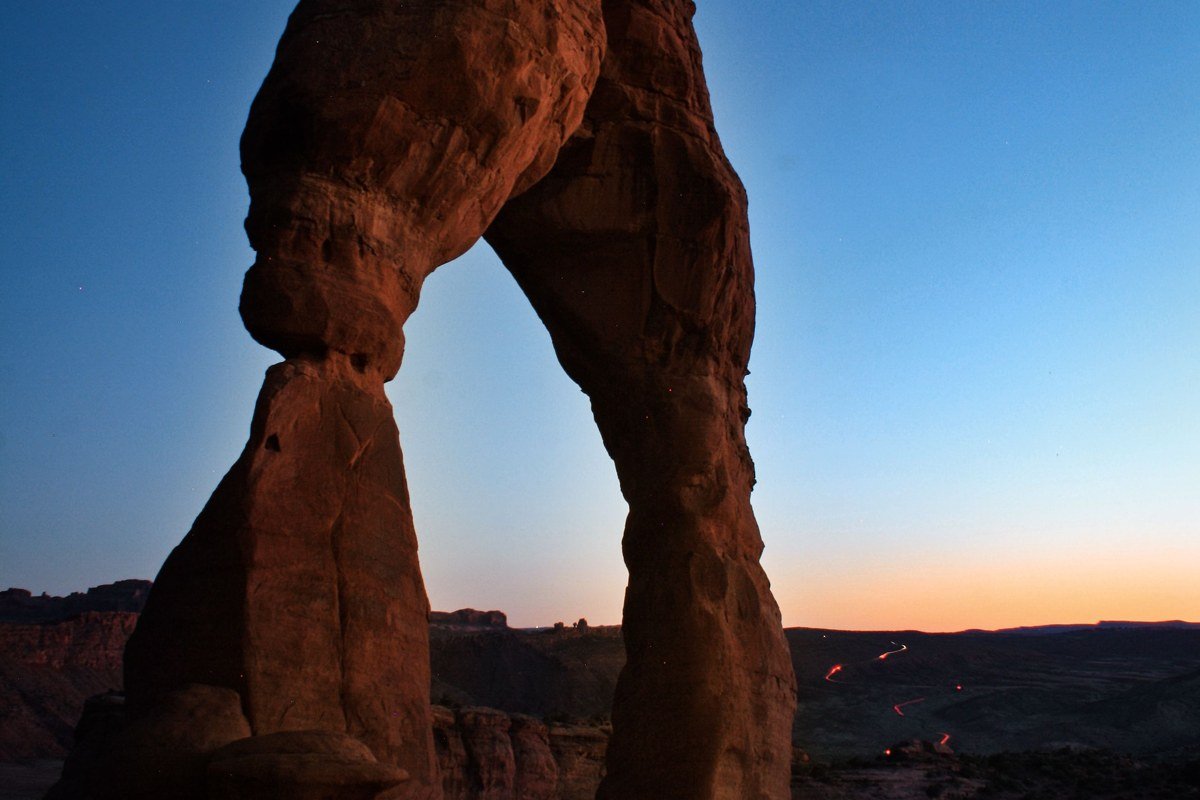
Arches National Park sits just outside Moab, Utah, and it’s the most efficient park in the state: pull off the main road, walk a short trail, see a strange rock formation, repeat. Delicate Arch is the one everyone comes for, and it’s worth the 3-mile round-trip hike, especially near sunset when the sandstone turns orange-red. I did that hike on a September evening and the parking area was already full at 6 p.m., an hour before sunset, so budget more buffer than you think you need. The honest downside is that Arches has become a victim of its own Instagram fame. Between spring and fall, the park has run a timed-entry reservation system for daytime hours in recent years, and the small parking lots fill early even with a reservation in hand (check NPS.gov for the current window and fee structure, since this changes). One full day, maybe a day and a half if you want both sunrise at Windows Section and sunset at Delicate Arch, is enough. Anything more and you’re padding.
4. Bryce Canyon, Utah
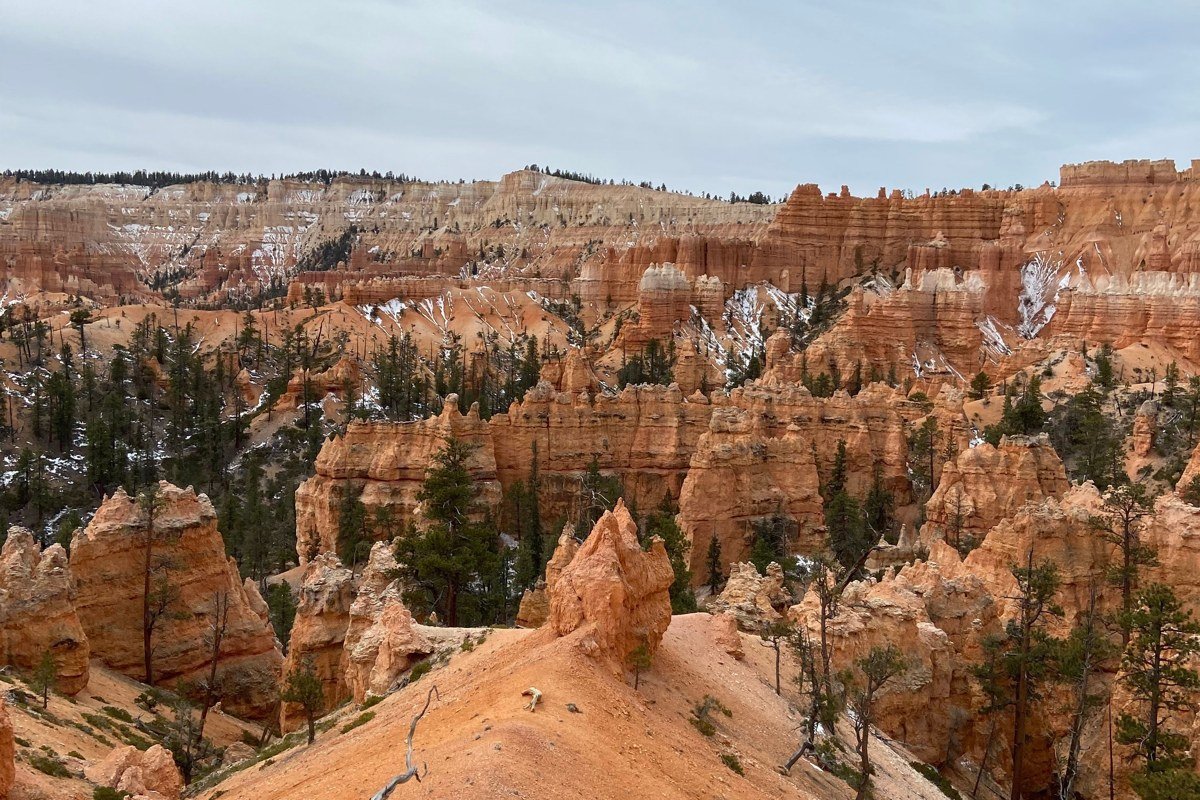
Bryce Canyon National Park in southern Utah is the one people underestimate on a map and then can’t stop talking about afterward. It’s not canyon country in the Colorado River sense, it’s a limestone amphitheater packed with thousands of hoodoos, those thin spires of rock that glow pink and orange at sunrise. The Rim Trail requires zero hiking commitment and delivers the view; the Navajo Loop and Queen’s Garden combo gets you down among the hoodoos in a couple of hours. I stood at Sunrise Point on an early April morning with snow still packed along the rail and had the whole overlook to myself for a solid twenty minutes before the first tour group showed up. Sitting at 8,000 feet elevation, Bryce runs cold much of the year, snow dusts the hoodoos well into April, and the main road can see winter closures after storms. That’s part of its appeal: it’s one of the only Mighty Five parks that feels magical under snow, and it stays open and accessible for winter road trips when Zion’s canyon floor is a mud pit. Two days covers it well; the second day earns its keep with a sunrise session before the tour buses arrive.
3. Capitol Reef, Utah
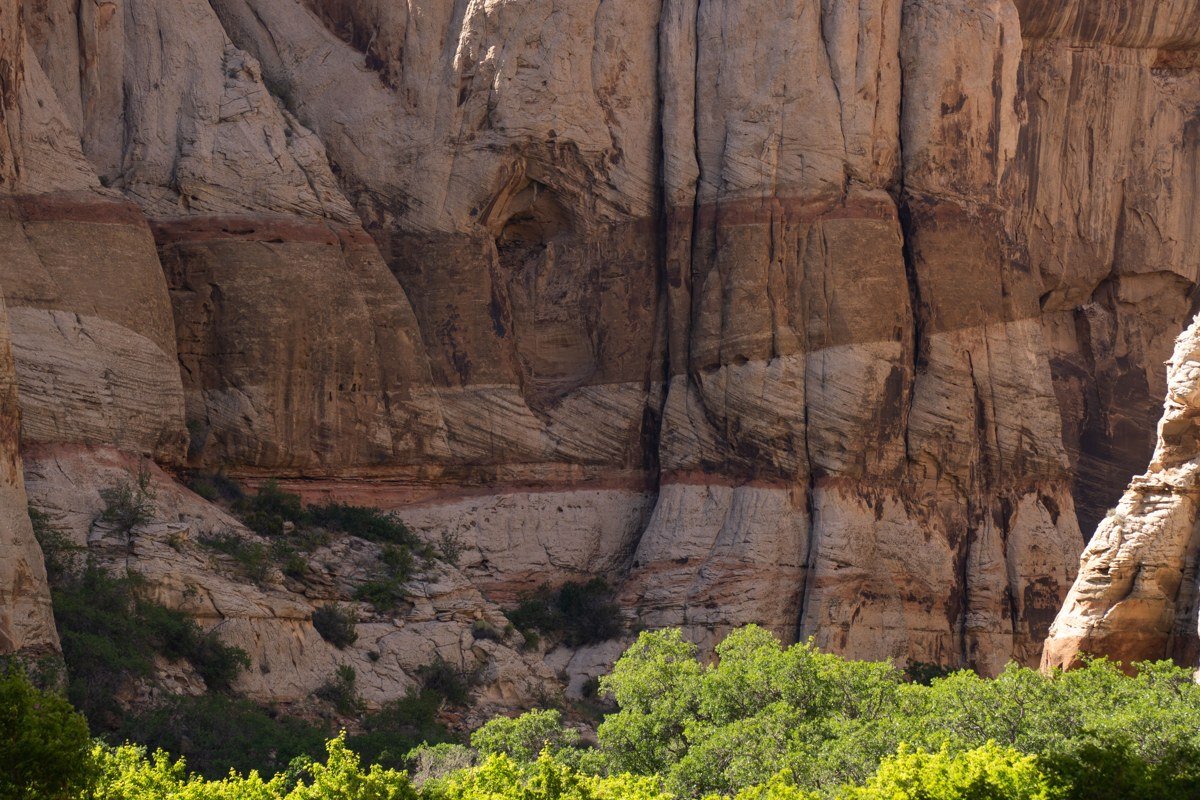
Capitol Reef National Park is the park most people driving the Utah national parks road trip skip entirely, and that’s the mistake that makes it worth ranking third. It sits in the middle of the state on Highway 24, off the direct Zion-to-Arches line, which is exactly why it stays quiet. The Waterpocket Fold, a 100-mile wrinkle in the earth’s crust, is the geological headline, but the real charm is Fruita, the old Mormon settlement inside the park where you can pick apples, pears, or peaches from historic orchards in late summer for a few dollars a bag. A ranger at the Fruita visitor center told me the pie at the Gifford Homestead sells out by early afternoon most summer days, so don’t save it for the drive back. Capitol Reef also has some of the darkest night skies of the five, with almost no light pollution for stargazing. The trade-off is real: it’s the farthest from any major airport, and the visitor amenities are thinner than at Zion or Arches, so gas up and stock the cooler before you arrive. Give it a day and a half. Anyone doing a 7-day Utah national parks road trip itinerary who cuts Capitol Reef to save time is cutting the wrong park.
2. Zion, Utah
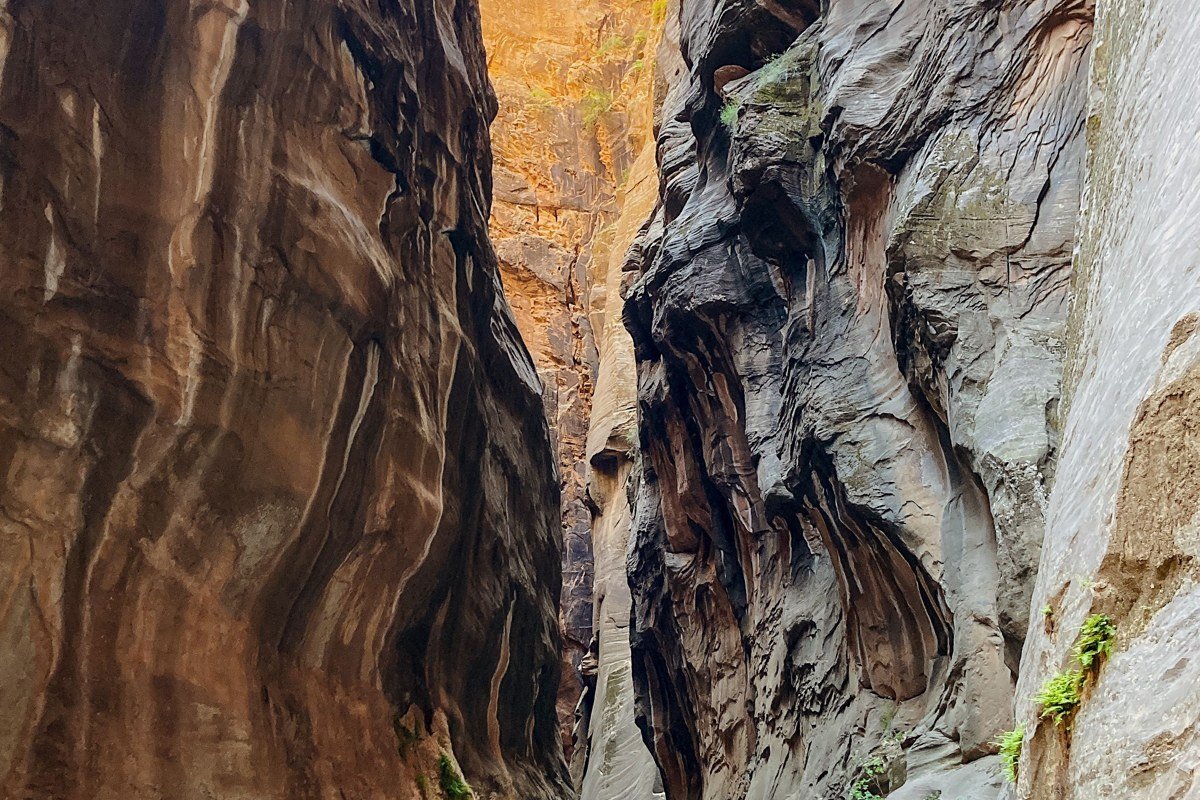
Zion National Park is the park that convinces first-timers Utah is worth a dedicated trip, and it’s also the one that can eat your schedule alive if you’re not careful. The Narrows, wading upstream through the Virgin River between thousand-foot walls, and Angels Landing, the chain-assisted climb with the exposed final half-mile, are the two hikes people fly across the country for. Both require planning: Angels Landing runs on a permit lottery system, and the Zion Canyon Scenic Drive is closed to private vehicles for most of the year, meaning you’ll ride the shuttle whether you like it or not (permit rules and shuttle schedules both shift year to year, so confirm on NPS.gov before you build your days around them). I waited 40 minutes for a shuttle on a Saturday in June and watched the line behind me double before the next bus pulled up. Summer crowds are brutal, and parking in Springdale fills by mid-morning from spring through fall. Zion rewards three full days, one for The Narrows, one for Angels Landing or Observation Point, one for the quieter Kolob Canyons section that almost nobody drives up to see. It’s an hour from St. George, Utah, and about 2 hours 45 minutes from Las Vegas, Nevada, which is exactly why so many Utah national parks road trip from Las Vegas itineraries start here.
1. Canyonlands, Utah
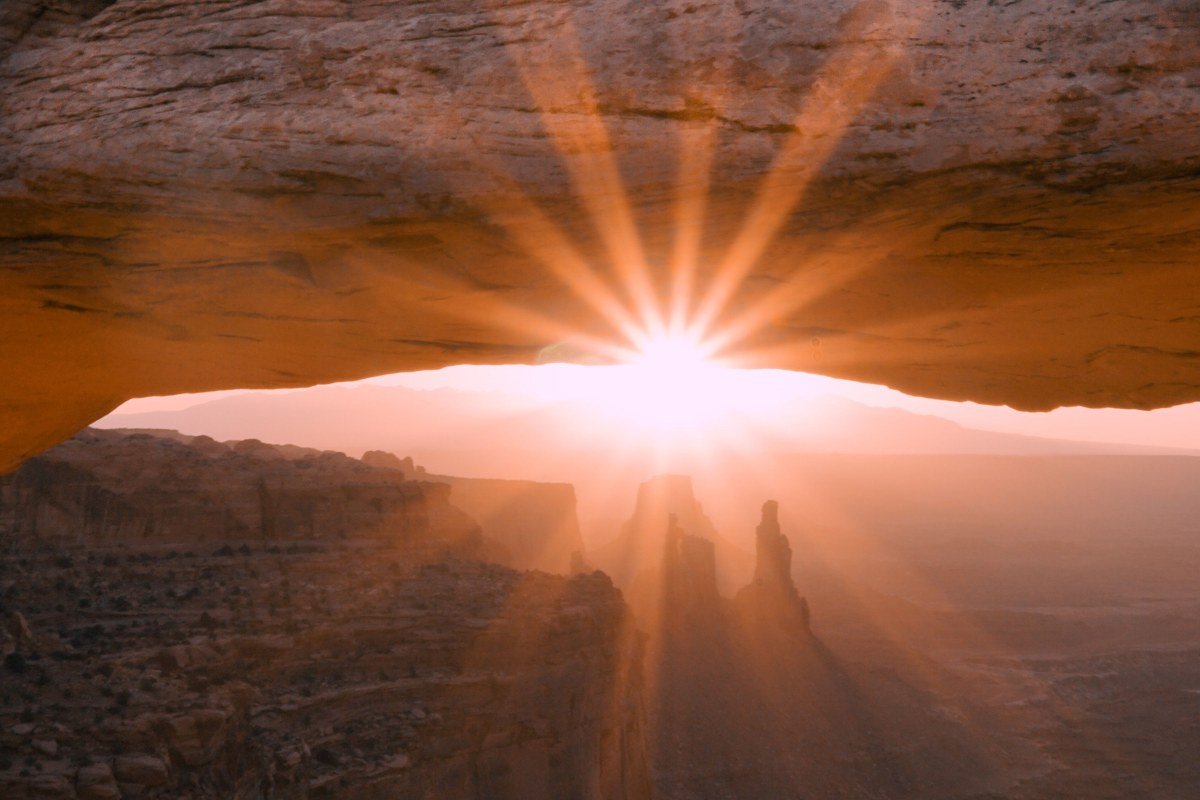
Canyonlands National Park is the largest of the five and, paradoxically, the one with the fewest people in it, which is exactly why it earns the top spot. Island in the Sky, the closest district to Moab, gives you the classic postcard shot: layered canyons dropping thousands of feet to the Colorado and Green Rivers, best seen at Mesa Arch around sunrise when the underside of the arch lights up orange. I got there forty minutes before sunrise on an October morning and there were already a dozen tripods lined up along the rail. But that district alone barely scratches the park. The Needles district, a 1.5-hour drive south, is a different world of banded rock spires and multi-day backcountry routes, and Horseshoe Canyon requires a full day just to see rock art panels most visitors never learn exist.
Spend one evening here and you’ll get a great photo. Spend three or four days splitting time between Island in the Sky and the Needles, and you start understanding why backcountry permits for overnight routes are some of the hardest to get in the state, limited in number and worth booking as early as the reservation system allows (check NPS.gov for current permit windows and fees, since both change). The downside is logistics: unlike Zion or Arches, there’s no shuttle system and cell service disappears fast, so this isn’t the park for someone who wants convenience. It’s the park for someone willing to trade convenience for solitude.
How I’d Pick
If you’ve got one weekend, do Zion or Arches, not both, and don’t try to squeeze in a third park just to say you did. A 4-day Utah national parks road trip realistically covers Zion and Bryce Canyon together, since they’re about 1.5 to 2 hours apart, with a day each plus travel. A 5-day trip can add Capitol Reef as the connector between Bryce and the Moab parks. For the full 7 to 10-day Utah national parks road trip itinerary, run Zion, Bryce, Capitol Reef, Arches, and Canyonlands in that order, west to east, which follows Highway 9, Highway 12, and Highway 24 without unnecessary backtracking, and matches a Salt Lake City or Denver, Colorado start point reasonably well depending on direction.
Families with young kids do best concentrating on Bryce and Arches, both parks with short, high-payoff trails and minimal exposure risk, and skipping Angels Landing’s chains entirely. Couples with flexible time should weight the back half of the trip toward Canyonlands and skip rushing Arches.
On cost: each of the five charges its own entry fee if you’re paying per park, though an America the Beautiful annual pass ($80 as of recent years, covers the vehicle and everyone in it) pays for itself fast if you’re hitting all five, versus the standard $30-per-vehicle fee charged at most individual parks. Confirm current amounts on NPS.gov before you go, since fees do get adjusted.
As for timing: spring (March through May) and fall are the best windows, since summer heat in the canyon-bottom parks routinely tops 100 degrees and winter closes some high-elevation roads at Bryce. March specifically is a reasonable bet, warm enough for the lower parks, though Bryce can still see snow and occasional weather delays, so build in a flex day if that’s on your route. All five parks stay open year-round, but “open” and “fully accessible” aren’t the same promise in January.