
The Upper Midwest gets written off as a summer-only destination, but the towns listed here prove otherwise. Each one photographs beautifully in January frost, October color, and mud-season quiet, not just the crowded weeks of July. One honest caveat before you start planning: late April through mid-May is genuinely difficult across the entire region. Expect gray skies, brown vegetation, patchy ice-out debris along shorelines, and no foliage whatsoever. The “year-round” claim in this article’s title refers to the other eleven months. If you are chasing that unhurried, wood-and-water aesthetic that keeps dominating Pinterest boards, these are the best lake towns to actually visit.
1. Bayfield, Wisconsin
Bayfield sits on a bluff above Lake Superior and the Apostle Islands, and it earns its visual reputation in every calendar month. The town’s century-old brownstone and brick storefronts line a single main street that tilts toward the water, making almost any angle a decent shot. Apple orchards ring the hillsides above town, so late September and early October bring a layered palette of red fruit, yellow leaves, and steel-blue Superior that genuinely stops scrolling. Catch the Apostle Islands National Lakeshore ferry out to the sea caves, which freeze into cathedral-like ice formations accessible by guided ice walk in late January or February. Avoid the last two weeks of July if crowds bother you. Memorial Day weekend and the first week of October offer nearly the same scenery with a fraction of the boats.
Lodging note: Bayfield has a tight inventory of inns and rentals. It books months ahead for October weekends. Budget travelers will find better value in Washburn, eight miles south, with easy day-trip access to town.
2. Lutsen, Minnesota
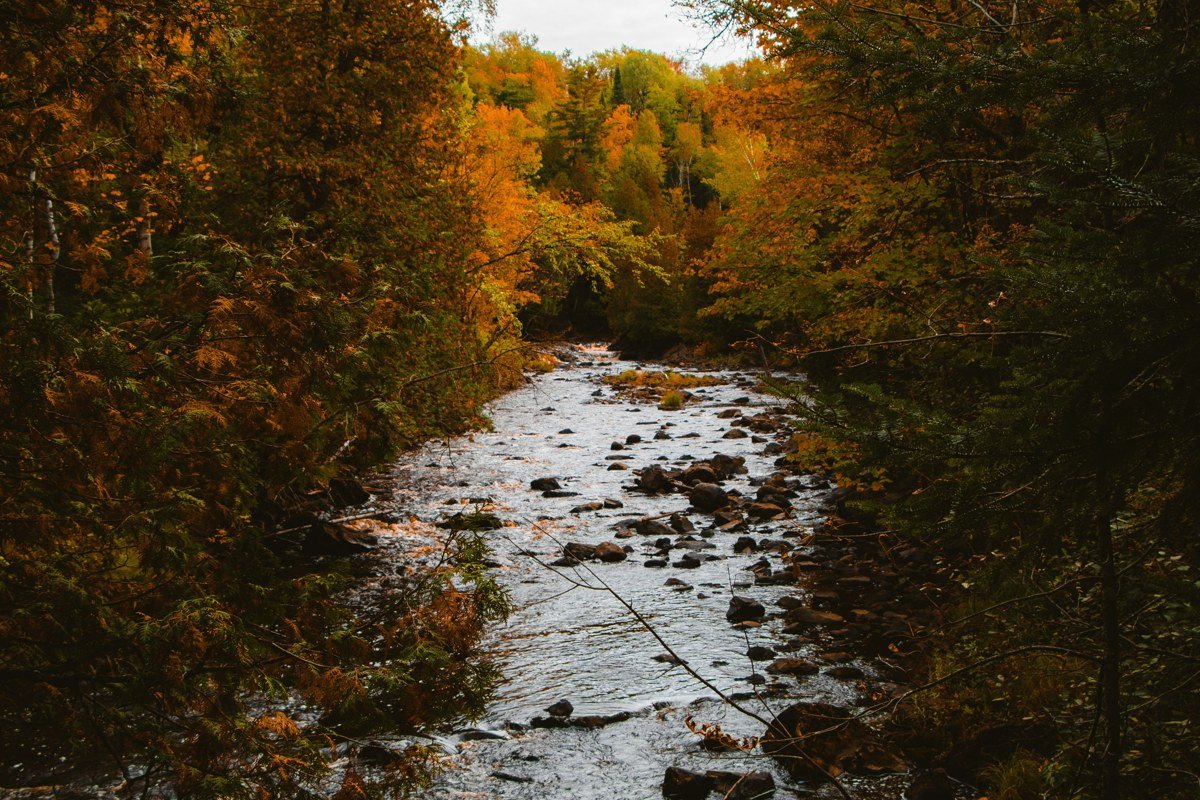
Lutsen is not a town in the traditional sense. It is a loose community strung along the North Shore of Lake Superior between Tofte and Grand Marais, anchored by the Lutsen Mountains ski area. That ambiguity is part of the appeal. The Sawtooth Mountains rise directly from the lake, which means you get both vertical drama and open water in the same frame. Rivers like the Poplar and Temperance cut through rocky gorges on their way to Superior, and both photograph well in high-water seasons: spring snowmelt and post-rain autumn. Ski the mountain in winter and you can look down on a frozen lake horizon that looks nothing like anywhere else in the Midwest.
Book a cabin at Lutsen Resort or one of the smaller properties along the Caribou Trail for late October. Peak color on the inland lakes typically runs a week behind the shoreline, so you get two rounds of foliage if you time it right. Rates are moderate compared to Bayfield or Traverse City, and midweek availability in October is usually good even on short notice.
3. Traverse City, Michigan

Start with the trade-off: the downtown along Front Street gets legitimately congested in peak summer, parking is genuinely frustrating, and the waterfront fills with the kind of foot traffic that makes unhurried photography difficult. If July is your only option, stay outside town and drive in for a single evening. Every other season, Traverse City rewards the effort fully.
Old Mission Peninsula and Leelanau Peninsula frame the town on either side, blanketed with cherry orchards and vineyards that change character dramatically by season. Winter on the bay is quiet and cold in a way that suits moody photography: frozen pier pilings and pastel sunrises with almost no people in frame. The best single activity is a self-guided drive up Old Mission Peninsula, stopping at Chateau Grand Traverse or Brys Estate for a tasting with water views through the vineyard rows. For dinner, Trattoria Stella in the Village at Grand Traverse Commons makes the culinary infrastructure claim concrete: it operates out of a restored Victorian asylum building and sources from regional farms year-round, which tells you something real about how seriously this town takes its food scene beyond cherry season.
Lodging runs the full range, from budget motels on US-31 to boutique hotels downtown. Elk Rapids, twenty minutes north, is the low-cost alternative with direct access to the same scenery.
4. Grand Marais, Minnesota
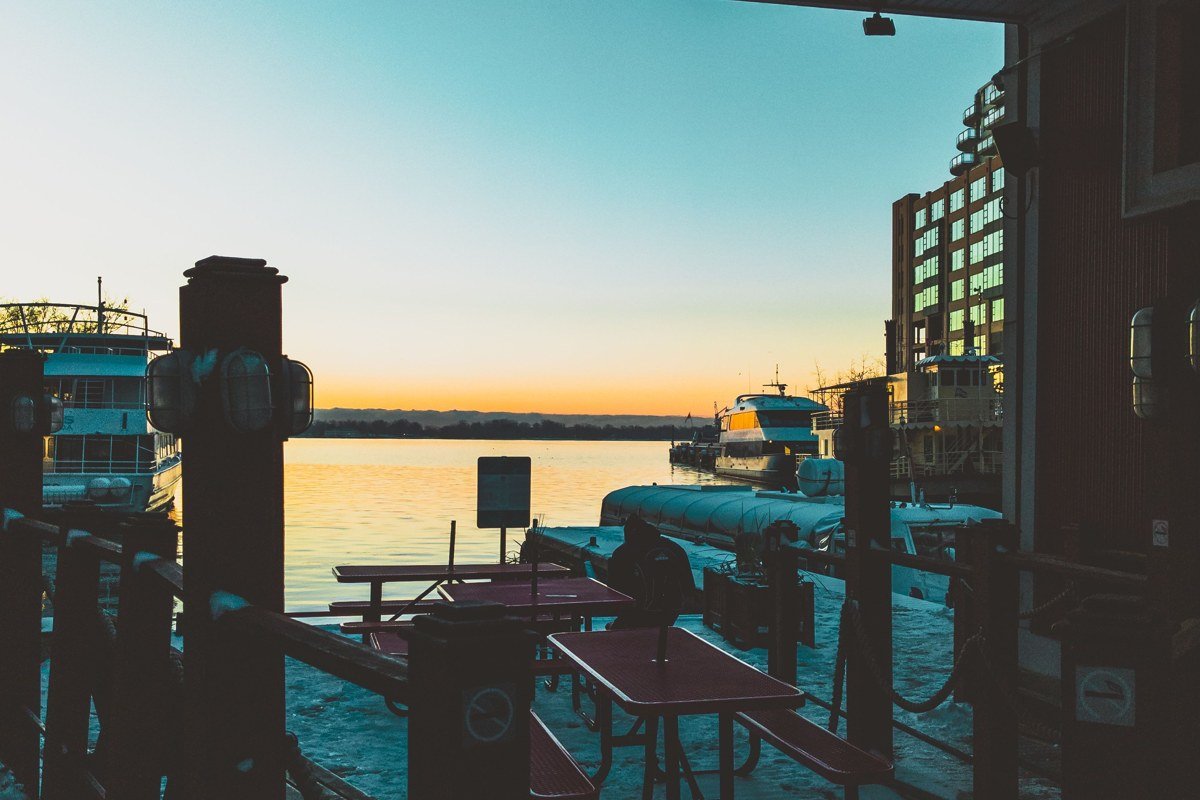
Grand Marais functions as the last real stop before the Boundary Waters Canoe Area Wilderness, and that threshold position shapes everything about the town’s character. The harbor is tiny and genuinely charming, ringed by artist studios and outfitter shops rather than chain restaurants. The lighthouse at the end of the breakwater is short enough that you can walk out to it without vertigo. Birch trees crowd the hillsides above town and hold their white bark through winter, creating a clean graphic contrast against gray Superior or a blue-sky March day.
Pair a paddling or hiking trip into the BWCA with evenings at the Angry Trout Cafe or North Shore Winery. One important planning note: BWCA entry requires a permit reserved in advance through Recreation.gov, and popular entry points sell out months ahead, so treat this as infrastructure research before you book flights. Early June brings black flies in the backcountry. Push your visit to mid-July or wait until mid-September, when the lake calms, the bugs vanish, and color begins creeping down from Canada. Grand Marais sits at the affordable end of the North Shore for lodging, with several independent motels and a well-run hostel that make it accessible for budget-conscious planners.
5. Sister Bay, Wisconsin
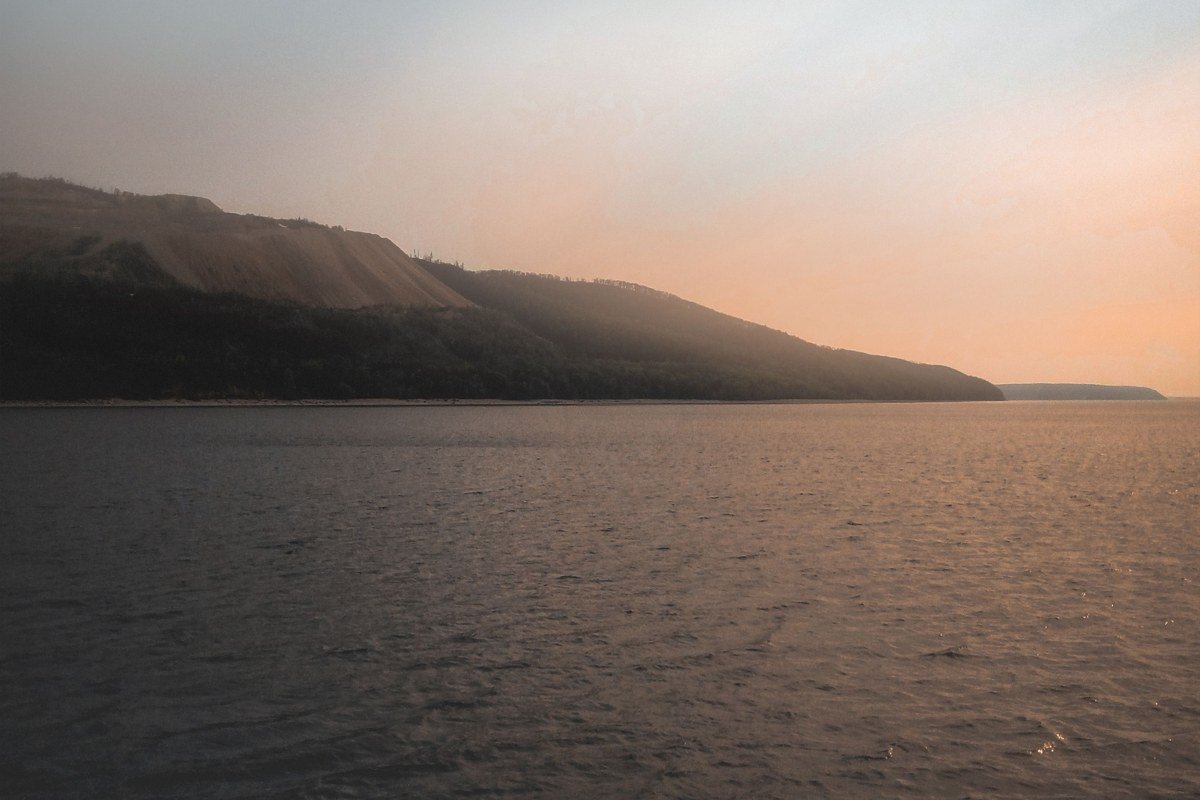
Paddle north from the Sister Bay marina toward Garrett Bay on a calm late-morning and you will understand immediately why this village keeps appearing on mood boards. The bluffs above the bay are high and wooded, the water runs green-clear over rock, and the only sounds are the dip of the paddle and the occasional gull. This is the activity that best captures what Sister Bay actually is: a quiet, working-scale Door County village that has not yet traded its fishing-town bones for boutique saturation.
Sister Bay sits on the Green Bay side of the Door Peninsula, which already puts it ahead of the more-trafficked Egg Harbor and Fish Creek in terms of genuine small-town feel. The Scandinavian heritage shows in the architecture and in a handful of long-running local businesses along the main street. The harbor is small and protected, surrounded by wooden docks and traditional fishing boats that give you authentic lakehouse details without staging. Autumn color peaks here in mid-October and tends to be underrepresented in travel coverage relative to New England, which means you get dramatic maple-and-water scenery without the crowds. Kayak rentals are available from outfitters near the marina.
Lodging is mid-range, with a concentration of small inns and cottage rentals. Comparable in price to Fish Creek but quieter, particularly on weekday visits in shoulder season.
6. Minocqua, Wisconsin
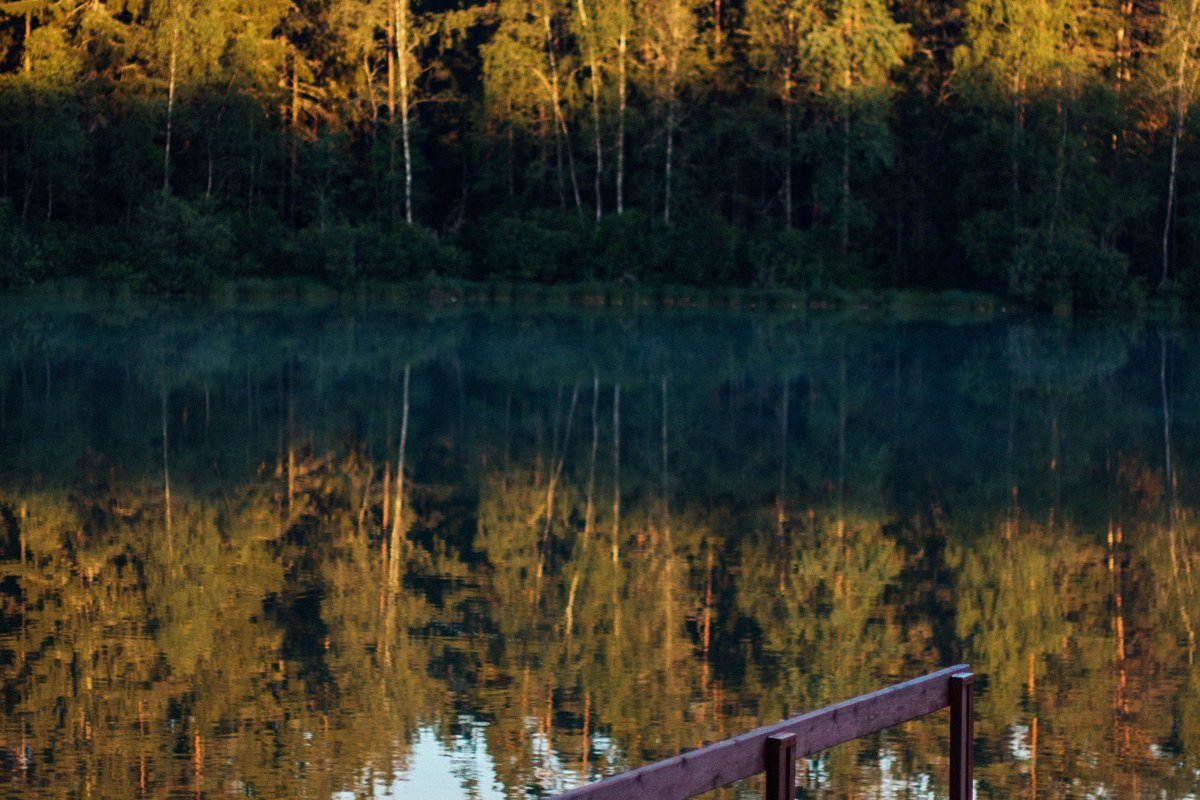
Knotty pine, taxidermied muskie, a vintage neon sign advertising a bait shop that has occupied the same corner for sixty years: Minocqua is not performing Northwoods nostalgia, it simply never stopped living it. That distinction is what separates it from resort towns that have retrofitted the aesthetic for Instagram. The town sits on a peninsula surrounded by a chain of interconnected lakes, and the main street is walkable with independent shops and ice cream stands that hold up aesthetically even in off-season, particularly after a November snowfall when the lake freezes and the pines load with snow. Snowmobiling and ice fishing are the primary winter activities, and both photograph surprisingly well at sunrise on the ice.
Skip the village hotels and rent a lakeside cabin instead. Beacons Bay Resort, a family-owned Northwoods property on the lake chain, offers direct dock access and morning water views that are the whole point of this aesthetic. Properties in this tier are plentiful around Minocqua and generally represent some of the best value on this list for families or groups splitting a cabin.
7. Duluth, Minnesota

Duluth is not a small lake town. It is a mid-sized port city, and visitors who arrive expecting the village scale of Grand Marais or Sister Bay will be briefly disoriented. Stay anyway. Its relationship with Lake Superior is unlike anything else on this list. The Aerial Lift Bridge rises over the ship canal as ore freighters pass underneath, and that image has become genuinely iconic in Midwestern travel photography. Canal Park draws crowds in July, but ten minutes in either direction reveals the working waterfront, the fish warehouses, the lift-bridge mechanism up close, and a rugged Lake Superior shoreline stretching east along the Lakewalk.
Winter is when Duluth earns real respect. The lake generates mesmerizing ice formations along the Lakewalk and dramatic wave-freeze events after November storms that turn the breakwater into abstract sculpture. The best single stop is the Fitger’s complex, a renovated 1880s brewery now housing independent shops and a hotel, sitting directly on the lakefront with views of the bridge from its upper floors. Duluth offers the widest lodging range on this list, from budget chain hotels near the interstate to the Fitger’s Inn itself, making it a practical anchor for a North Shore road trip in either direction.
8. Elk Rapids, Michigan
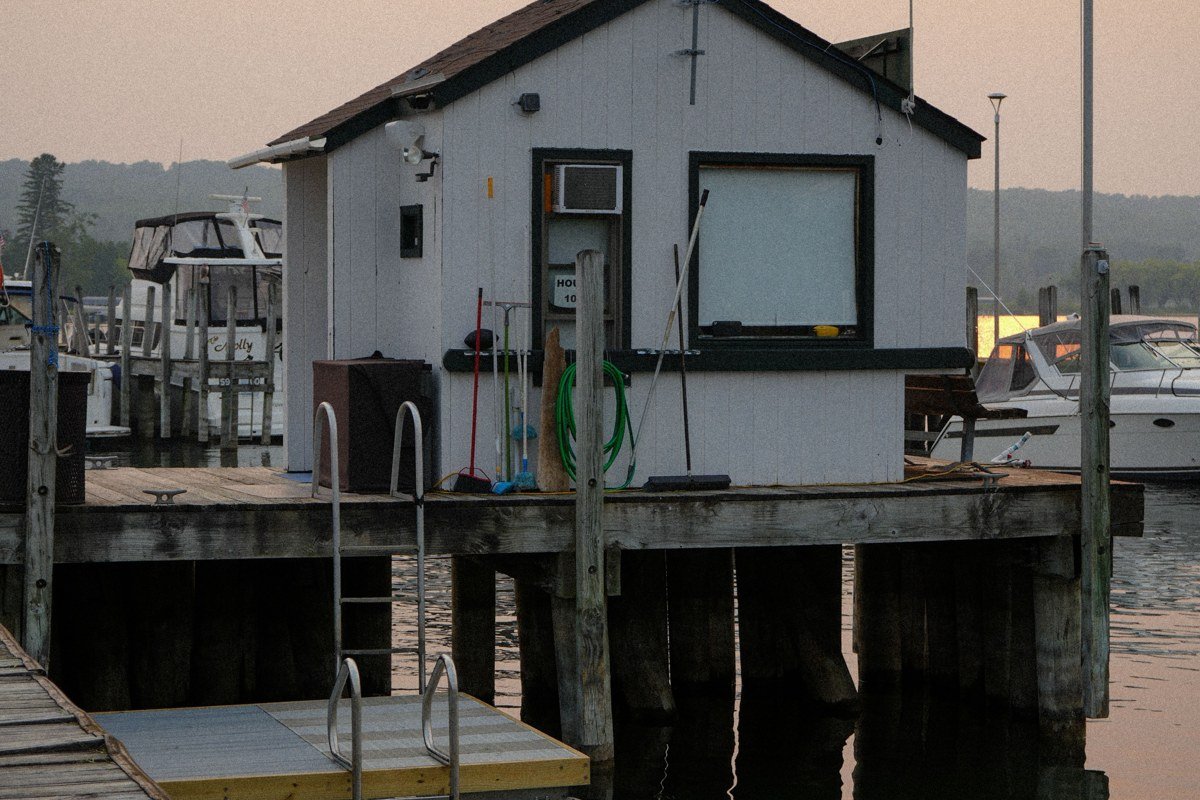
This entry belongs last because it functions as a corrective to everywhere else on the list. Elk Rapids is genuinely unknown at the scale these other towns are known, and that is the only reason to lead with it rather than bury it.
The village sits at the point where Elk Lake drains through a short river into Grand Traverse Bay, giving it two bodies of water at once: a small protected harbor on the bay side and a long, clear inland lake stretching south. A few blocks of painted storefronts, a bakery, a hardware store still doing actual business, and a public park with a dock over the river channel where you can watch lake trout hold in the current. Because it sits twenty minutes north of Traverse City on US-31, Elk Rapids captures the same vineyard and orchard scenery without the visitor infrastructure, and at noticeably lower price points for both lodging and meals. It is the budget-friendly alternative to Traverse City for travelers who want the same visual geography with fewer people and a smaller bill.
Visit on October weekdays. The fall color on Elk Lake and the surrounding Antrim County farmland is exceptional, and the area stays quiet enough that you can photograph the dock reflections without waiting for other people to clear the frame.
Practical Takeaway
These eight towns cluster into two logical road trip routes: the Lake Superior North Shore from Duluth through Grand Marais and across to Bayfield, and the Great Lakes Michigan loop connecting Traverse City, Elk Rapids, and a ferry hop or shoreline drive back through Door County. Both routes work across most of the calendar, though late September through mid-October offers the most visually varied conditions: warm enough for water activities, cool enough for genuine color, and quiet enough to actually see the places clearly.
Book accommodations early for October weekends anywhere on this list, particularly Bayfield and Sister Bay, where lodging is limited and fills months in advance. Avoid late April through mid-May across the entire region unless you actively prefer empty, dormant landscapes. The first two weeks of June and the last two weeks of September consistently deliver the photography without the crowds, and represent the windows where this list earns its “year-round” claim most honestly.