
If your Pinterest board is overflowing with Faroe Islands cliffside villages and you keep hitting the same wall of flight prices and tourist density, Norway has been quietly holding the answer. These ten fjord settlements offer the same mossy rooftops, mirror-still water reflections, and dramatic mountain backdrops that made Gásadalur go viral, and most of them still see more sheep than influencers.
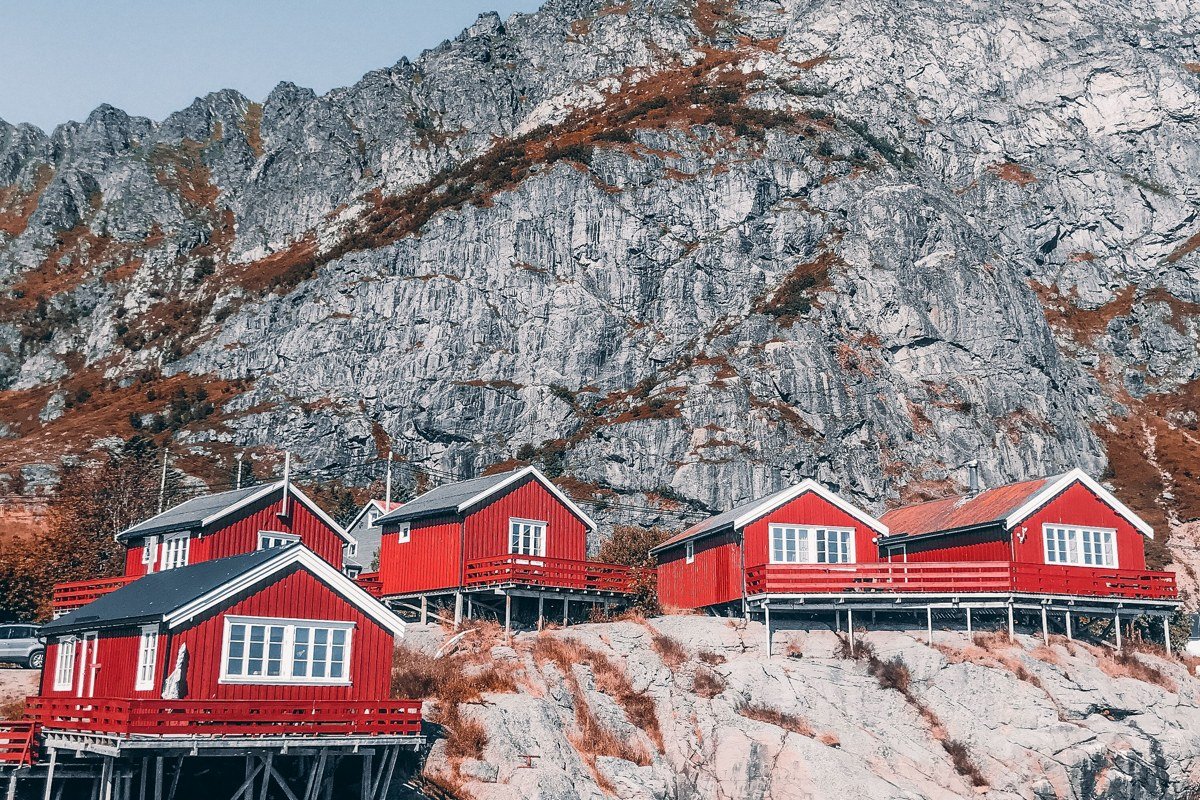
1. Undredal, Aurlandsfjord
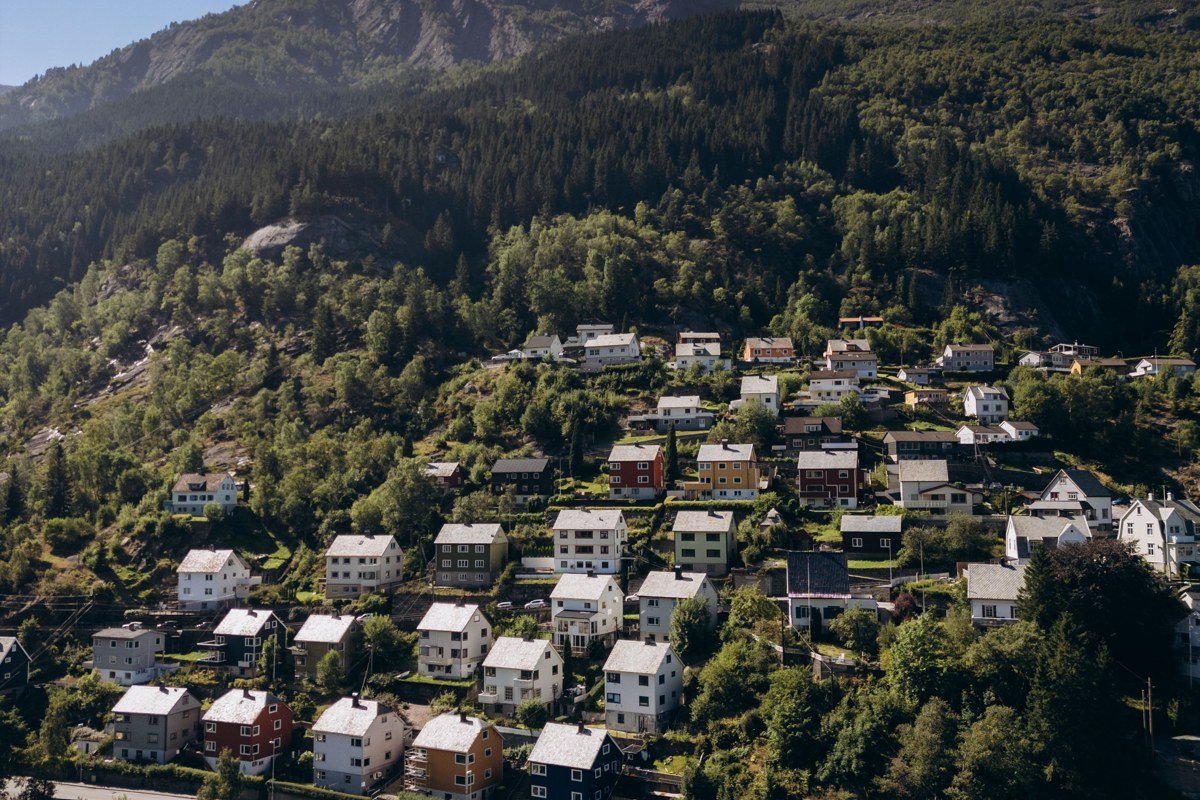
Undredal is absurdly small, roughly 100 residents, and sits wedged between a sheer cliff face and the Aurlandsfjord like someone forgot to finish building it. The village church, one of the smallest stave-style churches in Norway still holding services, is painted white and sits so close to the water that photographs of it look digitally composited. The light here in late afternoon turns the whole scene amber and the fjord goes completely glassy. The best thing to do is rent a kayak and paddle out far enough to get the full village-and-mountain frame in one shot. Avoid the brief window in July when tour buses detour from Flam and instead come in late May or September for near-total solitude. The village is reachable by ferry from Flam, and no car is needed.
2. Eidfjord, Hardangerfjord
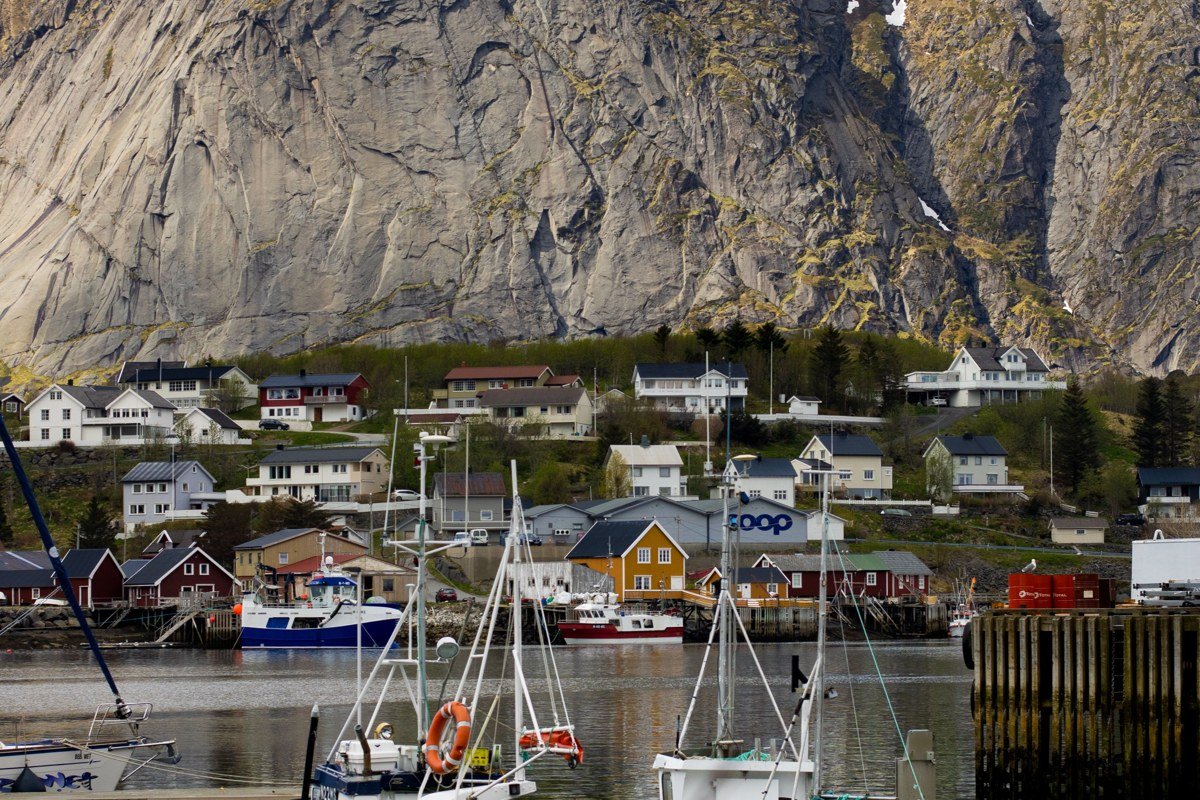
Eidfjord sits at the inner end of the Hardangerfjord, surrounded by some of the most aggressively photogenic fruit orchards in northern Europe. In mid-May, apple and cherry trees bloom white and pink while snow still caps the peaks directly above the village, which creates that impossible layering of seasons that makes a photograph feel fictional. The nearby Vøringsfossen waterfall is the most visited in Norway, but the village itself stays quiet because most people drive straight to the falls and leave. Spend a morning walking the old orchard paths above the fjord rather than chasing the waterfall crowds. The church, dating to the medieval period, has a reflective pond beside it that shoots beautifully in flat, overcast light. Eidfjord is most easily reached by car or the Hardangerfjord ferry connection from Brimnes.
3. Mundal (Fjærland), Sognefjord
A Bookshop Town at the Edge of a Glacier
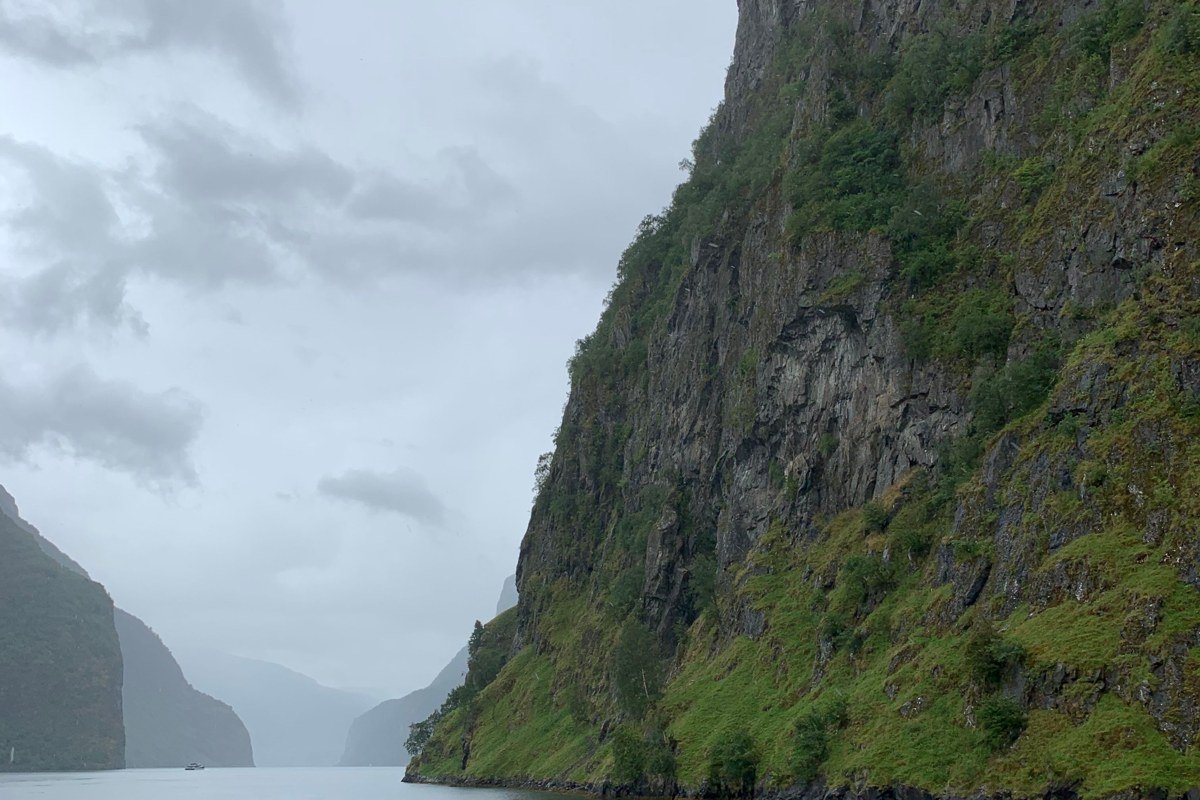
Mundal is the kind of place that sounds invented: a Norwegian fairy-tale village that also functions as a secondhand bookshop town, with old wooden houses converted into open-air book stalls that operate on an honor system when no one is staffing them. The Sognefjord here is exceptionally wide and steel-colored under clouds, and the Bøyabreen glacier arm hangs visibly in the background, a detail that makes wide-angle photographs feel almost surreal.
Staying Overnight Changes Everything
Most visitors come for the day via ferry from Balestrand and leave by evening, so staying overnight in the historic Mundal Hotel puts you there when the light is actually interesting. The village is technically only open to visitors from May through September, so the entire experience is seasonal, which adds to its mythological quality. The seasonal ferry from Balestrand is the most atmospheric way in; the alternative is a drive via the Rv5 road through Fjærland tunnel.
4. Utne, Hardangerfjord
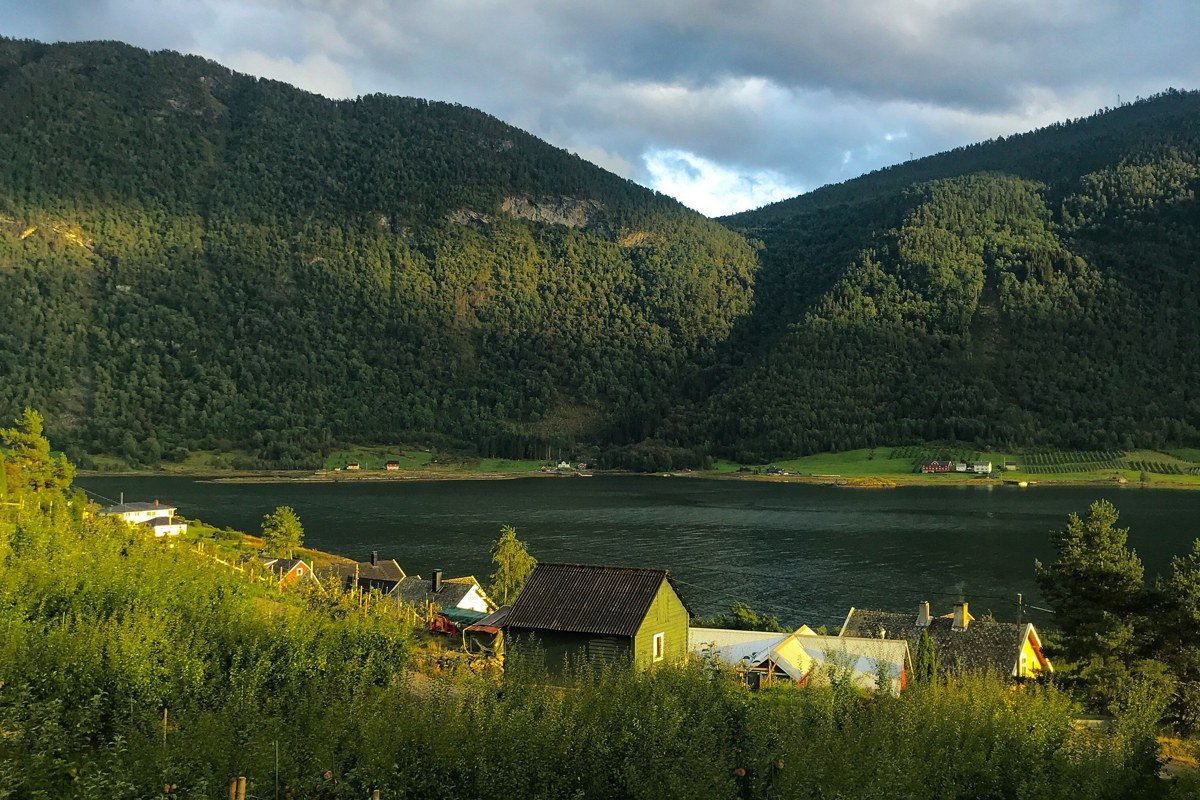
Utne sits on a narrow peninsula where the Hardangerfjord splits into two arms, and the visual result is water on three sides with mountains framing every direction. The Utne Hotel, founded in 1722, is one of the oldest continuously operating hotels in Norway and its wooden facade looks like it belongs on a book cover. In October the hillsides go rust and gold while the fjord stays dark blue, and this color contrast is one of the more underrated autumn photography scenarios in all of Scandinavia. Walk the shoreline path to the old ferry landing at dusk when the hotel lights start reflecting in the water. The folk museum nearby holds genuine artifacts from fjord farming life, not reconstructed versions, which gives the place a grounded, un-theatrical feeling. Utne is reached by a short car ferry from Kvanndal, with connections from the Bergen express boat corridor.
5. Vik, Sognefjord
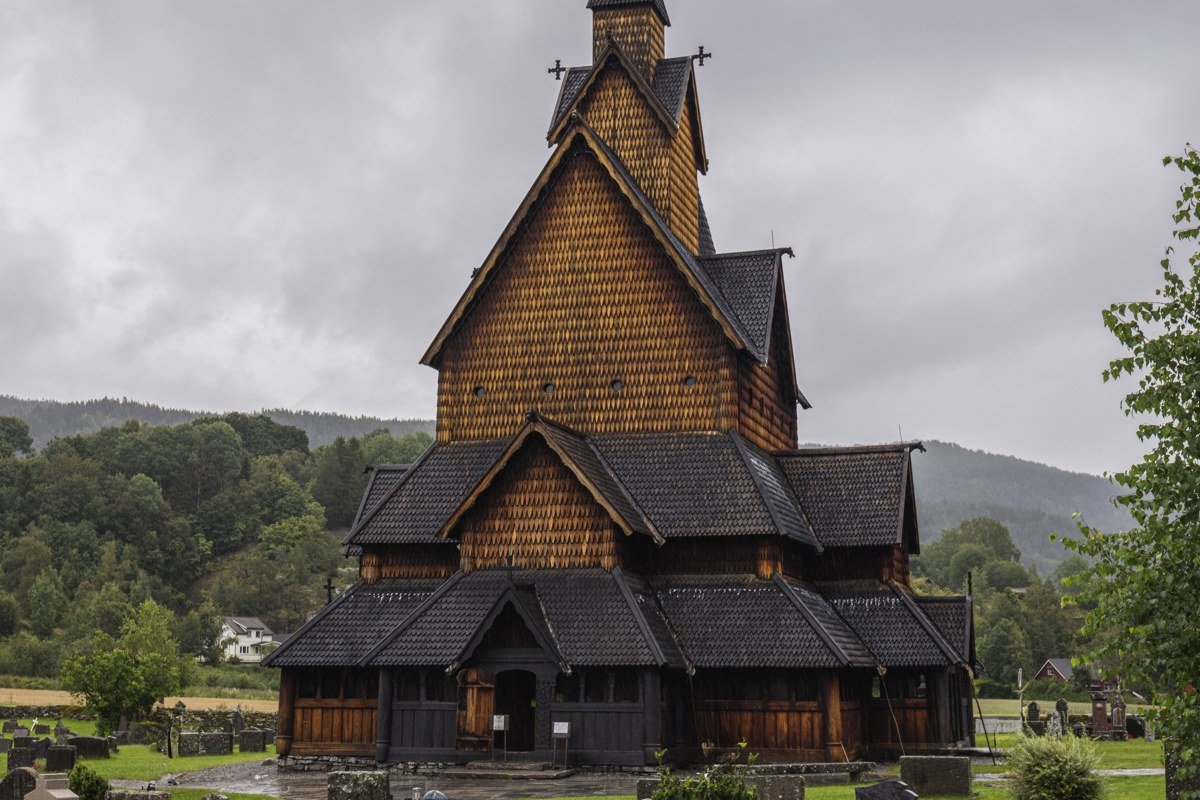
Vik’s main claim is the Hopperstad Stave Church, a twelfth-century wooden structure that survived because a local farmer bought it when the diocese wanted to demolish it in the 1800s. It now stands on a slight rise above the Sognefjord with unobstructed views in every direction, and on a foggy morning it looks less like a historical site and more like a prop from a fantasy film. The surrounding village is modest, which is exactly the point: nothing competes with the church and the landscape for your attention. Visit right at opening time on a weekday when tour groups have not yet arrived from Flam. The interior carvings are original and the light inside is dim and warm enough that even phone cameras produce something atmospheric. Vik is most practically reached by car via the E16 and Rv13, or by express boat from Bergen with a change at Vangsnes.
6. Balestrand, Sognefjord
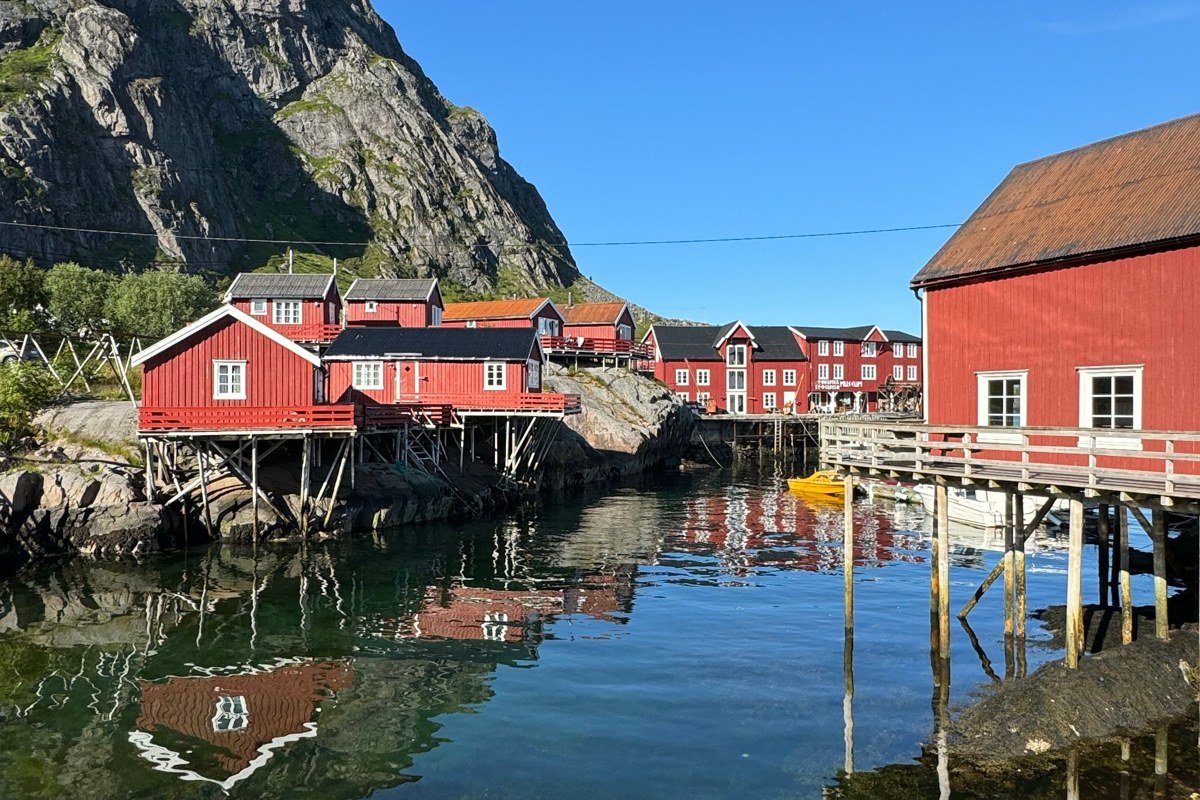
Balestrand was a destination for European aristocracy and artists in the late nineteenth century, and that history is still visible in ways that matter. Kaiser Wilhelm II visited the village annually for years in the early 1900s, and the Swiss-style wooden villas built for that era of well-heeled tourism give the village a slightly eccentric, layered appearance that reads as genuinely storybook without trying to. On the hillside above the village, Viking-age burial mounds at Kvikne date back more than a thousand years, adding a dimension that most fjord stops cannot offer. The English church of St. Olaf, built by a British woman who married a local, sits right on the fjordside and is small enough that photographs of it read as a miniature against the scale of the mountains. Kayaking the Esefjord arm off the main Sognefjord gives you angles back toward the village that almost no one publishes. June gives you long northern twilight and the gardens in full bloom simultaneously, which is the combination to plan around. Ferries from Bergen stop here on the scenic route, making arrival feel like sailing into a painting, and no car is necessary for a full stay.
7. Lærdalsøyri, Sognefjord
Norway’s Most Intact Eighteenth-Century Streetscape
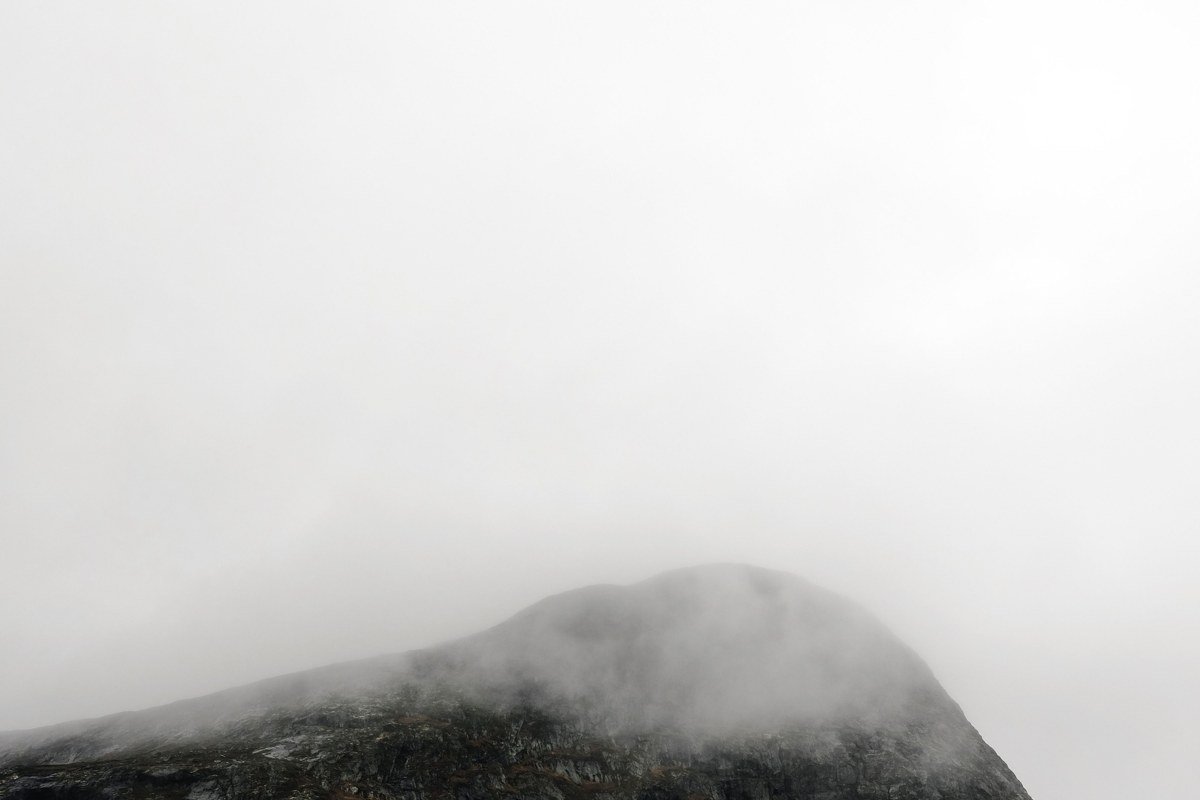
The old village section of Lærdalsøyri (sometimes anglicized as Laerdal) contains the largest intact collection of eighteenth-century wooden houses in Norway, roughly 160 of them, all preserved in the original configuration of a trading town. A fire in 2014 damaged parts of the broader municipality, but the historic core survived and remains fully inhabited, a fact worth knowing before you arrive and important enough to state plainly. Walking its narrow lanes in morning fog feels genuinely disorienting in the best way, like the clocks stopped around 1780 and nobody noticed.
Lived-In, Not Curated
The buildings are not a museum reconstruction: people actually live here, and curtains in the windows and firewood stacked outside make it feel inhabited rather than staged. The fairy-tale quality comes from the human scale of everything, low fences, tiny gardens, hand-painted signs, rather than any single dramatic feature. Plan a visit after a night of rain when the wooden facades are darkened and reflective and the light is soft. Lærdalsøyri sits on the E16 and is also served by the Sognefjord ferry route, making it a natural stop between Flam and Sogndal without backtracking.
8. Aurland, Aurlandsfjord
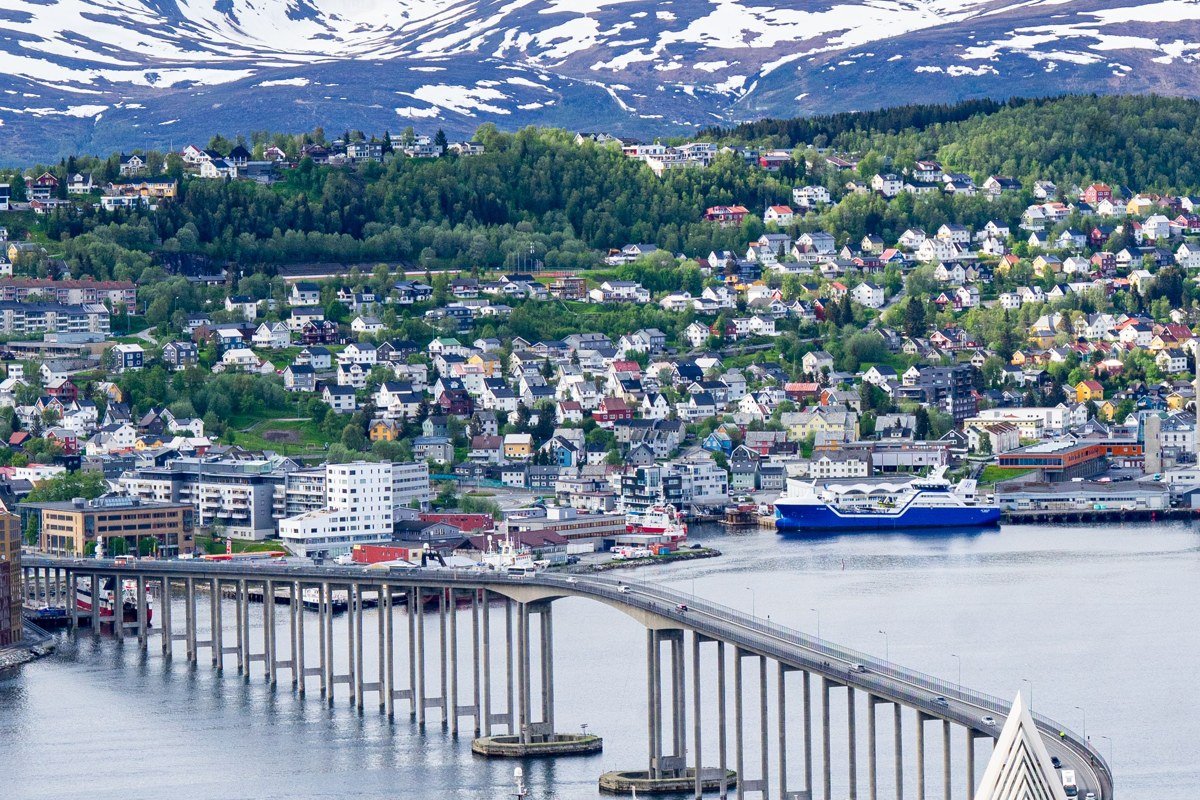
Aurland gets overshadowed by its neighbor Flam, which is unfortunate because it is quieter, prettier, and has a white medieval church that photographs dramatically against both summer green and winter snow. The main village street has a working bakery, a handful of old fishing houses converted to guesthouses, and views across the fjord that require no filtering to look cinematic. The Stegastein viewpoint above the village is famous, but most people drive up and drive back down without spending any time in Aurland itself, which works in your favor. Stay at least one night and walk out to the old dock at blue hour when the church is lit from inside and the reflection breaks across the fjord surface. November is genuinely dramatic here if you can handle cold: snow on the peaks, empty streets, and a quality of stillness that is essentially unavailable in summer. The Flamsbana railway stops at Flam, a ten-minute drive or a short ferry hop from Aurland, so arriving without a car is straightforward.
9. Rosendal, Hardangerfjord
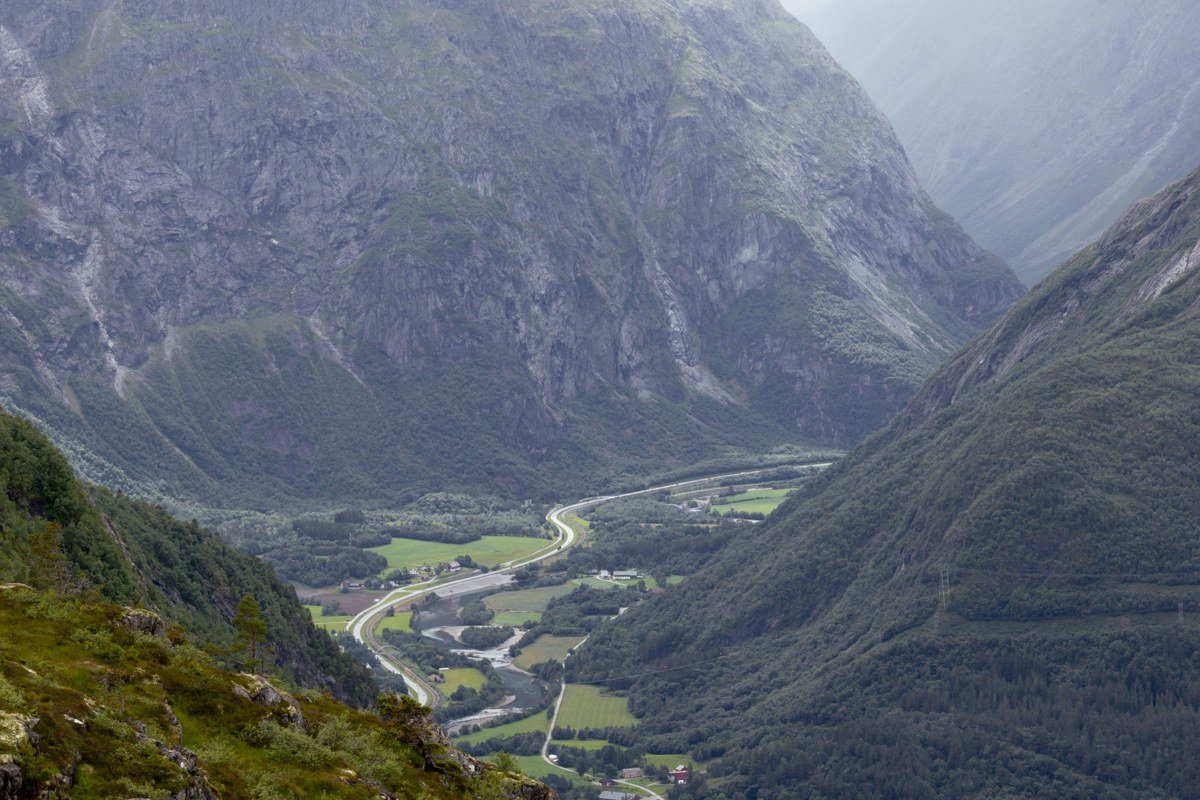
Rosendal holds the only baronial estate in Norway, a seventeenth-century stone manor house with formal rose gardens that look borrowed from a Loire Valley chateau and placed, improbably, at the edge of a Norwegian fjord. The juxtaposition is the whole point: formal European architecture framed by raw, vertical Norwegian landscape creates a visual tension that shoots unlike anywhere else in the country. According to Baroniet Rosendal’s published calendar, the rose garden typically peaks in late June through early July, with the mountains directly behind the estate still showing snow at upper elevations during that window. The surrounding village is small and fishing-oriented, which prevents the estate from feeling like a theme park. A hiking trail behind the manor leads up to alpine terrain within an hour, so you can have wildflowers, a baronial manor, a fjord, and a glacier view all in one morning. Rosendal is drive-accessible via the Rv48 after a ferry crossing from Løfallstrand, or reachable by the passenger express boat from Bergen.
10. Saebo, Norangsfjord
One of Norway’s Most Enclosed Fjords
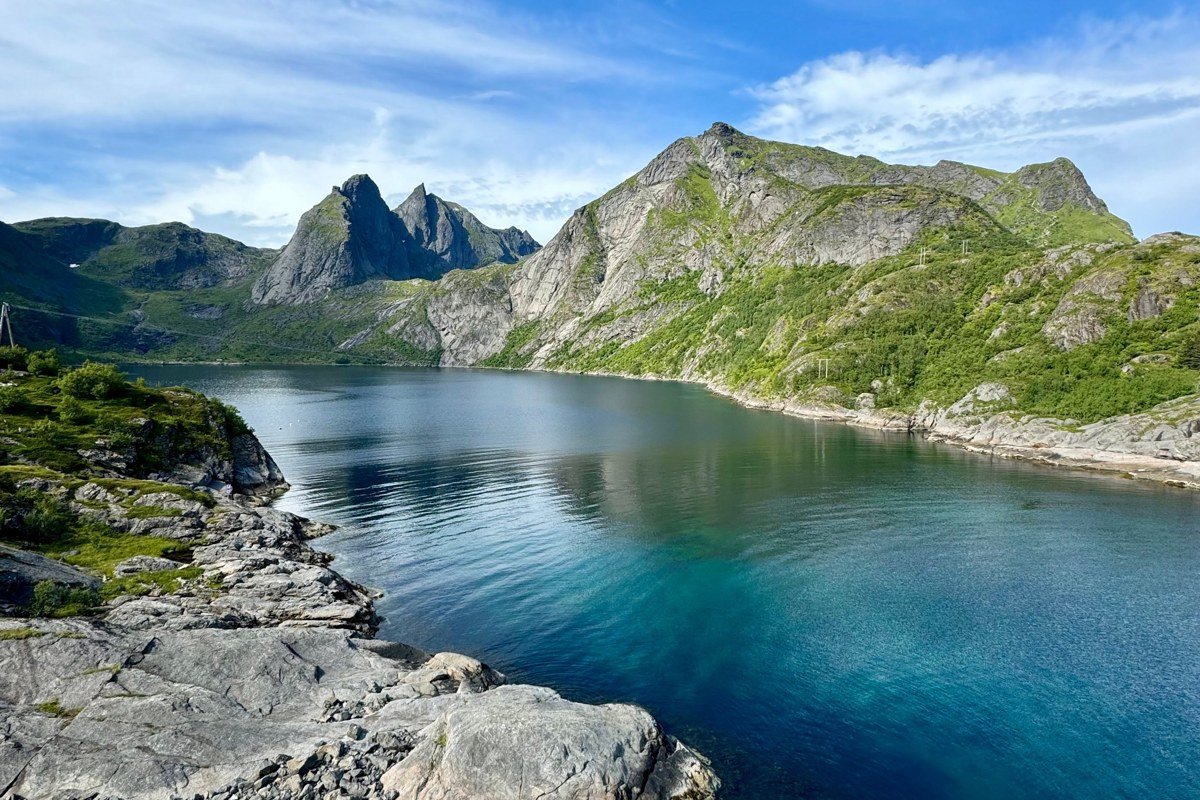
Saebo sits at the entrance to the Norangsfjord, one of the narrowest and most dramatically enclosed fjords in Norway, with walls so steep that direct sunlight only reaches the water for a few hours a day. A short boat trip into the fjord reveals the ruins of old farmhouses partially submerged beneath exceptionally clear water, left there after a series of landslides in the early twentieth century. The effect is eerie and beautiful in a way that photographs poorly and rewards being there in person, which means this place has not become a content-farm location despite being extraordinary.
The Road In Is Part of the Experience
The village itself is tiny, and the road into the valley from Ørsta is single-lane and slow, which is a genuine deterrent for larger tour groups and a gift for anyone willing to drive it. There is no ferry access; this is a drive-only destination, and the commitment required is part of why it stays quiet. Early morning in August, before the valley heats up, produces mist that sits low over the water and gives the ruins and the peaks a genuinely mythic quality.
Practical Takeaway
Norway’s rail and ferry infrastructure makes stringing these villages together easier than it looks on a map. A Eurail Norway pass or the Norway in a Nutshell circuit covers several of the Sognefjord and Aurlandsfjord villages in one sweep. For the Hardangerfjord cluster (Utne, Rosendal, Eidfjord), hire a car and plan three to four days. Shoulder season is the honest answer for all ten: May and September offer the light quality and crowd levels that make these fairy-tale villages worth the trip. Budget travelers should note that Norway is expensive but not uniformly so. Guesthouses in Mundal and Saebo cost significantly less than Bergen hotels and put you on-location for morning light without a drive. Prioritize weather over a fixed itinerary: in western Norway, an overcast day with low cloud and soft diffused light is frequently more photogenic than a clear blue-sky day. Pack for rain and plan for the kind of moody, atmospheric conditions that turn a Norwegian fjord village into something that belongs in a Grimm illustration.
The Faroe Islands deliver drama, but they cannot offer what Norway’s fjord villages provide almost incidentally: a functioning rail network that drops you at the edge of an eighteenth-century streetscape, medieval stave churches with original carvings still inside, and bloom cycles timed across weeks of apple orchards and rose gardens rather than a single short Atlantic summer. That layering of infrastructure, history, and seasonal texture is the actual argument for Norway. The Faroes show you a landscape. These villages show you a landscape that people have been living inside for a thousand years, and the difference is visible in every frame.