8 Misty Destinations in New Zealand That Give Scotland Highlands Energy on the Other Side of the World

Picture this: granite walls vanishing into grey at 7am, temporary waterfalls appearing from nowhere on cliff faces that rise straight from black water, and not another boat in sight. That image exists in New Zealand, repeatedly, across two islands and half a dozen distinct landscape types. If you have been chasing misty destinations on Pinterest and keep landing on Glencoe or the Isle of Skye, the South Pacific has its own version of that atmospheric pull, and in several cases it adds volcanic drama and ancient rainforest to the mix. These eight places are where you find it.

1. Milford Sound, Fiordland National Park
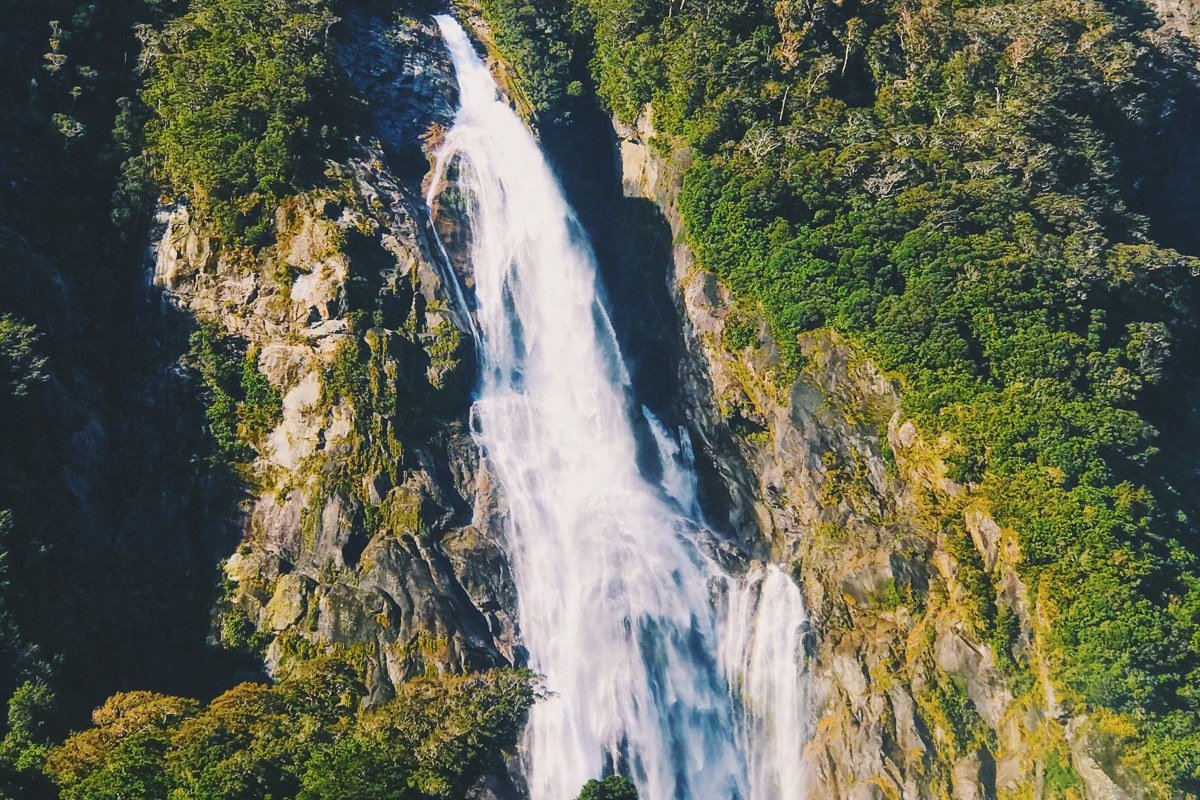

Milford Sound is the obvious entry point and it earns its reputation without apology. When rain and low cloud roll in, and they do roughly 200 days a year, the granite walls disappear into grey and dozens of temporary waterfalls appear from nowhere, sheeting down cliff faces that rise nearly 1,600 metres straight from the water. The effect is less a tourist attraction and more a weather event you happen to be inside.
The best approach is an overnight cruise rather than the standard two-hour day trip. Real Journeys operates overnight boats that stay on the water after the day vessels leave, which means you get the sound to yourself at dusk and dawn, when the mist sits lowest and the light, if there is any, turns everything silver. Book several months ahead in summer because these sailings fill faster than the day trips. Rain is not a trade-off here. It is the feature.
2. Doubtful Sound, Fiordland National Park
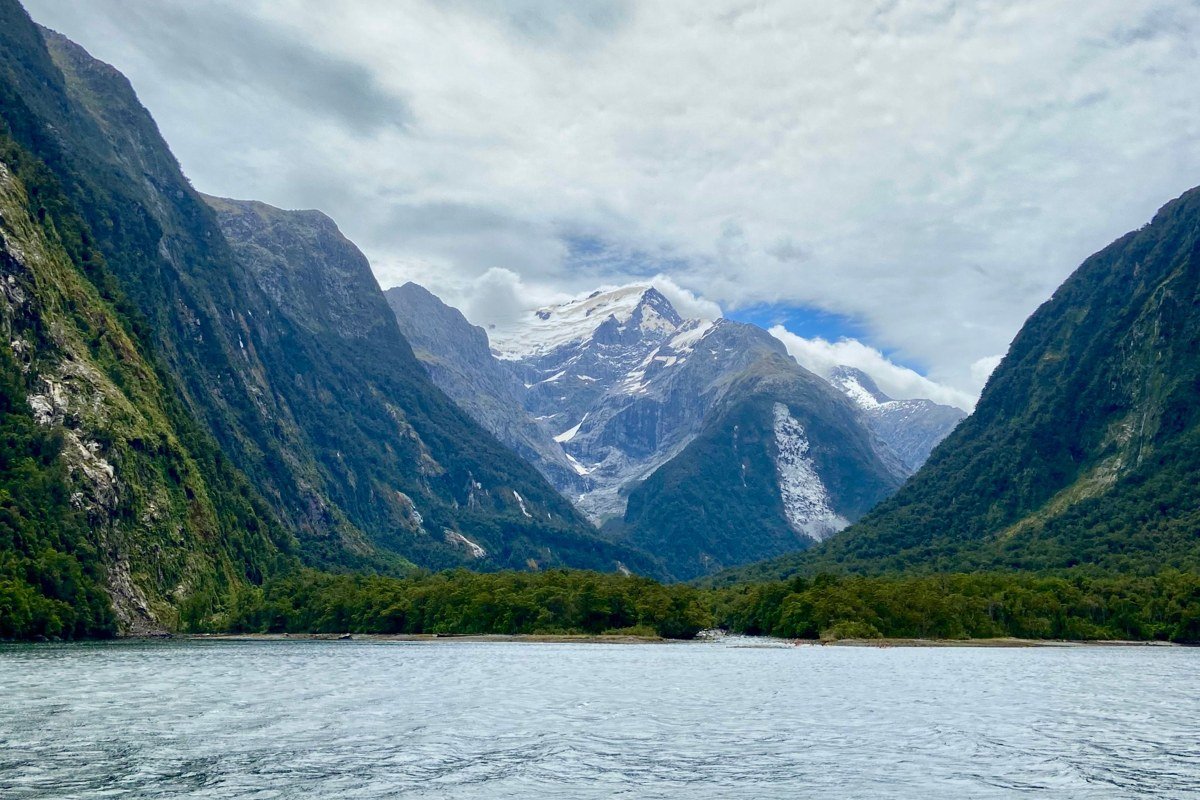

Doubtful Sound gets a fraction of Milford’s visitor numbers because reaching it requires a boat across Lake Manapouri, a bus over Wilmot Pass, and then another boat onto the sound itself. That layered effort filters the crowds dramatically. What you arrive at is a fiord three times longer than Milford, with no road access and a quality of silence broken only by rain on the water and the occasional pod of bottlenose dolphins.
The rainforest on the lower cliff faces grows so dense and so green it looks almost fluorescent in overcast light. Go in May or June when visitor volume drops and the deciduous beech trees on higher slopes turn rust-gold against a grey sky. Real Journeys also runs the Doubtful Sound overnight sailing, and it remains one of the least crowded genuine wilderness experiences in New Zealand. The Wilmot Pass road is steep and winding, but the view from the pass down into the sound below makes it immediately worthwhile.
3. Tongariro Alpine Crossing, Central North Island
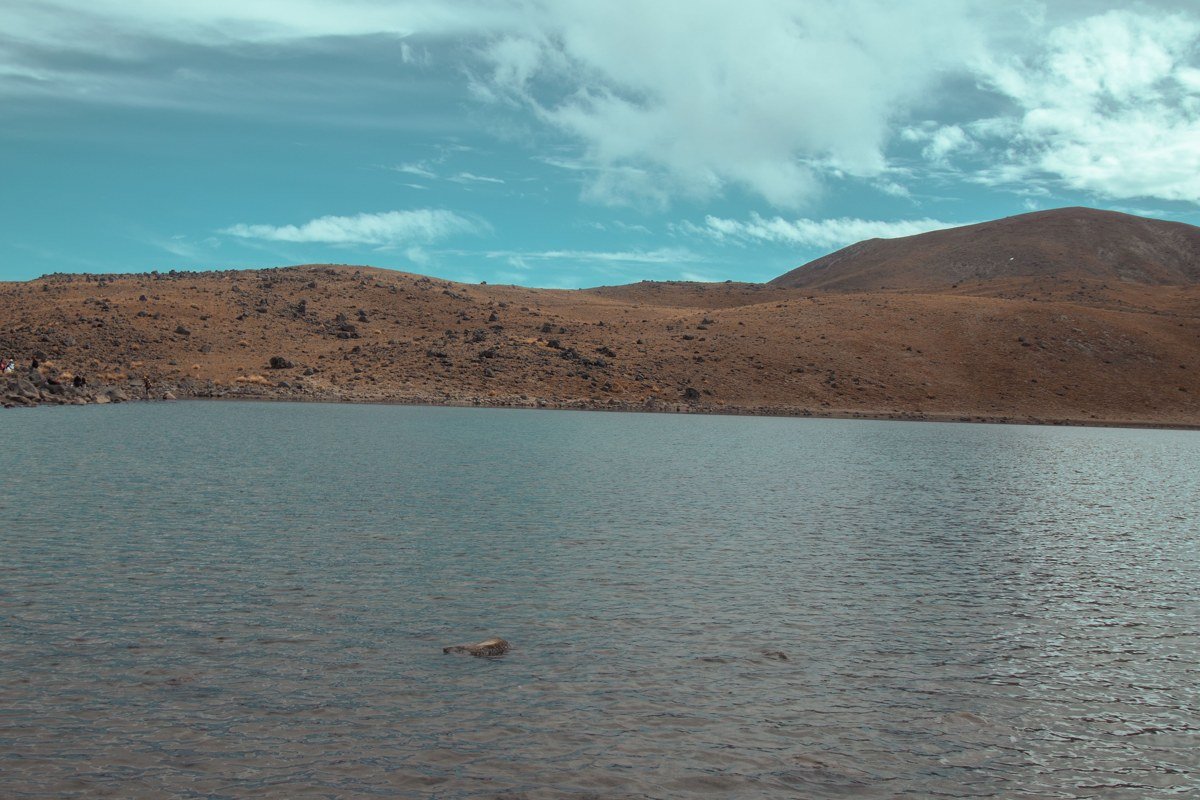

This is a misty destination of a completely different type. Tongariro sits on an active volcanic plateau, and the mist here is not maritime fog but hydrothermal steam, cloud snagging on the crater rim, and weather that changes in minutes because the plateau has no shelter in any direction. The crossing is a 19-kilometre walk that passes the South Crater, the Red Crater (which bleeds iron-oxide orange), and the Emerald Lakes, whose colour comes from minerals leached from volcanic rock. On overcast days, those lakes become almost surreal: saturated blue-green floating in grey.
Go well before 7am, and choose shoulder season (April or October) when the track is less congested and the autumn light is lower and warmer. Tongariro Expeditions runs a reliable shuttle service from Whakapapa Village and National Park township, with early departures that put you at the trailhead before the main crowds arrive. Avoid high summer midday if you want photographs without hundreds of people in the frame.
4. Rotorua Thermal Valleys, Bay of Plenty
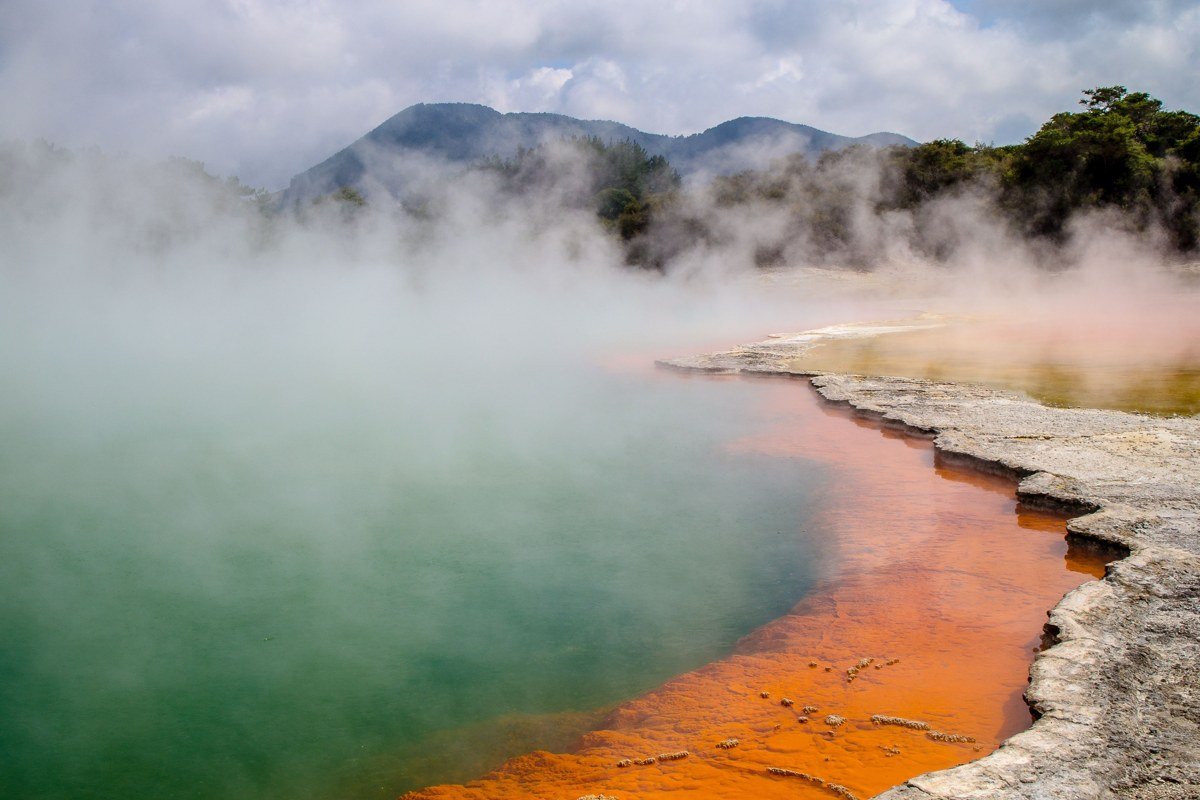

Rotorua is a deliberate wildcard in this list, and it earns its place on entirely different atmospheric terms. It does not look like Scotland. It smells like sulphur and the ground occasionally bubbles. But predawn mist mixing with geothermal steam rising off hot pools produces something with no real equivalent anywhere else in the world, and it photographs like a different planet.
Wai-O-Tapu Thermal Wonderland is the most visually dramatic single site. The Champagne Pool produces a ring of orange sulphur deposits around steaming, arsenic-tinted water, and arriving at 8:15am catches the Lady Knox Geyser erupting on schedule with mist still hanging from the surrounding bush. Within Rotorua township, Kuirau Park is a free geothermal reserve far less visited than the commercial parks, with mud pools and steam vents accessible at close range. It is the better option on overcast mornings when you want the atmosphere without the tour bus timing.
5. The Catlins, Southland
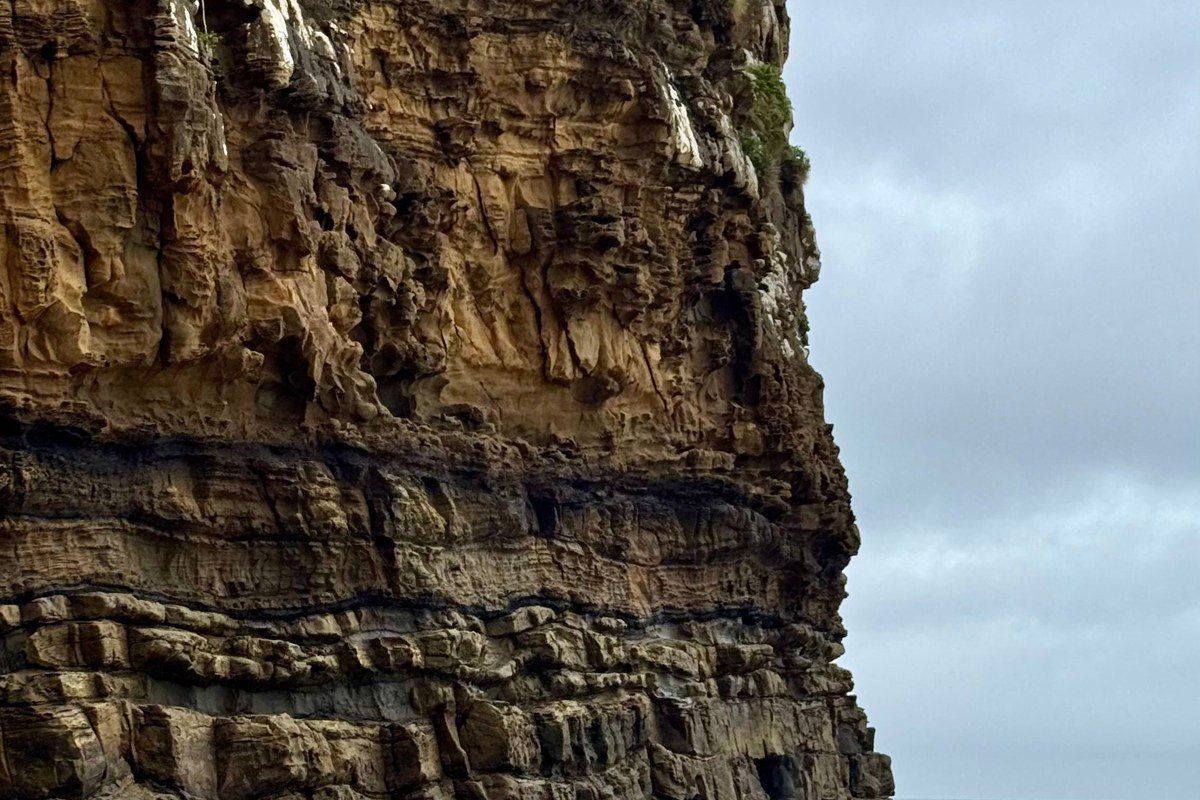

The Catlins is the stretch of southeastern coast between Invercargill and Dunedin, almost completely off the mainstream tourist circuit despite being genuinely extraordinary. The landscape combines ancient podocarp rainforest, deserted beaches with sea stacks, and waterfalls that fall directly onto surf. Purakaunui Falls, a three-tiered cascade surrounded by silver beech, repays the short walk from the road in almost any weather. McLean Falls nearby is taller, wilder, and sees far fewer visitors.
Fog rolling in off the Southern Ocean most mornings gives the forest the same quality of brooding dampness associated with the Scottish west coast. Curio Bay Campground, run by the Department of Conservation, sits right on the Catlins coast and is a useful base for the southern section. Drive slowly because the single-lane roads through the bush have no margin, and wildlife — Hector’s dolphins, sea lions, yellow-eyed penguins — appears without warning on beaches and roadsides.
6. Whanganui River, Manawatu-Whanganui
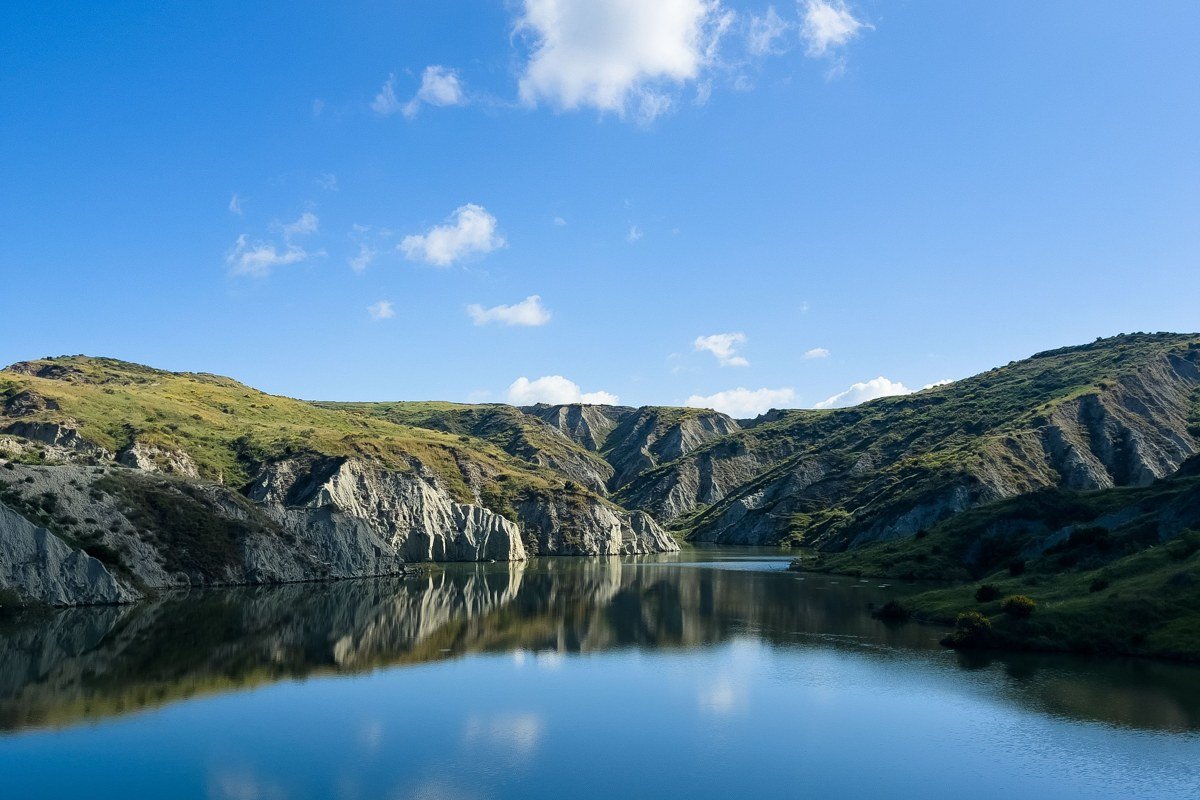

The Whanganui River cuts through the largest remaining area of lowland rainforest in the North Island, and the journey through its gorge is one of New Zealand’s official Great Walks despite being done entirely by canoe or kayak. The mist here is riverine: it pools on the water at dawn and drifts up through tree ferns and kahikatea overhanging the banks. The gorge walls, draped in moss and fern, rise steeply on both sides, and the river bends constantly, meaning you are always paddling into a fresh enclosed frame of dripping green.
The most atmospheric section runs between Whakahoro and Pipiriki, roughly three days by canoe. Tieke Kāinga, a riverside marae that serves as one of the Great Walk huts, is the most memorable overnight stop. Whanganui River Canoes is one of the established licensed operators for multi-day trips and handles equipment, logistics, and the shuttle return. Stop at the Bridge to Nowhere, a concrete bridge built in the 1930s for a settlement that was abandoned before the road reached it. It now stands in the middle of dense forest, completely overgrown.
7. Westland Tai Poutini National Park, West Coast
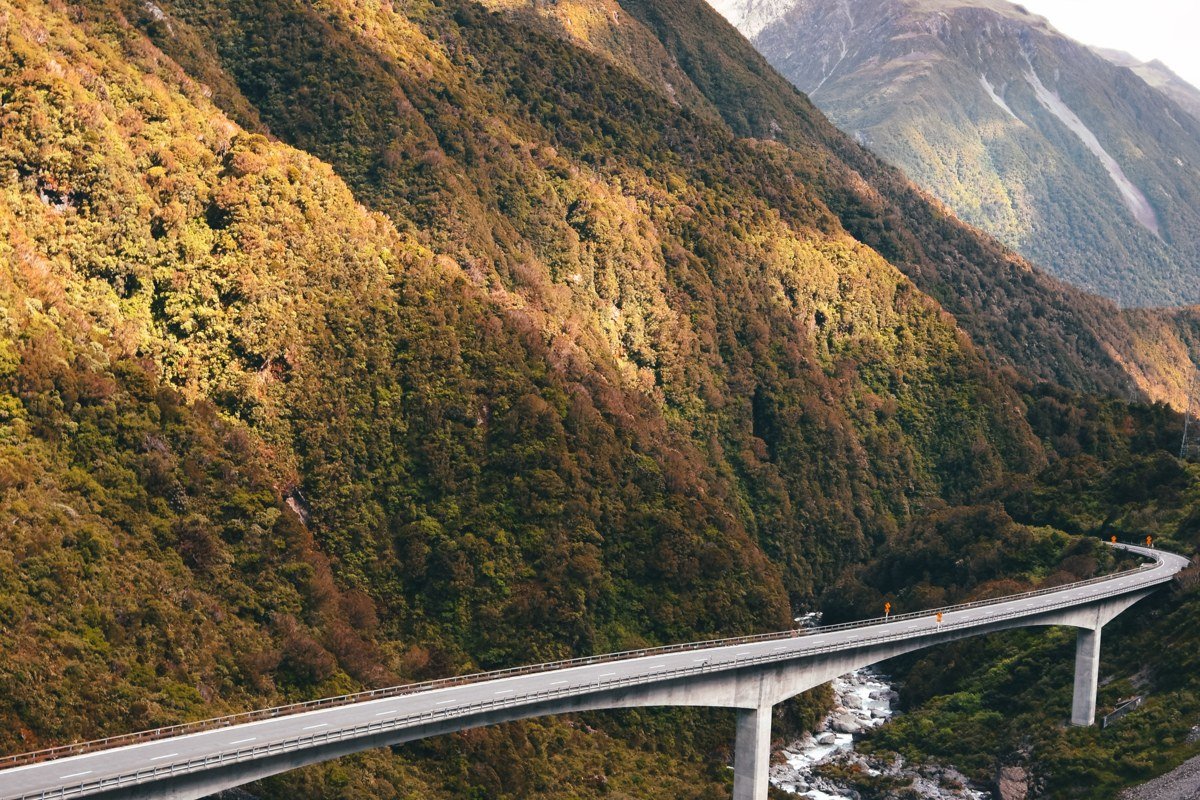

Both Fox Glacier and Franz Josef Glacier have retreated significantly, and guided walks now access the ice only by helicopter due to the changed terrain. That caveat belongs upfront because it affects how you plan and budget. The visual payoff remains stunning: a blue-white ice field ringed by rainforest under a permanently unsettled sky, reached in twelve minutes by helicopter rather than on foot.
The West Coast receives around three metres of rain a year. This is not a problem. It is the reason the landscape looks the way it does: a narrow strip of ancient podocarp forest, rivers braided across wide shingle flats, and the Southern Alps rising so steeply behind it all that they generate their own weather systems every afternoon. Lake Matheson, a short walk from Fox township, gives the classic reflection shot of Mount Cook and Mount Tasman on still mornings. The Matheson Cafe at the lake edge opens early specifically for this. Arrive before 7am for the reflection, before the tour bus rush, and bring waterproof everything because the West Coast is indifferent to your plans.
8. Marlborough Sounds, Top of the South Island
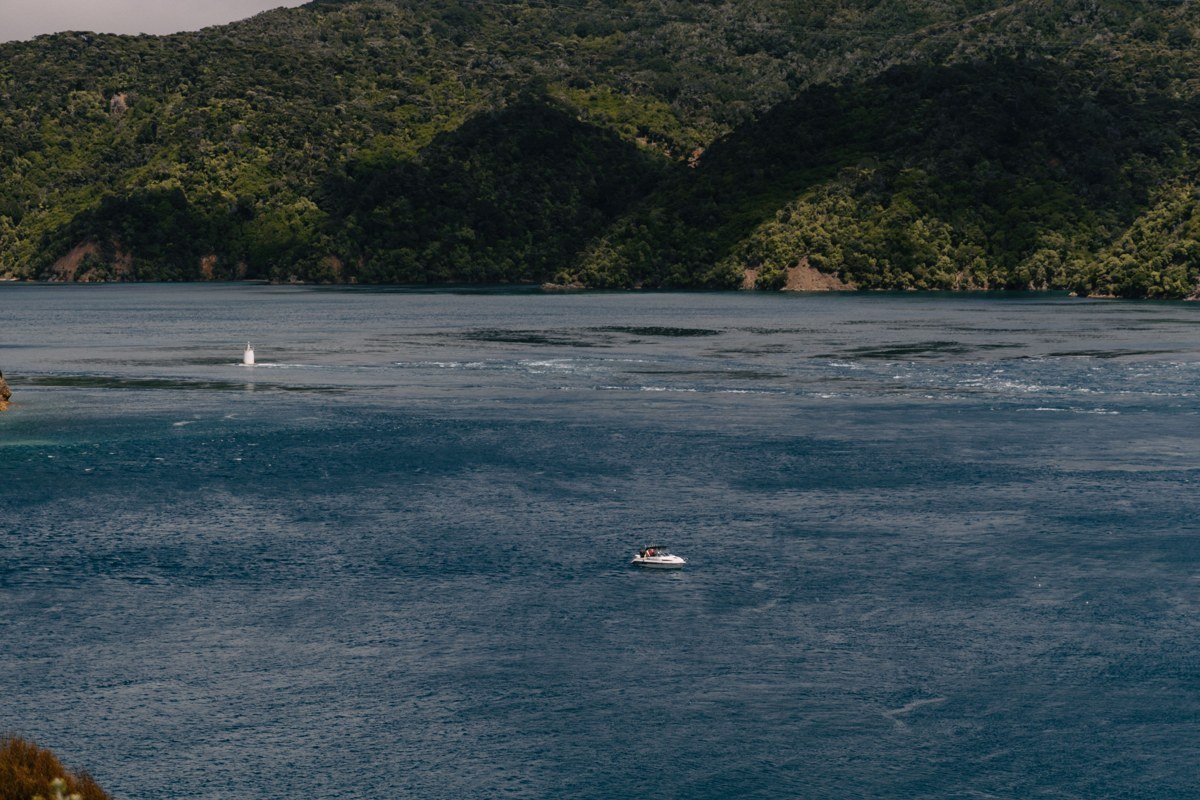

The Marlborough Sounds is a network of drowned river valleys at the top of the South Island, where sea inlets reach 35 kilometres inland through forested ridgelines that drop straight into the water. In winter and early spring, morning mist fills the inlets and settles in distinct horizontal layers between the ridges, each band slightly lighter than the one below, so the view from elevation looks like a series of pale veils stacked above dark water.
The Queen Charlotte Track runs 73 kilometres along the ridgeline above the main sound and can be walked over four or five days with water taxis shuttling your bag between lodges. Punga Cove Resort sits midway along the track on the waterfront and is one of the better-positioned overnight stops for catching that ridgeline mist at dawn. The views looking down into mist-filled valleys with the sea visible through gaps are among the more quietly spectacular things available on foot in New Zealand. Kayaking directly into the quieter arms of the sound at dawn, when the water is flat and the mist is low, is worth building the whole itinerary around.
A Few Honest Notes Before You Go
Most of these destinations are at their atmospheric best in the shoulder seasons: April to May and September to October. Midsummer brings clearer skies and far more people. The West Coast and Fiordland are exceptions, being reliably moody year-round.
Rental cars are essential for the Catlins, Westland, and Tongariro. The Whanganui River requires booking canoes and campsites through licensed operators well in advance, particularly for the October to April paddling season. Milford Sound day cruises sell out weeks ahead in summer; the overnight boats book even faster.
For photography, bring a UV filter for lens protection in rain and pack a dry bag for cameras on water-based activities. Accept that grey, overcast skies are not a consolation prize. They are the whole point. The mist, the low cloud, the perpetual damp are exactly what make these landscapes look the way they do in the images that made you want to come in the first place.
New Zealand is large and slow to drive. Build in more time than you think you need, and resist the urge to connect all eight places in a single two-week trip. Pick a region, go deep, and let the weather set the pace.