
Most visitors arrive, splash through ankle-deep water, snap the mirror reflection, and leave believing they have seen Salar de Uyuni. They have seen one frame of a location that contains at least nine genuinely different visual planets, depending on the month, the hour, and where you plant your tripod. This guide covers the full range, from bone-dry hexagons in August to the disorienting pre-dawn violet of early wet season, so you can build an itinerary around the specific image you actually want to bring home, whether your target is the classic mirror or something far less photographed.
1. The Infinite Mirror: Peak Wet Season (January to February)
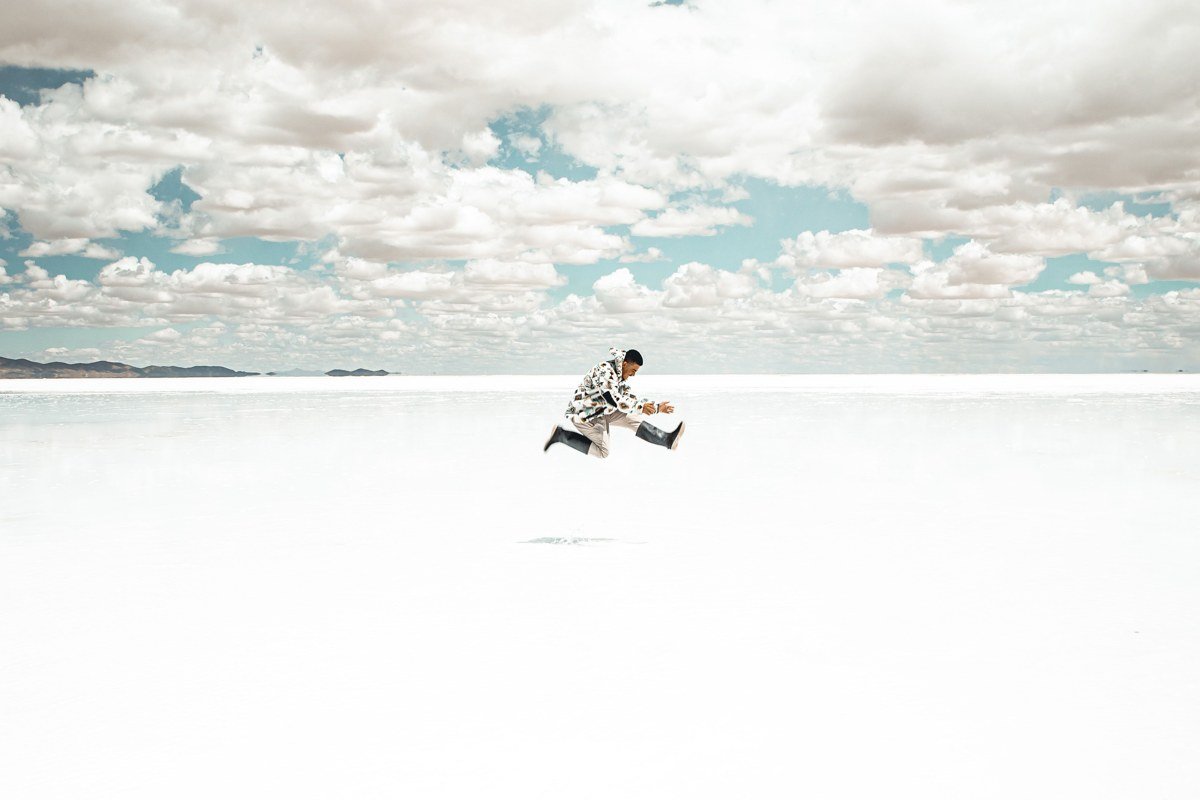
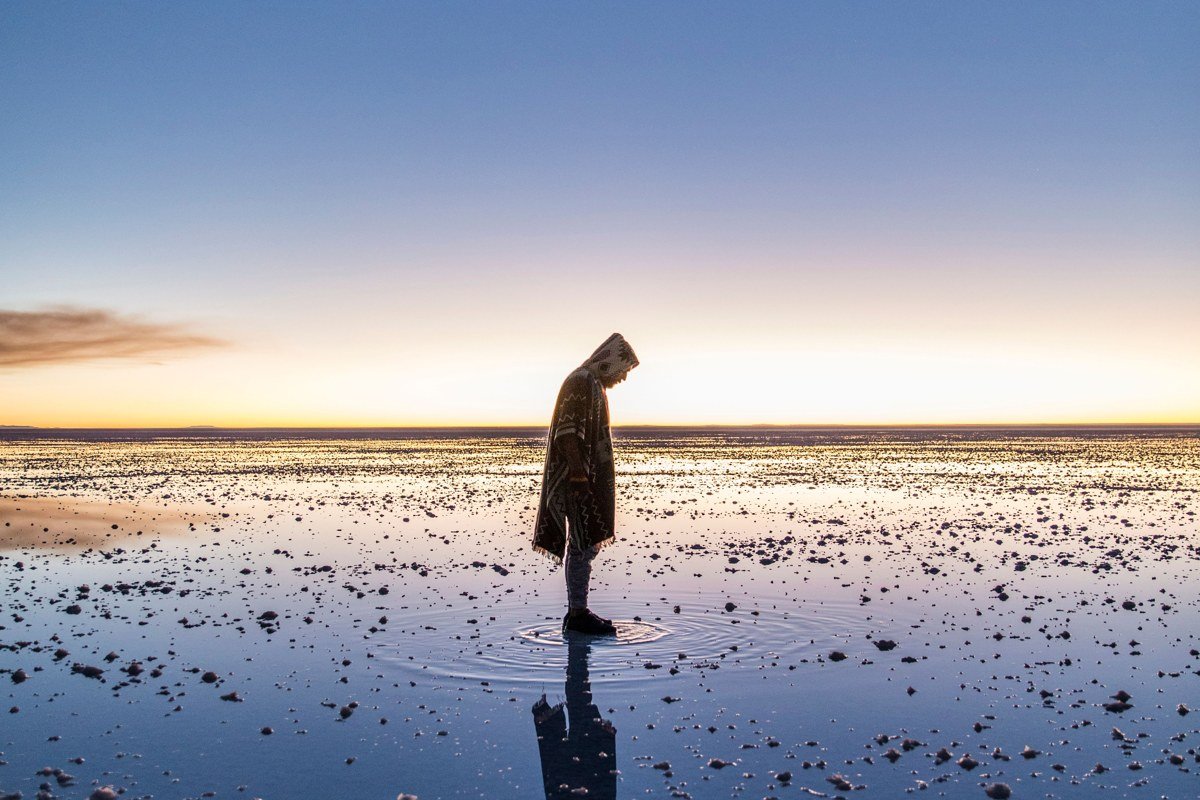
The image that pulled you here lives in January and February, when a few centimeters of standing rainwater turn the entire 10,582-square-kilometer surface into a single unbroken mirror. The visual trick is that the water layer needs to be shallow enough to stay still but deep enough to cover the salt crust uniformly, and that window is surprisingly narrow, typically a week or two after a sustained rainfall event. Shoot at solar noon when the sun is overhead and the reflection doubles the drama rather than casting a harsh shadow. The honest trade-off: roads become impassable or deeply rutted, you will share the flat with dozens of other jeeps tracking muddy lines through your composition, and finding a pristine foreground means wading well away from the tour convoy. Drivers based out of Uyuni town consistently point toward the southwestern edge near Isla Incahuasi for cleaner water with fewer tire tracks.
2. The Polygon Planet: Deep Dry Season (June to August)
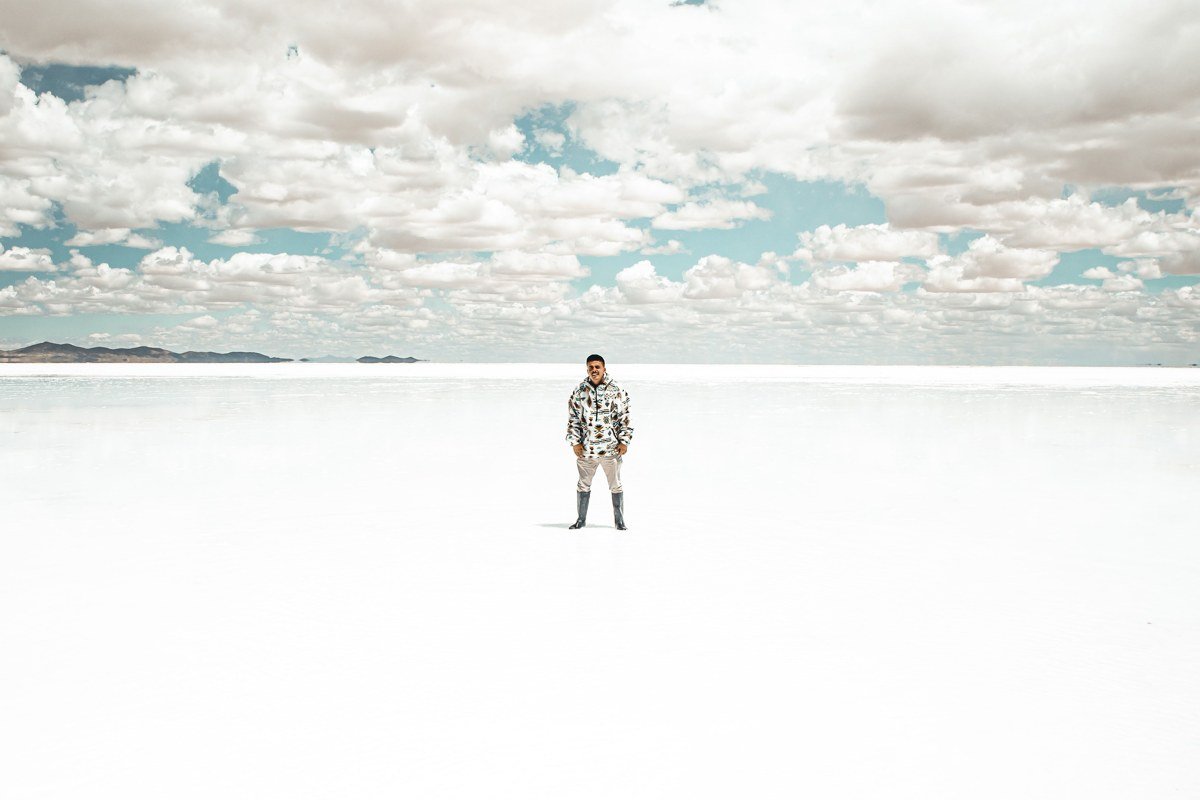
Strip out the water entirely and the flat reveals its structural geometry: pressure-raised salt polygons averaging roughly two to three meters across, each bordered by a ridge of crystallized brine that catches raking afternoon light like a bas-relief. The polygons are sharpest and most defined in late June and July, before August winds begin dusting fine salt particles across the ridges and softening them. Shoot low, maybe ten centimeters off the crust, with a wide-angle lens and the ridges running into the frame diagonally to emphasize scale. The insider note: try the very center of the flat, a several-hour drive from the Colchani entrance, where polygon regularity is more pronounced because evaporation has been undisturbed by edge runoff.
3. Pre-Dawn Violet Hour: Wet Season Before Sunrise
Arrive at the mirror flat between 4:30 and 5:15 a.m. and you encounter something that afternoon visitors never see: a deep indigo-to-violet gradient across the entire sky, reflected perfectly below, with the horizon line gone completely. You are suspended inside a sphere of color. This is the hardest shot to execute because the sky changes every three minutes and a slight wind kills the reflection, but a fifteen-second to thirty-second exposure at ISO 400 on a sturdy tripod will capture star trails dissolving into early color.
Before you attempt a 4 a.m. departure, spend at least two nights in Uyuni town, which sits at 3,669 meters. Altitude fatigue at that elevation is real and cumulative: it slows reaction time, disrupts judgment, and makes sustained physical effort in cold, dark conditions genuinely risky. Two nights of acclimatization before an early excursion is a minimum, not a suggestion.
Dress in serious layers since temperatures in January nights at this elevation can still drop to near freezing. A salt hotel near the flats is the most practical sleeping arrangement. Carlos Mamani, a Colchani-based driver who has run the flat for twelve years, recommends negotiating your 4 a.m. departure time and exact pickup point the evening before rather than the morning of, since predawn logistics fall apart quickly when communication is rushed.
4. Sunrise Raking Light: Dry Season Edge Glow
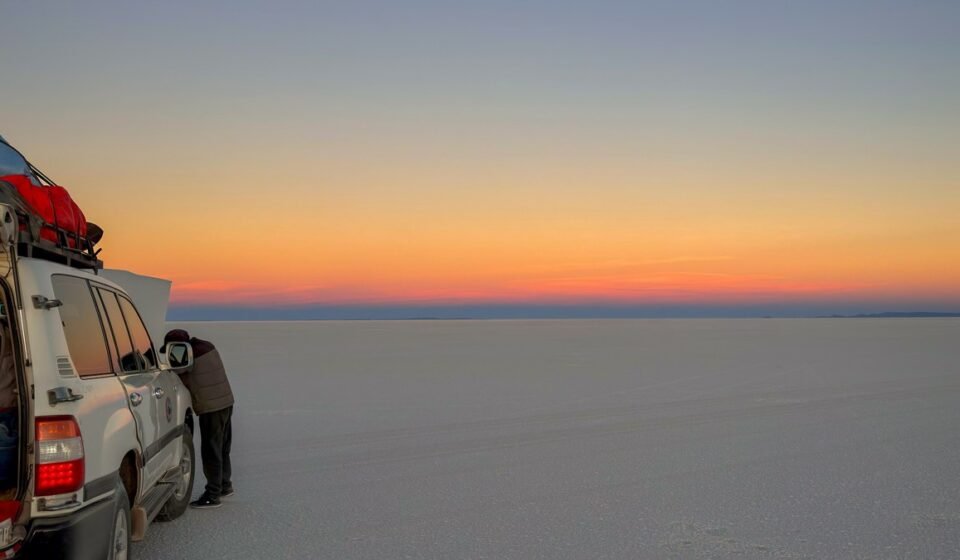
In dry season the sun rises behind the distant Tunupa volcano to the north and rolls a warm amber light at a near-horizontal angle across the polygon field for about twenty minutes. During this window the crust reads as hammered gold leaf, every crystal catching its own point of light, and the salt ridges throw shadows measured in meters. No reflections, no drama of water. Pure texture.
What the light actually does to your eye is closer to a visual compression: everything flattens at first, then suddenly the low angle catches the ridge geometry and the whole field snaps into relief, as though someone has switched a scene from two dimensions to three. Underfoot at that hour, the crust makes a faint dry creak with each step, a brittle sound like thin ice that reminds you constantly that you are walking on something alive with crystalline structure. The timing is strict. The light flattens and turns white by 7:30 a.m. and the texture disappears. Drive out the night before, sleep in the jeep or in a basic camp on the crust (allowed in designated areas), and be positioned before the ridgeline blocks nothing.
5. Isla Incahuasi at Midday: The Scale Anchor
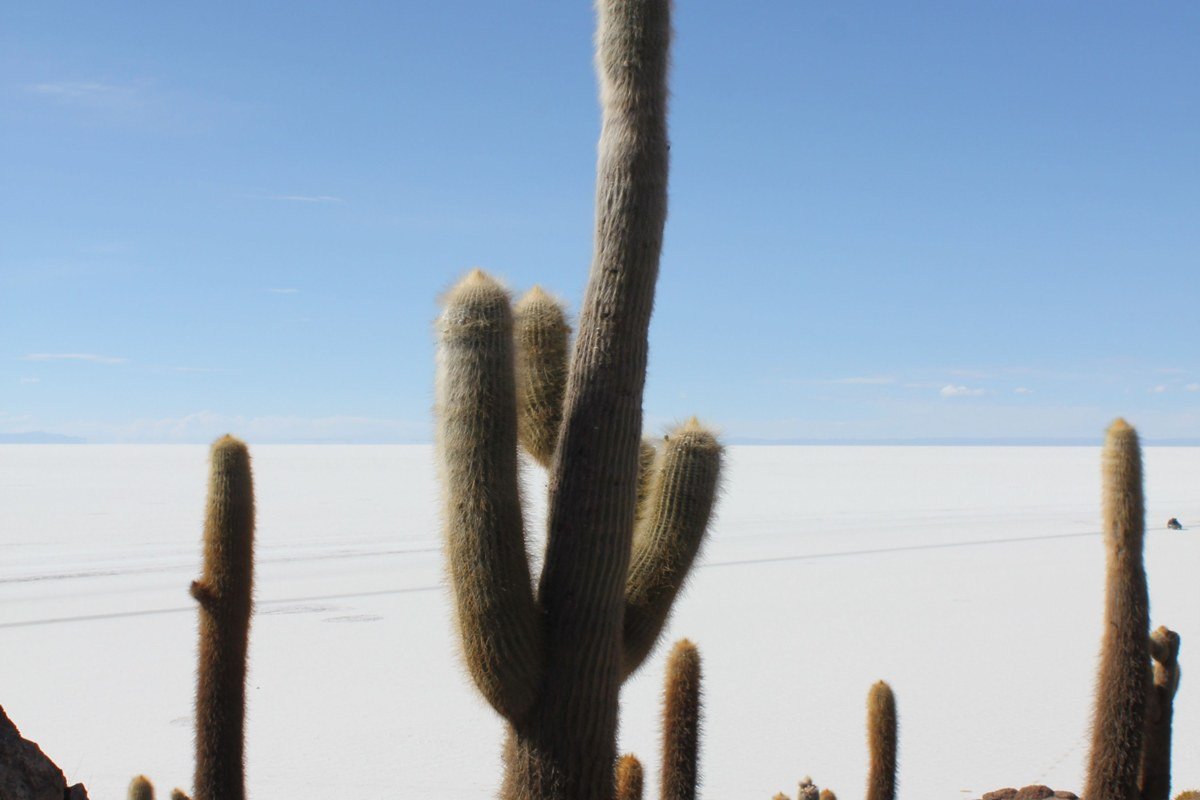
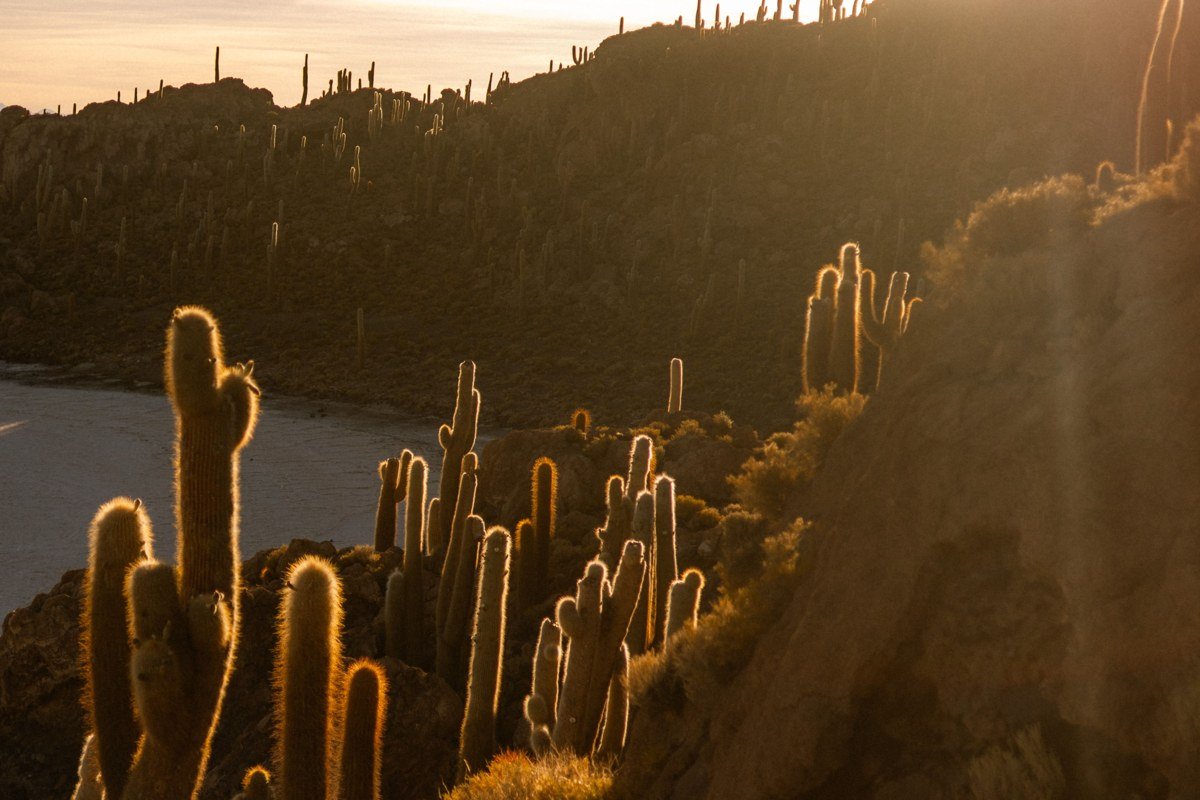
Roughly in the geographic center of the flat, Isla Incahuasi is a rocky outcrop dense with columnar Trichocereus cacti growing at around one meter per century, many of them four to six meters tall. The island creates the only foreground with organic scale on the entire flat, which is why every photograph taken from its summit reads so differently from the surrounding crust-level shots. Midday is when the cacti cast the sharpest circular shadows and the flat behind them bleaches to absolute white, creating a high-contrast composition that works beautifully in black-and-white conversion. The less-visited angle: the western face of the island looks back toward a cluster of smaller rock formations and receives cleaner afternoon light with no tour-group congestion, since most visitors circle clockwise to the eastern viewpoint.
6. Incoming Storm Front: Late Wet Season (March)
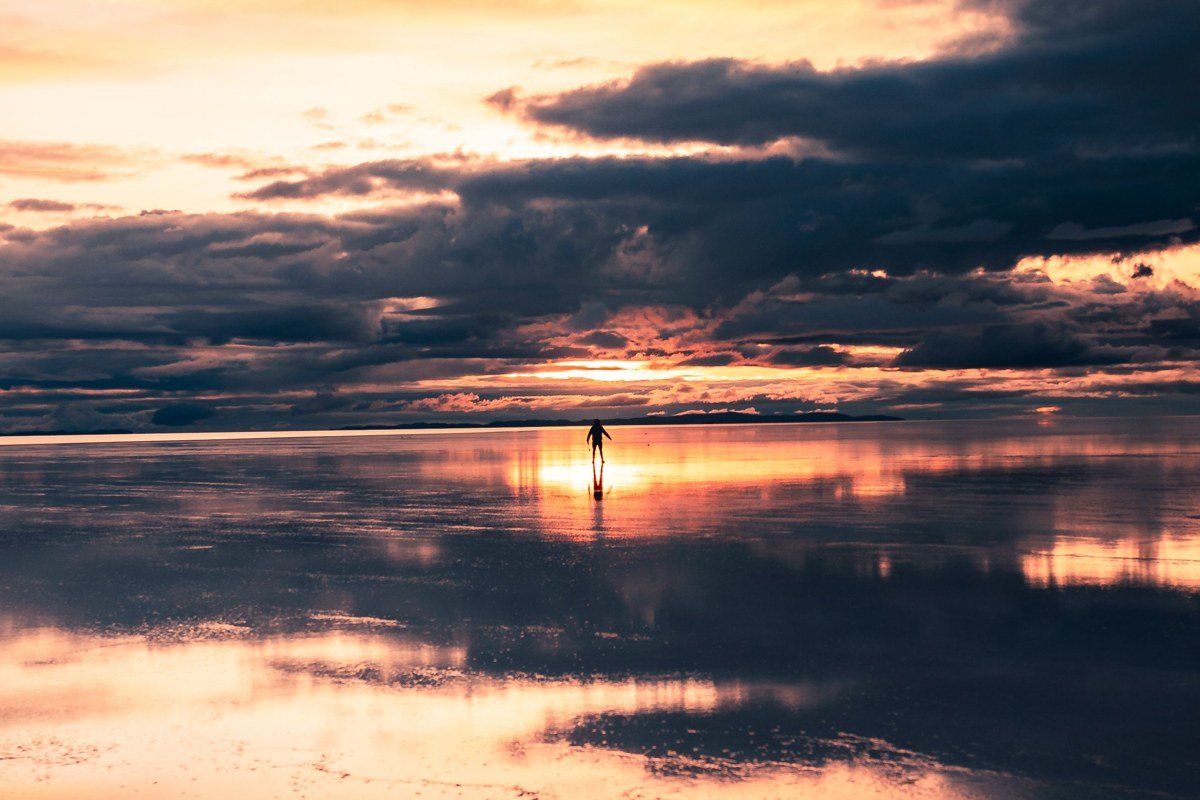
March sits at the ragged tail of wet season, and that instability produces something no other month offers: towering cumulonimbus buildups reflected in the still-present water layer while the sun cuts through breaks in the cloud on the opposite horizon. The resulting images are genuinely cinematic, deep charcoal overhead and burning orange at the edges. Lightning photography is possible but treat it seriously. The flat offers zero shelter, you are standing in conductive water, and storms can move faster than a jeep can exit the zone. The practical approach is to shoot from the Colchani edge in the early afternoon when storms typically build inland, giving you the drama on one side and a clear retreat path behind you.
7. Flamingo Season: October to November at the Edge Lagoons
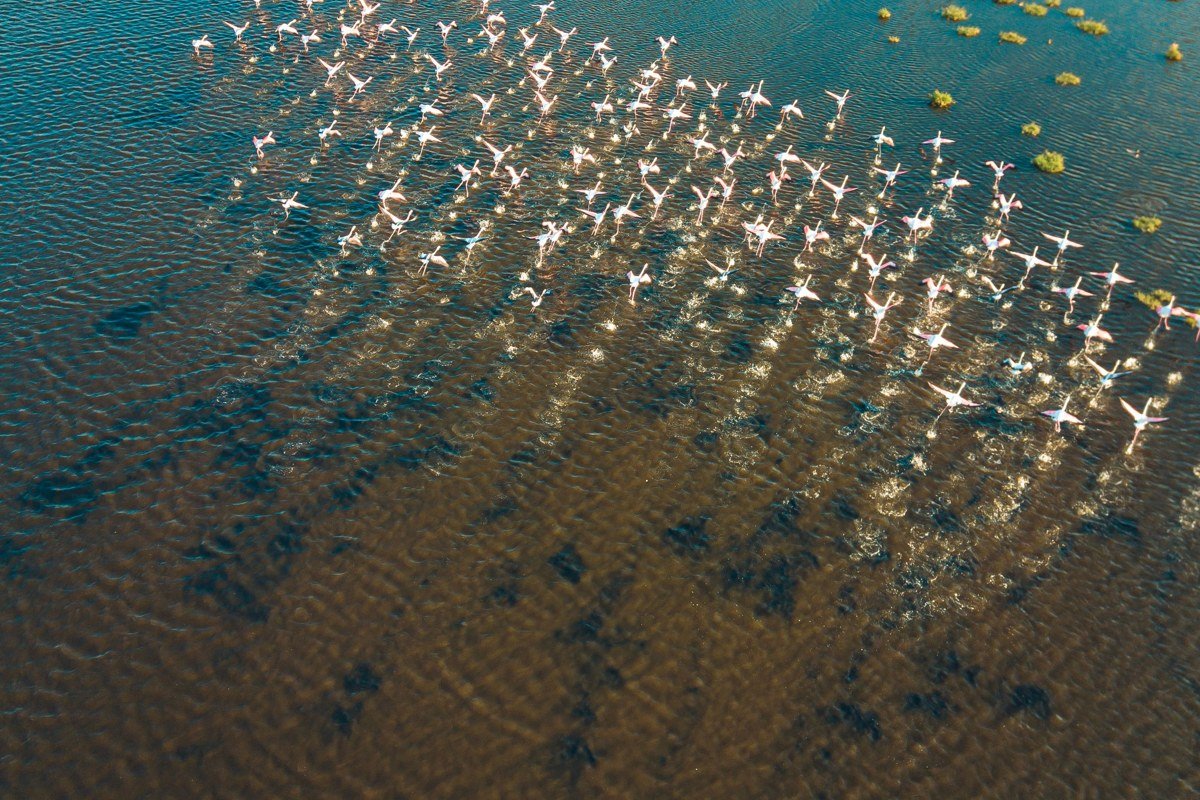
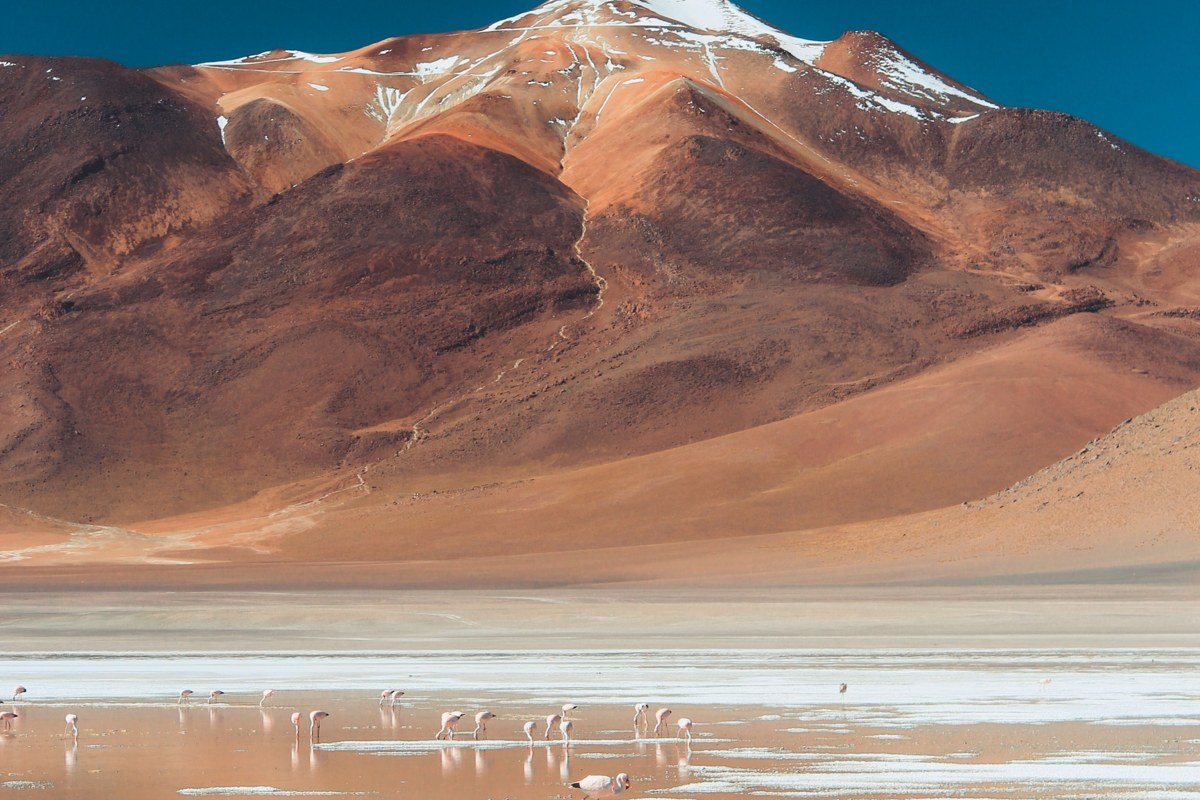
The shallow brine pools at the southeastern edge of the flat host James’s, Chilean, and Andean flamingos during the pre-wet-season breeding aggregation. October and November bring the largest concentrations, when birds are actively displaying and the brine algae have turned the lagoons blush pink and coral. Laguna Cañapa is the most accessible of these pools, lying approximately 100 kilometers south of the main Colchani flat entrance along the route toward the Eduardo Avaroa Andean Fauna National Reserve. On a standard multi-day circuit from Uyuni, it is typically reached on the second travel day, after the flat itself. Compose with a telephoto to compress the flamingo flock against the distant salt crust, or go wide to include the surrounding volcanic peaks. Early morning is essential here because the birds feed actively before the midday heat and are far more dispersed by afternoon.
8. Salt Hotel Geometry: Twilight Blue Hour Interiors
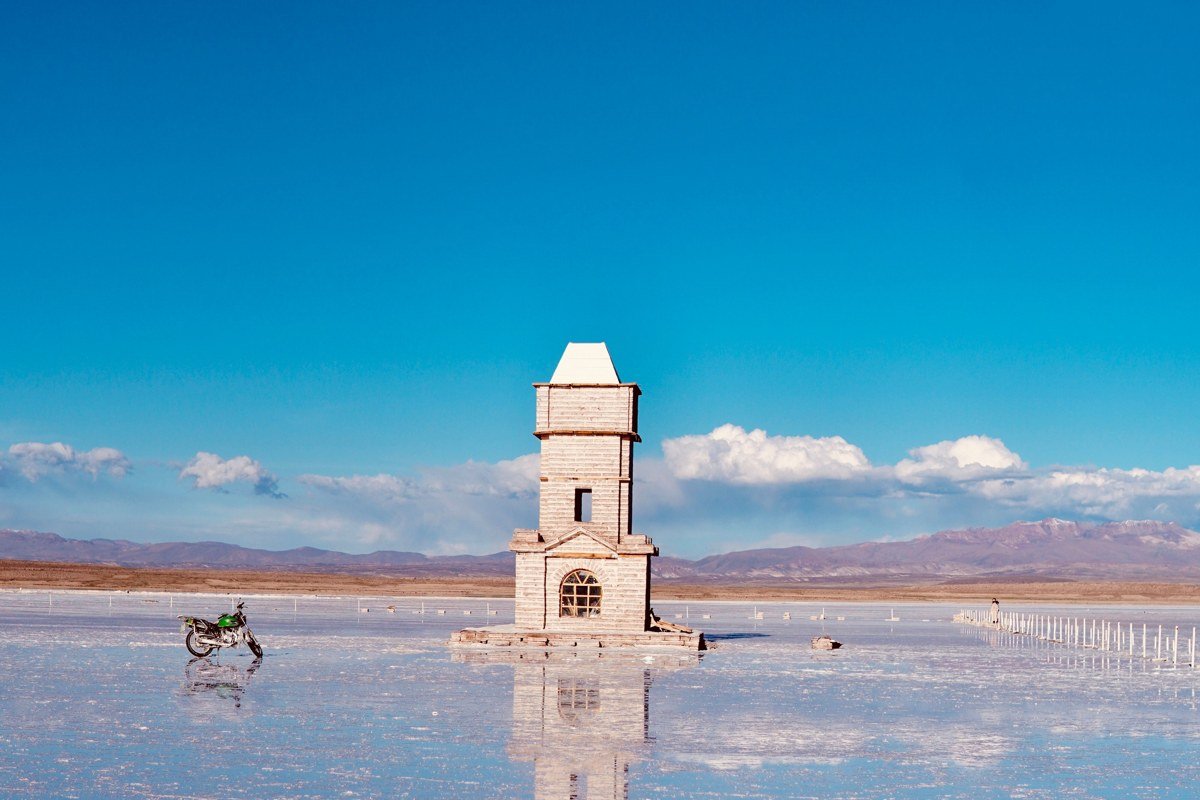
The architecture built from the flat itself deserves its own entry. Several properties near Colchani construct walls, furniture, and floors entirely from salt blocks, and in the twenty minutes after sunset when the sky outside turns deep blue, the warm interior lighting creates a color contrast that photographs extremely well. Luna Salada Hotel is the most established, with the most consistently photogenic rooms and corridors. Book a room for at least one night rather than visiting as a day guest: the blue-hour window is short, and having room access lets you compose unhurried.
For the sharpest technical result, set your white balance to Tungsten (approximately 3200K) rather than Auto. Auto white balance will neutralize the warm-cold contrast your eye actually sees, pulling the amber interior toward gray and draining the blue from the sky outside. Shoot from the doorway threshold so the deep-blue exterior remains visible in the frame alongside the salt-block interior. That layering of warm and cold within a single image is what separates a strong interior travel photograph from a flat room snapshot.
9. The Train Cemetery at Dusk: Uyuni Town Approach
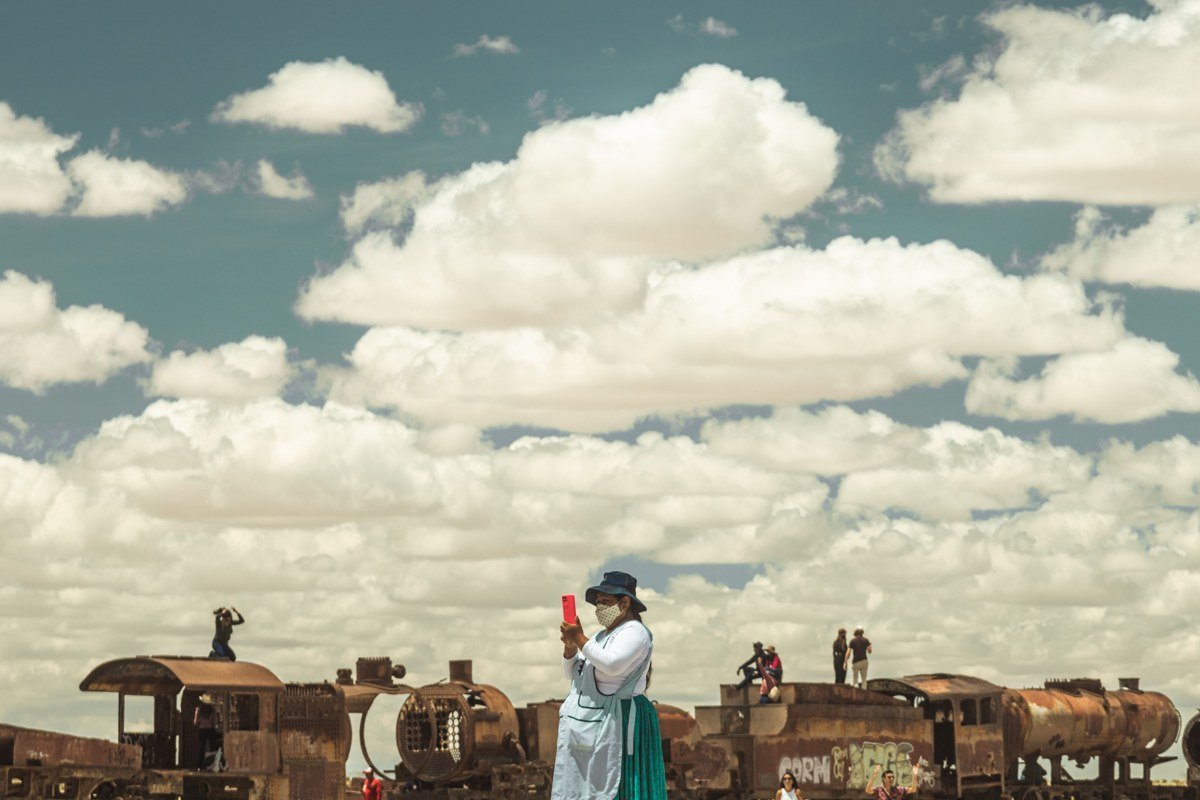
Three kilometers outside Uyuni town, a field of nineteenth-century steam locomotives rusts into the desert at the original rail terminus where the British-built network was abandoned in the 1940s. The light at dusk hits oxidized iron in shades ranging from deep amber to near-purple, and the locomotive silhouettes against an open sky create the kind of dramatic image that anchors a broader salt flat travel story. It is not technically the crust, but visually and historically it belongs to the same landscape chapter. Avoid midday when the light is flat and the site is crowded. Late afternoon, roughly an hour before sunset, with a wide-angle lens and a low vantage point looking up the flanks of a boiler gives the most compelling perspective. Admission is minimal and direct, no jeep required.
10. When Conditions Don’t Match the Plan
The flat’s weather is genuinely unpredictable, and a rigid shot list is the fastest route to disappointment. Knowing what each condition actually offers reframes a setback as an alternative assignment.
Overcast sky over a wet-season mirror surface is not a failed mirror shot. The diffuse light eliminates the harsh sun-disc in the reflection and produces a seamless pewter-and-white tonal field that is ideal for monochrome abstracts. Strip back to a 50mm or short telephoto, shoot tight, and let the absence of a horizon become the subject.
Overcast sky over a dry-season crust removes the raking shadows that make the polygon ridges dramatic, but it also creates the most even lighting you will ever have at altitude. Use it for macro work: get within thirty centimeters of the crust surface and fill the frame with individual salt crystals, which resolve into extraordinary geometric detail in flat light. A macro or close-focus wide-angle lens earns its place in your bag for exactly this situation.
Heavy wind in wet season that destroys the mirror surface is your signal to slow down and observe. The wind ripples produce shifting interference patterns that, over a thirty-second exposure, render as soft luminous gradients. These images are less literal and more abstract than the standard mirror shot, and they are far rarer in photo archives.
The decision tree, simplified: still water plus sun equals mirror shot; still water plus cloud equals monochrome abstract; dry crust plus sun equals texture and polygon geometry; dry crust plus cloud equals salt crystal macro. Build each day’s plan around what you find rather than what you expected, and you will leave with images across multiple visual registers regardless of what the sky does.
Practical Takeaway
Getting the full range of these ten reads requires at minimum two separate trips or a deliberate split itinerary: one visit during wet season (December through March, prioritizing January) and one during dry season (May through August, prioritizing late June or July). A single week-long visit can only cover one season faithfully. If you are planning a salar de uyuni itinerary for 2026, book dry-season logistics first since accommodations near the flat fill earlier than most travelers expect.
Colchani is the closest village to the flat and the best base for predawn departures. Tour operators based in Uyuni town generally use Toyota Land Cruisers, and the quality difference between operators comes down to driver experience and willingness to position you away from the convoy rather than any equipment difference. Ask specifically whether the driver will drive to the center crust, since some operators avoid it to protect tires, and whether early morning departures are included without extra charge.
One piece of gear protection that is not optional: the salt particulate suspended in the air during dry season and the salt-water splash during wet season both damage lens coatings and weather seals over time. A UV filter on every lens provides a sacrificial layer, and sealed dry bags for transport between shooting locations are essential, not a precaution. Beyond the camera, carry more water than you expect to need, apply sunscreen obsessively on the crust where UV reflects from below as well as above, and plan for at least one unscheduled day so you can respond to unexpected light rather than following a fixed schedule. The flat rewards patience and penalizes rushing in every season it offers.