What Is a Travel Itinerary? A Beginner’s Complete Guide (With Examples)
You land in a new city at 9 a.m., jet-lagged, and realize you have no idea how to get to your hotel, when check-in opens, or what’s even worth seeing before dinner. That scramble is exactly what a travel itinerary prevents.
A travel itinerary is your trip’s game plan: a written outline of where you’re going, when, and how it all fits together. It turns a vague “I want to visit Italy” into a day-by-day map you can actually follow. In this guide, you’ll learn what a travel itinerary is, what it includes, why it matters, and you’ll get a real, copy-ready example you can adapt for your own trip.
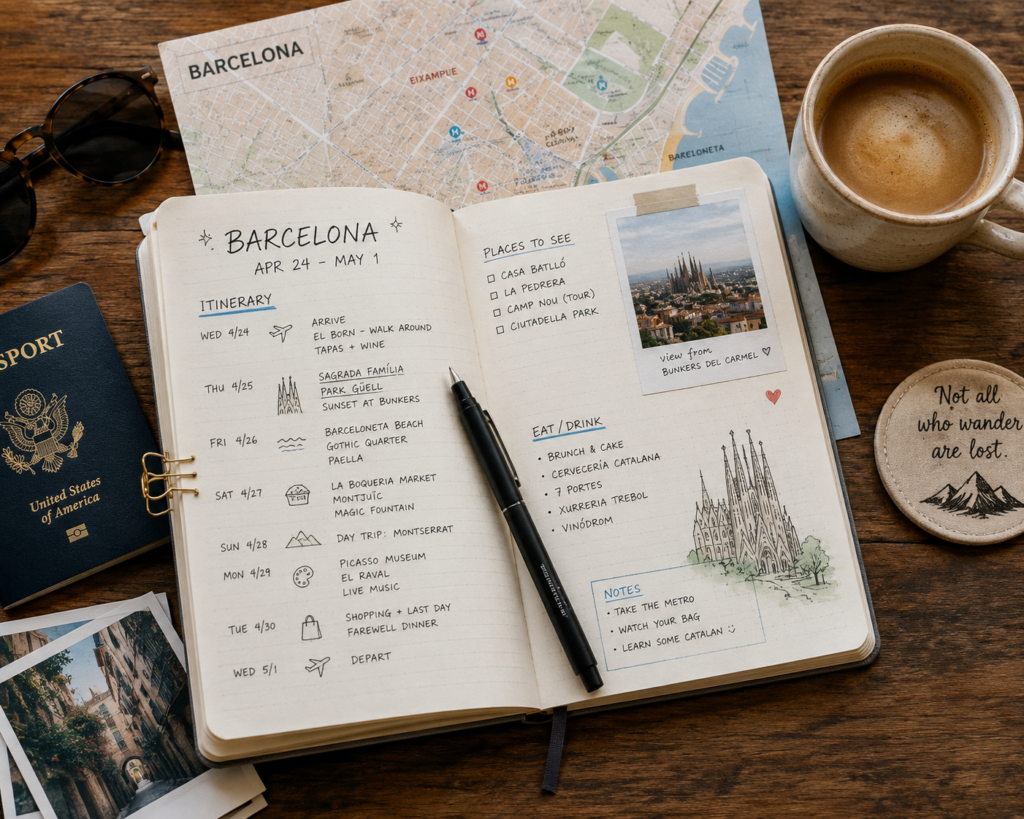
What Is a Travel Itinerary, Exactly?
A travel itinerary is a structured schedule of your trip, broken down by day (and often by hour). At minimum, it answers four questions:
- Where are you going?
- When are you going there?
- How are you getting between places?
- What are you doing once you arrive?
Think of it as the difference between a grocery list and just wandering the store hoping to remember everything. The itinerary holds the details so your brain doesn’t have to — which matters more than you’d think when you’re tired, in an unfamiliar place, and trying to read a transit map in a language you don’t speak.
Itineraries range from rigid (every hour planned) to loose (a few anchor activities per day with free time around them). Neither is “correct.” The right level of detail depends on your travel style — and honestly, on the trip. A tight three-day city break rewards more structure; two weeks of island-hopping rewards more breathing room. In practice, most experienced travelers land somewhere in the middle: a firm skeleton of booked, time-sensitive things, with loose space hung around it.
What a Travel Itinerary Includes
Most complete itineraries pull from the same building blocks. You won’t always need all of them, but here’s the full menu:
| Component | What It Covers |
|---|---|
| Dates & destinations | Arrival/departure dates, cities or regions visited |
| Transportation | Flights, trains, rental cars, ferries — with times and confirmation numbers |
| Accommodation | Hotel/Airbnb names, addresses, check-in/out times |
| Daily activities | Sights, tours, reservations, and rough timing |
| Meals | Booked restaurants or a few options per area |
| Budget notes | Estimated costs, prepaid vs. pay-on-site |
| Logistics | Confirmation numbers, addresses, emergency contacts |
The two non-negotiables for a first-time traveler are transportation and accommodation. Get those locked down, and everything else is flexible.
One block people skip and later wish they hadn’t: emergency and contact info. Hotel phone number, the address written in the local language (handy for taxi drivers), your country’s nearest embassy, and your travel insurance line. You’ll almost never need it — but the one time you lose a wallet or miss a connection, having it already in your itinerary turns a crisis into an errand.
Why a Travel Itinerary Actually Matters
It’s tempting to “go with the flow,” but a little planning pays off in concrete ways.
1. It saves you money
Booking trains, tours, and timed-entry tickets in advance is almost always cheaper than buying last-minute. An itinerary forces you to make those decisions early, while the cheap fares and the good time slots still exist.
2. It saves you time on the ground
Grouping activities by neighborhood means you’re not crisscrossing a city three times a day. A few minutes of planning can save hours of backtracking — and backtracking is where a lot of trip energy quietly disappears.
3. It prevents the “we missed it” regret
Many famous sites sell out days or weeks ahead, and some have no on-the-day option at all. The Anne Frank House in Amsterdam, for instance, sells tickets online only — once a day is gone, it’s gone, with no walk-up line to save you. Pena Palace in Sintra and the Alhambra in Granada are the same story in peak season. An itinerary catches these before they become disappointments.

4. It’s a safety net
Sharing your itinerary with a friend or family member means someone always knows roughly where you are. That matters more when you’re traveling solo or abroad. Send them the doc, or just a screenshot of each day before you head out.
A Simple Travel Itinerary Example (3 Days in Lisbon)
Here’s a realistic, copy-friendly example with a moderate level of detail — enough structure without scheduling every minute.

Day 1 — Arrival & Alfama
- 11:00 AM — Land at Lisbon Airport; Metro (red line) toward your hotel in Baixa
- 1:00 PM — Hotel check-in, drop bags
- 2:00 PM — Lunch near Praça do Comércio
- 3:30 PM — Wander the Alfama district + Sé Cathedral
- 6:00 PM — Sunset at Miradouro das Portas do Sol
- 8:00 PM — Dinner with Fado music (reserve ahead — the good rooms are small and fill up)
Day 2 — Belém & Monuments
- 9:00 AM — Tram 15E from the city center to Belém (about 30 minutes)
- 9:45 AM — Jerónimos Monastery (buy the timed ticket online; the on-site queue is brutal)
- 11:30 AM — Belém Tower exterior + waterfront walk
- 1:00 PM — Pastéis de Belém for the original custard tart (expect a line — it moves fast)
- 3:00 PM — MAAT museum or simply relax by the river
- 7:30 PM — Dinner in Bairro Alto
Day 3 — Sintra Day Trip & Departure
- 8:30 AM — Train to Sintra from Rossio station (~40 min; trains run every 20–30 min, so no need to plan around a timetable)
- 9:30 AM — From Sintra station, take the 434 tourist bus (or a taxi/Bolt) up the hill to Pena Palace — it’s a steep climb you don’t want to walk with luggage or in the heat
- 10:00 AM — Pena Palace (book the earliest timed entry online; interior slots sell out a week ahead in summer)
- 1:00 PM — Lunch in Sintra town
- 3:00 PM — Train back to Lisbon
- 5:00 PM — Last-minute shopping / pack
- 8:00 PM — Head to airport
Notice the pattern: one or two anchor activities per day, time to eat, and breathing room in between. That balance keeps a trip enjoyable instead of exhausting. Notice too that the only truly fixed points are the ones with a clock attached — the train, the timed palace ticket, the dinner reservation. Everything else can flex on the day.
How to Build Your Own Itinerary in 5 Steps
- Lock your dates and arrival/departure logistics first. Everything else builds around when you land and leave.
- List your “must-dos.” Write down the handful of things you’d be sad to miss. Start there — not with a 40-item bucket list.
- Group activities by location. Plot them on a map and cluster nearby sites into the same day. This single step saves more time than any other.
- Add timing and reservations. Flag anything that needs advance booking (timed-entry sites, popular restaurants, day-trip trains) and slot in meals.
- Leave gaps on purpose. Build in free blocks for rest, wandering, and the unexpected. Some of the best moments of any trip happen in the time you didn’t plan.
Pro tip: Don’t over-schedule
The most common beginner mistake is packing too much in. A good rule of thumb: plan about two or three major activities per day, max. Travel days have friction — slow transit, long lunches, getting lost, a museum that’s bigger than you expected. Build for that friction and you’ll feel relaxed instead of perpetually behind.
Keep it on your phone — and reachable offline
A printed copy is a nice backup, but in practice you’ll live off your phone. Whatever tool you use — a notes app, a shared Google Doc, a calendar, or a dedicated travel planner like TripIt or Wanderlog — make sure you can open it without signal. Screenshot each day, or save an offline copy, so a dead data connection in a metro tunnel doesn’t strand you. Keeping reservations, maps, and confirmation numbers in one place beats digging through your email at a ticket gate.
The Takeaway
A travel itinerary isn’t about controlling every minute — it’s about removing the friction so you can actually enjoy the trip you spent money to take. Start simple: lock down your flights and hotels, list a few must-dos, and group them by location. Build from there.
Open a blank document, copy the Lisbon example above as a template, and swap in your own destination. That first rough draft is all it takes to turn a daydream into a plan.