
Peak color moves south and downhill through Vermont over about three weeks, so a lake town in the Northeast Kingdom peaks a good ten days before one in the southern Green Mountains or the Champlain Valley. Match the wrong lake to the wrong weekend and you get bare branches or a town still green. The nine lakes below are ranked from good to best against one test: does the lake actually earn its place next to the leaves, or is it just a pond near a nice drive. Peak week estimates below are per Vermont’s foliage tracker, VTFoliage.com, in an average year; an early or late season can shift any of these by several days in either direction.
9. Lake Bomoseen, Vermont
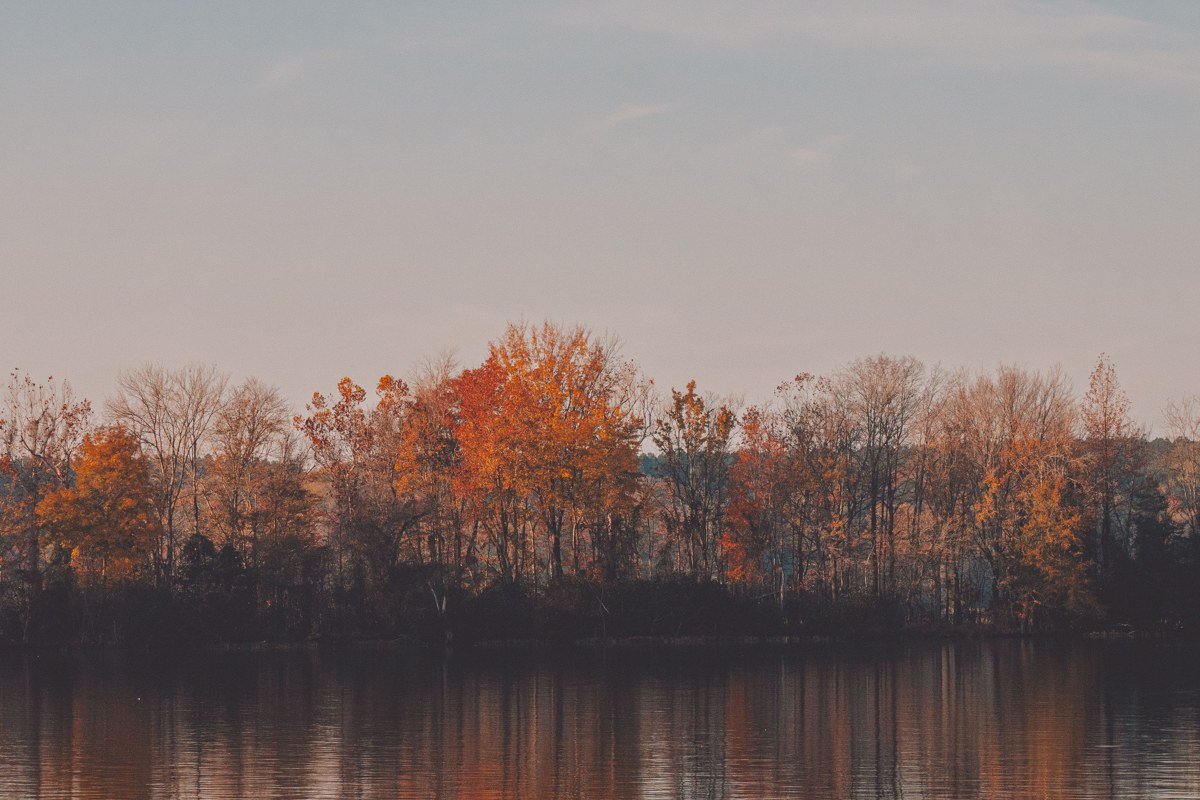
Lake Bomoseen sits about 10 miles west of Rutland, Vermont’s largest lake entirely within state lines, ringed by low hills that run more slate gray than fiery red because of the old marble and slate quarry country nearby. Bomoseen State Park, on Route 30 in Castleton, rents rowboats and has a swimming beach that’s dead quiet by late September. Foliage here usually peaks in the first week of October, a shade later than the mountains further east. Day use parking at the state park is a flat five dollars per adult, and the lot rarely fills even on a Saturday. The honest downside is that the color is good, not great, mostly yellow birch and ash rather than the sugar maple red photographed everywhere else, so if that saturated postcard look is the whole point, keep driving.
8. Lake St. Catherine, Vermont
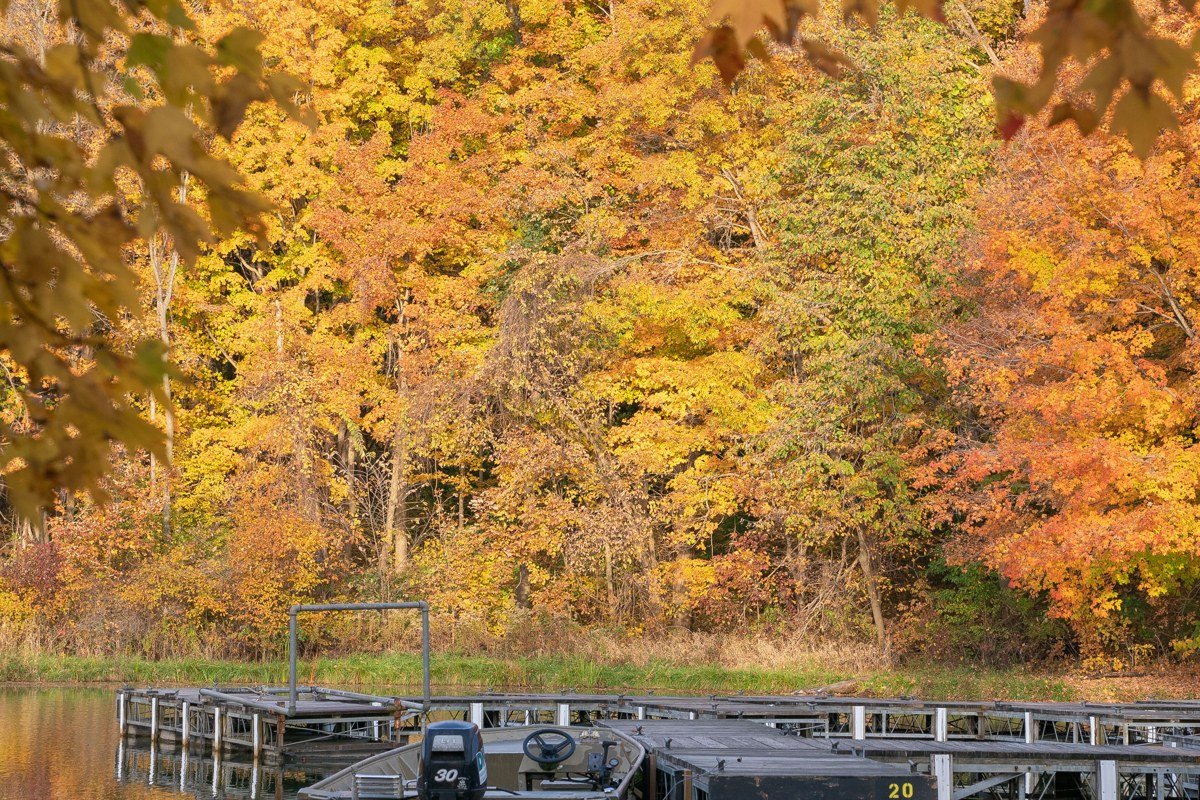
Small enough to paddle across in an afternoon, Lake St. Catherine sits near Poultney in the southwest corner of the state and stays swimmable into September. Lake St. Catherine State Park, off Route 30, closes its campground for the season on Columbus Day weekend, which is actually a useful deadline: book the last weekend before closing and you’ll usually catch color and still get a fire pit and a shower house. Kayaking the shoreline past the old summer cottages beats the beach itself. The drive from Boston runs close to three and a half hours, longer than most people expect for what’s marketed as a quick escape, so this one suits a long weekend more than a Saturday dash.
7. Lake Dunmore, Vermont
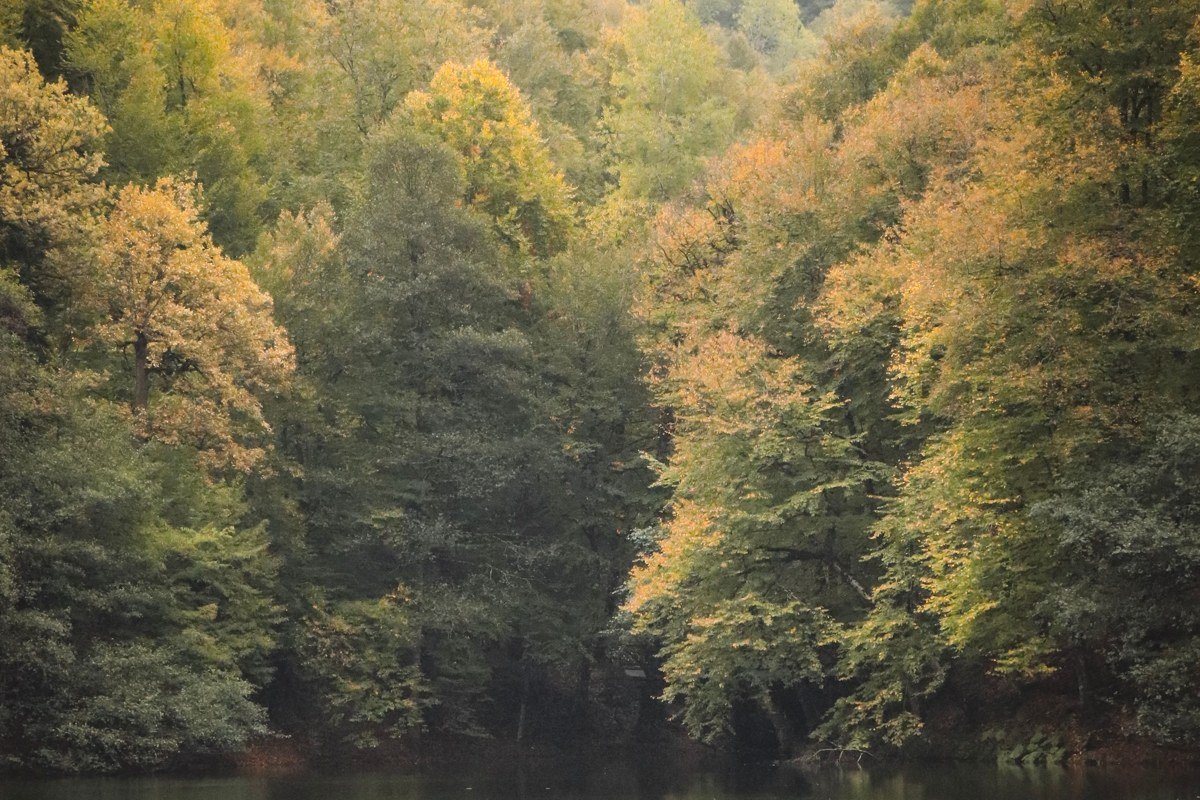
Inside Green Mountain National Forest near Salisbury, Lake Dunmore is backed by the Moosalamoo peaks, which go orange and gold together in a way that reads as one continuous hillside from the water. Branbury State Park on the south shore has a beach and boat launch off Route 53, and the Falls of Lana trailhead is a short walk away if you want a waterfall in the same afternoon as the lake. Peak color typically lands in the last week of September into the first few days of October, on the earlier side for central Vermont because of the elevation. The Branbury lot holds only about 60 cars and fills by mid-morning on peak weekends, so this is a place to arrive with coffee, not to plan around brunch first.
6. Lake Morey, Vermont
Outside Fairlee in eastern Vermont, near the New Hampshire line, Lake Morey is the pick for anyone who wants a proper inn attached to the lake rather than a campsite. Lake Morey Resort has been running here for over a century, rents canoes off its own dock, and sits beside a paved recreation path that circles the lake, flat enough for an easy 4-mile walk under full color. It’s also one of the few towns on this list within two hours of Boston, which is exactly why weekend rooms often book out by Labor Day, well before the color shows up. For the same view without the resort price tag, Lake Fairlee a few miles north has a public access area with its own small parking lot off Lake Fairlee Road.
5. Lake Willoughby, Vermont
Willoughby sits between the cliffs of Mount Pisgah and Mount Hor in the Northeast Kingdom, a glacial lake so deep and steep sided that people call it Vermont’s fjord, and it isn’t an exaggeration once you see it in person. It ranks lower here only because it demands more driving than anything else on this list, not because the color is any less dramatic; several entries below trade some scenery for convenience, and this is where that trade tips the other way. Peak color here arrives earlier than almost anywhere else in the state, usually the last week of September, because the Kingdom sits at higher latitude and elevation than the rest of Vermont. The move is South Trail up Mount Pisgah, a roughly 3.5-mile round trip to an overlook with both mountains framing the lake below; the trailhead lot on Route 5A holds about 20 cars and overflows onto the shoulder by 10 a.m. on clear weekends. It’s a solid three hours from Boston and further from New York, so plan on two nights, not a day trip. Lodging right on the lake is thin; most people base in nearby Burke or Newport and drive in.
4. Harveys Lake, Vermont
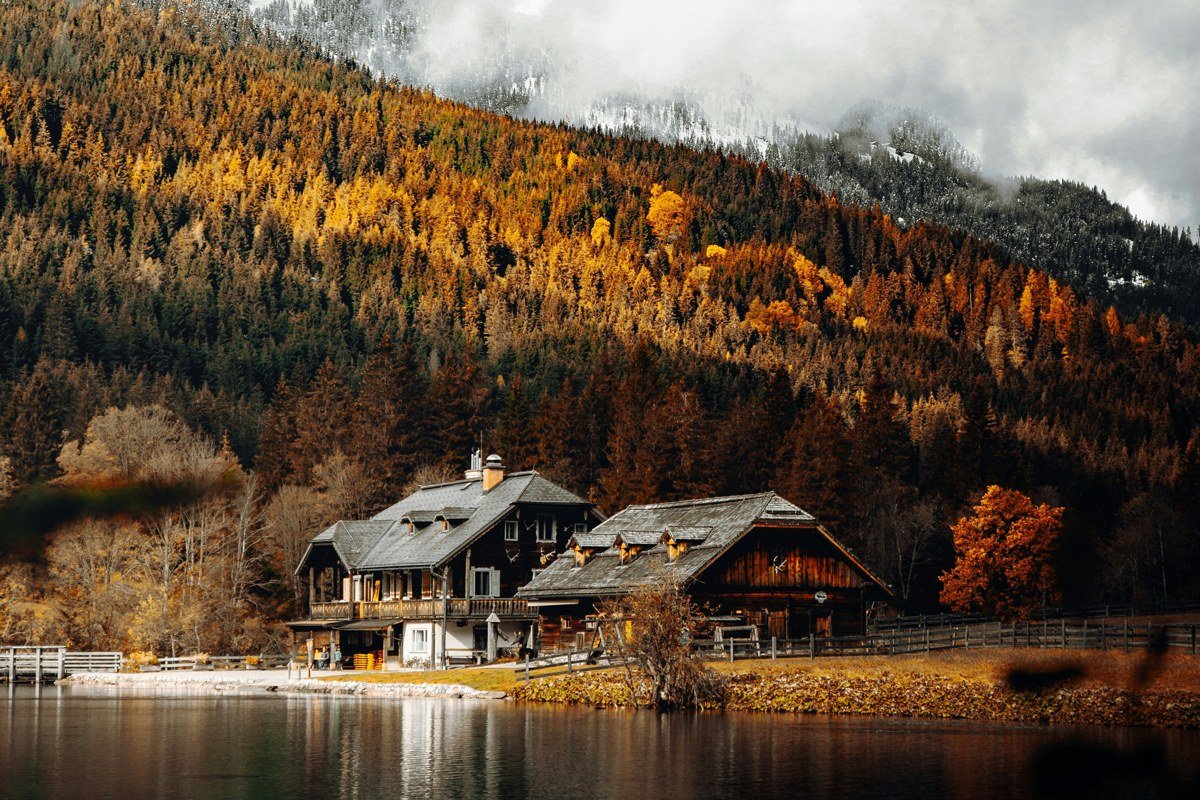
Near Barnet in the Northeast Kingdom, Harveys Lake sits fifteen minutes north of Willoughby and gets a fraction of the attention. Ringed by private camps rather than resorts, its public beach on Lakeside Drive stays uncrowded even on a bright Saturday in peak color, and the surrounding hills run thick with sugar maple that turns hard red rather than the yellow-heavy palette further west. There’s no real attraction here beyond the lake itself: bring a canoe, or rent one from the small marina on the western shore, and just be on the water while the hillsides burn around it. The trade-off is amenities. There’s one general store, spotty cell service, and almost nowhere to eat dinner within a 15-minute drive, so pack food in.
3. Lake Champlain (Burlington area), Vermont
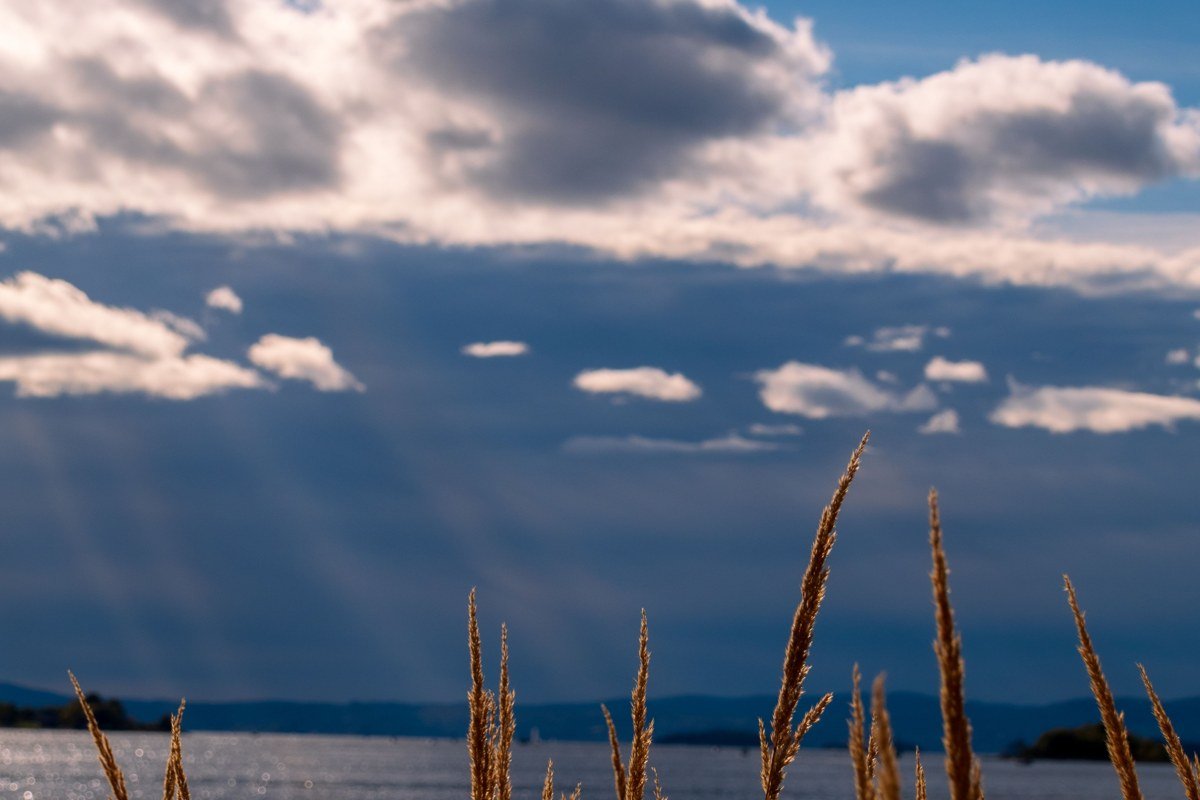
Burlington, on Champlain’s eastern shore, is the only lake town on this list with a real city attached, which matters if your travel companions want restaurants and a farmers market along with the leaves. The waterfront bike path gives sunset views across the water toward New York’s Adirondack Mountains, which hold their own color and make the whole horizon look layered. Peak foliage in the Champlain Valley usually runs a week or so behind the mountains, often the first half of October, because the lake moderates nearby temperatures. This is also the most crowded entry on the list by far: Church Street and the waterfront inns book up months ahead for peak weekends, the Waterfront Park lot on College Street fills by late morning, and traffic on Route 7 through town slows to a crawl on Saturday afternoons in early October. For the same view without the city crowd, base instead in Charlotte or Shelburne a few miles south and drive in for dinner.
2. Lake Elmore, Vermont
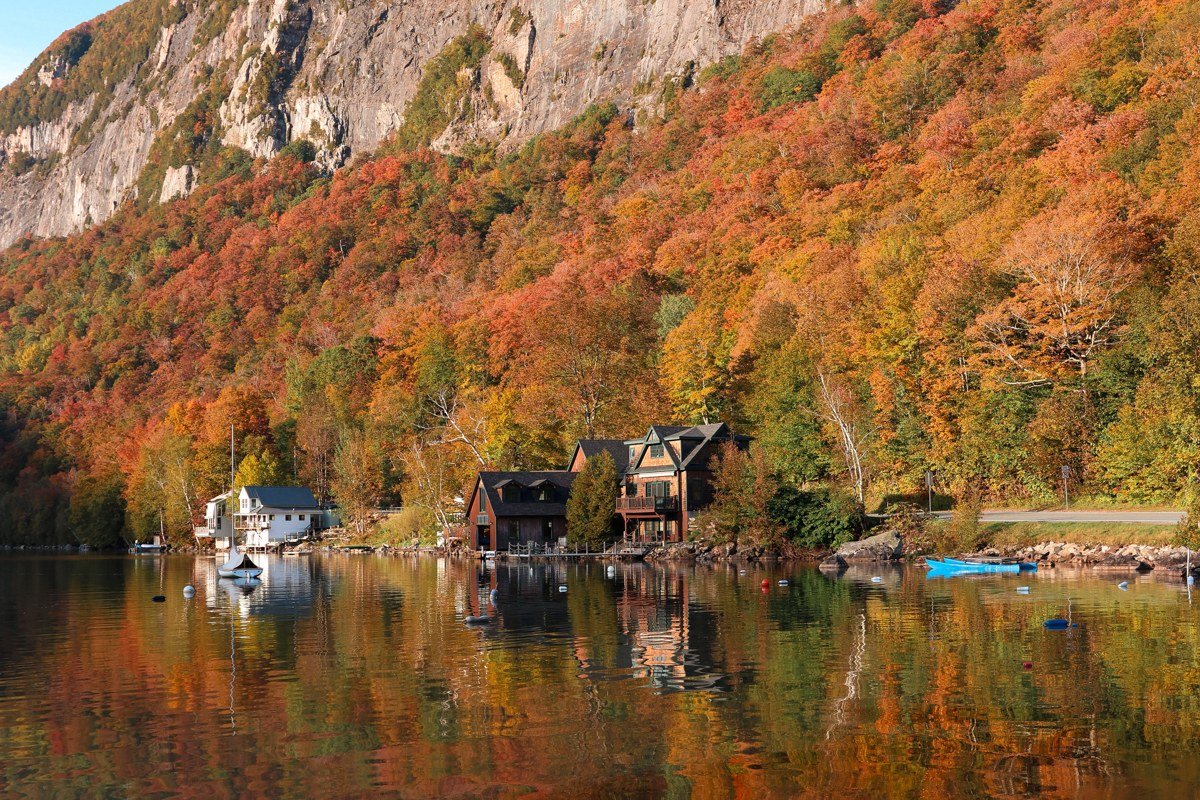
North of Stowe in Lamoille County, Lake Elmore is the quiet alternative to everything happening twenty minutes away on Mountain Road. Elmore State Park sits right on the water off Route 12, with its own beach, boat launch, and a $5 day-use fee per adult. The fire tower hike up Elmore Mountain, about 2.5 miles round trip from the park, gives a 360-degree view over the lake with Mount Mansfield’s ridgeline in the distance, usually at peak color in the last few days of September through the first week of October. Time that hike for late afternoon, when the light comes in low across the water. The park campground is basic, no showers in some loops, so this suits people who want scenery over comfort; Stowe’s crowds and prices are a short drive away if you want a nicer dinner or a hotel bed after.
1. Lake Iroquois, Vermont
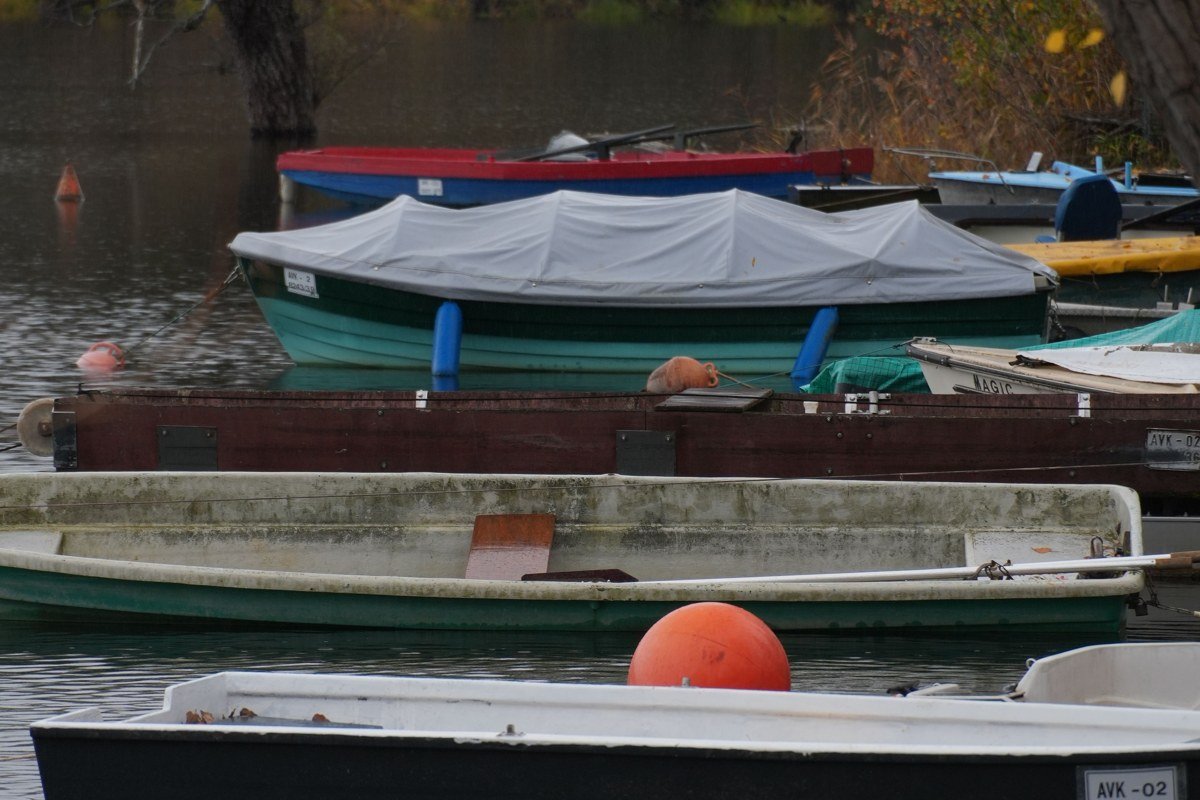
Lake Iroquois is the best match on this list between water, color, and a town that doesn’t turn into gridlock while you’re trying to enjoy either. Tiny, maybe a mile end to end, it sits in farmland and low hills about 20 minutes south of Burlington near Hinesburg, and it’s the one place here where you can genuinely have a dock to yourselves on a Saturday afternoon in peak color. The small public beach and canoe launch, off Lake Road, ban motorboats, so the water stays still enough to mirror the hillside almost perfectly on calm mornings. Rent a canoe for an hour and drift the reed-lined north end, where the color comes down closest to the waterline. Peak usually hits in the first week of October, the same window as greater Burlington, so a lake morning here pairs easily with a Church Street dinner the same night. The trade-off is size and services: there’s no lodging on the lake itself, so you’re staying in Burlington, Richmond, or Hinesburg and driving in, and the gravel lot at the access area, which holds only about 15 cars, fills by early afternoon on a bluebird Saturday.
How I’d pick
A first-timer who’s never seen Vermont in October should base in Burlington and day-trip to Lake Champlain’s shoreline and Lake Iroquois, since both peak the same week and sit close enough together to hit in one trip. A couple wanting something genuinely romantic should book Lake Morey for the resort and dock, or Lake Iroquois for something smaller and quieter, both within easy range of a good dinner. A family should aim for Lake Dunmore or Lake St. Catherine, where the state park beaches and easy trails give kids something to do besides look at trees. Someone with exactly one weekend and a willingness to drive should go straight to Lake Willoughby and accept the three hours each way, since nothing else on this list matches its color against that landscape. Anyone planning strictly around foliage forecasts should book the Northeast Kingdom for late September and save the Champlain Valley and southern lakes for the first two weeks of October, since a week’s difference in Vermont is the whole trip.