
Cannon Beach on a clear July afternoon is a parking lot with a view, tour buses idling and every angle of Haystack Rock already in somebody else’s phone. Drive south to Hug Point on a foggy September morning and you might not see the water until you’re standing in it. That gap, between the postcard and the real thing, is why people come back to the Oregon coast in the off months instead of the busy ones.
Cannon Beach, Oregon
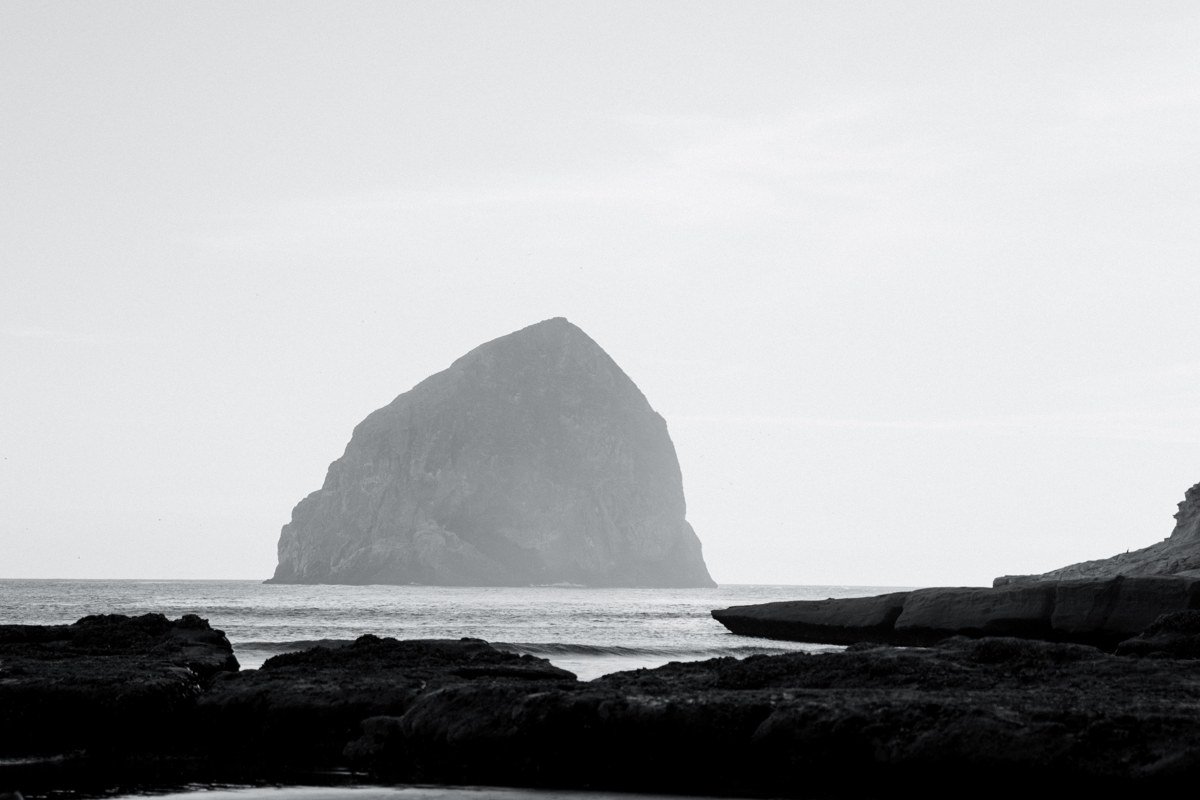
Haystack Rock is the sea stack that made the rest of this list famous, a 235-foot monolith that anchors the most photographed stretch of the Oregon coast. On a foggy morning the tide pools at its base appear before the rock itself does, so you hear gulls and waves before you see what’s making the noise. It’s touristy for a reason, but arrive before 8 a.m. and you’ll have it mostly to yourself.
Worth knowing: Free public parking downtown fills by mid-morning in summer. The Cannon Beach City Park lot on Second Street runs $3 an hour and is a more reliable bet if the free spots are gone. Tide pool access is restricted during the nesting season for the puffins and other seabirds that use the rock, roughly spring through summer.
Skip if: You want solitude in July or August. Come September through May instead, when the crowds thin and the fog thickens.
Hug Point, Oregon
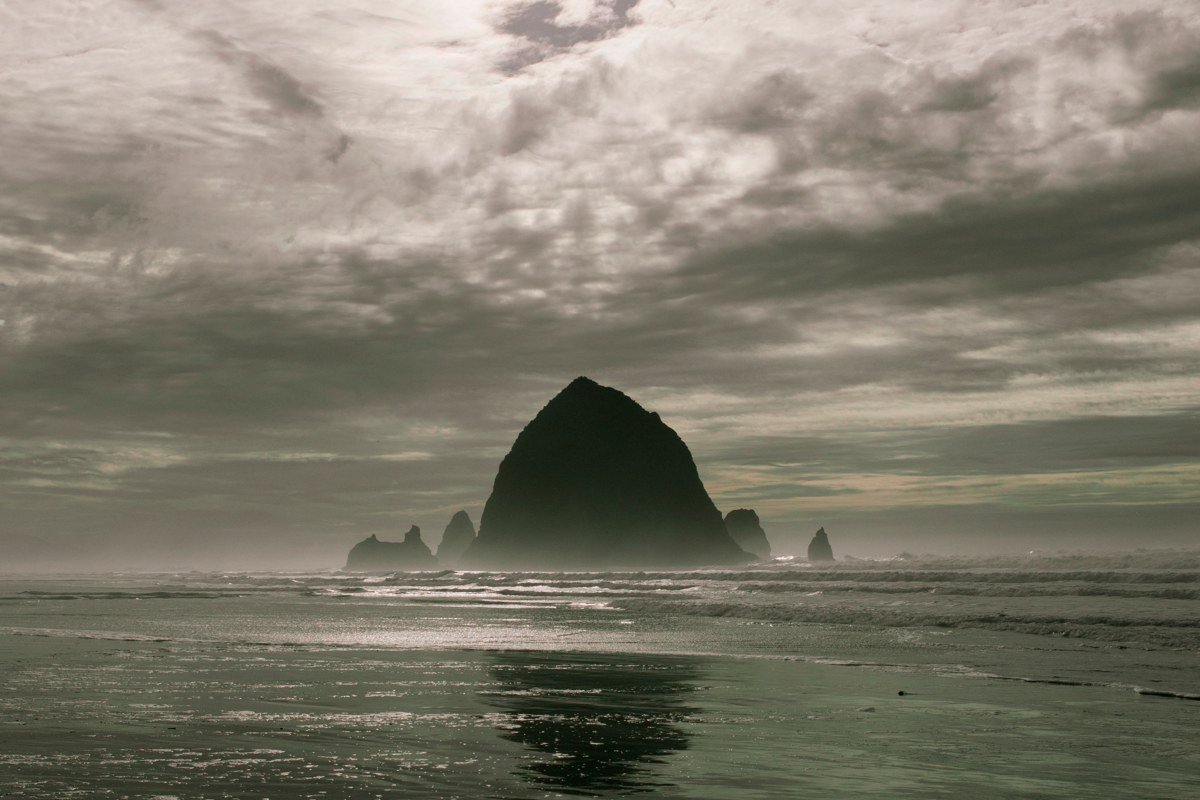
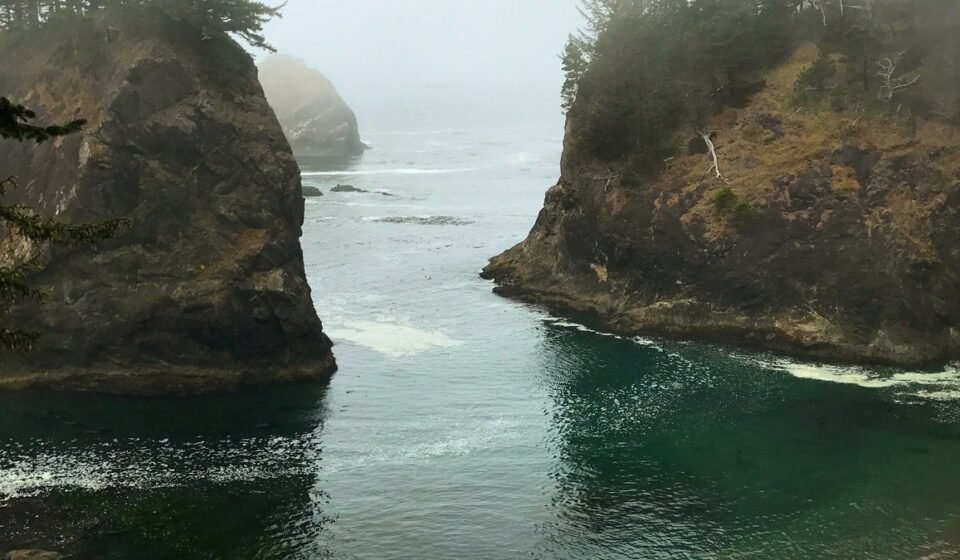
South of Cannon Beach, Hug Point has a waterfall that drops straight onto the sand and old wagon-road grooves cut into the rock, remnants of when this stretch of beach was literally the highway before Highway 101 existed. Fog here tends to sit low and thick because the point traps it against the cliffs, most stubbornly between about 7 and 10 a.m. in September and October. Low tide is when you can walk into the sea caves, and that’s also when the wagon ruts are visible.
Worth knowing: The parking area is a small unmarked pullout at milepost 39 on Highway 101, easy to drive past if you’re not watching for it. Check a tide table before you go; the caves and the beach route around the point flood at high tide.
Skip if: You need cell service. It’s spotty to nonexistent here, which is part of the appeal but not great if you’re traveling with anyone who panics without a signal.
Cape Kiwanda, Oregon
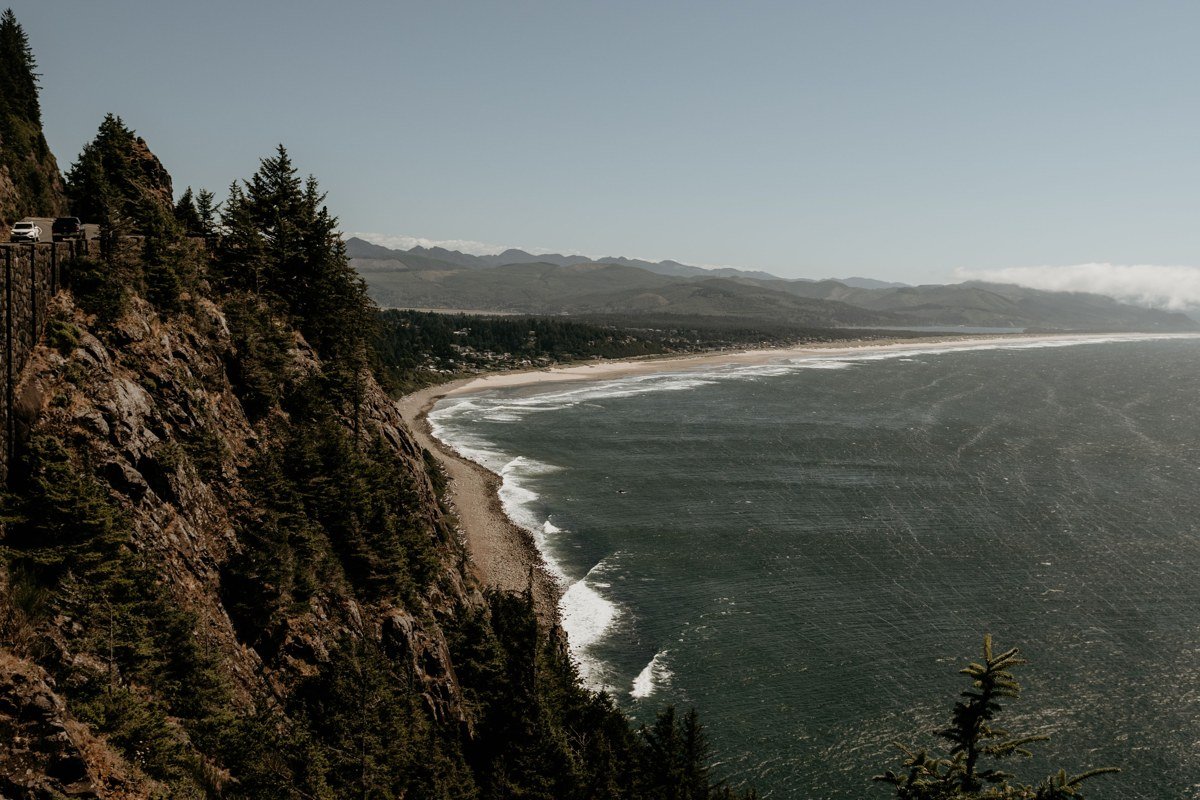
Cape Kiwanda near Pacific City is a sandstone headland, not a sea stack, but it faces directly onto the dory fleet, the small flat-bottomed boats that launch straight off the beach into the surf, one of the only places in the country where that’s still done commercially. Fog rolling over the dune here turns the whole headland into a silhouette. Climb the dune itself, about a 200-foot rise, for a view down onto the dory launch if the boats are running that morning.
Worth knowing: The sand dune climb is steep and deceptively tiring; wear shoes you don’t mind filling with sand. Parking is free but the lot is small and shared with the brewery next door, so weekend afternoons get tight.
Skip if: You have mobility issues that make loose sand climbing a problem. The flat beach below is still worth the visit on its own.
Depoe Bay, Oregon
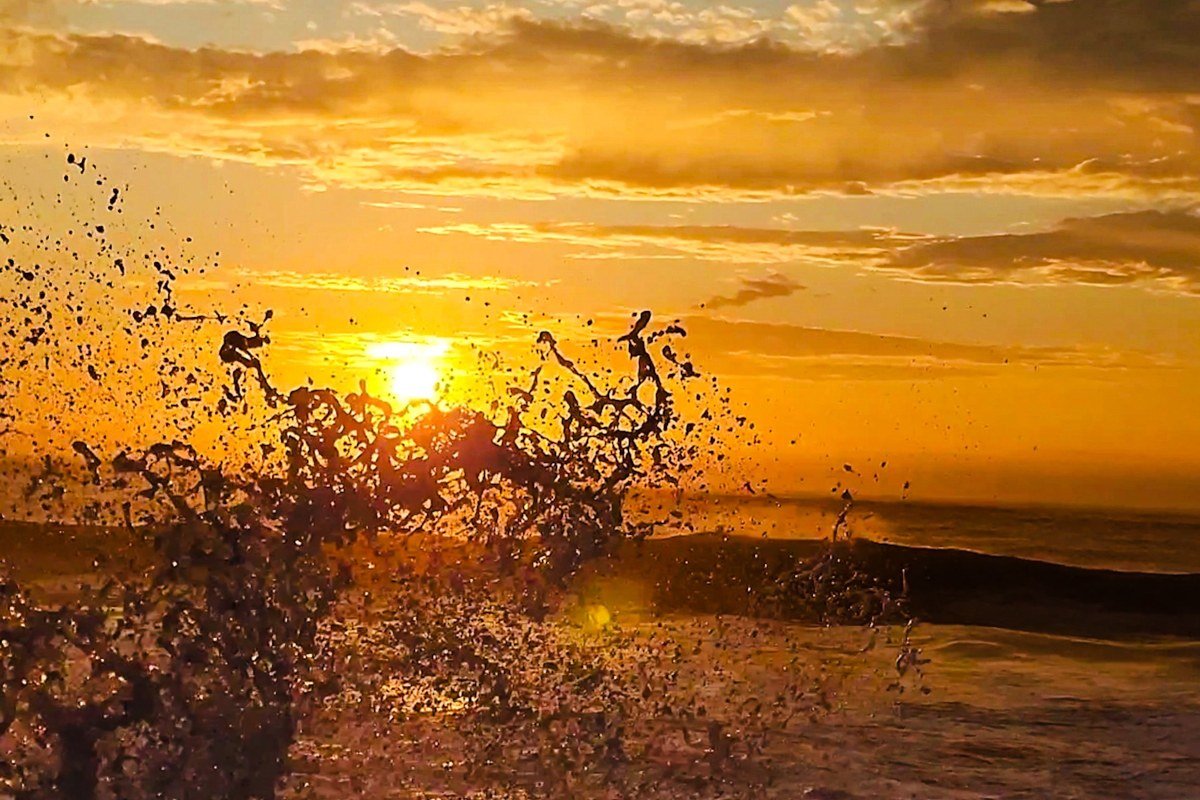
Depoe Bay calls itself the whale watching capital of the Oregon coast, and the claim holds up: gray whales pass close to shore here on their migrations, with the best chances in late December through January heading south and again in March through June heading north. Fog off the seawall thins fastest in the early afternoon, so the spouting horns, where waves force water up through lava tube openings, look genuinely otherworldly on a morning visit, when spray and mist are hard to tell apart.
Worth knowing: Whale watching charters run out of the small harbor here and cost around $40 per person; book a few days ahead during migration windows rather than showing up. Watching from the seawall itself is free and requires nothing but patience.
Skip if: The charter schedule doesn’t line up with your visit. A skipped boat here just means a seawall visit instead, not a lost trip.
Yachats, Oregon
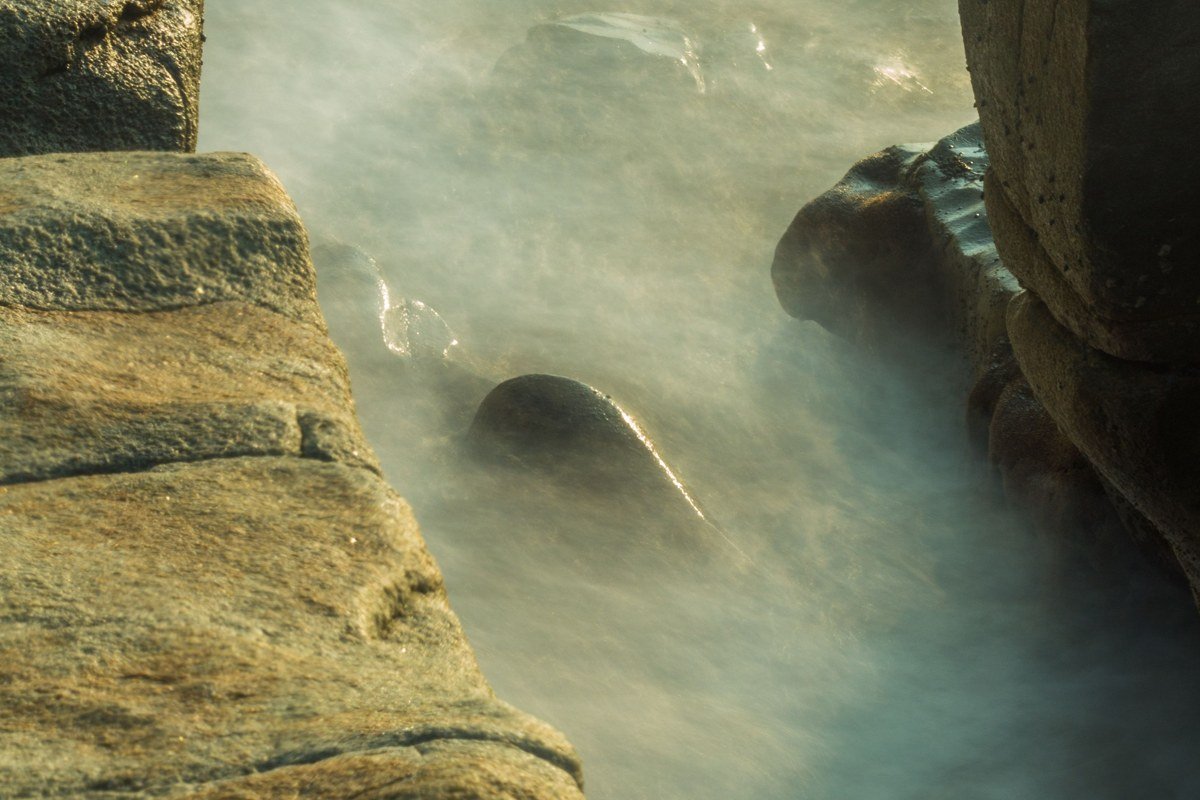
Yachats (locals say YAH-hots) sits where the coast gets rockier and wilder, backed by the Cummins Creek Wilderness Area. The 804 Trail runs just under a mile along the water through town and past tide pools that hold anemones, starfish, and hermit crabs at low tide. Fog tends to hang until 10 or 11 a.m. here, later than the beaches thirty miles north, so a slow breakfast in town before you walk the trail isn’t wasted time, it’s strategy.
Worth knowing: The 804 Trail is flat, doable in tennis shoes, and free to walk. Parking along the main strip is limited but there are small pullouts every few blocks.
Skip if: You’re looking for a big sandy beach to spread out on. This stretch is rock and tide pool, not a place to sunbathe.
Sea Lion Caves, Oregon
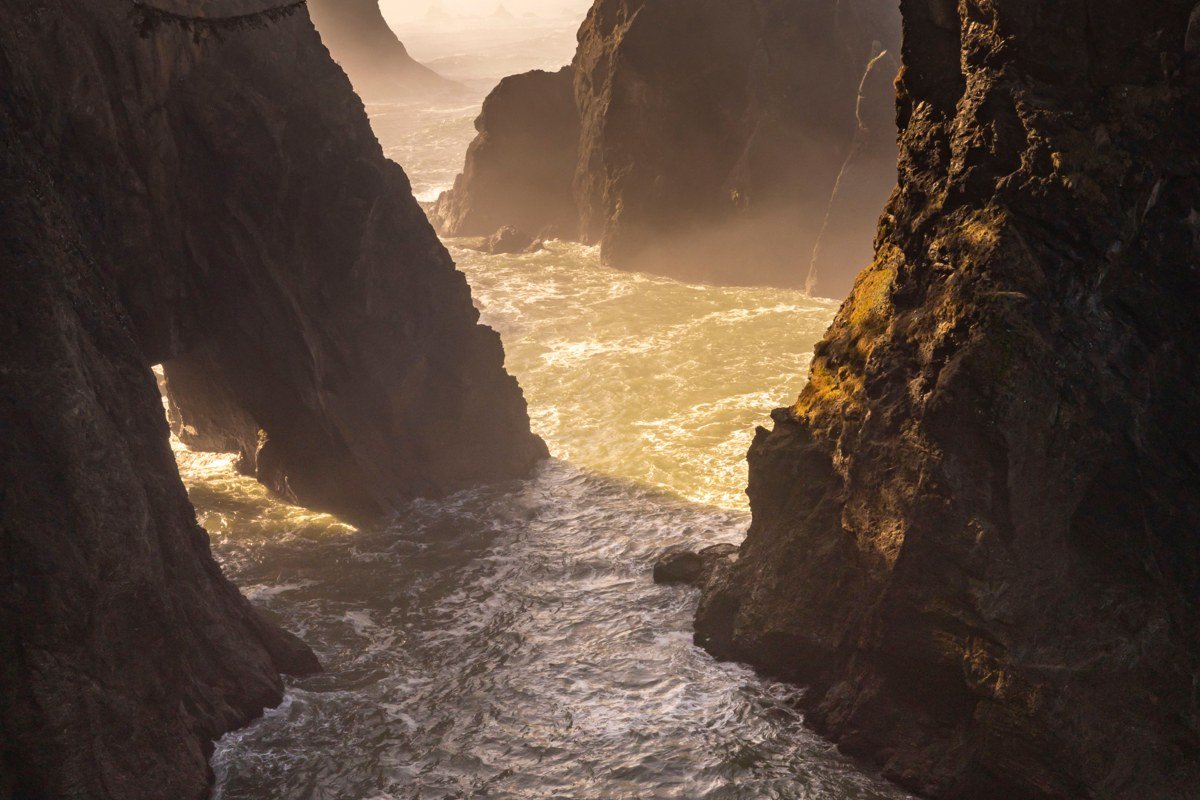
Between Yachats and Florence, this privately run cave system holds one of the largest sea lion colonies on the mainland coast, audible before you’re anywhere near the entrance. The site is open 9 a.m. to 5 p.m. most of the year, and the elevator ride down to the cave floor takes about 40 seconds, dropping you 208 feet through solid rock. On a foggy morning before opening, the free highway pullout above it is the better stop: the ocean disappears entirely and leaves just the barking.
Worth knowing: Cave admission runs $16 for adults; the highway viewpoint above is free and accessible anytime. Sea lions move seasonally between the cave and outdoor rock ledges, so what’s visible depends on time of year.
Skip if: You’re only going for the fog view. Pay the admission only if you actually want the cave itself; the pullout gives you the atmosphere for free.
Oregon Dunes, Florence, Oregon
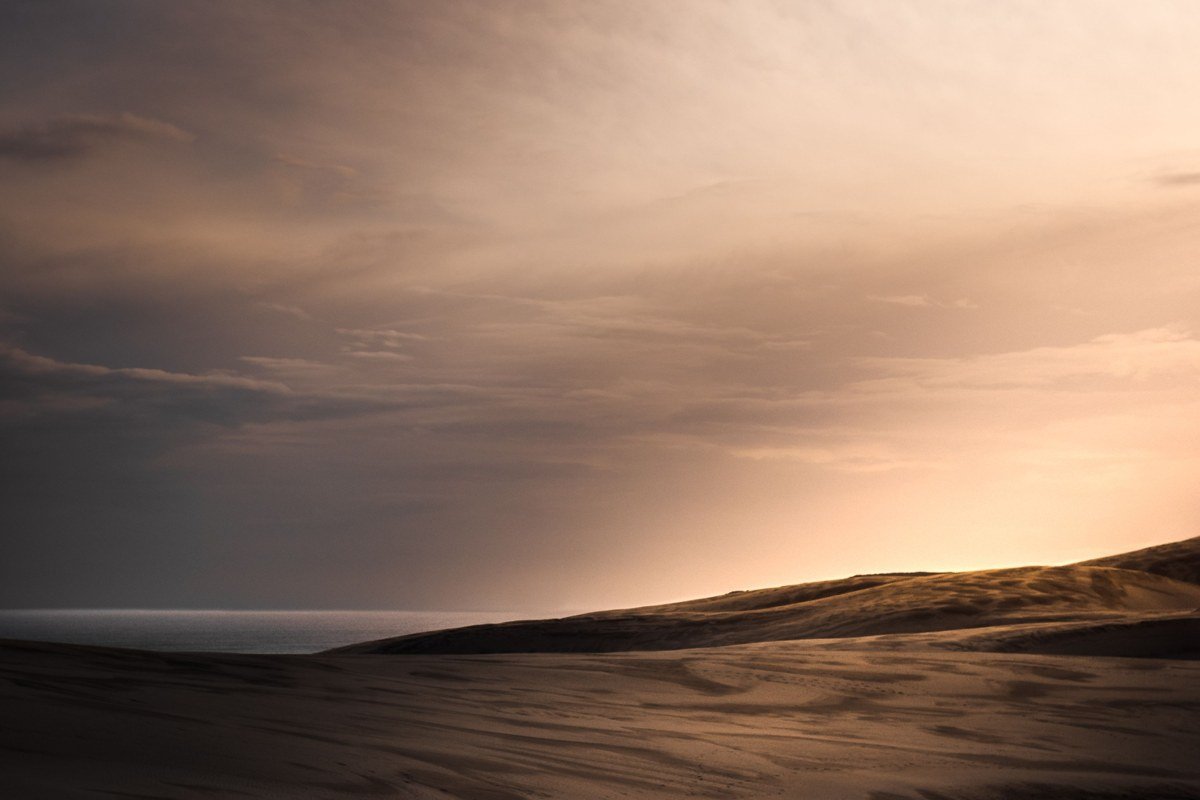
South of Florence, the highway pulls inland because the terrain shifts entirely, into a 40-mile run of dunes, some cresting 500 feet, among the tallest coastal dunes in the country. Sandboarding and ATV rental are the daytime draw, but at dawn, with fog still pooled in the hollows between ridges, the dunes look less like Oregon and more like a different continent. Fog here typically clears by mid-morning, faster than it burns off on the rocky headlands to the north, since there’s no cliff to trap it.
Worth knowing: Some sections allow ATVs and dune buggies, others are foot traffic only; check which zone you’re in before you rent anything. Sandboard rentals in Florence run about $20 for a half-day.
Skip if: You came for tide pools or sea stacks. This is the one detour on this list that’s about sand, not rock.
Bandon, Oregon
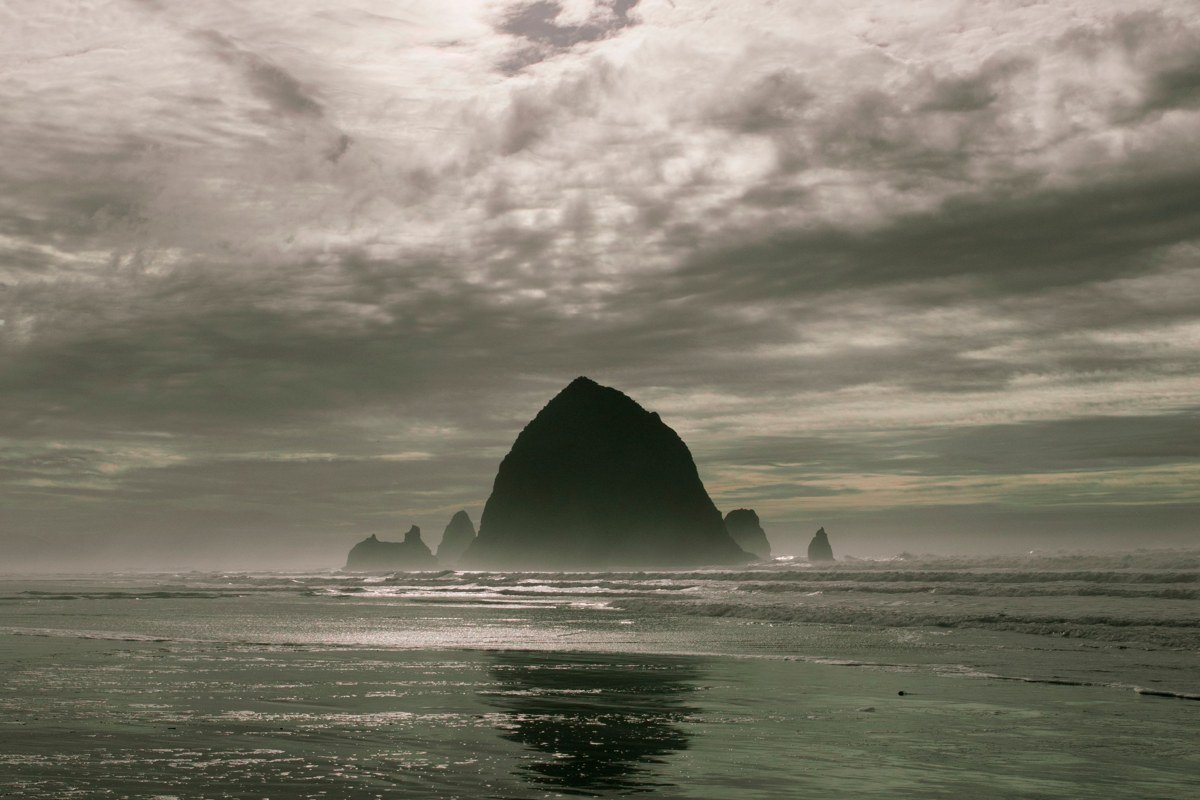
Bandon’s beach holds a cluster of sea stacks including Face Rock, named for the local legend of a face visible in the profile of the largest formation. This is southern Oregon coast, quieter than the northern towns near Portland, with a slower, more contemplative feel. Fog here can linger most of the day in shoulder season, which locals will tell you is normal, not a weather event to wait out.
Worth knowing: Beach access points are well marked with small parking areas along Beach Loop Drive. The town itself is a worthwhile stop for cranberry products, a local specialty most visitors don’t expect.
Skip if: You’re on a tight schedule. Bandon is roughly a four-hour drive from Portland on Highway 101, far enough that it doesn’t work as a day trip from the northern coast.
Samuel H. Boardman State Scenic Corridor, Oregon
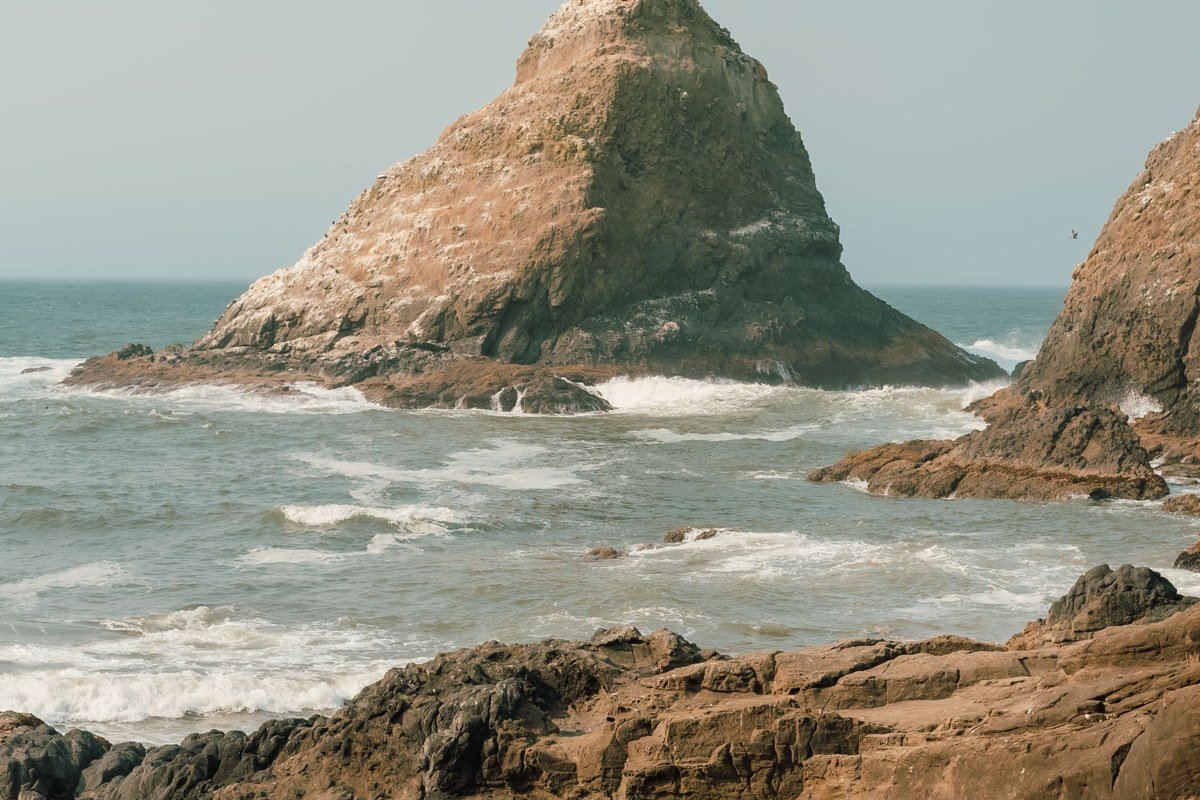
This roughly 12-mile scenic corridor near Brookings, close to the California border, strings together some of the most dramatic cliff-and-cove scenery on the entire coast, including the Natural Bridges viewpoint and Arch Rock. It’s the least crowded stretch on this list simply because of how far south it sits. Fog and the rugged, forested cliffs together make it feel closer to parts of the California coast than to the Oregon most visitors picture.
Worth knowing: There are multiple small pullouts along Highway 101 rather than one main entrance; a map or a downloaded offline route helps since cell service drops in and out. This is also close enough to the state line that a Rogue River jetboat trip out of Gold Beach makes sense as an add-on.
Skip if: You’re only visiting the coast for a weekend from Portland. This stretch is a six-plus hour drive one way and deserves a full day on its own, not a rushed add-on.
Mistakes people make
- Treating the whole Oregon coast as one climate. Fog patterns, temperature, and even which beaches allow ATVs or dogs off-leash change town to town; what’s true in Cannon Beach won’t be true in Bandon.
- Forgetting that the “beach” is legally public but the bluffs above it often aren’t. Oregon’s Beach Bill keeps the wet sand open to everyone, but parking lots, dune access points, and trails crossing private or park land can still require a fee or have posted hours.
- Chasing whales or sea stacks on a random date instead of checking the calendar. Whale migrations run in fairly predictable windows (winter for southbound, spring into early summer for northbound), and fog itself is thickest in the morning hours of late summer, not in the dead of winter storms most people picture.