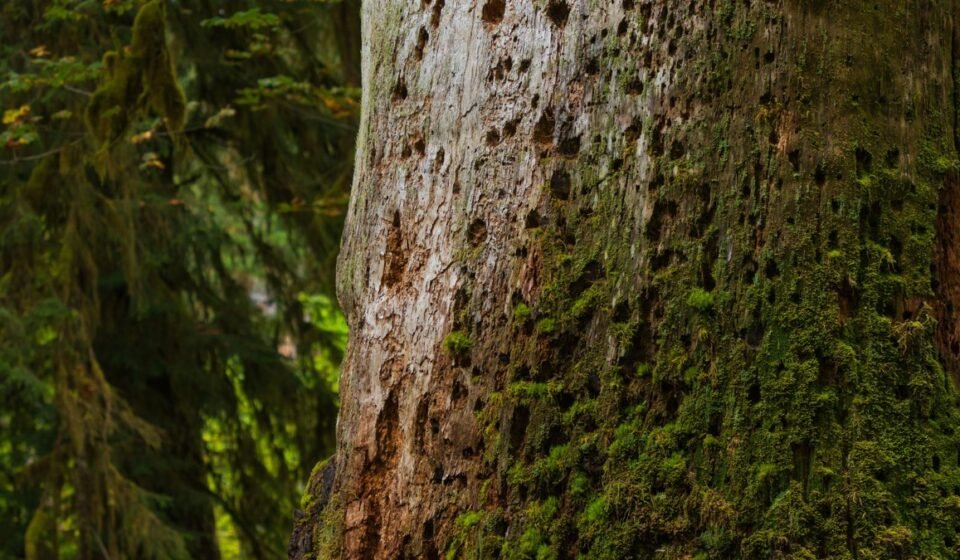
Olympic National Park’s Hoh Rainforest at First Light: 8 Trails Where the Moss Still Drips With Fog

The Hoh gets around 140 to 170 inches of rain a year, more than almost anywhere else in the contiguous US, and most of it falls between October and April, which is exactly why the fog lingers so stubbornly into summer mornings. The Hoh River Trail at dawn and the Hall of Mosses at dawn are not the same hike, even though they share a trailhead. One is a long, quiet walk into river fog that most visitors never finish past the first mile. The other is a fifteen-minute loop that fills with tripods by 9 a.m. If you only have one morning in Olympic National Park’s rainforest, which of these eight trails you pick decides whether you get a postcard or something closer to a memory.
I built this list from mornings actually spent on the Upper Hoh Road before the visitor center opened, watching which trails held fog longest and which ones burned off by mid-morning. Elevation, canopy density, and distance from the parking lot all matter more than most guides let on. Worth knowing before you go: the Upper Hoh Road has washed out more than once in recent years and sees periodic closures after heavy rain or flooding, so check current conditions before you drive out, especially outside summer. In dry conditions a regular sedan is fine, but after storms, potholes and debris can make the last few miles rough enough that high-clearance helps. Cell service is effectively nonexistent along the Hoh Road once you leave US-101, so download maps and check road status before you lose signal. The visitor center has restrooms and is the last reliable facility; there is nothing past it.
| Place | Best for | Getting there |
|---|---|---|
| Hall of Mosses, Washington | First-timers, short time windows | 0.8-mile loop from Hoh Visitor Center |
| Spruce Nature Trail, Washington | Fewer crowds, river fog | 1.2-mile loop from Hoh Visitor Center |
| Hoh River Trail, Washington | Long, solitary fog walks | Trailhead at Hoh Visitor Center, go as far as time allows |
| Five Mile Island, Washington | Turnaround goal for a half-day hike | 10 miles round trip on the Hoh River Trail |
| Mount Tom Creek Meadow, Washington | Escaping day-trip crowds | About 7 miles in on the Hoh River Trail |
| Hoh Lake Trail, Washington | Elevation and a changed forest | Starts at Sol Duc, not the Hoh Road |
| Kalaloch Beach, Washington | Fog meeting the coast | 30 miles south of Forks on US-101 |
| Ruby Beach, Washington | Sea stacks in morning haze | On US-101 between Kalaloch and the Hoh Road turnoff |
Hall of Mosses, Washington
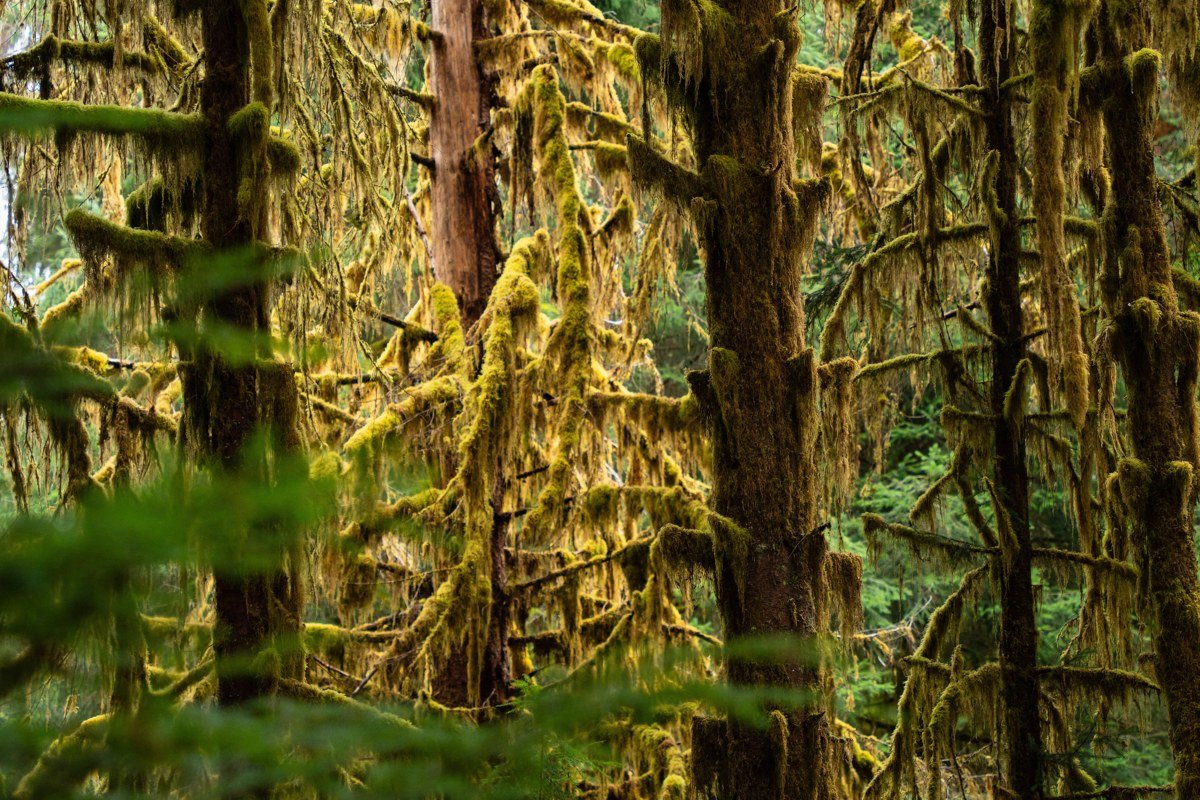
This is the trail everyone photographs, and there is a reason. The bigleaf maples here carry club moss in such thick drapes that the canopy looks upholstered. Sunrise in July runs close to 5:15 a.m., and fog usually holds until around 7:30 before the light starts breaking it apart, so that narrow window is your real target, not “morning” in general. On a Tuesday in late September the lot had six cars in it at 7:15 a.m.; by 9:30 the same lot was full and a ranger was waving cars toward overflow parking. The loop itself takes under half an hour, which is exactly why it gets crowded, so treat it as your appetizer, not your whole meal.
Spruce Nature Trail, Washington

Most visitors do Hall of Mosses and leave. That alone makes the Spruce Nature Trail worth the extra twenty minutes. The loop drops down toward the Hoh River, where cold water keeps fog pooling in the gravel bars well past the time it has burned off the maple groves above, often past 9 a.m. on cooler mornings. Nurse logs here are enormous, some hosting an entire row of young hemlocks along their spines. One late-June visit turned up exactly two other hikers in the first twenty minutes, both headed the opposite direction, which is about as close to solitude as this corner of the park gets in summer.
Hoh River Trail, Washington
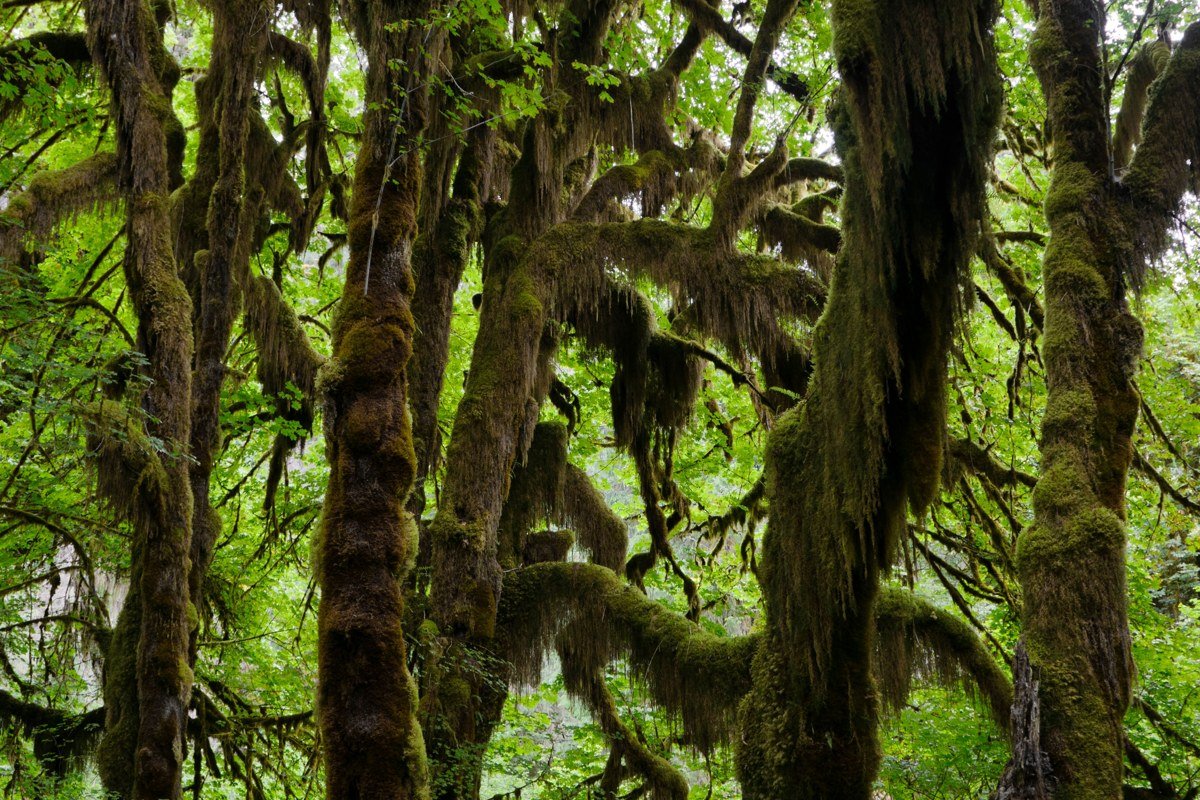
This is the trail that actually earns the word rainforest. It runs 17.3 miles one way to Glacier Meadows at the base of Mount Olympus, and almost nobody needs to go that far to get the payoff. The first few miles wind through old-growth Sitka spruce and western hemlock so dense that fog can linger into late morning, sometimes past 10 a.m. in shaded stretches, even on a day that turns sunny everywhere else on the peninsula. A September hike that started under full cloud cover had sun hitting the trailhead parking lot by 9, while the first mile of trail stayed sealed in mist for another hour. Pack layers; a trail that looks dry at the car can turn to standing water a mile in.
Five Mile Island, Washington
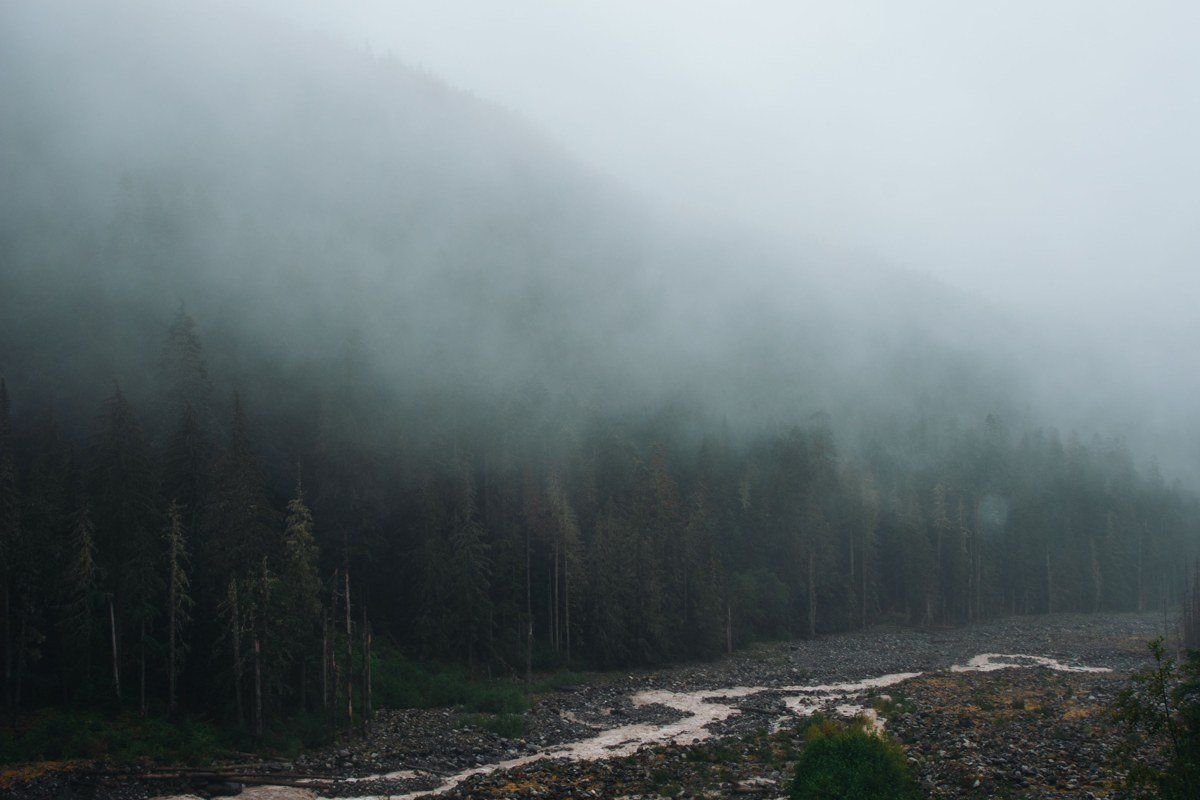
If Hall of Mosses is the appetizer and the full Hoh River Trail is more than most people have time for, Five Mile Island is the satisfying middle distance. The round trip runs about 10 miles, flat enough to be manageable in half a day, and it opens onto gravel bars where the river braids and fog sits over the water even after it has cleared the trees, sometimes until midday when the air is still. Four hikers who set out at 6 a.m. on an August morning reported fog still sitting on the gravel bar when they turned back around 10:30. This is where the forest starts to feel less like a visitor center and more like wilderness. Plan on four to six hours round trip depending on how often you stop, and start early enough that you are not racing the light back out.
Mount Tom Creek Meadow, Washington
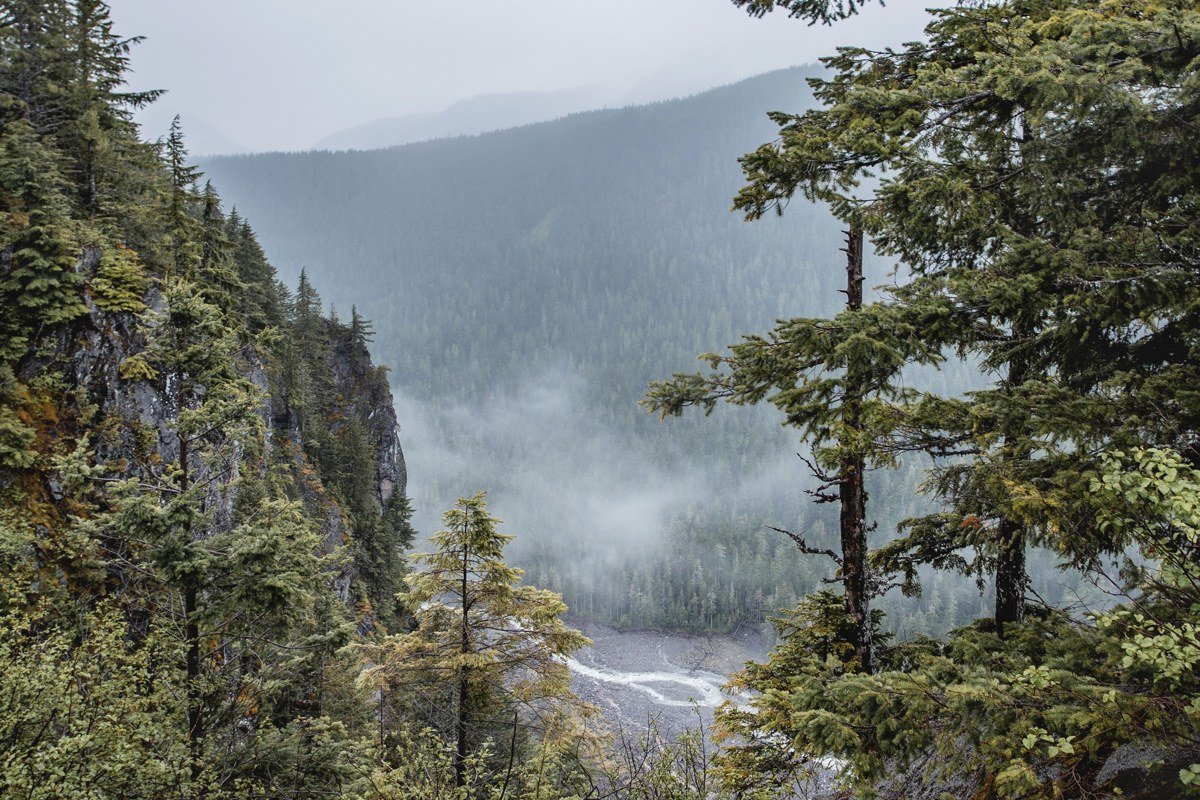
Around the 7-mile mark the trail opens into meadow, and this is where day hikers mostly stop turning back. It is a legitimate backcountry destination requiring a wilderness permit if you plan to camp, which Olympic requires for all overnight stays in the park’s interior, reservable in advance through recreation.gov during the busy season. Fog here behaves differently than it does near the visitor center: it rises off the meadow grass in sheets rather than hanging in the canopy, usually dissipating within an hour of direct sun reaching the clearing, which in summer means somewhere around 8 to 9 a.m. Most visitors who get this far are doing it as an overnight, not a day hike, and the quiet reflects that.
Hoh Lake Trail, Washington
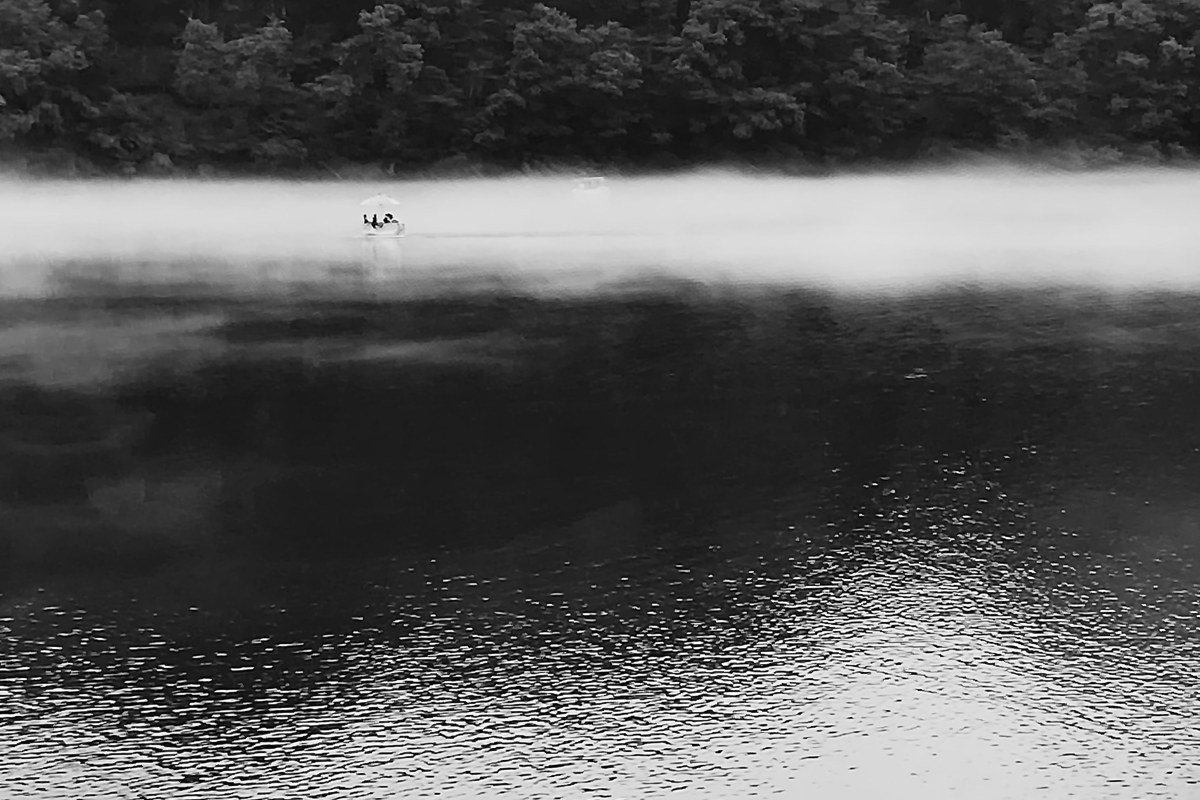
This one is a trick question, in a useful way. The trailhead isn’t on the Hoh Road at all; it starts from Sol Duc, and the forest changes character as you climb, trading rainforest density for subalpine fir and open ridges. Fog behaves completely differently at elevation here, rolling over the lake in sheets rather than dripping from branches, and it tends to burn off faster than valley fog, often within thirty to forty minutes of direct sun hitting the water. On a clear morning you can catch Mount Olympus from the ridge above the lake. It is a strenuous day hike or an overnight with a permit, not a casual add-on, so only aim for it if you have already done at least one of the lower Hoh trails and want the contrast.
Kalaloch Beach, Washington
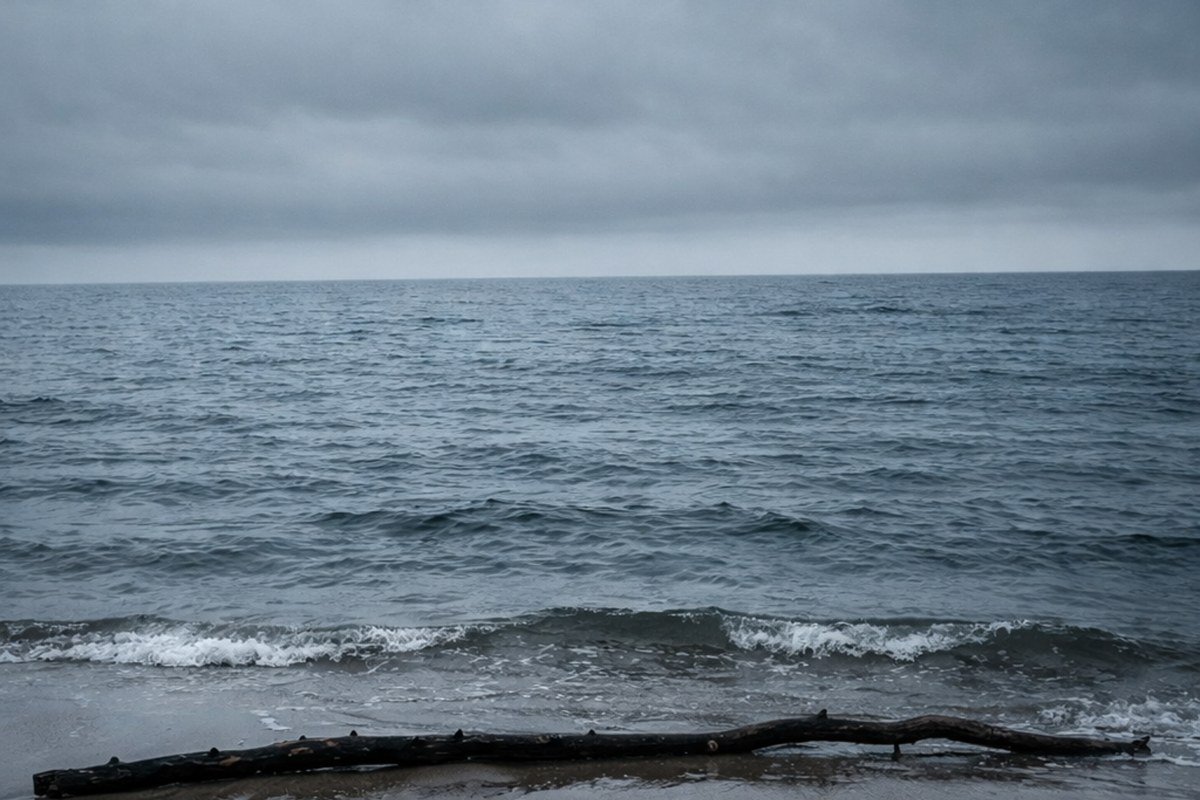
Olympic National Park is really two parks stitched together: the mountain interior and a separate coastal strip, and Kalaloch is where the coastal section becomes easy to reach. It sits about 30 miles south of Forks on US-101, and unlike the Hoh Road spur, the highway runs right along the bluff here, so no entrance fee gets checked and no permit is required just to pull off and walk the beach. Driftwood logs the size of small boats pile at the tideline. Coastal fog here tends to hang on longer than inland fog, often past 10 or 11 a.m. in June and July, so an early morning visit after a Hoh Rainforest sunrise hike is a natural pairing, not a redundant one. Low tide exposes tide pools worth checking a schedule for before you go.
Ruby Beach, Washington

Ruby Beach gets argued about more than any other stop on this list. Some travelers call it overrated, mobbed by midday, not worth the parking lot scramble in peak summer. They have a point if you arrive at noon in August, when the lot overflows onto the highway shoulder. Arrive instead within the first half hour after sunrise, before the haze over the sea stacks has had time to burn off, and the picture changes entirely: three cars in the lot, no one else on the sand, driftwood still dark with overnight dampness. The trail down to the beach is short and steep, with driftwood crossings that can be slick, so good footwear matters more than the distance suggests.
FAQ
What is the best time to visit Olympic National Park?
July through September is the driest stretch and the most reliable for clear trails and functioning mountain roads, though it is also the busiest. If fog and mood matter more to you than dry socks, late spring and early fall give you fewer crowds and plenty of the misty conditions this rainforest is known for, with the tradeoff being a real chance of rain most days.
How far is Olympic National Park from Seattle, Washington?
Port Angeles, the main gateway town, is roughly 85 to 90 miles from Seattle depending on whether you take the Bainbridge Island ferry or drive around via Tacoma, generally a two-and-a-half to three-hour trip. The Hoh Rainforest itself is further still, another couple of hours south and west along US-101, so most people treat it as an overnight rather than a day trip from the city.
Do I need a reservation or permit to visit the Hoh Rainforest?
Day use does not require an advance reservation, just the standard per-vehicle park entrance fee or an annual or interagency pass, though the Hoh Visitor Center parking lot does fill and close temporarily on busy summer days. Overnight backpacking anywhere past the day-use trails, including Five Mile Island and beyond, requires a wilderness permit booked ahead through the park’s reservation system, especially in peak season.