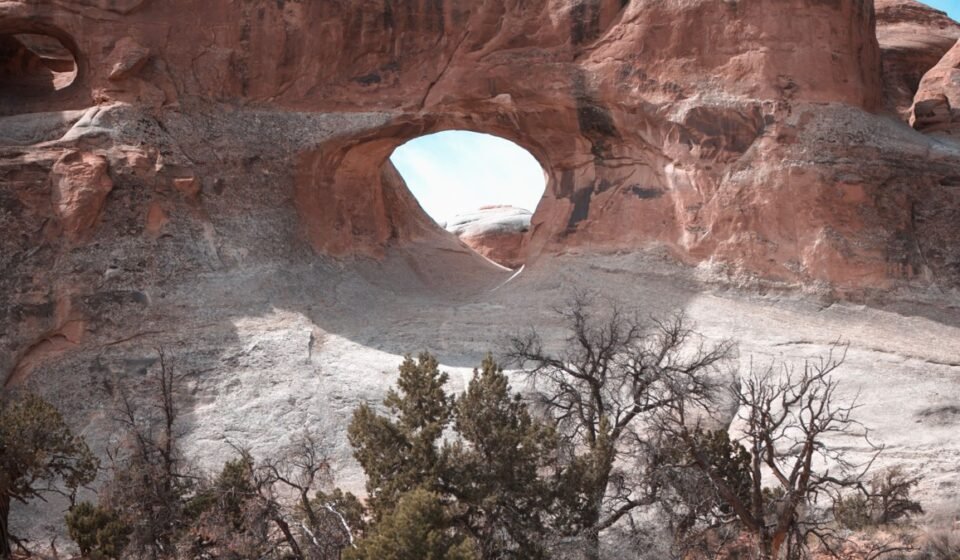

Most people plan their Arches National Park trip around the calendar and forget about the clock. They pick a nice week in May, book a hotel in Moab, Utah, and still end up circling a full parking lot at 10 AM with a hundred other cars, wondering why every photo has a stranger in a sun hat standing under Delicate Arch. The season matters, but inside that season, the hour matters more. Arches rewards people who treat sunrise as the real opening time, permit or no permit, and it punishes everyone else with heat, glare, and a trailhead lot that fills before breakfast.
Devils Garden, Utah – best in early January
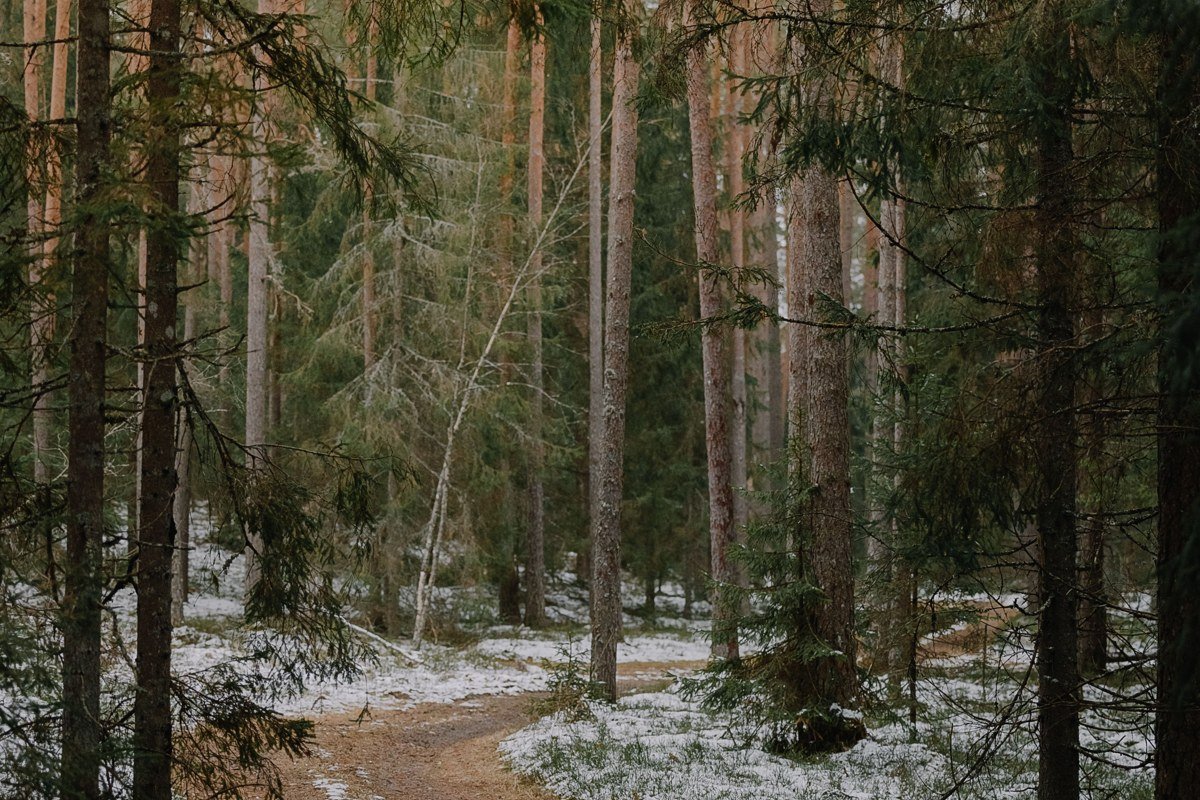
January is the one month you can show up at 9 AM and still find the far end of the parking area empty. Landscape Arch, the park’s longest, gets a soft low-angle light most of the day in winter because the sun never climbs that high, so the usual sunrise-only window stretches out. Outside this window you trade solitude for summer crowds who treat the primitive loop past Navajo and Partition Arches like a highway. The tradeoff in January is cold: mornings often sit near or below freezing, so bring traction for icy sandstone near Double O Arch and skip this one entirely after a snowstorm until the trail crews or the sun clear it.
Fiery Furnace, Utah – best in mid-February
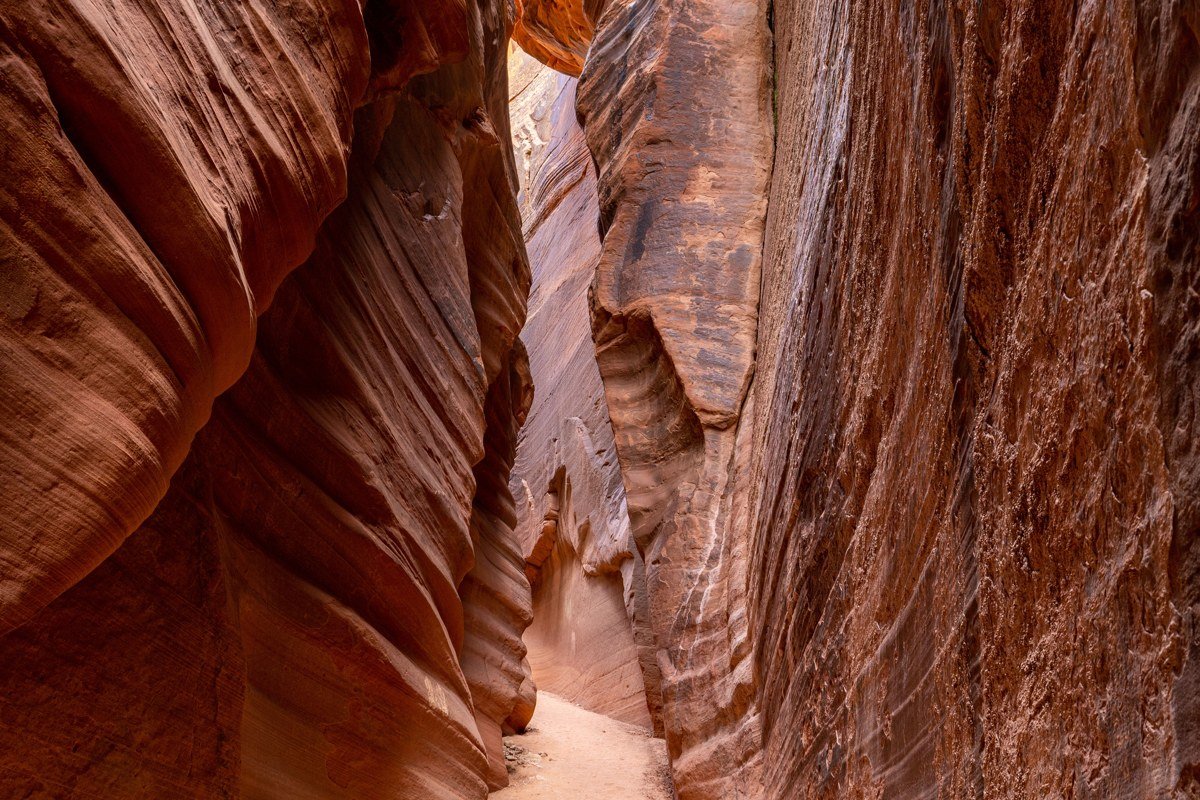
This isn’t a trail so much as a permit system, and February is when that permit is easiest to get. The Furnace is a maze of narrow sandstone corridors that requires either a ranger-guided walk or a self-guided permit, both capped daily. The self-guided permit currently runs $10 per adult through recreation.gov (confirm the exact fee and age brackets on nps.gov before you book, since it’s adjusted periodically). Ranger-led walks cost more and are booked separately. In February the guided walks run less frequently and the self-guided slots are far easier to snag same week; by April, permits for both routes often go within minutes of release. Check the recreation.gov booking window the moment park staff open it and take whatever February or March date you can get.
Park Avenue, Utah – best in early March
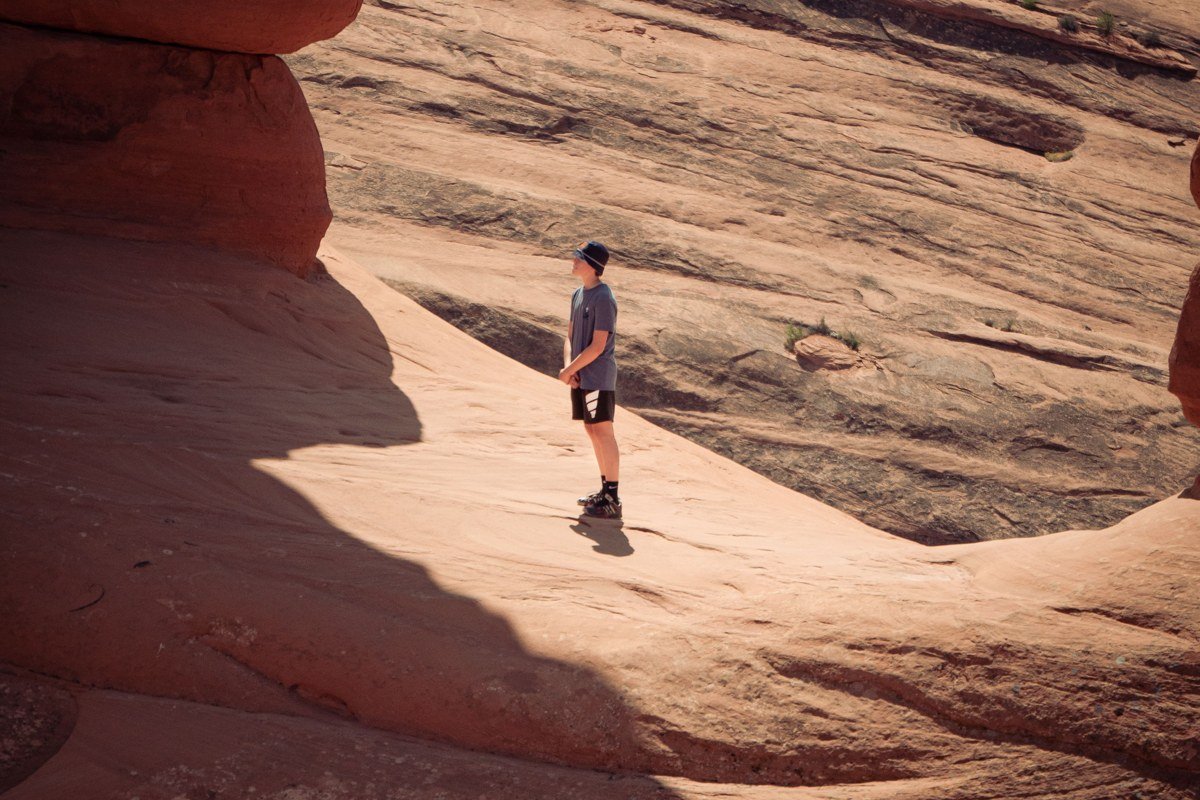
Park Avenue sits right off the main road near the entrance, which makes it the first stop for every tour bus and rental car by mid-morning. In early March, before spring break traffic hits, you can walk this steep-walled one-mile trail with nobody else on the canyon floor and the light still angled low enough to light the walls instead of flattening them. The Park Avenue trailhead lot holds only a couple dozen vehicles, so it overflows onto the shoulder well before the Windows or Devils Garden lots do. The move is to park at the Park Avenue viewpoint at first light, walk the one-way mile down to the Courthouse Towers lot, and have someone loop back for you, or just walk it both ways while the lot is still half empty.
The Windows, Utah – best in late March
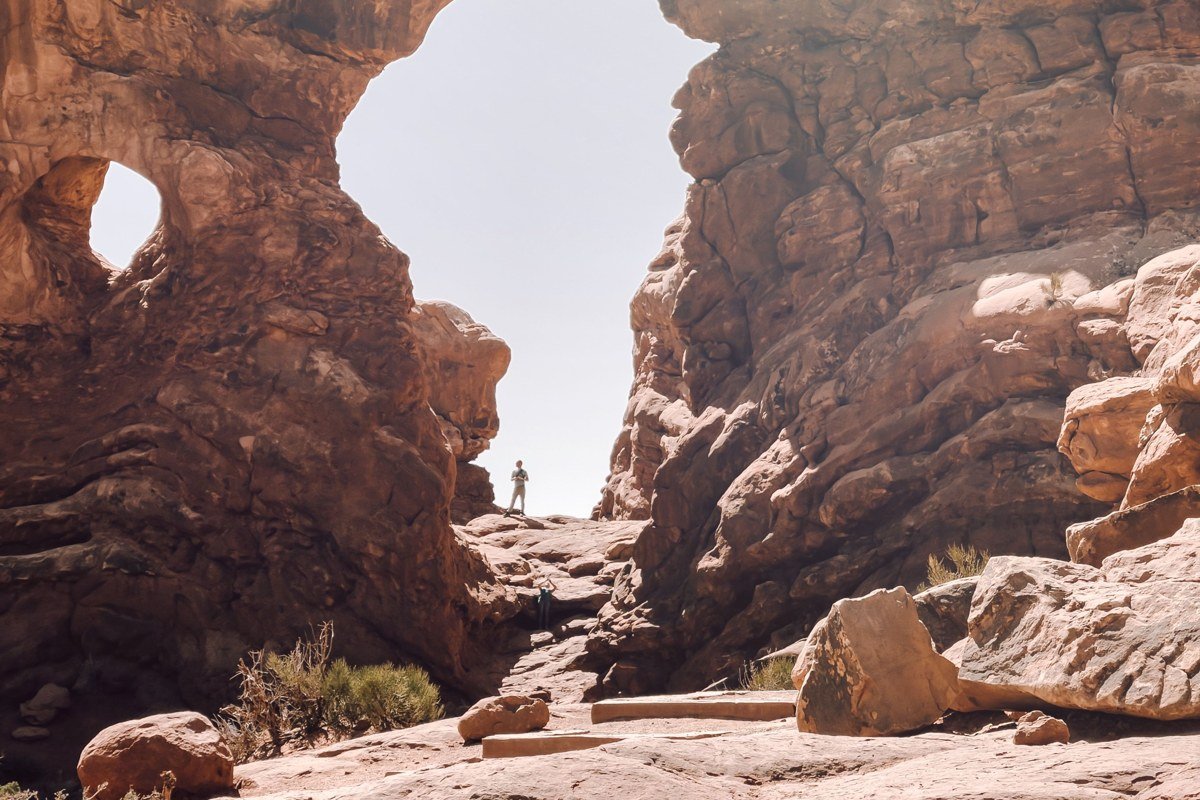
North Window, South Window, and Turret Arch sit on one easy loop, and late March gives you sunrise photo light without the summer heat or the spring-break parking crunch that peaks in April. This is one of the best sunrise spots in the entire park because the Windows face east and catch the first color. The Windows lot is one of the larger ones in the park, but it still fills by mid-morning once the timed-entry window opens for the day. Come at 7 AM in late March and you’ll have the sandstone frame to yourself; arrive after the light’s already up and you’re negotiating for a tripod spot with whoever got there first.
Delicate Arch, Utah – best in early April
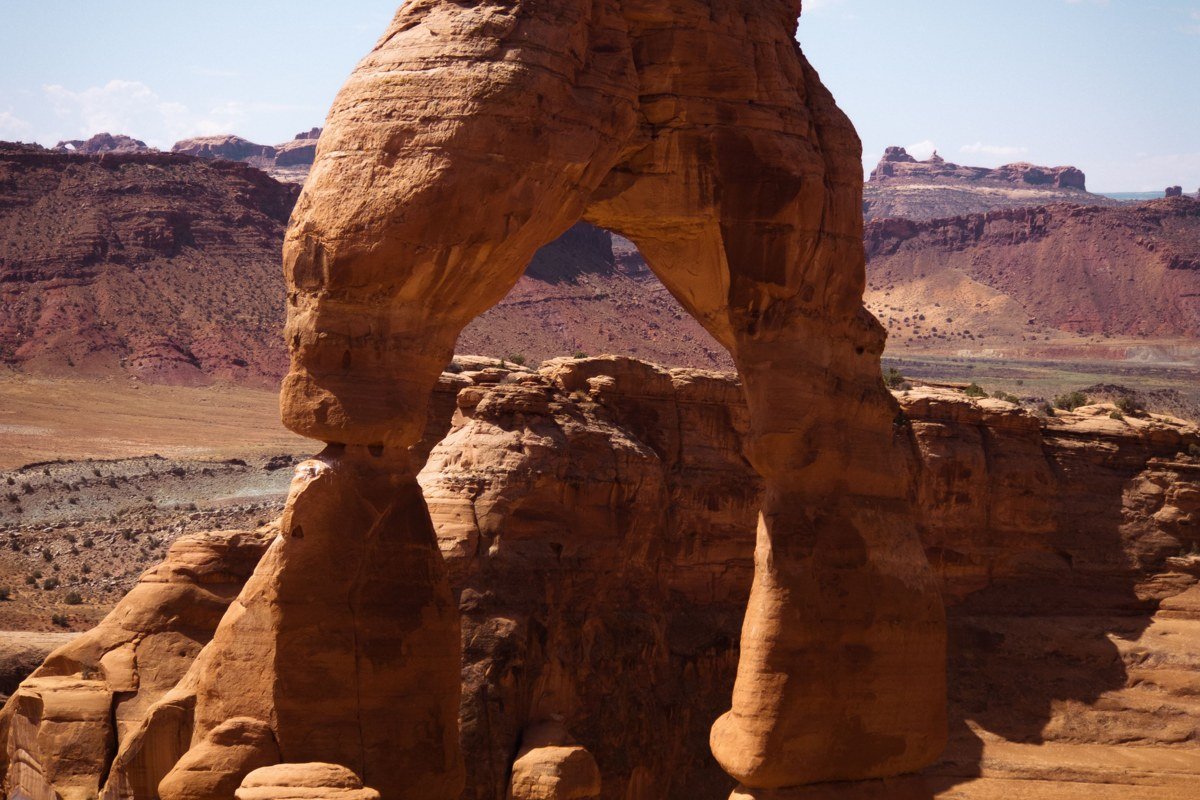
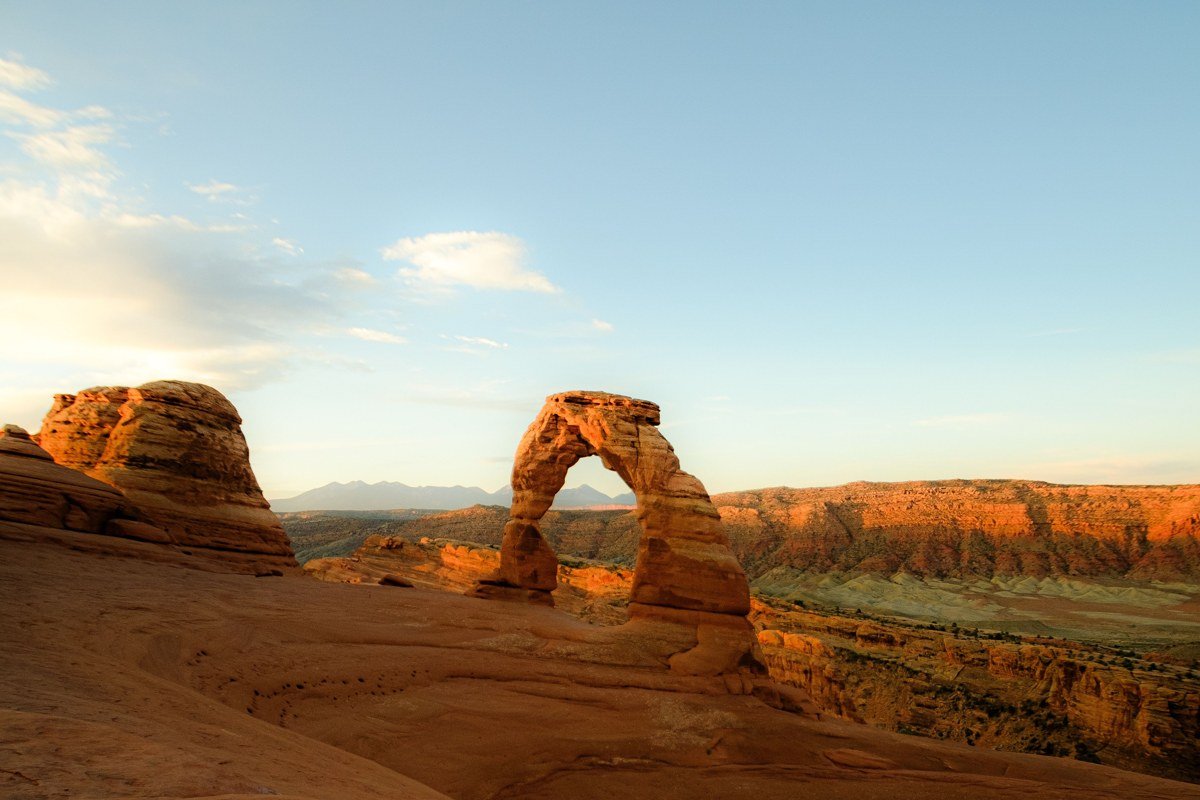
Delicate Arch is the postcard, the three-mile round trip with the exposed slickrock climb, and the arch that glows at sunset with the La Sal Mountains framed inside it on a clear evening. Early April threads the needle: daytime highs are still comfortable for the climb, the light cooperates, and you’re ahead of the true crush that hits by Memorial Day weekend when the viewing area below the arch is standing room only. My call: go for sunset, not sunrise, since the west-facing rock needs that late light. Start the hike ninety minutes before sunset, because the trail has no shade and no water source, and the last quarter mile is a slickrock incline that’s easy to underestimate in fading light.
Anytime add-ons if you’re already up early
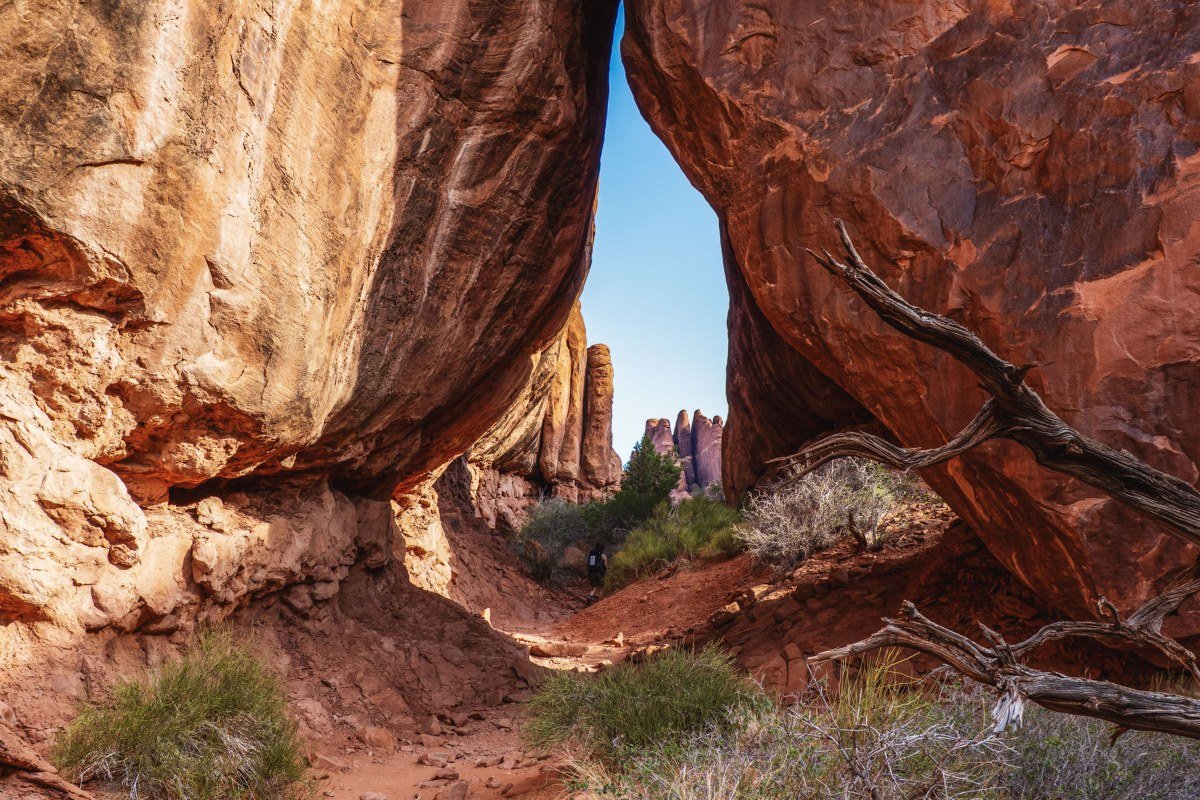
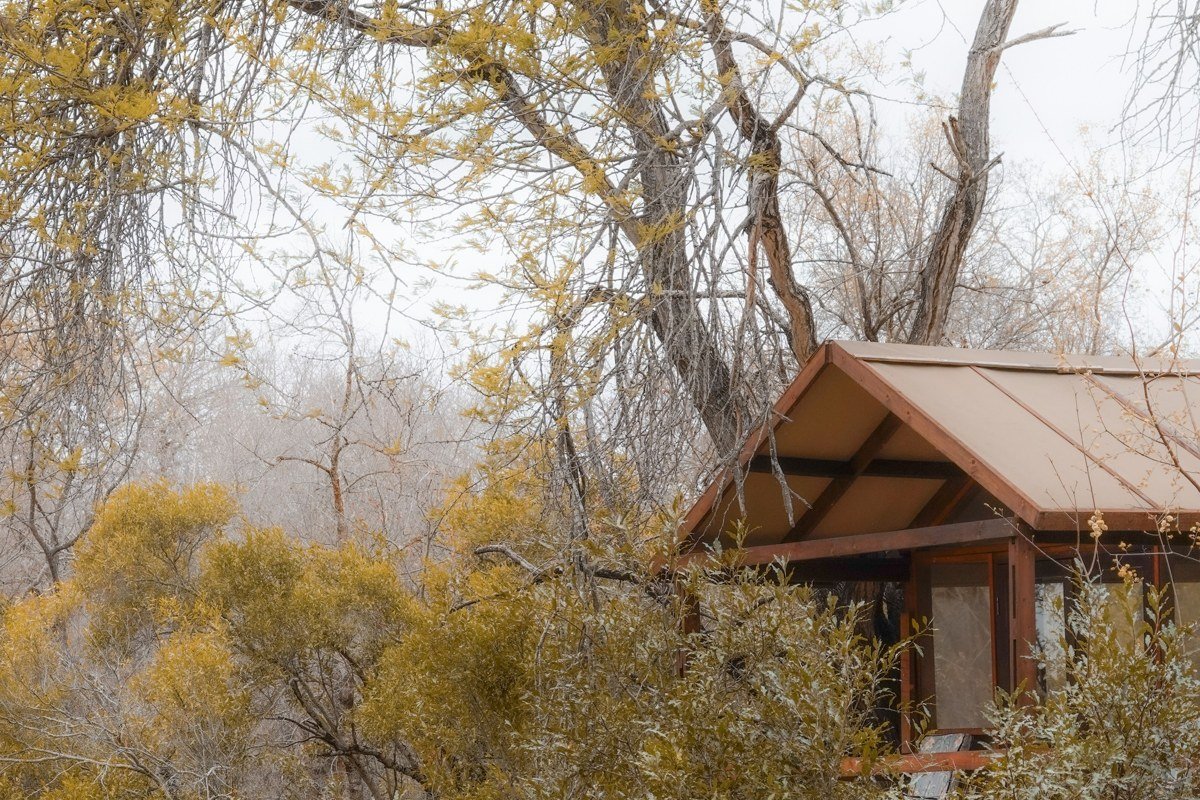
Balanced Rock, Wolfe Ranch, and Park Avenue’s Courthouse Towers end don’t need a specific month, they need a specific hour. Balanced Rock is a ten-minute loop that’s mobbed by midday from spring through fall but nearly empty at sunrise any time of year; its pullout lot holds only a handful of cars, so midday visitors often just slow down, photograph it from the road, and move on. Wolfe Ranch, the trailhead for Delicate Arch, has a historic cabin and cottonwood grove worth a five-minute look even if you’re not doing the full climb, and it’s dead quiet before 7 AM regardless of season. All three sit within a few minutes’ drive of each other and of the Windows, so if you’re already out before sunrise for one trail, string the others onto the same loop instead of driving back out later when the lots are full.
Double Arch, Utah – best in mid-September
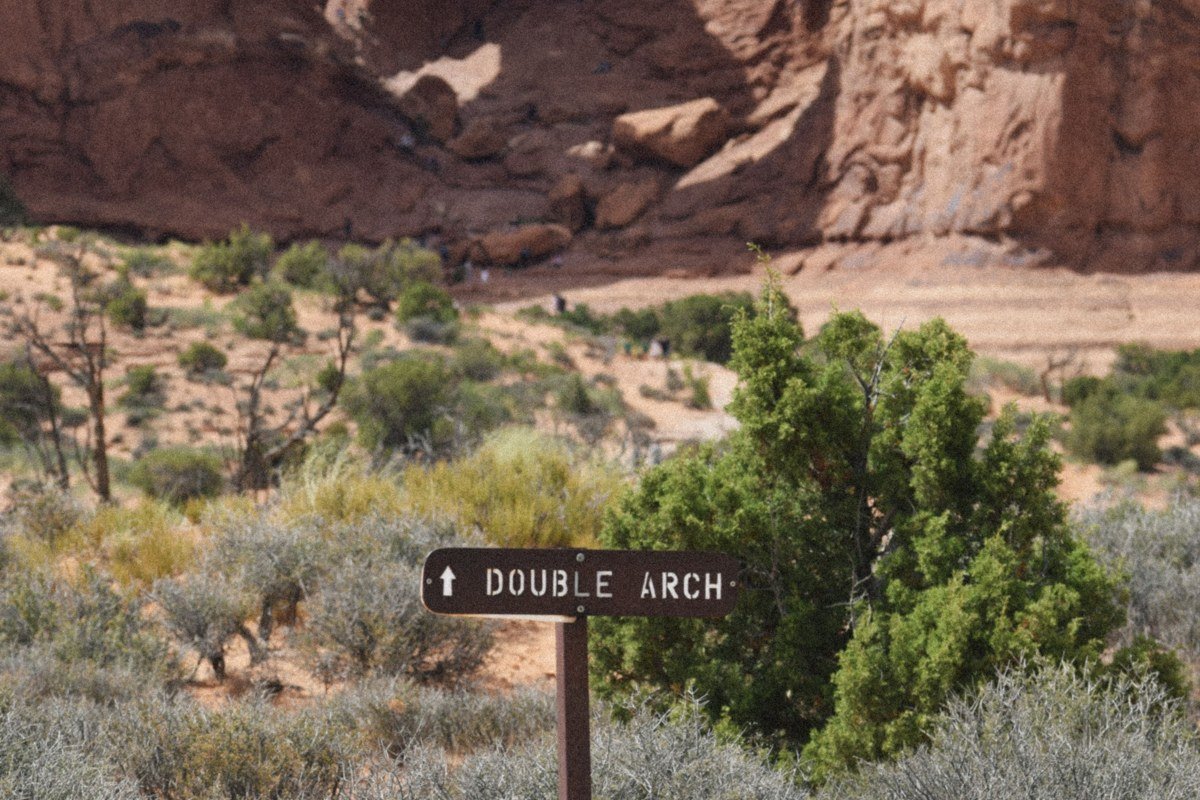
Double Arch, the joined pair recognizable from the opening of an old Indiana Jones movie, faces open sky and takes both sunrise and sunset light reasonably well, which makes it more forgiving than most spots in the park. Mid-September is the sweet spot: monsoon storm season is winding down, daytime highs have dropped out of the triple digits, and the summer break crowds have gone back to school. This 0.8-mile round trip near the Windows section is short enough that people linger, so arriving right at opening light still matters even in the calmer shoulder season. Skip August here if you can help it. Late-summer monsoon cells build fast over the La Sals, and exposed slickrock with a lightning risk is not a place to be caught improvising.
Landscape Arch and the Primitive Loop, Utah – best in late September
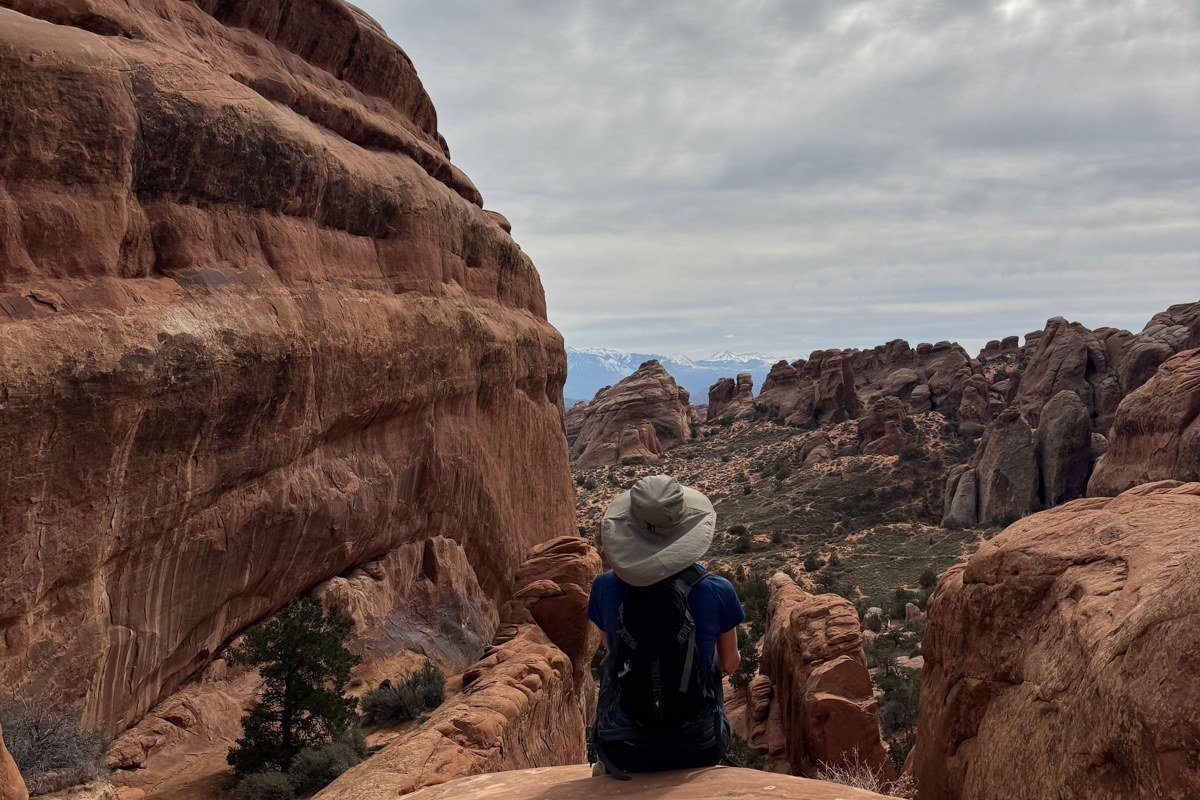
Landscape Arch is the thinnest, longest arch in the park, and pieces of it have sheared off before, which is why you view it from a distance rather than walking underneath. Late September through mid-October is the best-time-of-year answer most experienced visitors give: daytime highs settle into the 60s and 70s, nights are cool but not yet freezing, and this is before the shorter days of true winter cut the early-entry window down to almost nothing. Summer means starting this hike at or before 6 AM just to beat 100-degree heat on exposed rock. Winter means a gorgeous but short and cold outing with ice possible on the primitive loop past the arch. Moab’s shoulder-season occupancy climbs noticeably through late September and into October’s peak leaf and festival weekends, so book that stretch further out than you would July.
Whatever week you land on, the daily mechanics are the same across all nine of these. Arches has used a timed-entry reservation system for peak-season daytime hours in recent years; as of this writing entry between roughly 7 AM and 4 PM during the reservation season has required a ticket, but confirm the current season dates and exact hours directly on nps.gov before you go, since both have shifted year to year. Arriving before that window opens is the entire reason the early-morning strategy works, and it also means you’re not competing for a reservation slot that may already be sold out. The visitor center just past the entrance station opens later than the park itself, so don’t wait for it to open before heading in. The per-vehicle entrance fee is $30 and covers seven days; if you’re also stopping at nearby Canyonlands National Park, an $80 annual interagency pass pays for itself in two visits. There’s no lodging inside Arches itself, camping is limited to the 51-site Devils Garden Campground and books out months ahead on recreation.gov, and Moab, five miles south on Highway 191, is your real base.
Month by month
- January: Devils Garden, for quiet snow-dusted light on Landscape Arch
- February: Fiery Furnace, for the easiest permit window of the year
- March: Park Avenue early, the Windows late, for empty canyon light
- April: Delicate Arch, plus the anytime add-ons, the last easy stretch before summer crowds
- May: same as April but arrive earlier, the window is closing fast
- June: skip midday entirely, do sunrise Windows or nothing
- July: avoid strenuous hikes altogether, this is the miserable month
- August: watch the sky, monsoon storms make afternoon hikes genuinely risky
- September: Double Arch early, Landscape Arch late, as heat breaks
- October: Landscape Arch and the primitive loop, arguably the best month overall
- November: any trail, cooler but still workable, thinner crowds
- December: Devils Garden or the Windows, short days, big rewards for early risers