
Stand in Shirakawa-go on a quiet January morning and you will hear it before you see it: a low whisper, then a soft collapse, as a shelf of snow slides off a thatched roof and lands in the silence below. That sound, that specific texture of stillness interrupted, is what no photograph of these places ever captures. These eight fairy-tale villages share one quality: standing inside them, you genuinely question whether the scenery is constructed. Each one has a distinct aesthetic identity, which is exactly why they keep circulating on Pinterest years after their first viral moment.
1. Hallstatt, Austria
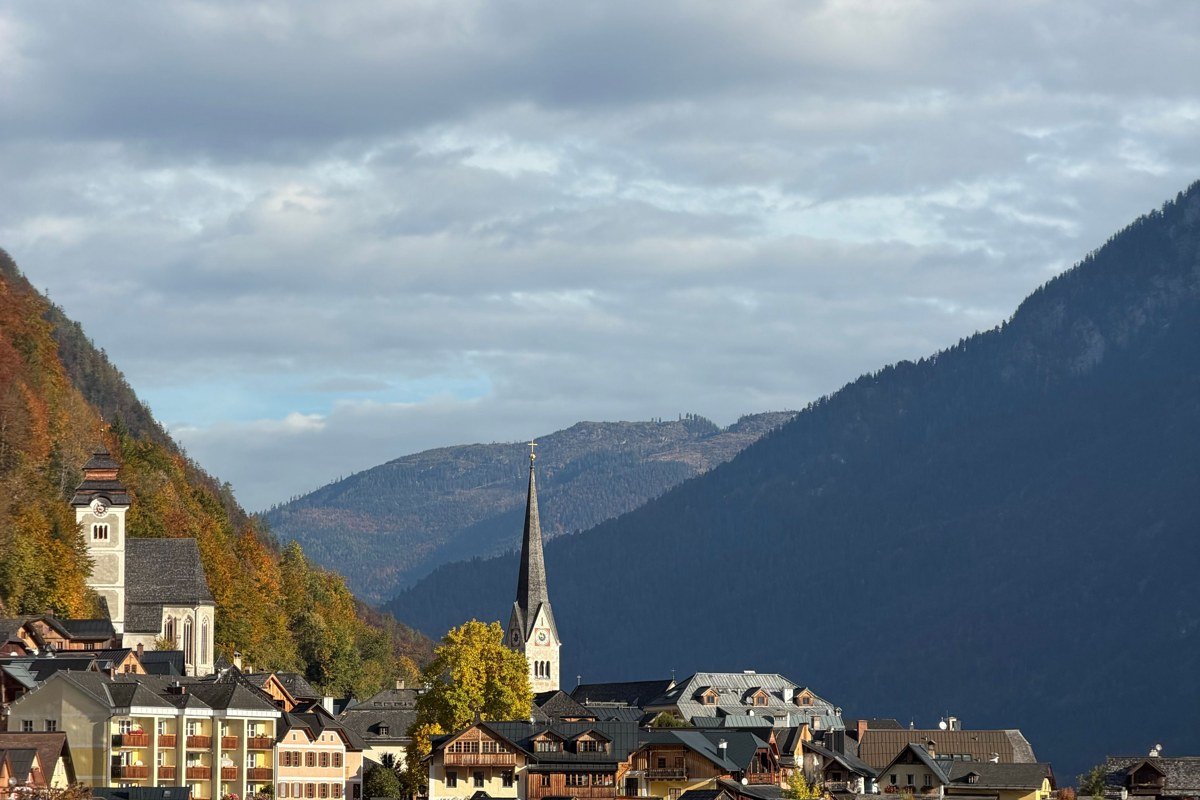
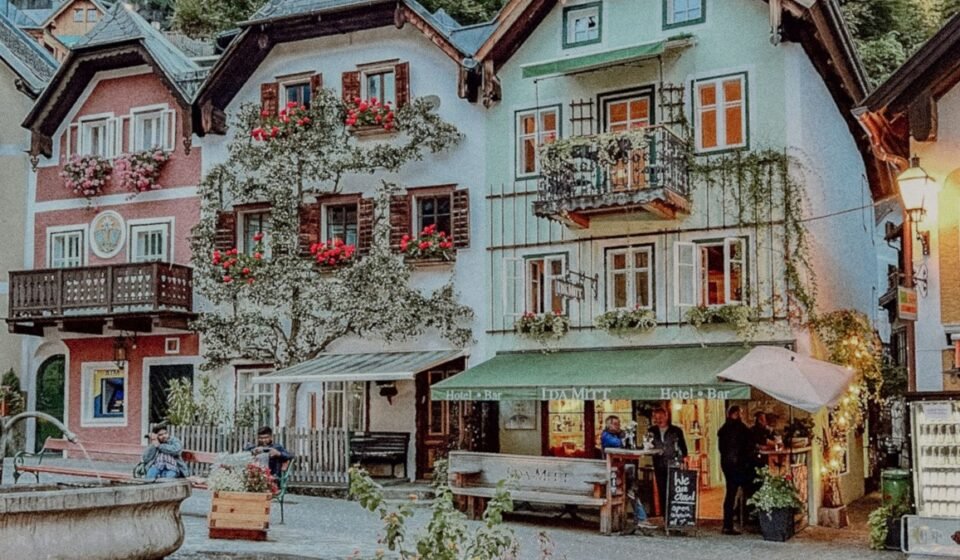
Hallstatt sits on a narrow ledge between the Dachstein glacier and the Hallstattersee, which means the village has basically nowhere to sprawl. Every house stacks tightly against the next, their window boxes dripping red geraniums, and the whole cluster reflects in the lake below with almost absurd precision. The single most photogenic spot is the little Catholic church with its onion-dome spire, best shot from the lake by renting a rowboat at dawn before tour groups arrive. Hallstatt is genuinely very crowded from May through September, so a mid-week visit in late April or early October gets you the atmosphere without the crush. The bone house (Beinhaus) inside the chapel is a genuinely singular, slightly unsettling thing to see and most visitors skip it entirely.
Access requires a train to Hallstatt station on the opposite shore of the lake, followed by a short ferry crossing. Budget travel is feasible from Salzburg as a day trip, though staying overnight in the village itself justifies the higher room rates.
2. Monsanto, Portugal
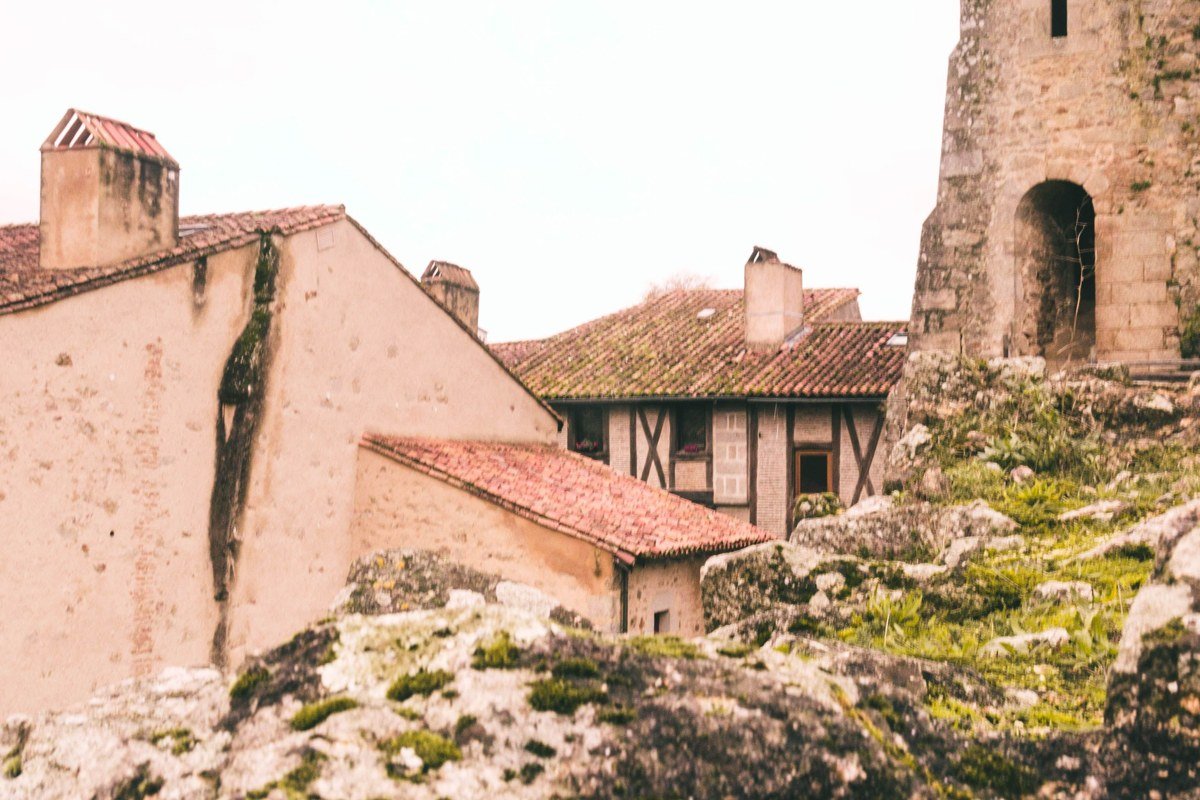
Monsanto was voted “most Portuguese village in Portugal” in 1938 and the residents have kept a commemorative jug on a pedestal ever since. The village is built directly into and around enormous granite boulders, so houses share walls with rocks that are bigger than the buildings themselves. Some roofs are literally the underside of a boulder. The aesthetic is primordial rather than pretty, somewhere between a hobbit settlement and a prehistoric fortress, and it photographs completely differently depending on the light. Walk up to the Castelo ruins at the top and you get views across the Beira Baixa plain stretching into Spain. Visit in the morning before the heat builds because there is almost no shade in the upper village.
Monsanto has no train connection. The most practical approach is a rental car from Castelo Branco, about 50 kilometres away. Accommodation in the village is limited to a handful of guesthouses, so book well ahead for spring and summer.
3. Shirakawa-go, Japan
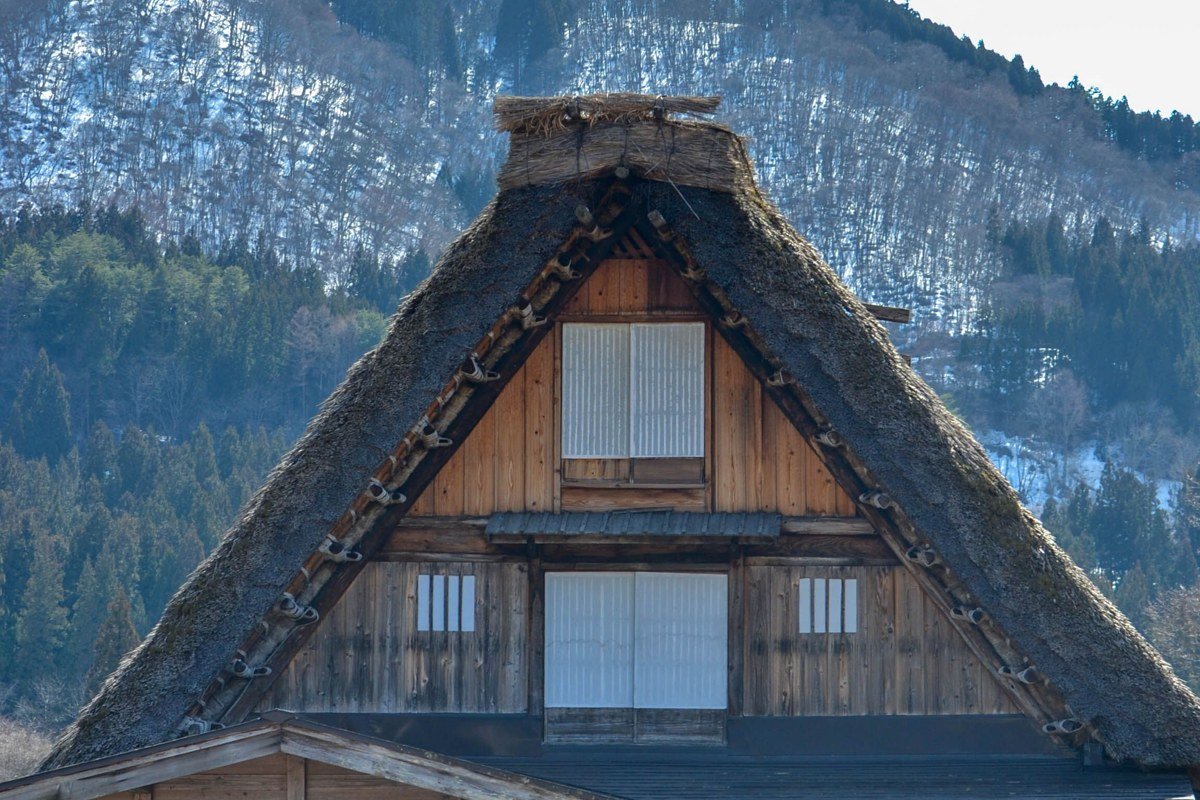
The gassho-zukuri farmhouses of Shirakawa-go have roofs pitched so steeply they look like hands pressed together in prayer, which is exactly what the Japanese name means. The steepness is purely practical, designed to shed the region’s extraordinary snowfall, but it produces something no image fully conveys: the smell of irori hearth smoke drifting from the farmhouses on a cold morning, cedar and woodsmoke threading through air so clean it almost hurts, while overhead the thatch creaks and then releases another slide of snow with that soft, unhurried collapse. The village sits in a narrow valley in the Hida region of Gifu Prefecture and the surrounding mountains close it in dramatically on all sides. The best single view is from the Shiroyama viewpoint across the valley, a ten-minute walk up a path behind the main cluster. February illumination events happen on select nights and draw crowds, but on an ordinary January weekday the village is quiet and genuinely otherworldly.
Buses run from Takayama (about 50 minutes) and Kanazawa (about 75 minutes), making Shirakawa-go accessible without a car. Budget travellers can use a day-trip bus pass; staying overnight in a working gassho-zukuri farmhouse costs more but puts you there at dusk and dawn when the day visitors are gone.
4. Civita di Bagnoregio, Italy
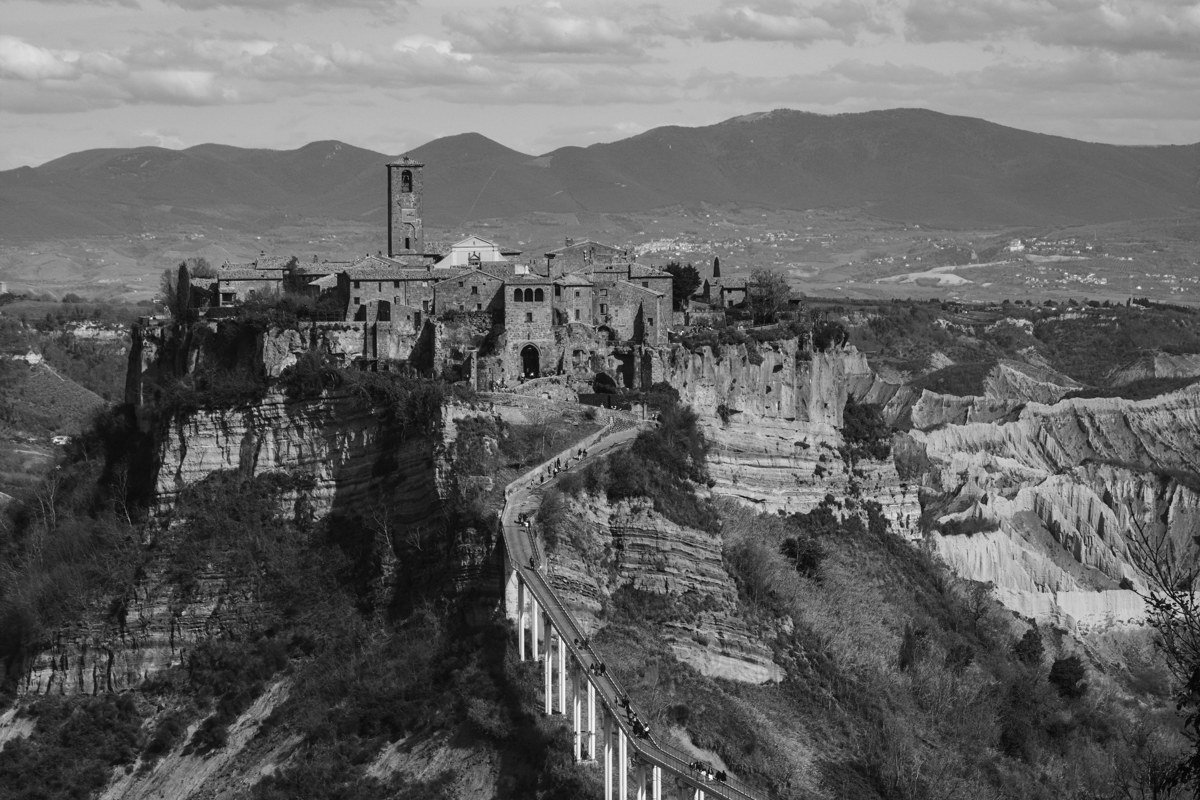
Civita di Bagnoregio is dying, slowly and literally. The town sits atop a plug of volcanic tufa that erodes a little more every year, and the only access is a long pedestrian bridge from the town of Bagnoregio below. About ten people live there year-round. The drama is geological: the surrounding badlands, called calanchi, look like crumpled brown paper, and the town perches on its pillar above them with almost theatrical confidence. It is sometimes called “the dying city” (la citta che muore) and that melancholy is part of the atmosphere. Walk every alley because the entire village takes about twenty minutes to cover, then sit at the one cafe near the central piazza and order something. Late afternoon in spring, when the light goes amber across the calanchi and there are few tourists, is close to a perfect travel moment.
Entry to the village requires a bridge toll (currently a few euros for visitors, less for Italian residents). Bagnoregio is reachable by bus from Viterbo, which connects to Rome by regional train in around an hour. There is no accommodation inside Civita itself; staying in Bagnoregio or Orvieto is the standard approach.
5. Giethoorn, Netherlands
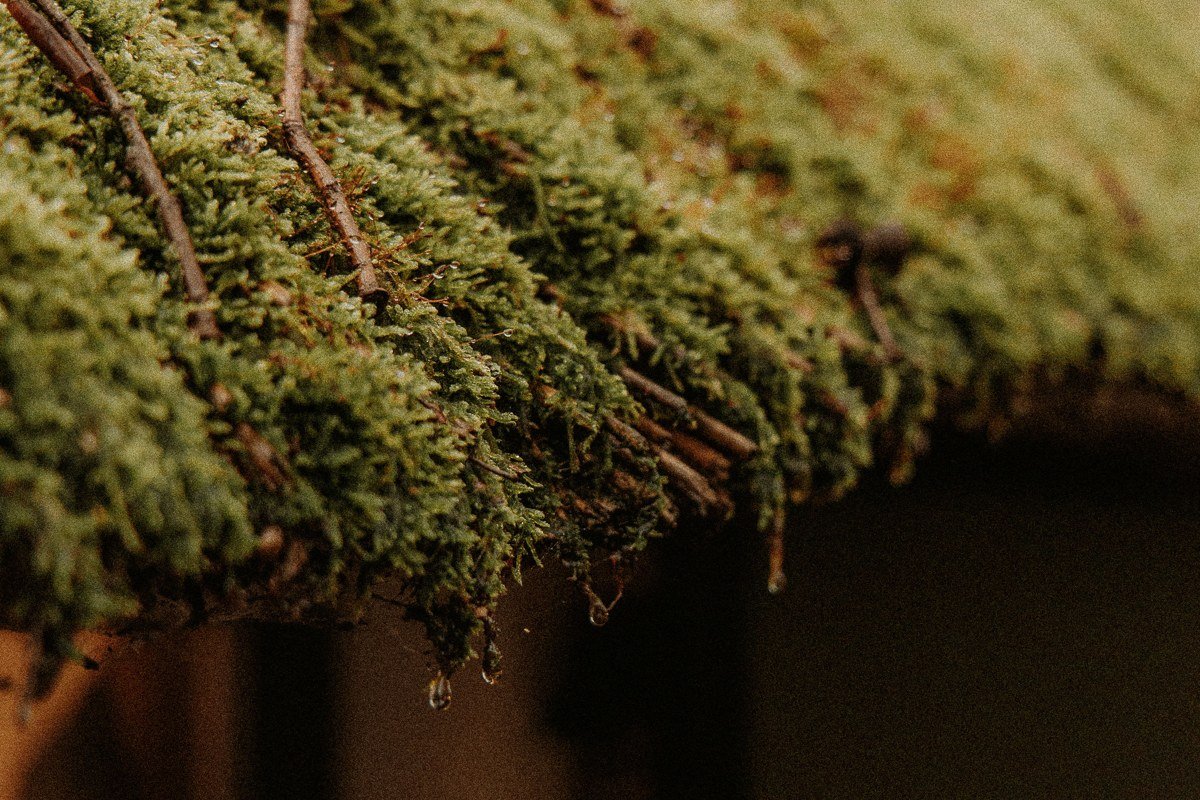
Giethoorn has no roads in its historic center. Canals do the work instead, and the thatched farmhouses sit on small islands connected by arched wooden footbridges. The scale is intimate: the main waterway is barely wide enough for two small boats to pass, and the largest structures are working farmhouses, not palaces or grand civic buildings. The green is relentless in summer, with reeds pressing in on both sides of every waterway, and the silence is genuine because motorboats are replaced here by whisper boats and punting poles. Giethoorn is in Overijssel province, not easy to reach without a car, and that friction keeps the crowd volume lower than it could be given how frequently the village circulates online. Renting a whisper boat and navigating the back canals yourself is worth it. Go on a weekday morning in June before the day-trippers arrive from Amsterdam and you will have stretches of canal entirely to yourself.
The nearest train station is Steenwijk, about eight kilometres away, from which a bus or taxi connects to the village. Renting a whisper boat runs roughly 15 to 20 euros per hour; most visitors find two to three hours sufficient to cover the network.
6. Colmar, France
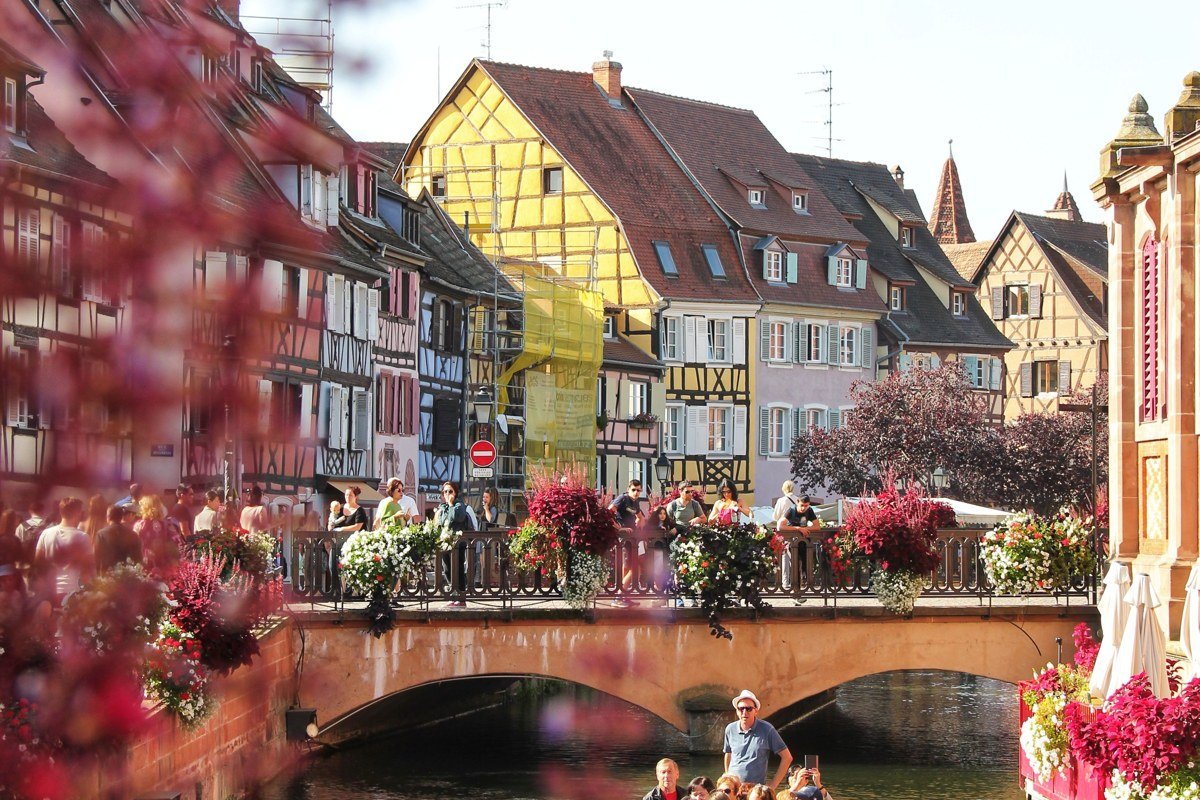
Colmar is a functioning town of roughly 70,000 people, which makes it more livable and less theme-parky than some on this list. The Alsatian half-timbered architecture, in pastel pinks, greens, and ochres, runs along canals in the district called La Petite Venise, and the whole color palette feels more like a watercolor painting than a real streetscape. The painted wooden beams and jutting upper stories are original, not restored confections, and many buildings date to the 15th and 16th centuries. The Christmas market here is genuinely among the best in Europe, not the biggest, but the setting transforms dramatically with fairy lights and wooden stalls selling bredele cookies and mulled wine. Colmar is also the home of the Isenheim Altarpiece at the Unterlinden Museum, one of the most powerful paintings in the Western canon, which most visitors drive past without stopping.
Colmar sits on a main rail line between Strasbourg and Basel, making it one of the most straightforward villages on this list to reach without a car. Prices are moderate by French standards outside the Christmas market period, when accommodation books up months in advance.
7. Setenil de las Bodegas, Spain
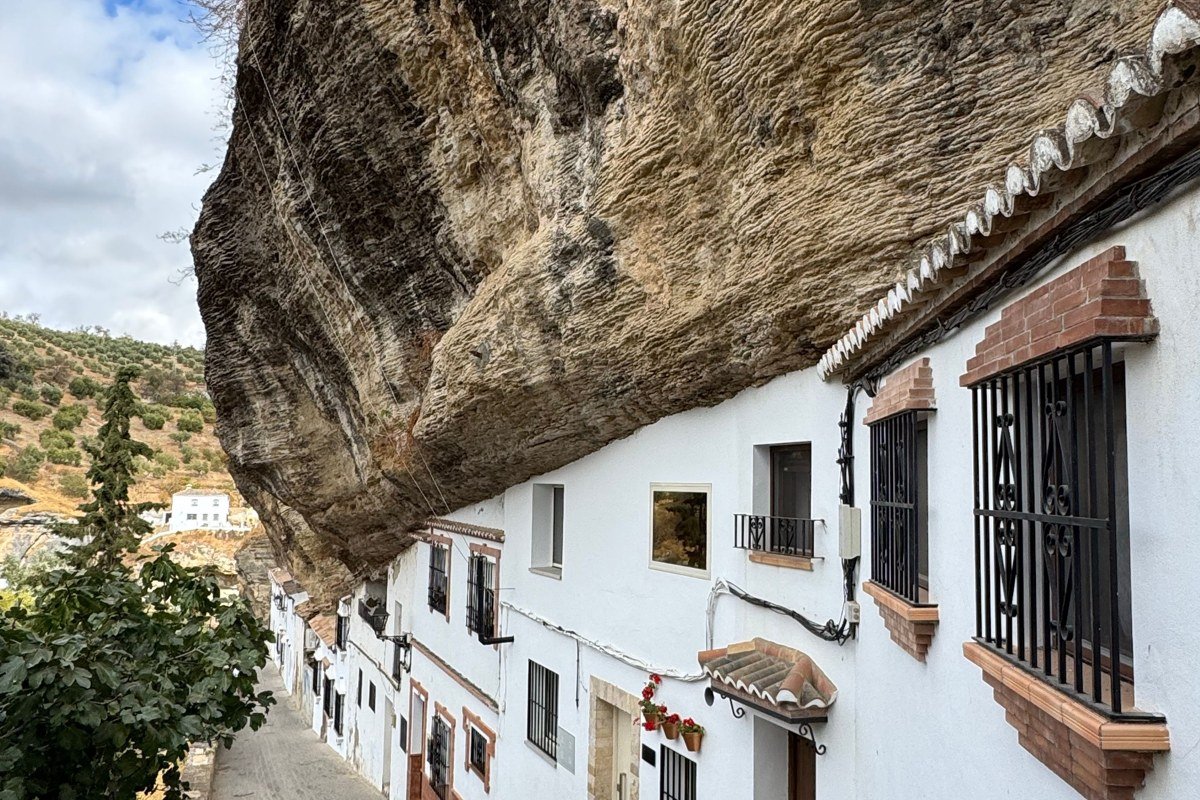
Setenil de las Bodegas is a white Andalusian village where residents built their houses directly under and into overhanging rock ledges, so entire streets have ceilings of solid stone. The effect from a distance is of houses growing out of the cliff face like barnacles. The village is in Cadiz province in the Sierra de Grazalema and appears on none of the major bus tour circuits running between Seville, Ronda, and the Costa del Sol, which means the tapas bars on Calle Cuevas del Sol are priced for locals: a glass of local wine and a plate of iberico costs what it should, not what a captive tourist audience would tolerate. That main street runs under the longest continuous rock overhang in the village and holds several bars operating literally inside caves in the rock face. Come for lunch on a Saturday, order the local pork (the area is renowned for its iberico production), and walk up to the castle ruins for a view that makes the geology make sense. Summer afternoons are brutally hot and the shade under the rocks is not just aesthetic, it is the entire point.
A rental car is effectively essential; the nearest train station is at Ronda, about 20 kilometres away, with no reliable onward bus. The upside is that self-drive also opens up the surrounding Sierra de Grazalema villages, which are equally unhurried.
8. Hamnoy, Norway
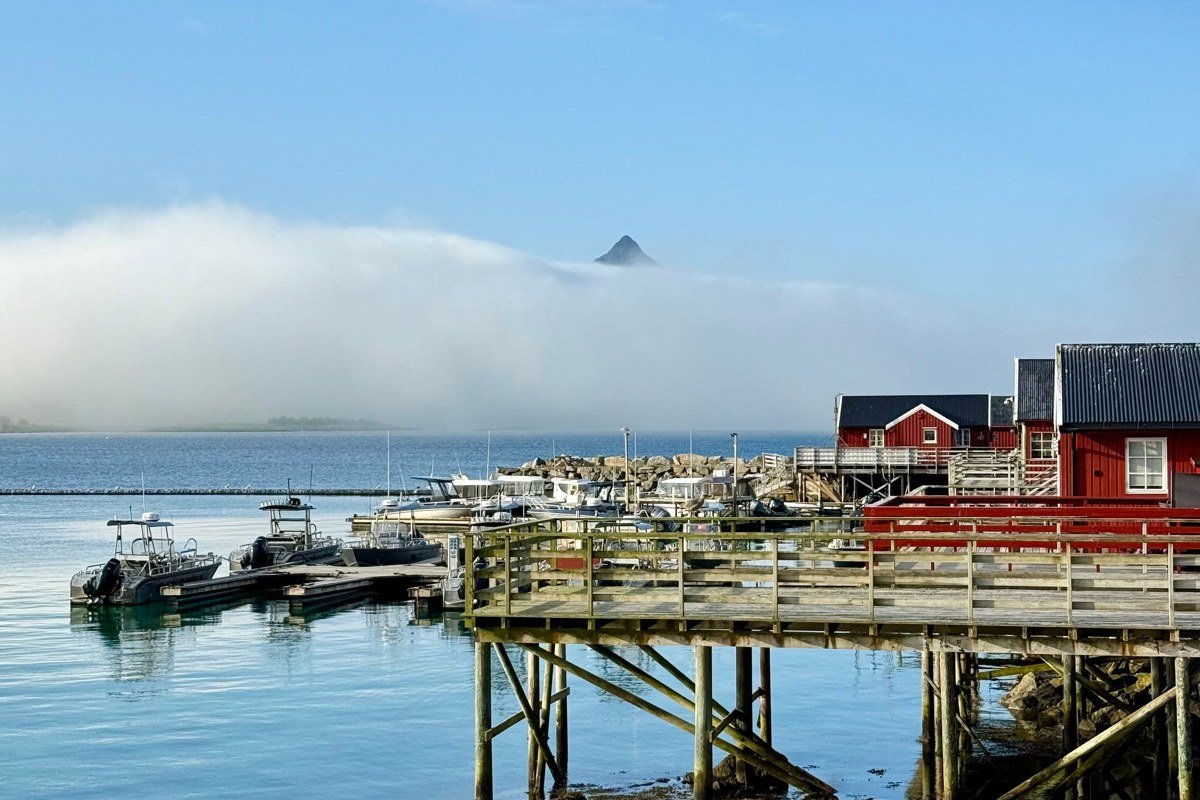
Hamnoy is a cluster of red wooden fishing cabins (rorbu) on stilts above the water at the end of a road in the Lofoten Islands, backed by peaks so vertical they look generated. The mountains drop directly into the fjord with almost no foothill transition, which is what makes Lofoten consistently unbelievable to people seeing it for the first time. Hamnoy specifically is the spot that launched approximately half of all Lofoten photography because the rorbuer, the bridge, and the peak called Olstinden align in a single frame that needs almost no cropping. The Northern Lights are visible here from roughly September through March on clear nights, and the cobalt blue twilight that persists for hours in winter creates a photography window that simply does not exist further south. Stay in a rorbu rental rather than a hotel because waking up with the fjord six feet below your window is the experience. Summer brings the midnight sun but also intense tourism; February and March offer snow, potential aurora, and far fewer people.
Hamnoy requires a flight to Bodo or Evenes airport, followed by a drive of roughly two to three hours along the E10 through the Lofoten chain. Budget for the rorbu rentals to be higher than standard Norwegian hotel rates, particularly in winter aurora season.
9. Chefchaouen, Morocco
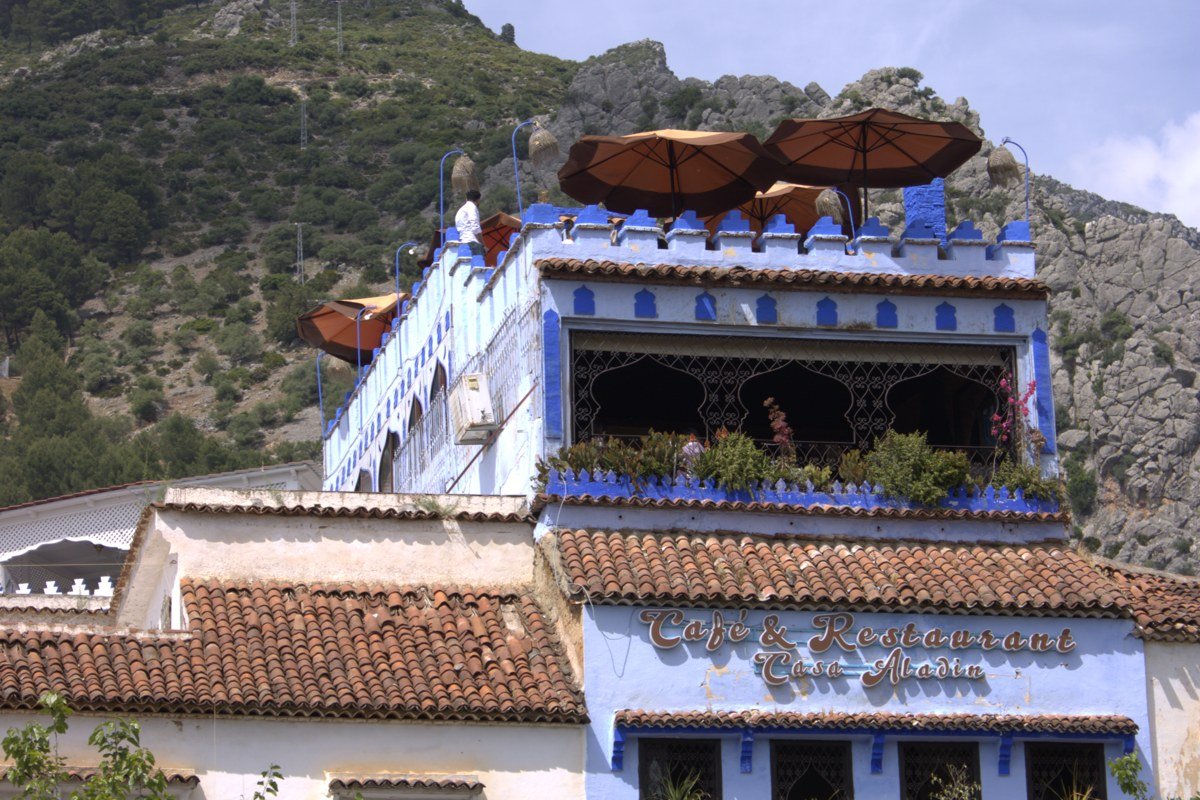
Chefchaouen sits in a fold of the Rif Mountains in northern Morocco, and almost every surface in its medina is painted in a shade of blue: powder, cobalt, cornflower, and slate layered against each other along alleys so narrow that outstretched arms touch both walls. The effect is less a colour scheme than a sustained atmosphere, cooler and quieter than the blues suggest, with the smell of cedar wood from the carpentry workshops and the sound of water running through open channels in the street. The city has a genuine working life beneath the photography: market stalls selling spices and vegetables, women carrying bread to communal ovens, cats conducting their own unhurried business on every staircase. The best light is early morning, when the alleys are swept clean and the blue reads truest before foot traffic and direct midday sun flatten it out.
Chefchaouen is accessible by bus from Tangier (roughly three hours) or Fes (roughly four hours), making it viable without a rental car. Accommodation inside the medina ranges from simple guesthouses to mid-range riads; neither end of the market is expensive by European standards, which is part of why it rewards a slower, multi-night stay.
How to Actually Visit These Fairy-Tale Villages
A few honest logistics worth noting before you book.
Most of these villages are small and fragile. Hallstatt has actively tried to limit visitors, Civita di Bagnoregio charges an entry fee to cross the bridge, and Giethoorn’s canal system cannot absorb unlimited boat traffic. Shoulder season (April to early May, or late September to October for European villages) almost always produces better photographs and a less stressful visit than peak summer.
For photography, the common thread is arriving early. Every single village on this list transforms between 6 a.m. and 8 a.m. in a way that mid-morning does not replicate. Fog, clean light, empty streets, and the smell of bread or woodsmoke rather than sunscreen.
Accommodation matters more here than on a city trip. Staying inside the village (or as close as possible) rather than basing yourself in a larger nearby town shifts the experience entirely. You get the place before and after the day-trippers, and that gap is where the atmosphere actually lives.
Finally, resist the urge to run the whole list in one trip. These places are scattered across Europe, Asia, and Africa for a reason. Pick one or two that match your travel style and go properly, rather than checking boxes at speed.