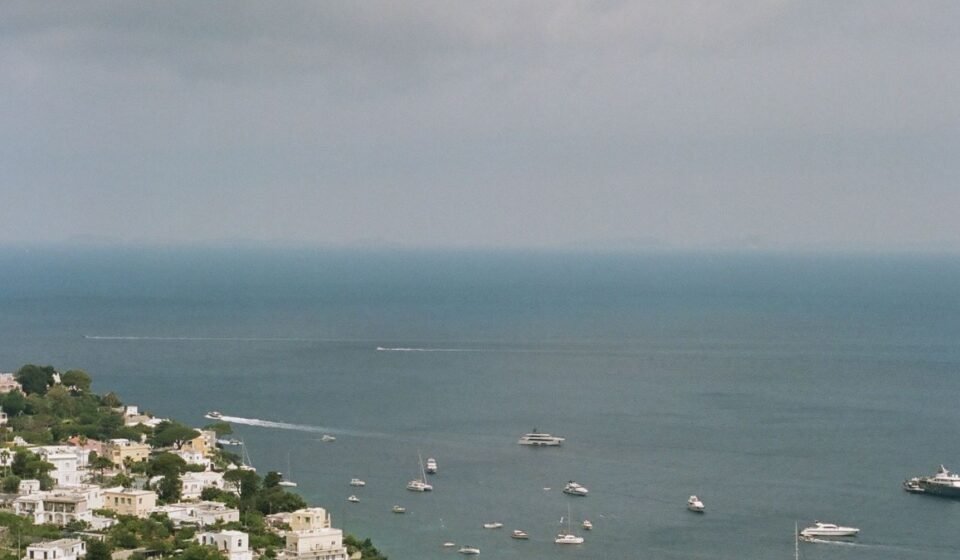

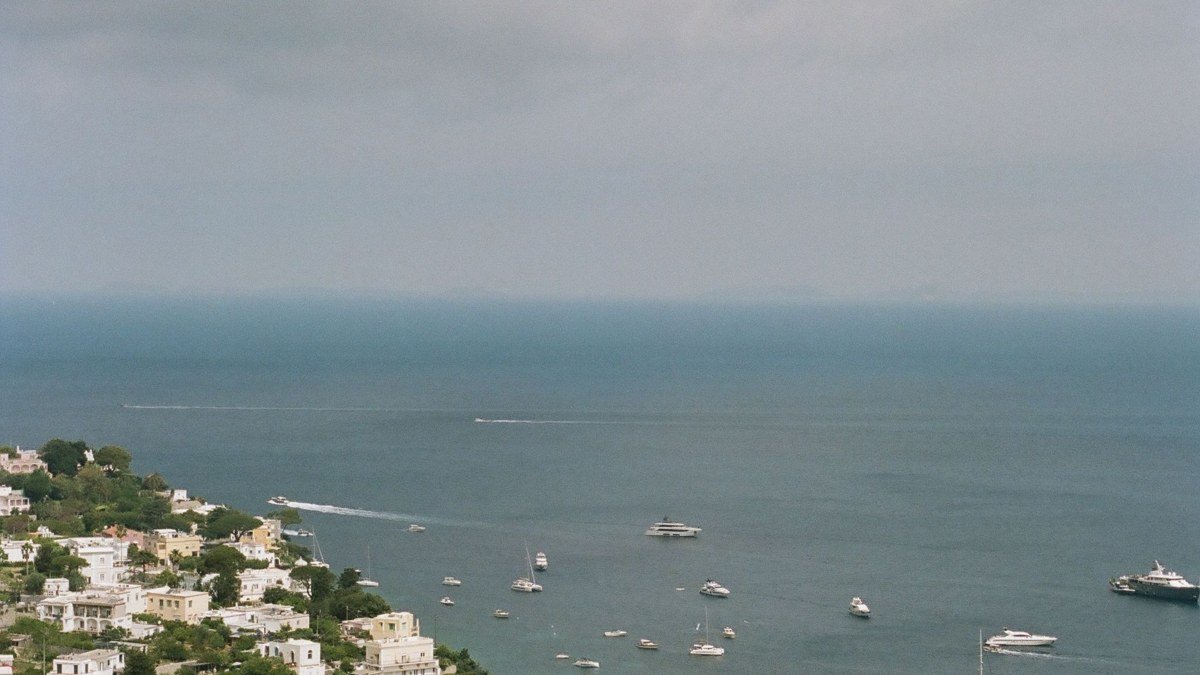
Picture this: it’s 11am on a July Saturday and the SITA bus stop in Amalfi has forty people crammed under a strip of shade, all watching a bus roll up already full. It doesn’t stop. The next one is in forty minutes, and it will also be full. Meanwhile, a ferry glides out of the harbor below with empty seats, past cliffs that no bus window can do justice to.
That scene is the whole reason this three-day, car-free plan exists. The single biggest mistake people make here is treating the coast like a driving destination and then panicking when they don’t have a car. You don’t need one. In fact, on the Amalfi Coast a car is often a liability: nowhere to park, hairpin traffic, and a road so narrow that two tour buses meeting head-on can stop everything for twenty minutes.
The trick is sequencing. Ferries when the sea is calm and the views are the point. Buses for early mornings and bad weather. Walking to link the spots that are annoyingly close but transit-awkward. Get the order right and the logistics disappear into the background, which is exactly where they belong.
Where to Base Yourself (This Decision Makes or Breaks the Trip)
Do not sleep in a different town each night. Dragging luggage on and off ferries and up stepped alleys will eat an entire day and your patience. Pick one base for all three nights.
Your realistic options:
- Sorrento: Technically the Sorrentine Peninsula, not the Amalfi Coast proper, but it’s the transport hub. Direct train to Naples and Pompeii, ferries everywhere, flat and walkable, cheapest hotels. The trade-off is that it lacks that vertical Amalfi drama.
- Amalfi town: Central on the coast, biggest ferry port, buses in both directions. A good middle-of-everything choice. Gets very crowded midday.
- Positano: The postcard. Stunning, but everything is stairs, prices are the highest on the coast, and the ferry dock and bus stop are far apart and far below most hotels.
My recommendation for a first trip without a car: base in Sorrento or Amalfi. Choose Sorrento if you want the easiest logistics and a Pompeii day, and Amalfi if you want to wake up on the coast itself.
The rest of this plan assumes a Sorrento base, because it gives you the most reliable transport spine. I’ll note the swaps if you choose Amalfi.
The Transport Toolkit
Three systems do all the work. Know how each behaves.
Ferries
Run roughly April through October (peak schedule June to September). The main operators are Travelmar, Alicost, Positano Jet, and NLG. Ferries link Sorrento, Positano, Amalfi, and Salerno, with some seasonal Minori and Maiori stops.
Schedules and operators change. Cross-check current timetables at the harbor or on the operators’ websites in the week before you travel.
- They are weather-dependent. Rough seas cancel sailings, usually decided that morning.
- Buy some tickets in advance in peak season for popular runs (Positano to Amalfi sells out), but many you buy at the dock kiosk 30 to 60 minutes before.
- Sample fares: Sorrento to Positano around 18 to 22 euro; Positano to Amalfi around 10 to 12 euro; Amalfi to Salerno around 10 euro. Cash and card both usually work at kiosks.
- To check same-morning status, look at the operator’s website for posted cancellations, or ask at the harbor kiosk, which often lists a WhatsApp group where sailings and cancellations are announced.
SITA Buses
The blue regional buses run the coast road year-round and go where ferries don’t (Ravello, Praiano, plus early and late hours). Tickets are cheap (a few euro) but you must buy them before boarding, from tabacchi shops, bars, or newsstands, then validate onboard. Buses get packed and run late. Sit on the seaward side going toward Amalfi for the views.
Feet
Walking connects things transit handles badly, and some of the best hours of the trip are on foot: the Path of the Gods, the stairs of Positano, the lemon-terrace lanes above Amalfi.
Here’s how the three compare for the core hops:
| Route | Best by ferry | Best by bus | Rough time | Notes |
|---|---|---|---|---|
| Sorrento to Positano | Yes | No (long, winding) | 35-50 min ferry | Ferry is faster and scenic |
| Positano to Amalfi | Yes | Backup | 25-30 min ferry | Ferry sells out in peak |
| Amalfi to Ravello | No ferry | Yes (only option) | 25-30 min bus | Bus from Amalfi harbor, plus stairs |
| Amalfi to Salerno | Yes | Yes | 35 min ferry | For trains onward |
| Sorrento to Naples/Pompeii | No | Circumvesuviana train | 30-70 min | Not the coast road |
The 3-Day Itinerary That Actually Flows
The logic: hit the ferry-dependent, view-critical legs on the calmest, clearest part of each day (usually morning). Save bus-only Ravello and the walking day for structure that doesn’t depend on the sea. Move west to east so you finish near Salerno for an easy exit.
Day 1: Sorrento to Positano to Amalfi
Morning. Grab breakfast in Sorrento and walk to Marina Piccola for the first or second ferry to Positano, ideally by 9 to 9:30am. Early boats are emptier and the light on the cliffs is best.
You’ll arrive at Positano’s Spiaggia Grande. Do not immediately climb. Walk the beachfront, then take the stepped Via Positano up through the boutiques to the church of Santa Maria Assunta with its majolica dome. Wander the upper lanes for an hour. This is a place to drift, not to check off sights.
Lunch. Eat early (12 to 12:30) to beat the rush. A spot up the hill with a terrace beats the beachfront tourist traps on both price and view. Expect 20 to 35 euro per person for lunch with a drink.
Afternoon. Catch an early-afternoon ferry from Positano to Amalfi (25 to 30 minutes). This is one of the best short ferry rides in Italy, so sit outside. If the timetable allows, this same route makes it easy to break the journey in Praiano, a quieter village between the two, for an afternoon coffee or a swim off the Marina di Praia. In Amalfi, see the striped Duomo of Sant’Andrea and climb its dramatic staircase, then walk 10 minutes up Via delle Cartiere to the Paper Museum in the valley. Housed in a 13th-century mill, it still runs its original water-powered paper presses, and you’re free to touch the thick handmade sheets as they come off the frames. It’s genuinely interesting and blessedly cool on a hot day.
Evening. Ferry back to Sorrento on the last sailing (check times, often around 5:30 to 7pm depending on month), or, if you’re basing in Amalfi, you’re already home. For dinner in Sorrento, head into the old town around Via San Cesareo and the streets off Piazza Tasso, a lantern-lit warren of trattorie where a plate of gnocchi alla sorrentina costs a fraction of the coastal terraces.
Approximate Day 1 transport cost: 30 to 35 euro in ferries.
Day 2: The Path of the Gods (The Signature Walk)
This is the day people remember. The Sentiero degli Dei (Path of the Gods) runs high above the coast between Bomerano (Agerola) and Nocelle, above Positano. It’s roughly 7 to 8 km, mostly downhill if you walk it in the right direction, and the views are the best on the entire coast.
Walk it Bomerano to Nocelle, not the reverse. Uphill from Nocelle in the heat is punishing. Downhill from Bomerano is a joy.
The logistics:
- From Sorrento, take the SITA bus toward Amalfi and change at Amalfi for the bus up to Agerola/Bomerano. From an Amalfi base, this is simpler: direct bus up to Agerola. Aim to start the trail by mid-morning.
- Walk the trail. Allow 3 to 4 hours with photo stops. Bring water, a hat, and real shoes. There is little shade.
- The trail ends above Nocelle. From there, either take a local bus down toward Positano or descend the roughly 1,700 steps to Positano’s road, where you catch a bus or walk to the beach.
- From Positano, ferry back to Sorrento (or bus and ferry to your Amalfi base).
If you’re not up for the full walk, the first 30 to 45 minutes out of Bomerano deliver most of the drama, and you can turn back.
Approximate Day 2 transport cost: buses total 5 to 10 euro, plus a ferry home around 18 to 22 euro if returning to Sorrento.
Day 3: Ravello, Then an Easy Exit via Salerno
Ravello sits high above Amalfi and has no ferry. That’s exactly why it’s a day-three anchor: it doesn’t depend on the sea, so it’s your weather-proof insurance.
Morning. Ferry or bus to Amalfi, then the SITA bus up to Ravello (25 to 30 minutes of switchbacks). Ravello is calm, green, and cultured. Visit Villa Rufolo for its famous garden terrace over the sea and Villa Cimbrone for the Terrace of Infinity, arguably the most photographed viewpoint on the coast. Both charge modest entry (around 7 to 10 euro).
Lunch. Ravello’s piazza has civilized, slightly upscale options. It’s a nicer, quieter lunch than the coastal crush below.
Afternoon. Bus back down to Amalfi, then take the ferry to Salerno (about 35 minutes). Salerno is underrated, with a walkable seafront and a real-city feel, and crucially it has a mainline train station with direct fast trains to Naples, Rome, and beyond. If your trip ends here, this is the smoothest possible exit. If you’re returning to Sorrento, ferry straight back from Amalfi instead.
Approximate Day 3 transport cost: buses a few euro, ferry to Salerno around 10 euro.
Common Mistakes (The Non-Obvious Ones)
Trusting ferry schedules blindly in shoulder season. In April, May, and October, sailings thin out and cancel with wind. Always have the bus as a backup and check the operator’s site or the harbor kiosk that morning. Never plan a same-day tight connection to the airport off the last ferry.
Doing Positano at midday. Between roughly 11am and 4pm it’s a slow-moving crowd on staircases. Go early or late. The same goes for Amalfi’s Duomo steps.
Underestimating the vertical. Positano and Ravello are stairs, stairs, and more stairs. If you book a “cheap” Positano hotel, check how many steps sit between it and the beach or road. There are no elevators to most of them, and porters cost extra.
Buying bus tickets on the bus. You can’t reliably. Buy from a tabacchi first, then validate. Boarding without a ticket can mean not boarding at all.
Assuming Sorrento is on the Amalfi Coast. It isn’t, quite. That’s fine as a base, but don’t expect to walk out your door into Positano-style scenery. You reach the coast by ferry or bus.
Overpacking the days. Two towns per day, max, plus travel. This coast punishes greed. Slow beats frantic here.
Wearing the wrong shoes on the Path of the Gods. It’s a real trail with loose rock, not a promenade. Sandals will hurt you.
Insider Tips a First-Timer Wouldn’t Know
- Face the sea on the bus. Going from Sorrento toward Amalfi, the right side has the views. It also has the vertigo, so choose accordingly.
- The first ferry of the day is the trip’s best value. Fewer people in Positano, softer light, and you’ll be eating lunch while everyone else is still arriving.
- Ravello has a music festival in summer. Concerts on the Villa Rufolo terrace at sunset are a genuinely special, non-touristy experience. The main Ravello Festival typically runs from late June to early September, with individual concerts scheduled across July, August, and into September. Tickets usually run roughly 25 to 80 euro depending on the program and seating, and the best sunset dates sell out, so book several weeks ahead.
- Skip the private day boat unless you’re a group. For two people, scheduled ferries plus one small shared boat excursion (a coastal grotto tour with a swim stop, for example) is far cheaper and covers the same water. Note that the Emerald Grotto is not a ferry swim stop: you reach it by car or SITA bus along the coast road, then descend to a small rowboat that takes you inside the cave.
- Carry small cash. Bus tickets, some kiosks, and tiny cafes prefer it. Card works in most places but not all.
- Minori and Atrani are the antidote to crowds. Atrani, a five-minute walk from Amalfi, is a tiny, real village most day-trippers never notice. Great for an evening away from the crush.
- Book Positano-to-Amalfi ferry ahead in July and August. It’s the one leg that genuinely sells out.
Honest Trade-Offs
Ferry vs bus, generally: Take the ferry when the weather is good and the leg has a scenic sea route (Sorrento, Positano, Amalfi, Salerno). Take the bus for Ravello, for early or late hours, and whenever the sea is rough. Ferries win on comfort and views. Buses win on reliability and price.
Sorrento base vs Amalfi base: Base in Sorrento if you want the easiest transport spine, a Pompeii or Naples day, and lower prices. Base in Amalfi if waking up on the coast itself matters more than convenience, and you don’t mind fewer late-night dining or transport options.
Three towns vs slow travel: If this is a bucket-list trip and you may never return, the plan above hits the icons. If you value calm over completeness, cut Ravello or Positano and add a lazy afternoon in Atrani or Minori.
Path of the Gods vs a beach day: Do the walk if you’re reasonably fit and the day is clear. It’s the single best thing on the coast, and no boat or beach gives you those aerial views over Positano and the open sea. The costs are real, though: it’s three to four hours of exposed trail with loose rock and little shade, hard on knees on the long descent, and genuinely punishing in a heatwave. Swap it for a beach and boat day if you have joints to protect, small children, or forecast temperatures in the mid-thirties Celsius. A middle path also works well. Walk the first 30 to 45 minutes out of Bomerano for the best of the views, then turn back and spend the afternoon swimming off Positano or a quieter cove near Praiano. That way you bank the signature scenery without committing your whole body to the full descent.
Your Actionable Takeaway
Book one base for all three nights (Sorrento for easy logistics, Amalfi for coast atmosphere). Then run the coast west to east: ferries for the scenic morning legs, the SITA bus for Ravello and any rough-sea backup, and your own two feet for the Path of the Gods. Catch the first ferry each morning, eat lunch early, and never build a same-day tight connection off the last boat. Do that, and the logistics that stress everyone else simply won’t apply to you.