
The first time I did Paris “properly,” I spent a full morning in a snaking line at the Louvre, ate an eleven-euro croissant near the Eiffel Tower that tasted like packing foam, and ended the day so footsore I fell asleep on the RER back to my hotel. I saw the landmarks. I didn’t see Paris.
This three-day plan fixes that. Instead of dragging you across the city on a landmark scavenger hunt, it organizes each day around one or two adjacent arrondissements. You’ll still hit the Louvre, Notre-Dame, and the Eiffel Tower. But you’ll get to them by walking through the neighborhoods where Parisians actually live, buy their vegetables, and drink their coffee standing at the bar.
The logic is simple. Paris is small and dense. Zigzagging burns your day on the Métro. Cluster geographically and you walk more, spend less, and stumble into the parts of the city that never make it onto a postcard.
Before you go: the logistics box
Handle these five things before you leave home and the whole trip runs smoother.
- Museum closure days. The Louvre closes Tuesdays. The Musée d’Orsay closes Mondays. Check any museum’s day before you build it into a plan.
- Market closure days. Most covered and street markets are closed Mondays, including the Marché des Enfants Rouges. Plan market mornings for Tuesday through Sunday.
- Notre-Dame booking. The cathedral reopened in December 2024. Interior entry is free, but you now reserve a timed slot online through the official site (notredamedeparis.fr) to avoid a long wait. See the box on Day 1.
- Louvre. Book a timed-entry ticket in advance at ticketlouvre.fr. Do not turn up hoping to walk in.
- Septime reservations. Septime opens its online booking window roughly three weeks ahead and fills within minutes. Book the moment the window opens, at septime-charonne.fr. Realistically, plan four to six weeks out and set a calendar reminder. If you miss it, its wine bar Septime La Cave takes walk-ins.
The geography you need to know (in two minutes)
Paris is a spiral of 20 arrondissements that wind clockwise from the center like a snail shell. The Seine cuts it into the Right Bank (Rive Droite, north) and the Left Bank (Rive Gauche, south). Almost everything a first-timer wants is in the 1st through 8th, plus Montmartre in the 18th.
Two practical truths shape this plan:
- Central Paris is genuinely walkable. Notre-Dame to the Louvre is a 15-minute stroll. The Marais to the Latin Quarter is one bridge.
- The Métro is fast, but it robs you of the streets in between, which is where the good stuff hides.
So this itinerary keeps you on foot within each day’s zone and uses the Métro only to jump between the anchor neighborhoods.
A note on money and passes
Skip the “Paris Pass” unless you plan to hammer through six paid attractions a day, which contradicts this whole approach. Here’s the honest math.
| Item | Rough cost (2024) | Worth it for this plan? |
|---|---|---|
| Single Métro/bus ticket (t+) | around 2.15 euro | Yes, buy a carnet or load Navigo Easy |
| Navigo Easy card (rechargeable) | 2 euro for the card, plus tickets | Yes, cheaper per ride than paper |
| Navigo Découverte (weekly) | around 30 euro plus photo | Only if you ride 4 or more times a day |
| Louvre ticket (online, timed) | around 22 euro | Yes, book in advance |
| Paris Museum Pass (2-day) | around 70 euro | Only if doing 4 or more museums |
For a neighborhood-first trip you’ll walk most places, so pay-as-you-go beats any pass. Load a Navigo Easy at any station machine and forget about it.
Day 1: The Marais and Île de la Cité (3rd, 4th)
The Marais is where I send everyone on their first day. It’s medieval, walkable, packed with cafés, and it sits right next to Notre-Dame and the islands. You get history and neighborhood texture in one loop.
Morning: Market and coffee
Start at the Marché des Enfants Rouges (39 Rue de Bretagne), the oldest covered market in Paris, dating to 1615. It opens at 8:30am and is closed Mondays. Get there early and it’s still calm. Grab a coffee and watch the vendors set up. If you want a proper breakfast, the Moroccan stall does a good tagine later, but mornings are for pastries.
Walk south on Rue Vieille du Temple. This is the spine of the Marais, lined with hôtels particuliers, the grand private mansions from the 1600s. Duck into the courtyard of any that has an open gate. Most people walk straight past them.
Coffee tip: for an actual specialty flat white rather than a bitter espresso, try Boot Café (19 Rue du Pont aux Choux), a tiny former cobbler’s shop, or Ob-La-Di nearby. Expect to pay 4 to 5 euro and to stand while you drink it.
Late morning: Place des Vosges
Cut over to Place des Vosges, the oldest planned square in Paris and, to my eye, the most beautiful. Symmetrical rose-brick façades, a quiet garden in the middle, arcades all around. Victor Hugo lived at number 6 and you can visit his apartment for free. Sit on a bench for fifteen minutes. This is the pace the trip is supposed to have.
Lunch: falafel or a bistro
Rue des Rosiers is the historic Jewish quarter and the falafel here is a genuine institution. L’As du Fallafel has the queue, and it earns it, but Chez Hanna across the street is nearly as good with a shorter wait. Around 8 to 10 euro, eaten walking.
If you’d rather sit, Chez Janou (2 Rue Roger Verlomme) is a Provençal bistro tucked on a corner, with a famous self-serve chocolate mousse. Budget 25 to 35 euro for lunch with a glass of wine.
Afternoon: Île de la Cité and Île Saint-Louis
Walk south to the Seine and cross onto Île de la Cité and Notre-Dame.
Notre-Dame in 2024-25: what you need to know
The cathedral reopened in December 2024 after the 2019 fire. The interior is once again open to visitors, and entry is free.
To go inside, reserve a free timed slot through the official website (notredamedeparis.fr) or its app. Slots open a couple of days ahead and disappear fast, so book as soon as you know your dates. A limited number of walk-up entries are released, but expect a long queue without a reservation.
Even if you skip the interior, the west façade from the parvis (the square out front) is worth twenty minutes.
Walk around the back to the small park, Square Jean XXIII, for the best view of the flying buttresses and far fewer people.
Then cross the little footbridge to Île Saint-Louis, the quieter island. Get a scoop from Berthillon, the legendary ice cream maker. Try the salted caramel or the fruit sorbets. Around 4 euro for a couple of scoops. Wander Rue Saint-Louis en l’Île, then loop the island’s quays for river views without the crowds.
Evening
Head back into the Marais for dinner and a drink. Le Mary Céleste does natural wine and small plates. For something classic, Chez Omar does couscous in a beautiful old room. End the night with a walk. The Marais at 10pm, lamplit and half-empty, is one of the best free things in Paris.
If you have more time: the Musée Carnavalet (23 Rue de Sévigné), the free museum of the history of Paris, is a five-minute detour and rarely crowded. Or extend south to the Île Saint-Louis quays at dusk for the golden-hour view back toward Notre-Dame.
Approximate Day 1 spend per person: 45 to 70 euro, depending on how you eat.
Day 2: Latin Quarter, Saint-Germain, and the Louvre (5th, 6th, 1st)
Today crosses the river twice but stays walkable, mostly. A quick honesty check first: from Rue Mouffetard up through the Panthéon, across to Saint-Germain, and over to the Louvre is roughly four kilometres before you even start the museum. If you’re not up for that, take one short Métro hop from Luxembourg (RER B) or Odéon to Pont Neuf to reach the Louvre with fresh legs. No shame in it.
Morning: Latin Quarter and a real market
Start at Rue Mouffetard in the 5th, one of the oldest streets in Paris and a working market street. In the mornings, especially Tuesday through Saturday, the lower end near the church of Saint-Médard fills with produce, cheese, and rotisserie stalls. Buy a warm baguette, some comté, and fruit, and you have picnic supplies for later.
Walk up through the Panthéon area. You don’t have to go in (it costs around 13 euro), but the square in front and the surrounding streets, including the view down Rue Soufflot, are worth the climb.
Loop past the Jardin du Luxembourg. This is the Parisian park done right: gravel paths, green metal chairs you can drag anywhere, kids sailing toy boats on the fountain. Eat your market picnic here on a bench. It’s free and it beats any restaurant terrace for people-watching.
Midday: Saint-Germain-des-Prés
Wander north into Saint-Germain. Yes, Les Deux Magots and Café de Flore are here, and yes, they’re expensive and touristy now. Have your coffee somewhere else and just look at them from the outside as the literary landmarks they are.
Better use of your time: the bookshops and the Église Saint-Sulpice (of Da Vinci Code fame, with genuinely great Delacroix murals), then browse the food halls at the bottom of La Grande Épicerie if you like gawking at beautiful groceries.
Afternoon: The Louvre, done sanely
Cross the Pont des Arts to the Louvre. Here’s the insider move. Book a timed-entry ticket online in advance, choose a mid-afternoon slot, and enter through the Porte des Lions or the Carrousel du Louvre underground entrance rather than the main pyramid. The pyramid line is theater. The side entrances are often nearly empty.
Do not try to “see the Louvre.” You can’t. Pick two wings and go deep. My suggested 90-minute route:
- Denon wing for the Italian paintings and, yes, the Mona Lisa (go straight there in the first 20 minutes before the crush builds).
- The French sculpture courts (Cour Marly and Cour Puget), which are stunning and empty.
- The Egyptian antiquities in the Sully wing.
Then leave. Museum fatigue is real and you have more city to see.
Evening: Tuileries and the river
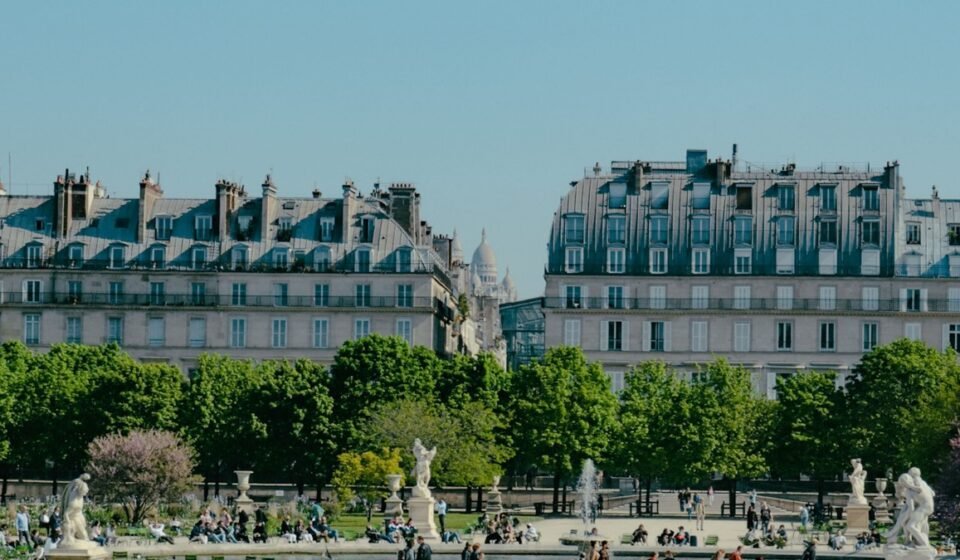
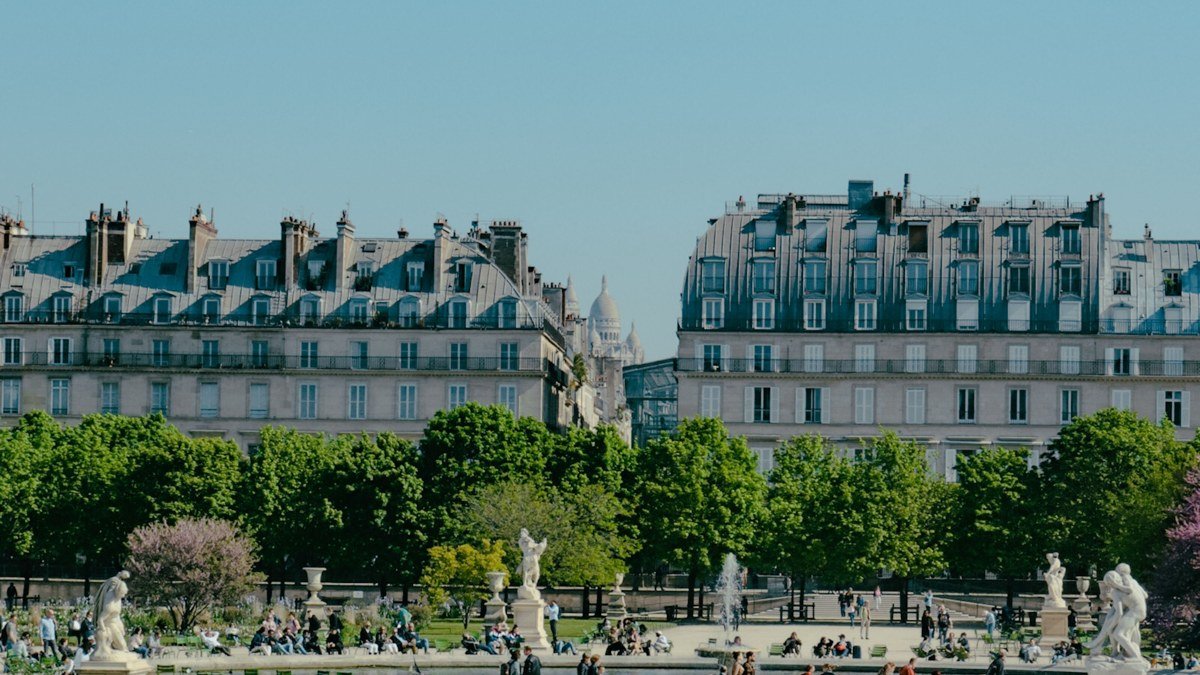
Exit into the Jardin des Tuileries and walk west as the light goes gold. There’s a small kiosk for a drink. This stretch, with the Louvre behind you and the Place de la Concorde ahead, is the classic Paris sunset most people miss because they’re queuing somewhere.
For dinner, head north to the Grands Boulevards. Bouillon Chartier (7 Rue du Faubourg Montmartre, 9th) is the historic original, a cavernous 1896 dining room a 15-minute walk from the Tuileries via the Palais-Royal. It serves traditional French dishes at throwback prices, with main courses often under 12 euro. If you’d rather stay closer to the Louvre, Bouillon Chartier Montparnasse is a sibling location, but it’s across the river and off Day 2’s route, so the Faubourg Montmartre original is the one to aim for here. Either way, expect a queue and a fast, buzzy, no-reservations room. Great value and genuinely local.
If you have more time: the Musée de l’Orangerie, at the west end of the Tuileries, holds Monet’s vast Water Lilies in two oval rooms and takes under an hour. Or cross to the Palais-Royal gardens for a quiet arcade stroll before dinner.
Approximate Day 2 spend per person: 50 to 80 euro, including the Louvre.
Day 3: Montmartre and Canal Saint-Martin (18th, 10th)
The last day trades central density for two distinct northern neighborhoods. Do Montmartre early to beat the crowds, then unwind by the canal.
Early morning: Montmartre before the tour buses
Get to Montmartre by 8:30 or 9am. This is non-negotiable. By 11 it’s a crush; at 9 it’s a village. Take the Métro to Abbesses (the deep station with the beautiful curved Art Nouveau entrance) and walk up.
Skip the funicular and climb the stairs through the quiet streets. Pass the Wall of Love (Le Mur des Je t’aime) in the little square by Abbesses, then wind up via Rue des Abbesses. Reach Sacré-Cœur early, go inside (free), and take in the view over the city from the steps before the crowds arrive.
Then get off the main drag immediately. Place du Tertre with its portrait artists is a tourist trap. Instead, walk to Rue de l’Abreuvoir, the prettiest street in Montmartre, past La Maison Rose and the tiny Clos Montmartre vineyard, which still produces a few hundred bottles a year. This corner feels like the painters’ Montmartre and most day-trippers never find it.
Coffee and breakfast: Le Progrès at the corner of Rue des Trois Frères is an unpretentious neighborhood café, or grab a pastry at any boulangerie with a queue of locals.
Late morning to lunch: down the hill
Walk down the south side of the butte toward Pigalle (much gentrified now, with good bars) or over toward the covered market. If you’re hungry, the 9th and 18th have excellent, unfussy bistros. Le Coq Rico is a splurge for roast chicken. Le Relais Gascon near Abbesses does giant salads with fried potatoes, cheap and filling.
Afternoon: Canal Saint-Martin
Take the Métro to Jacques Bonsergent or République and walk to the Canal Saint-Martin in the 10th. This is where young Parisians spend their weekends. Iron footbridges, plane trees, and the canal locks slowly filling and emptying.
There’s no landmark to check off here, and that’s the point. Browse the independent shops on Rue de Marseille and Rue Beaurepaire. Get coffee at Ten Belles (10 Rue de la Grange aux Belles), the original café that helped kickstart Paris’s specialty coffee scene, a block back from the canal near the Quai de Jemmapes locks. In good weather, buy a bottle of wine and a wedge of cheese and sit on the canal bank with everyone else. It’s the most relaxed the city gets.
Evening: a last dinner
The 10th and 11th are Paris’s current dining hotspots. For a memorable last meal, book ahead at a neo-bistro like Le Servan or Septime (the latter needs reservations weeks out, see the logistics box). For something spontaneous, the streets around Rue Sainte-Marthe are full of small, lively spots.
If you have more time: walk south along the canal to Place de la République and on to the covered Marché Couvert Saint-Martin, or catch late-afternoon light on the water from the Point Éphémère terrace at the northern end.
Approximate Day 3 spend per person: 40 to 75 euro.
Common mistakes that quietly ruin a Paris trip
- Treating the Métro as your default. Central Paris rewards walking. If two points are under 25 minutes apart on foot, walk it.
- Eating within sight of a monument. The rule is nearly ironclad: the closer the café is to the Eiffel Tower or Notre-Dame, the worse and pricier the food. Walk three streets back.
- Ordering coffee on the terrace and expecting it to be cheap. Prices differ by where you stand. At the bar (comptoir) is cheapest, terrace is dearest. This is legal and normal.
- Booking the Eiffel Tower for the middle of a walking day. Security and lifts eat two hours. Either commit to it as a dedicated evening (book the summit online well ahead) or just admire it from the Champ de Mars or Trocadéro and spend the time elsewhere.
- Not carrying a small amount of cash. Most places take cards, but some markets, bakeries, and older cafés have minimums or prefer cash.
- Overpacking each day. Three big things per day is plenty. This plan looks light on paper and still fills the day, because the walking between stops is the experience.
- Ignoring closure days. Turning up at the Louvre on a Tuesday or a market on a Monday is the most common wasted-morning mistake there is. Cross-check the logistics box before each day.
Get these right and Paris stops feeling like a checklist and starts feeling like a place you half-live in. Walk more than you ride, say bonjour before anything else, and leave room in every day for the thing you didn’t plan. That is the trip people come home talking about.
Insider tips that signal you’ve done this before
- Say “Bonjour” first, every single time you enter a shop or approach anyone. This one word changes how Parisians treat you more than fluent French would.
- Boulangeries sell a “tradition,” a better baguette than the standard one, for a few cents more. Ask for “une tradition.”
- Public toilets are scarce. Use the free, self-cleaning green sanisettes on the street, or duck into a department store like BHV in the Marais.
- Museums are quietest on late-opening evenings. The Louvre stays open late on certain nights (currently Fridays), and crowds thin dramatically after 5pm.
- Many museums are free on the first Sunday of the month from October to March. Great if your dates line up, chaotic if they don’t.
- Tap water is fine and free. Ask for “une carafe d’eau” and you won’t be upsold a bottle.
Trade-offs: adjust the plan to who you are
Do the museum-heavy version if you’re a first-timer who’d regret missing the Louvre and the Orsay. Buy the 2-day Museum Pass and swap Day 3’s canal afternoon for the Musée d’Orsay (the Impressionist collection is unmissable and the building itself, a former railway station, is glorious). Remember the Orsay closes Mondays.
Do the slower version if you value atmosphere over checklists. Cut the Louvre to 60 minutes or skip it, add an extra hour in the Luxembourg gardens and along the canal, and eat two-hour lunches. You’ll remember this trip more fondly.
Traveling with kids? Front-load Montmartre’s funicular and the Luxembourg toy-boat pond, keep museum visits under an hour, and lean on park picnics over sit-down meals.
Practical footer: months, weather, tipping, and data
The most pleasant months are late April to June and September to early October, when the light is long and the terraces are open without the August heat or the crowds. If it rains, you have not lost the day: trade the outdoor stretches for covered passages like the Galerie Vivienne and the 19th-century arcades near the 2nd, or add a museum. Paris in the rain is a mood, not a washout. On tipping, service is included by law (service compris), so there’s no obligation to add anything. Rounding up or leaving a euro or two for good table service is appreciated but never expected. For data, the easiest option is an eSIM you activate before landing (Airalo and Orange both sell tourist plans), or buy a physical SIM at any Orange, SFR, or Free shop in the city; either way you’ll have maps and café-finding at your fingertips from the moment you arrive.
Your takeaway
Tonight, before you sleep, do three things. Load a Navigo Easy card plan into your notes. Book one timed Louvre slot for the afternoon of Day 2 and reserve your Notre-Dame slot for Day 1. Star five cafés and one market from this article on your phone map so you’re never more than a few minutes from a good coffee or a picnic.
Then let the rest happen on foot. The Paris worth remembering is the ten minutes between the landmarks, not the landmarks themselves.