The Perfect 7-Day Belgium Itinerary: Bruges, Ghent, Brussels & the Stops Most Tourists Skip (Day-by-Day Plan)

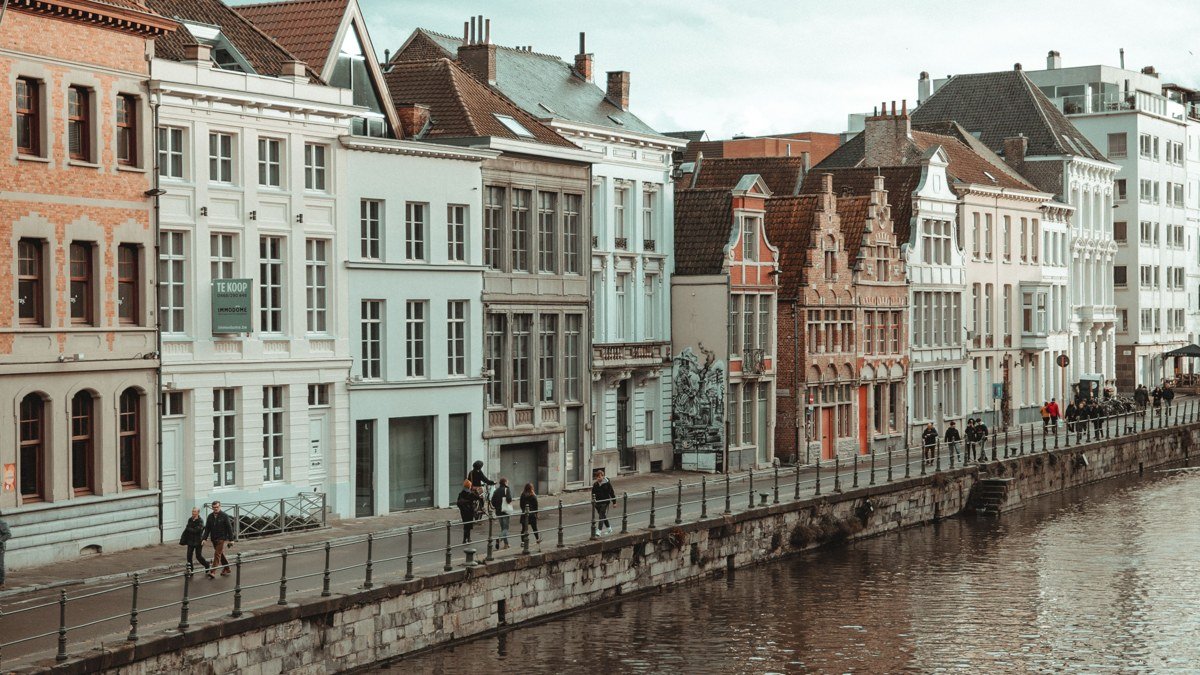
At 7:40 a.m. in Bruges, the Rozenhoedkaai — the canal bend that fills every Belgium Pinterest board — is completely empty. No selfie sticks, no tour groups from the cruise ships in Zeebrugge, just a low mist coming off the water and a baker three doors down pulling the first tray of croissants. By 10 a.m. that same spot is elbow-to-elbow. This gap between the postcard Belgium and the crowded one is the whole secret, and a good Belgium travel itinerary is really just a plan for being in the right place before everyone else shows up.
I’ve done this route four times, in three different seasons, and dragged friends through it who’d never heard of Ghent. This is the plan I keep coming back to: seven days, no rental car, sleeping in two bases, hitting the famous canals and the towns most people never bother with.
Why Belgium rewards a slow, train-based approach
Belgium is small — you can cross the country by train in under two hours. That’s the killer feature. You don’t need a car, you don’t need to change hotels every night, and you can day-trip to a medieval town and be back for dinner.
The core logic of this itinerary: base yourself in Bruges for the first stretch and Brussels for the second, and treat Ghent, Antwerp, and the smaller towns as day trips or half-day stops on travel days. You unpack twice in a week. That alone will save you more sanity than any single sight.
The trains, briefly
- Belgium’s national rail is SNCB/NMBS. Buy tickets at the station machines or the app; no reservation needed for domestic trains — just hop on.
- Standard second-class single fares between the big cities run roughly €8–€17. Brussels–Bruges is about an hour; Bruges–Ghent about 25–35 minutes.
- If you’re under 26, ask about the Youth Multi pass. For everyone, a Standard Multi (10 trips, valid for a year) can pay off if two people are traveling — you share it.
- Trains run frequently (2–4 per hour on main lines), so you don’t need to obsess over exact times. Just know the last trains back run until around midnight on major routes.
When to go
Belgium’s weather is unremarkable, but the crowd calendar makes or breaks a trip.
Spring (April–May) is the sweet spot. The Begijnhof in Bruges fills with daffodils, the canal boats reopen for the season (they don’t run in the dead of winter), and the days are long enough for both a dawn shoot and a late dinner. Everything is green, and the summer hordes haven’t arrived.
July is when I’d think twice. It brings Gentse Feesten, Ghent’s enormous ten-day street festival — brilliant if you want music, beer, and chaos, but be warned: Ghent is genuinely mobbed, hotels triple in price, and the quiet-university-city charm evaporates. Bruges and Brussels also hit peak summer tourism.
December is a real temptation. The Christmas markets in Bruges, Ghent, and on Brussels’ Grand-Place are magical, and the illuminated squares are worth the cold. But December is also peak Bruges crowd season — the town is small and it clogs fast — plus daylight is short and the canals are grey.
January–February is the genuine value window. Hotels inside the Bruges ring can drop by half, museums are near-empty, and you’ll have Rozenhoedkaai to yourself. It’s cold and some canal tours pause, but for photographers and budget travelers, this is the insider’s season.
The 7-day plan at a glance
I’ve split the numbers so you can plan accommodation and daily spend separately — mixing “includes hotel” and “food only” in one column is where most budgets go wrong.
Daily on-the-ground spend (mid-range, per person — food, sights, trains, no hotel):
| Day | Base | Focus | Daily spend |
|---|---|---|---|
| 1 | Bruges | Arrive, evening canals | €40–60 |
| 2 | Bruges | Bruges deep dive | €50–70 |
| 3 | Bruges | Day trip: Ghent | €45–65 |
| 4 | Bruges → Brussels | Damme or coast morning, transfer | €40–60 |
| 5 | Brussels | Brussels core | €50–75 |
| 6 | Brussels | Day trip: Antwerp | €50–70 |
| 7 | Brussels | Grand-Place morning, depart | €30–50 |
Accommodation (per room per night, mid-range):
| Base | Nights | Per night | Total |
|---|---|---|---|
| Bruges (inside the ring) | 3 | €120–180 | €360–540 |
| Brussels (Sainte-Catherine / Sablon) | 3 | €100–160 | €300–480 |
Add it up and a mid-range trip lands around €110–150 per person per day all-in (splitting a double room, table-service meals, trains, and entry fees). You can do it for €70/day with hostels and frites-for-dinner; you can blow past €250/day if you want the canalside boutique hotels.
Day 1 — Arrive in Bruges
Fly into Brussels Airport (BRU) or take Eurostar into Brussels-Midi and go straight to Bruges (about an hour by train). Drop your bags, don’t nap, and walk.
Evening plan: Head to the Markt square, then wander toward Rozenhoedkaai for the golden-hour canal view. Climb the Belfry (Belfort) if you arrive with energy — it’s 366 steps and the last entry is usually around 5 p.m., so check the time. Dinner: skip the touristy places on the Markt and walk five minutes to a side street like Langestraat for moules-frites or a Flemish stew (stoofvlees).
Insider tip: Bruges is a UNESCO site and hotels inside the ring canal fill fast. Book something inside the historic center even if it costs a bit more — being able to walk out into empty streets at 7 a.m. is the entire point of this trip.
💰 Budget hack: Skip the Belfry’s €14 climb and get almost the same rooftop panorama for free from the top floor of the Historium gift shop’s terrace café, or simply walk the ramparts near the windmills (Sint-Janshuismolen) for elevated views at no cost.
✨ Splurge worth it: A room with an actual canal view inside the ring (think Hotel De Orangerie or Relais Bourgondisch Cruyce). Opening your shutters onto the mist at dawn — instead of walking ten minutes to reach it — is the memory people talk about for years.
Day 2 — Bruges, done properly
This is your dawn day. Be at Rozenhoedkaai and the Bonifacius Bridge by 8 a.m. The light is soft, the reflections are still, and you’ll get the shots everyone else is fighting over at noon.
Morning:
– Walk the quiet Begijnhof (Beguinage) — a walled courtyard of white houses, gorgeous with daffodils in spring.
– Take a canal boat tour (~€12–15, 30 minutes) mid-morning before the queues balloon. The boats only run March–November roughly.
Midday: Lunch, then the Groeningemuseum for Flemish Primitives (Van Eyck, Memling) — small, world-class, and rarely crowded. Or the Church of Our Lady to see Michelangelo’s Madonna — one of the few Michelangelo works outside Italy.
Afternoon: Waffles. The real distinction: a Brussels waffle is light, rectangular, dusted with sugar; a Liège waffle is denser, caramelized with pearl sugar, eaten from the hand. In Bruges, go for a Liège one from a proper shop, not a place drowning it in whipped cream and Nutella for the photo.
Evening: Chocolate. Buy from an actual chocolatier — The Chocolate Line, Dumon, or BbyB for something modern — not the airport-souvenir shops. Sit with a Trappist beer; Bruges has excellent beer bars where the staff actually know their glassware.
Honest trade-off: Bruges can feel like a beautiful theme park by day. If overtourism bothers you, weight your time toward mornings and evenings and use the crowded midday for indoor museums or a long lunch.
💰 Budget hack: Lunch on a warm broodje (filled roll) from a bakery and eat it canalside instead of sitting down for a €25 tourist-menu lunch. Do the sit-down meal at dinner, away from the Markt, where the same money buys you far better.
✨ Splurge worth it: A tasting flight and a guided pairing at a serious beer bar like ‘t Brugs Beertje — or a private chocolate workshop. In the city that takes both seriously, doing it properly once beats grazing all week.
Day 3 — Day trip to Ghent
Ghent is the answer to “I loved Bruges but wished it felt more alive.” It’s a real university city with grit, street art, and just as much medieval drama — but locals outnumber tourists.
Train from Bruges takes 25–35 minutes. Leave bags at your hotel; you’re coming back to Bruges tonight.
In Ghent:
– St. Bavo’s Cathedral to see the Ghent Altarpiece (Van Eyck’s Adoration of the Mystic Lamb). This is one of the best presentations of a single artwork in Europe — the timed AR/audio visitor experience walks you through the panels and the painting’s astonishing theft-and-recovery history. Tickets are €18 and must be booked in advance at visitghent.be. ⚠️ This is the single most complained-about planning mistake for Ghent visitors: timed slots routinely sell out 2–4 weeks ahead in summer. Book the moment your dates are fixed — not the day before, and definitely not on arrival.
– Walk the Graslei and Korenlei — the guild-house-lined harbor. This is Ghent’s canal-postcard moment.
– Climb or view Gravensteen, the moated castle right in the center. The audio tour has a cheeky, funny script.
– Werregarenstraat (Graffiti Alley) for legal street art that changes constantly.
Food: Ghent invented Gentse waterzooi (a creamy chicken or fish stew) — try it. Ghent is also weirdly great for vegetarians; the city ran a “Thursday Veggie Day” campaign for years.
Insider tip: Ghent stays lit up beautifully at night thanks to a dedicated lighting plan. If you have the stamina, take a later train back to Bruges (they run until ~11 p.m.–midnight) and see the illuminated waterfront first.
💰 Budget hack: Ghent is one of the most walkable cities in Belgium — skip the canal boat here (you’ll have done Bruges) and the paid attractions blur together. Gravensteen and the Altarpiece are the two worth paying for; the Graslei, Graffiti Alley, and the illuminated waterfront are all free.
✨ Splurge worth it: Dinner at a modern Flemish restaurant near the Vrijdagmarkt. Ghent’s student energy keeps its food scene inventive and better value than Bruges — this is the meal to trade up on.
Day 4 — Bruges to Brussels (with a detour)
Check out, but don’t rush to Brussels. Use the morning for one of the stops most tourists skip:
Option A — Damme. A tiny, storybook village 7 km from Bruges, reachable by a flat canal-side bike ride (rent a bike in Bruges) or a seasonal paddle-steamer. Windmills, polder landscape, near-total quiet. Best April–September.
Option B — The North Sea coast. Hop the Kusttram (Coast Tram) — the world’s longest tram line, running the entire Belgian coast. Get off at Ostend for art (the James Ensor connection) or De Haan for Belle Époque villas. This is a completely different, breezy side of Belgium almost no first-timer sees.
Then take the train to Brussels (about an hour) and check into your second base.
Where to stay in Brussels
Your base matters more here than in compact Bruges. A quick micro-guide:
- Sainte-Catherine is my pick — a genuinely atmospheric old fish-market quarter with excellent restaurants where actual residents eat, walkable to the Grand-Place but calmer at night.
- The Sablon / Saint-Géry areas are also solid — central, characterful, good for bars.
- ⚠️ Be wary of anything marketed as “near Brussels-Central.” It sounds convenient, but that pocket is noisy at night and ringed with tourist-trap restaurants; you pay for the location and eat badly.
- ⚠️ Don’t book in the EU district to save money. It’s efficient and businesslike Monday–Friday, but it empties completely at weekends — shuttered cafés and dead streets, exactly when you’ll be sightseeing.
Evening in Brussels: The Grand-Place at night, illuminated, is legitimately breathtaking — arguably more impressive than by day. Then dinner and beers in Saint-Géry or Sainte-Catherine, where actual Brussels residents drink.
Day 5 — Brussels, beyond the peeing statue
Brussels gets dismissed as “just the EU and a small statue.” That reputation is mostly people who spent three hours there. Give it a full day.
Morning:
– Grand-Place early, before the tour groups. Duck into the Galeries Royales Saint-Hubert, an elegant 1840s shopping arcade — one of Europe’s oldest.
– Manneken-Pis. Yes, it’s tiny. Yes, you’ll be underwhelmed. See it for two minutes, laugh, move on. (He has a wardrobe of hundreds of costumes displayed at the nearby GardeRobe MannekenPis museum, which is more fun than the statue itself.)
Midday: Pick your museum lane:
– Royal Museums of Fine Arts + the excellent Magritte Museum (Belgium’s surrealist star).
– Or, for something offbeat, the Musical Instruments Museum (MIM) — housed in a stunning Art Nouveau building with a rooftop café view over the city.
Afternoon — architecture walk: Brussels is the birthplace of Art Nouveau. Walk the Saint-Gilles / Ixelles neighborhoods to see Victor Horta‘s buildings; the Horta Museum (his own house) is a must if the style interests you.
Horta Museum — book ahead, seriously. The house is tiny and admission is capped at roughly 40 visitors per time slot, so turning up on spec usually means being turned away. Reserve a timed ticket online at hortamuseum.be, and note it’s closed Mondays. While you’re in the area, walk the short detour to the Tassel House (Rue Paul-Émile Janson 6) — Horta’s 1893 breakthrough and one of the first true Art Nouveau buildings anywhere. You can’t go inside, but the exterior is free to view and worth the ten minutes.
Food you actually came for:
– Frites from a friterie (a “fritkot”), double-fried, in a paper cone with mayo or andalouse sauce.
– A carbonnade flamande (beef braised in dark beer) for dinner.
– Waffles and chocolate as needed — this is Belgium, no one’s judging.
💰 Budget hack: Many Brussels museums (including the Fine Arts complex) offer free or reduced entry on the first Wednesday afternoon of the month, and the MIM’s rooftop café view is free to anyone who rides up. Combine free viewpoints and skip a paid museum if you’re stretched.
✨ Splurge worth it: A proper carbonnade or a seafood dinner at a Sainte-Catherine institution, paired with a well-chosen Belgian beer flight. Brussels does classic bistro cooking as well as anywhere in the country — this is the sit-down meal to spend on.
Day 6 — Day trip to Antwerp
Antwerp is the one people forget to plan for, and then wish they’d stayed longer. It’s Belgium’s fashion and diamond capital, with a big, confident, cosmopolitan feel. Train from Brussels: about 40–50 minutes.
- Start at Antwerpen-Centraal station itself — a cathedral-like railway palace routinely ranked among the world’s most beautiful stations. Don’t just walk through it; stand still and look up.
- Cathedral of Our Lady houses several Rubens altarpieces in situ — the way they were meant to be seen.
- Red Star Line Museum — genuinely moving and badly undervisited. Housed in the original dockside sheds where millions of European emigrants (many bound for New York) were processed and deloused before boarding, it tells the migration story through personal objects and letters. Budget an hour; you’ll leave quiet.
- Zurenborg — take the short tram or walk southeast to this residential neighborhood, especially Cogels-Osylei, for a dense concentration of Art Nouveau and eclectic townhouses that rivals anything in Brussels. It’s an open-air architecture museum and almost entirely tourist-free.
- MAS (Museum aan de Stroom) — go for the free rooftop panorama even if you skip the exhibits.
- The Fashion District and the MoMu fashion museum if that’s your thing; otherwise wander the Grote Markt and the old town.
- Peek at the diamond district near the station (Antwerp handles a huge share of the world’s rough diamonds).
Food: Antwerp claims the Antwerpse handjes (hand-shaped biscuits/chocolates) and has a serious beer culture — De Koninck is the local brew.
💰 Budget hack: Antwerp’s best hits are free — the station, the Red Star Line exterior and dockside walk, Zurenborg’s streets, the MAS rooftop, and window-shopping the Fashion District cost nothing. You can have a full, rich day here and only pay for lunch and the cathedral.
✨ Splurge worth it: If you have any interest in design, the paid MoMu fashion museum and a browse through the Antwerp Six-influenced boutiques justify the euros — this is the fashion capital, and it shows.
Day 7 — Slow Brussels morning and departure
Don’t over-plan the last day. Do a final Grand-Place loop with a coffee, buy the chocolate you meant to buy earlier (Pierre Marcolini, Neuhaus, Wittamer on the Sablon), and stroll the Place du Grand Sablon antique area if it’s a weekend (Saturday/Sunday morning market).
Brussels Airport is about 20 minutes by train from Brussels-Central. For Eurostar back to London, allow extra time for security at Brussels-Midi.
Common mistakes (that experienced travelers still make)
1. Basing yourself in Brussels and day-tripping to Bruges. People do this to save on hotels. But Bruges is the dawn-and-dusk magic — if you only see it 11 a.m.–4 p.m. with the day-trip crowds, you’ve seen the worst version. Sleep in Bruges.
2. Renting a car. Old Belgian city centers are car-hostile — low-emission zones, near-impossible parking, and pedestrianized cores. The trains are faster and cheaper for this route. A car only makes sense for the Ardennes or rural Flanders Fields, which aren’t in this plan.
3. Eating on the main squares. The restaurants ringing the Markt and the Grand-Place charge a premium for the view and rarely deserve it. Walk two or three streets back for better food at fair prices.
4. Treating waffles and chocolate as an afterthought. These are actual culinary specialties here. Buying a whipped-cream monstrosity from a photo-bait stand is like judging Italian coffee by an airport vending machine — pick a real chocolatier and a proper waffle stand instead.
5. Skipping Ghent and Antwerp “to save time in Bruges.” Bruges is spectacular but small; you can genuinely exhaust its highlights in a day and a half. Ghent and Antwerp are what turn this from a pretty-photos trip into a real understanding of the country.
6. Under-booking timed-entry sights. The Ghent Altarpiece experience (2–4 weeks ahead in summer), the Horta Museum, and popular canal tours can sell out or queue badly. Book as soon as your dates are fixed — not the day before.
Insider tips that signal you’ve actually done this
- Order beer by name and let the bar recommend. Belgian beer runs from crisp blondes to heavy quadrupels at 10%+ ABV. Ask for something “not too strong” if you want to keep walking; a couple of Trappist quads will end your afternoon.
- Carry some cash for friteries and small chocolatiers, though cards are widely accepted almost everywhere else.
- Sundays and Mondays — some museums close Mondays (the Horta Museum included); markets happen on weekends. Build your day trips around the closures.
- Belgium is bilingual and it’s political. Flanders (Bruges, Ghent, Antwerp) speaks Dutch/Flemish; Wallonia speaks French; Brussels is officially bilingual. Almost everyone speaks excellent English. A “dank u” in Flanders and a “merci” in Brussels go a long way.
- The weather is genuinely fickle. Pack a rain layer regardless of season. Belgian rain is more drizzle-that-ruins-canal-photos than dramatic storm — a small umbrella beats a big coat.
When to change this plan
- Only have 4 days? Do Bruges (2 nights), Ghent (day trip), Brussels (1 night). Cut Antwerp and the coast.
- Traveling with photography as the priority? Add a second Bruges night and sacrifice Antwerp — you want more golden hours.
- Beer and food focused? Add a night in Ghent and an evening tasting in Brussels’ Saint-Géry; consider a Trappist-brewery-adjacent detour.
- First-timer, want maximum variety? Follow this plan exactly. It’s built for it.
The one thing to actually do
Book a hotel inside the historic center of Bruges for your first two nights, set an alarm, and be standing at Rozenhoedkaai by 7:30