The Car-Free 7-Day Norway Fjords Itinerary: Real Costs, Hidden Stops & Every Boat and Train You Actually Need to Book

The ferry pulls out of Kaupanger at 8:15 in the morning, and for the next two hours the only sounds are the engine, the wind, and the occasional camera shutter. No steering wheel to grip on hairpin turns, no white-knuckle passing on a single-lane mountain road, no €600 rental-car deposit hanging over your trip. Just the Sognefjord narrowing into the Nærøyfjord while you drink a 45 NOK coffee on the top deck.
This Norway itinerary for first-time visitors is built entirely around that experience: fjord towns, public ferries, express boats, and trains instead of a rental car. It’s slower, quieter, and — honestly — more scenic, because you’re looking out instead of ahead at the road.
If you want to drive the Atlantic Road and Trollstigen, read a road-trip guide. If you want to sit on a deck with a waffle and let Norway come to you, keep reading.
Who This Itinerary Is For (and Who Should Skip It)
Do this trip if you:
– Don’t want to drive on narrow Norwegian roads or pay for a car + fuel + ferries + parking
– Prefer trains and boats to highways
– Are a couple, solo traveler, or older traveler who values comfort over flexibility
– Are visiting between May and September, when boat and ferry schedules are frequent
Skip it (and rent a car) if you:
– Want to reach remote hikes far from public transport hubs
– Are traveling in deep winter, when many express boats and seasonal routes stop
– Hate committing to fixed departure times
Norway’s public transport is excellent but punctual to a fault. Miss the 14:20 express boat from Balestrand and the next one might be tomorrow. That’s the core trade-off of a car-free trip.
The Route at a Glance
This is a Bergen → fjords → Flåm → Oslo loop, arguably the most efficient way for a first-time visitor to see the classic fjord landscape without backtracking.
| Day | Base | Getting there | Highlight |
|---|---|---|---|
| 1 | Bergen | Fly in | Bryggen, fish market, Fløibanen |
| 2 | Bergen | — | Day trip or slow city day |
| 3 | Balestrand | Express boat from Bergen | Fjord village life |
| 4 | Balestrand | Local ferries | Hidden churches & glacier arm |
| 5 | Flåm | Boat via Nærøyfjord | UNESCO fjord cruise |
| 6 | Flåm → Oslo | Flåm Railway + Bergen Line | Two of Europe’s best train rides |
| 7 | Oslo | — | City wrap-up, fly out |
Seven nights, three bases, zero rental cars. Everything below assumes the peak-season schedule (roughly late May to late September).
When to Book What: The One-Glance Checklist
Booking timing is where car-free trips are won or lost. Print this or screenshot it:
- Bergen Line minipris fares (Day 6): book 8+ weeks out for the cheapest tickets. Advance fares can be under 300 NOK versus 800+ NOK last minute.
- Flåm accommodation (Day 5): book 6–8 weeks ahead for July — Flåm has very few rooms and they vanish first.
- Flåm Railway (Day 6): book 4+ weeks ahead in July; specific departures sell out.
- Norled express boat, Bergen → Balestrand (Day 3): book 2–3 weeks ahead; walk-up fares are higher and July seats sell out.
- Ægir Brewery dinner (Day 5): book the afternoon before for July/August evenings (see Day 5).
- Mostraumen cruise (Day 2): flexible; a few days ahead is plenty except peak weekends.
Everything else on this route (local ferries, the Bygdøy ferry, Oslo transit) can be handled on the day.
Day 1: Land in Bergen, Ease In
Fly directly into Bergen (BGO) if you can — it saves a day versus flying to Oslo first. The Bybanen light rail runs from the airport to the city center in about 45 minutes for around 42 NOK. Don’t take a taxi; it’s 500+ NOK for the same trip.
Base yourself within walking distance of Bryggen, the old Hanseatic wharf. Stay in the Nordnes or city-center area so you can walk everywhere.
Afternoon plan:
– Walk the crooked wooden alleys behind Bryggen, not just the photogenic front. Most tourists photograph the facade and leave; the back passages are where the character is.
– Ride the Fløibanen funicular up Mount Fløyen (around 160 NOK return). Go late afternoon for softer light and fewer cruise-ship crowds.
– Hidden stop: from the top of Fløyen, walk 20–30 minutes further to the small lake Skomakerdiket. Almost no day-trippers make it there.
Dinner: skip the tourist-priced fish market restaurants and eat at a bakery or a kebab/pizza spot your first night. Save the splurge for later. Budget 200–300 NOK.
Day 2: A Full Day in Bergen (Rain-Proof Your Trip Here)
Bergen is one of the rainiest cities in Europe. Locals barely acknowledge rain. Plan a flexible day so weather doesn’t wreck it.
If it’s clear: do a half-day fjord cruise to Mostraumen, run by Rødne Fjord Cruise, which departs from the Zachariasbryggen dock right in central Bergen (near the fish market). The round trip runs about 3 hours for roughly 700 NOK and cuts through a genuinely narrow sound, slowing at a waterfall where the crew fills a jug of fresh meltwater for passengers. It’s underrated compared to the famous fjords further east.
If it’s raining:
– KODE art museums (one ticket covers multiple buildings, ~160 NOK) — includes a strong Edvard Munch collection.
– The Hanseatic Museum area and Bryggens Museum for the medieval backstory.
– Long lunch at a café. This is Norway; sitting in a warm café watching rain is a legitimate activity.
Insider tip: buy groceries at a Kiwi, Rema 1000, or Bunnpris supermarket today and stock up on breakfast items, snacks, and lunch supplies for the fjord days. Food gets pricier and options thinner once you leave Bergen. A supermarket sandwich lunch costs 60–80 NOK versus 200+ NOK at a café.
Day 3: Express Boat to Balestrand — The Real Fjords Begin
This is the day the trip transforms. Take the Norled express boat from Bergen’s Strandkaiterminalen up the Sognefjord to Balestrand. It’s roughly a 4-hour journey and costs in the region of 700–900 NOK depending on booking timing.
Book this in advance on the Norled website or app — seats sell out in July, and walk-up fares are higher.
Sit on the right (starboard) side heading out for the best coastal views, then move around as the fjord narrows. There’s a small café onboard, but you brought your supermarket lunch, right?
Why Balestrand and not the tourist-swarmed Flåm first? Balestrand is a genuine fjord village — a couple of hotels, a handful of houses, painted wooden villas built by 19th-century artists who came for the light. It’s calm in a way Flåm no longer is. You want this contrast.
Arrive, settle in, and:
– Walk the shoreline path past the old Swiss-style villas.
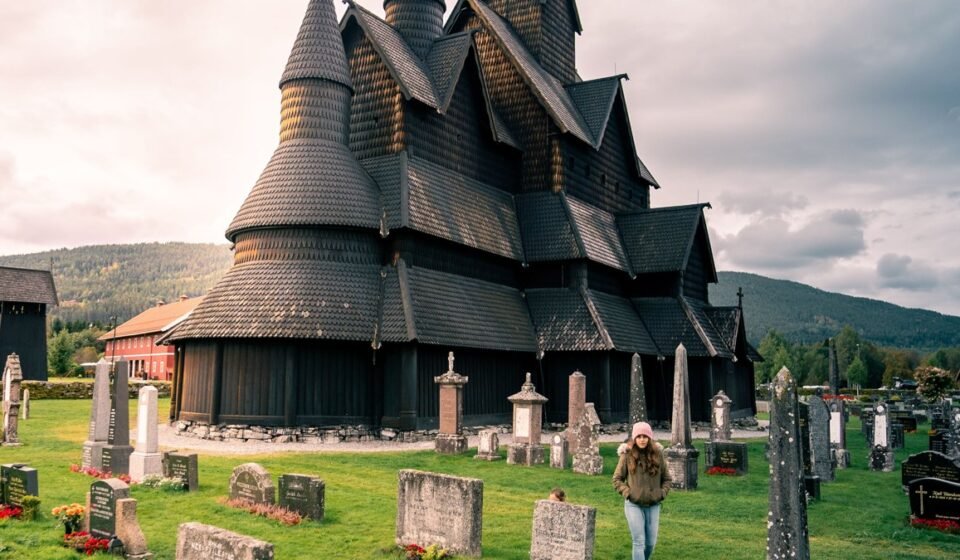
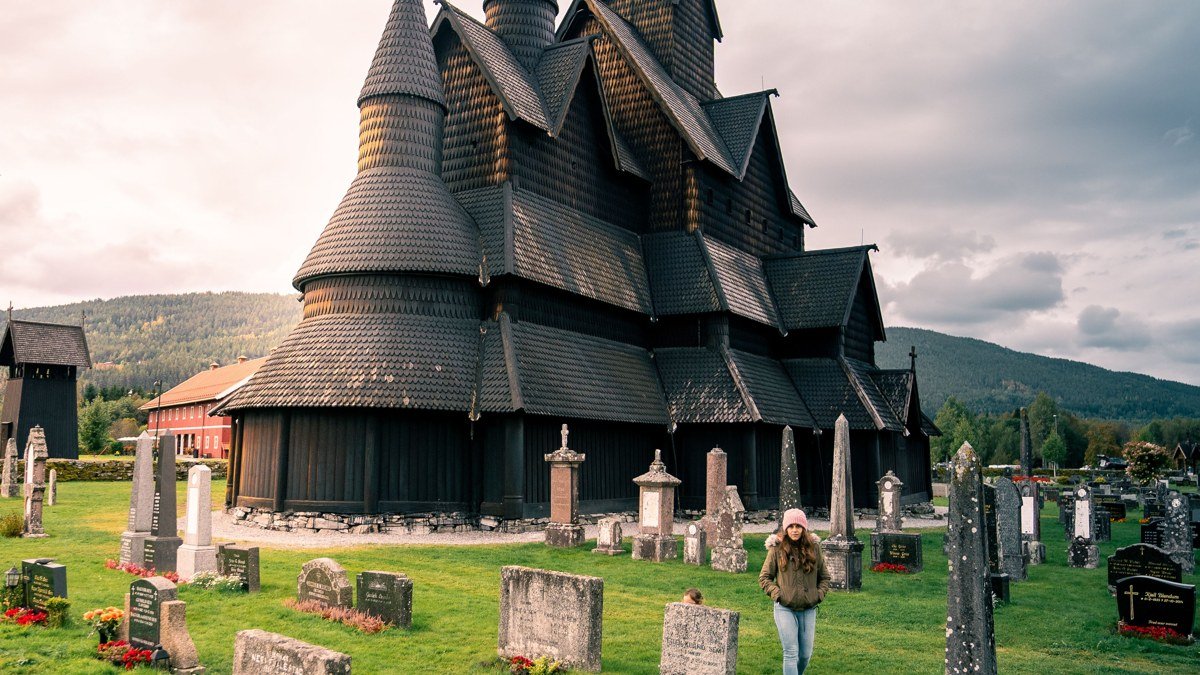
– Hidden stop: the tiny St. Olaf’s Church (English Church), a wooden stave-style church built in the 1890s, tucked in the trees a short walk from the pier. Free, quiet, and often empty.
– Rent a bike from your hotel or the tourist office and ride along the fjord — the road is flat and traffic is almost nonexistent.
Where to stay: the historic Kviknes Hotel is the grand option (fjord-view rooms, big buffet dinner, ~2,000–2,800 NOK/night for two). Budget travelers can look at guesthouses or the Balestrand Hostel.
Day 4: Slow Fjord Day — Fjærland and the Glacier Arm
Use Balestrand as a base for a day trip most first-timers never think to do.
Take the seasonal Fjærlandsfjord boat (run by Norled and local operators, typically mid-May to mid-September) up the fjord arm to Fjærland, a village beneath the Jostedalsbreen glacier — mainland Europe’s largest ice cap. A typical peak-season departure leaves Balestrand around 08:30, with a return in the afternoon; always confirm the exact times on the Norled app the night before, as this route runs only a couple of times a day. Fjærland is famous for two odd, wonderful things:
- The Norwegian Book Town — secondhand bookshops scattered through old barns and buildings.
- Easy access to glacier arms like Bøyabreen, visible from near the road/valley.
Plan B if connections fail: don’t force a tight transfer. Instead, ride the low-effort scenic Dragsvik–Hella ferry loop — a short crossing of the fjord from just outside Balestrand and back, giving you the open-deck fjord views with zero timetable stress. Combine it with a lazy afternoon on the shoreline path. A slow day here is not a wasted day.
Evening: back in Balestrand, have the big hotel dinner if you’re at Kviknes — the buffet is a local institution. Budget 500–650 NOK per person, or eat from your supermarket supplies for a fraction.
Day 5: The Nærøyfjord Cruise to Flåm (The One You Came For)
Today is the showpiece. Take the boat from Balestrand toward Flåm, routing through the Nærøyfjord — a UNESCO World Heritage arm of the Sognefjord and the narrowest, most dramatic stretch you’ll see. The Balestrand–Flåm connection typically runs via Aurland/Gudvangen boats; a combined ticket runs roughly 500–800 NOK.
The Norway in a Nutshell cost comparison first-timers Google: the packaged Norway in a Nutshell round-trip fjord tour from Bergen runs roughly 1,600–2,000 NOK per person and returns you to your starting point. This itinerary covers the same signature Nærøyfjord water one-way, as a genuine leg of your route for roughly 500–800 NOK — you’re not paying a premium to loop back; you’re actually going somewhere.
The fjord walls rise over a thousand meters, waterfalls streak down the rock, and the boat slows through the tightest passages. Stand outside. It’ll be cold even in July; bring a windproof layer.
Flåm reality check: Flåm itself is tiny and heavily geared toward cruise-ship and tour-bus crowds. The village has maybe a few hundred residents and can host thousands of day visitors. Stay the night anyway — the crowds evaporate by early evening when the day-trippers leave, and you’ll have the place nearly to yourself.
Evening in Flåm:
– Grab a beer at the Ægir Brewery, a Viking-longhouse-style brewpub. Their tasting flight is a fair splurge at ~200 NOK. Reservations: walk-ins are possible off-peak, but July and August evenings fill up fast — book the afternoon before via their website to be safe.
– Walk 20 minutes up the valley toward the Brekkefossen waterfall trailhead once the tour buses have gone.
Where to stay: Flåm has limited rooms and they book out early. The Flåmsbrygga Hotel and nearby guesthouses run 1,800–2,600 NOK/night in peak season. Book 6–8 weeks ahead for July.
Day 6: Two Legendary Train Rides — Flåm Railway + Bergen Line to Oslo
This is a train day, and it’s spectacular.
Step 1 — The Flåm Railway (Flåmsbana): one of the world’s most scenic rail journeys, climbing from sea level at Flåm up to Myrdal in about an hour, past the thundering Kjosfossen waterfall (the train stops for photos). Ticket is around 600 NOK one way. Book 4+ weeks ahead in summer.
Step 2 — The Bergen Line (Bergensbanen): at Myrdal, connect to the mainline train and ride across the Hardangervidda plateau — a stark, treeless high-mountain landscape with reindeer, snow patches, and mountain lakes — all the way to Oslo. This leg takes roughly 4.5–5 hours.
Insider booking tip: book Norwegian rail tickets on Vy (the national operator) as early as possible. Advance “minipris” fares can be a fraction of the walk-up price — sometimes under 300 NOK for the long Oslo leg if booked 8+ weeks out, versus 800+ NOK last minute.
You’ll roll into Oslo Central (Oslo S) in the evening. Stay near the station or in the Grünerløkka neighborhood.
Total transit time today: about 6–7 hours with the connection, but it’s arguably the most beautiful transit day of your life. Bring snacks; onboard prices are steep.
Day 7: Oslo and Fly Out
Oslo deserves more than a day, but as a trip closer it works well.
Getting to the Bygdøy museums: the Bygdøy ferry, operated by Norway Yacht Charter / Boat Sightseeing, departs from Pier 3 at Rådhusbrygge near City Hall. It costs around 90 NOK one-way (roughly 160 NOK return) and — importantly — runs May through September only. Outside those months, take city bus 30 instead.
If you only have 3 hours, prioritize the museums in this order:
1. The Fram Museum — the actual polar exploration ship you can walk through; the single most memorable stop.
2. Kon-Tiki Museum — Thor Heyerdahl’s balsa raft and reed boat; small, fast, fascinating.
3. Norwegian Maritime / Viking (if reopened) — only if you have time to spare.
If you have a full day, also add:
– The Opera House — walk up its sloping marble roof for free.
– Vigeland Sculpture Park — free, open, and genuinely strange in the best way.
– Hidden stop: wander the Vulkan/Mathallen food hall area near Grünerløkka for a final meal that isn’t tourist-priced.
The Flytoget airport express or the cheaper regular Vy train gets you to Oslo Gardermoen (OSL) in about 20–25 minutes.
Pack Smart: A Fjord Gear Sidebar
Norway’s scenery is generous; its weather is not. Pack for changeable conditions and you’ll never miss a moment on deck.
- A waterproof jacket is non-negotiable. Not “water-resistant” — a proper shell. Bergen and the fjords deliver sudden, sideways rain, and an umbrella is useless in wind.
- Layers for the boat deck, even in August. On the Nærøyfjord the wind funnels between thousand-meter walls; a fleece plus your shell keeps you outside where the views are, instead of huddled behind glass.
- Good walking shoes with grip. Bergen’s cobblestones get slick when wet, and village paths (Balestrand, Flåm) are uneven. Skip fashion sneakers.
- A packable warm hat and gloves for the Hardangervidda plateau, which can hold snow in summer.
- A reusable water bottle — Norwegian tap water is superb, and refilling saves real money.
- A dry bag or ziplock for your phone on open decks.
Rough Total Cost (Per Person, Peak Season)
Excluding international flights, based on mid-range choices and a couple sharing rooms:
| Category | Estimate (7 days) |
|---|---|
| Accommodation (share of double) | 7,000–10,000 NOK |
| Boats & ferries | 2,000–2,500 NOK |
| Trains (Flåm + Bergen Line) | 1,000–1,400 NOK |
| Food (mix of supermarket + restaurants) | 2,500–4,000 NOK |
| Attractions/activities | 800–1,200 NOK |
| Total | ~13,000–19,000 NOK |
That’s roughly €1,150–€1,700 / $1,250–$1,850 per person. Solo travelers pay more per night for rooms; budget travelers using hostels and self-catering can shave 25–30% off.
Common Mistakes (Specific Ones)
1. Not booking boats and trains in advance. The Flåm Railway, Bergen express boat, and Bergen Line all sell out or spike in price in July. Book the fixed-time legs on the schedule in the “When to Book What” box above — 4+ weeks for the Flåm Railway, 8+ weeks for the cheapest Bergen Line fares.
2. Basing the whole trip in Flåm. It’s the single most crowded fjord village. First-timers who overnight only in Flåm miss the calm of places like Balestrand and go home thinking fjords are packed with cruise passengers.
3. Underestimating how early things close. Small-village cafés and even some restaurants close by 20:00 or 21:00. Don’t arrive somewhere at 20:30 expecting dinner options — this is exactly why booking Ægir the afternoon before matters, and why arriving in Balestrand hungry at 21:00 can mean supermarket crackers for dinner.
4. Ignoring the weather buffer. Bergen and the fjords are rainy. If a fjord cruise is your must-do, schedule it with a spare day so you can swap for a clearer forecast. Never put your one essential activity on your one available slot.
5. Buying every meal at restaurants. Norway is expensive; a sit-down dinner is 300–600 NOK per person. Supermarket lunches and hotel breakfasts (often included) cut costs dramatically without hurting the experience.
6. Skipping seat/side planning on boats. The scenery is directional. On the Bergen–Balestrand express boat and the Nærøyfjord cruise, which side you sit on genuinely matters — board early, claim a starboard seat outbound, and move around as the fjord bends.
7. Overpaying for “Norway in a Nutshell” without doing the math. Many first-timers book the packaged round-trip tour from Bergen (roughly 1,600–2,000 NOK) not realizing they can cover the same Nærøyfjord water one-way as a normal leg of their route for a fraction of the cost — while actually progressing toward Oslo instead of doubling back.
8. Cutting the connection too fine on Day 6. The Flåm Railway → Bergen Line transfer at Myrdal is timed, but if the Flåm train runs late or the platform is chaotic, you can miss the mainline train and lose hours. Give yourself the scheduled buffer and don’t book the tightest possible connection.
Insider Tips First-Timers Miss
- Download offline maps and timetables. Fjord-side mobile coverage is patchy. Screenshot your ferry times.
- Use the Norled and Vy apps — they’re the actual operators, cheaper than resellers, and hold your tickets offline.
- Tap water is superb. Never buy bottled water; a 20 NOK bottle refilled all trip saves real money.
- Bring a windproof shell and a warm layer even in July. On the water it’s cold; on the Hardangervidda plateau there can be snow in summer.
- Cash is nearly obsolete. Everything takes card, including tiny village kiosks. Don’t bother with much cash.
- Golden hour is late in summer. In June–July, “sunset light” can last until 22:00+. Plan photo walks accordingly.
Your Actionable Takeaway
Open the Norled and Vy apps today and check the peak-season schedule for two legs first: the Bergen → Balestrand express boat (Day 3) and the Flåm Railway (Day 6). Lock those two in, because they set the skeleton of the whole car-free route — everything else flexes around them. Do that, pack a windproof layer and a reusable water bottle, and you have a slower, cheaper, and frankly more beautiful Norway than you’d get behind a rental-car wheel.