The Perfect 7-Day Bosnia Itinerary: A Day-by-Day Tourist Travel Plan for First-Time Visitors (Mostar, Sarajevo & Hidden Stops)

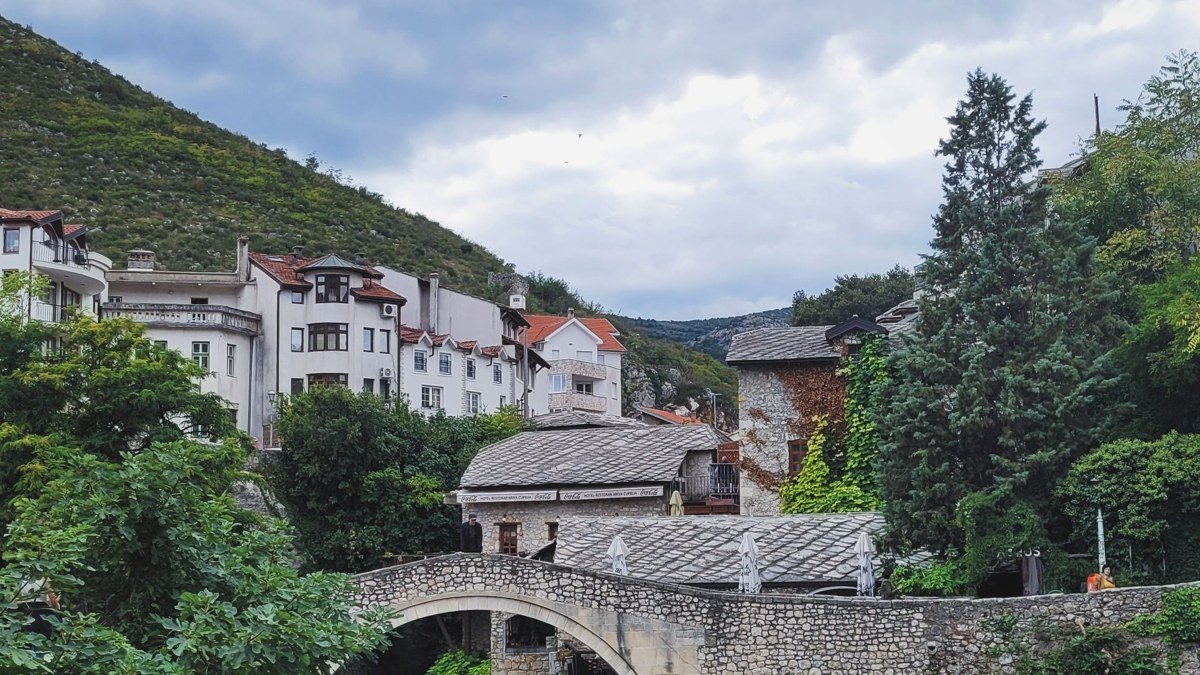
The first time I stood on Mostar’s Stari Most at 7 a.m., I had the entire bridge to myself. By 10 a.m. it was shoulder-to-shoulder with day-trippers bused in from Dubrovnik and Split, everyone shooting the same photo of the same diver. That gap — the quiet morning versus the loud midday crush — is basically the secret to enjoying Bosnia. Get the rhythm right and you get a country that still feels genuinely undiscovered. Get it wrong and you’re stuck in someone else’s crowd.
This Bosnia travel itinerary is the version I wish I’d had before my first trip: seven days, sensibly paced, with real driving times, honest costs, and the small stops that turn a good route into a great one. No 14-cities-in-a-week nonsense.
Who this itinerary is for (and who it isn’t)
This is a road-trip-friendly loop built around Sarajevo and Mostar, with detours most tourists skip. It works if you:
- Have 7 full days on the ground (not counting arrival/departure travel).
- Are comfortable renting a car, or willing to combine buses with a couple of day tours.
- Want a mix of cities, Ottoman history, and waterfalls — not a beach holiday.
If you only have 3–4 days, do Sarajevo + Mostar and skip the rest. If you want beaches, you’re thinking of Croatia next door.
Quick logistics before you go
Getting in: Most travelers fly into Sarajevo (SJJ). It’s small and easy. Alternatively, fly into Dubrovnik, Split, or Zagreb in Croatia and drive in — a very common combo. Mostar is roughly 2.5–3 hours from Dubrovnik.
Currency: The Bosnian Convertible Mark (KM / BAM), pegged to the euro at roughly 1.95 KM = €1. Euros are accepted in many tourist spots but at bad rates — pay in KM. Cash is king in smaller towns; carry it.
Car rental: Expect roughly €30–50/day for a compact in shoulder season. Critical tip: if you plan to cross into Croatia or Montenegro, tell the rental company and get a Green Card (insurance extension) in writing. Getting stopped at the border without it is a genuine headache.
Language: Bosnian. English is widely understood in cities and tourist areas, less so in villages. “Hvala” (thank you) goes a long way.
Connectivity: Local SIM cards (BH Telecom, m:tel, HT Eronet) are cheap and widely available at the airport and any phone shop — a data package runs a few KM and saves you a lot of hassle. For rural driving, don’t rely on live navigation: mobile coverage drops in the river canyons. Download Google Maps offline for the whole country before you set off, or use Maps.me, which works fully offline and handles minor roads well.
Budget snapshot (per person, mid-range, per day):
| Category | Budget | Mid-range |
|---|---|---|
| Accommodation | 25–40 KM (hostel/guesthouse) | 60–120 KM (boutique/hotel) |
| Meals | 20–35 KM | 40–70 KM |
| Car + fuel (split 2 people) | — | 40–60 KM |
| Attractions/tours | 10–30 KM | 30–80 KM |
Bosnia is one of Europe’s best-value destinations. A proper sit-down dinner with drinks for two rarely breaks 60–80 KM (€30–40).
When to go: a quick seasonal guide
The sweet spot is April–June and September–October. Spring brings full waterfalls (Kravice and Pliva run hardest after snowmelt), mild days, and thin crowds; early autumn gives you warm-enough water for a Kravice swim without the peak-summer mob. Expect daytime temps in the pleasant 18–26°C range and cool evenings.
Peak July–August is hot (often 35°C+ in Mostar and the Herzegovina lowlands) and busy. Kravice fills up by mid-morning and its car park becomes a genuine scrum; Mostar’s old town accommodation prices climb noticeably and the bridge is packed from mid-morning to late afternoon. It’s still doable — you just have to be disciplined about the early-morning/late-evening rhythm this itinerary is built around.
Winter (Nov–March) works but changes the trip. Sarajevo is atmospheric and close to ski resorts (Bjelašnica, Jahorina), and the city sights are all year-round. But mountain passes and the interior drives can get snow and ice, some Jajce and Pliva Lakes facilities scale back, and Kravice swimming is off the table. If you come in winter, weight the plan toward Sarajevo and Mostar and treat the interior as weather-dependent.
The 7-Day Bosnia Itinerary at a Glance
| Day | Base | Highlights | Driving |
|---|---|---|---|
| 1 | Sarajevo | Baščaršija, Latin Bridge, cevapi | — |
| 2 | Sarajevo | War history, Tunnel of Hope, Trebević | — |
| 3 | Travnik/Jajce | Vezir town, Pliva waterfall | ~2.5 hrs |
| 4 | Jajce → Mostar | Pliva lakes, drive south | ~3 hrs |
| 5 | Mostar | Stari Most, Old Bazaar, Blagaj | short trips |
| 6 | Mostar | Kravice Falls, Počitelj | ~1 hr |
| 7 | Mostar → onward | Morning at bridge, depart | varies |
Day 1: Sarajevo — Where East Meets West Literally on One Street
Start where the layers of the city are most obvious. Walk down Ferhadija street and look for the “Sarajevo Meeting of Cultures” marker in the pavement — on one side, Ottoman-era bazaar architecture; on the other, Austro-Hungarian facades. You cross empires in a single step.
Spend your morning in Baščaršija, the old bazaar. It’s touristy but authentic in a way that survives the crowds — the coppersmiths hammering in Kazandžiluk alley are real artisans, not props. Get coffee at the Sebilj fountain square and try Bosnian coffee done properly: the copper džezva, a sugar cube, and a piece of Turkish delight.
For lunch, cevapi are non-negotiable. Go to Ćevabdžinica Željo (there are two branches close together) or Petica. You’ll get grilled minced-meat fingers in fluffy somun bread with raw onion for around 8–12 KM. Eat it with ajvar.
In the afternoon, walk to the Latin Bridge, where Archduke Franz Ferdinand was assassinated in 1914 — the spark for WWI. The small museum on the corner is worth 20 minutes.
Insider tip: Skip the tourist-trap restaurants right on Sebilj square. Walk two or three streets back and prices drop by a third for the same food.
Where to stay: Base yourself within a 10-minute walk of Baščaršija so you’re never dependent on the car in the evenings.
- Budget: Hostel Franz Ferdinand, a well-run, sociable hostel steps from the Latin Bridge (dorms roughly 25–35 KM, private rooms from ~70 KM).
- Mid-range: Hotel VIP on Jaroslava Černija, quiet but a two-minute walk to the bazaar (doubles roughly 120–160 KM).
- Boutique: Hotel Isa Begov Hamam, built around a restored Ottoman bathhouse right in the old town — a splurge with genuine character (doubles roughly 200–280 KM).
Day 2: Sarajevo’s Recent History — Do This Slowly
Day 2 is heavier, and it should be. Sarajevo endured the longest siege of a capital city in modern history (1992–1996), and understanding it changes how you see everything.
Book a guided war-and-siege tour in the morning (roughly 40–60 KM for a half-day). A good guide, often someone who lived through it, will take you to:
- The Tunnel of Hope (Tunnel Museum) near the airport — the 800m tunnel that was the city’s lifeline under the runway. Genuinely moving.
- The Sarajevo Roses — mortar-shell scars in the pavement filled with red resin.
- Viewpoints over the “sniper alley” corridors.
Why a tour over DIY: The Tunnel Museum is doable on your own, but the context a local guide provides is the entire value. This isn’t a place to skim a plaque.
In the afternoon, lighten the mood. Take the Trebević cable car (Trebević žičara) up the mountain — about 20 KM round trip. At the top you’ll find the eerie, graffiti-covered 1984 Winter Olympics bobsled track, now a hiking and photo spot, plus sweeping views over the city bowl.
Finish with dinner and a drink. Sarajevo has a surprisingly good craft-beer scene. For the classic version, tour and drink at the Sarajevska Pivara (Sarajevo Brewery) — the grand 19th-century brewery southeast of the old town has an on-site museum and a cavernous beer hall where the house lager is poured fresh. For something more modern, head to Pivnica HS, the brewery’s own pub, or seek out craft taps around the Baščaršija fringe.
Day 3: Sarajevo to Jajce — The Waterfall in the Middle of Town
Grab your car and head northwest. Break the drive at Travnik, the former seat of Ottoman viziers, about 1.5 hours out. It has a dramatic hilltop fortress and the colorful Many-Coloured Mosque (Šarena Džamija). Stop for lunch and try the local Travnik cheese.
Continue to Jajce (another hour). This is the stop most tourists never make, and it’s a mistake to skip it.
Jajce’s showpiece is the Pliva Waterfall — a 20+ meter cascade that tumbles right at the edge of the old town where two rivers meet. Where else does a town center have a full-size waterfall? There’s a viewing platform, and you can pay a small fee (around 6 KM) to get down close.
Also worth it in Jajce:
- The medieval fortress crowning the town.
- The Catacombs, an unfinished 15th-century underground church.
- The AVNOJ Museum, where the second Yugoslavia was effectively founded in 1943 — niche, but fascinating for history buffs.
Where to stay: Somewhere small in or just outside the old town.
- Budget: Hostel Mlinovi, out by the Pliva Lakes watermills, simple and cheap with a lovely setting (beds from ~25 KM).
- Guesthouse: Pansion Stari Grad, right inside the walled old town and walkable to the waterfall (doubles roughly 70–100 KM).
- Hotel: Hotel Stari Grad, a comfortable central option if you want more services (doubles roughly 110–150 KM).
Day 4: The Pliva Lakes, Then South to Mostar
In the morning, drive 15 minutes to the Pliva Lakes just outside Jajce. The postcard here is the cluster of tiny wooden watermills (mlinčići) straddling the water between the two lakes — genuinely one of the most photogenic and least-crowded spots in the country. Go early for still water and reflections.
Then settle in for the long, scenic drive south to Mostar — around 3 hours. From Jajce you’ll drop down to Donji Vakuf and Bugojno, then pick up the M17, the main north–south artery that runs alongside the Neretva River most of the way to Mostar. It’s a gorgeous canyon drive, but the road is two-lane and shared with trucks, so don’t expect to average much speed. Fuel up before you leave Jajce or in Bugojno — stations thin out considerably on the middle stretch through the mountains, and you don’t want to be hunting for a pump with a quarter tank. Take a coffee break; the roadside grills along the Neretva are part of the fun.
Arrive in Mostar by late afternoon. Check in, then take your first walk to Stari Most as the day-trip crowds leave. Late afternoon light on the bridge is spectacular and the crowds thin dramatically after 5 p.m.
Where to stay: Stay in or right beside the Old Town (Stari Grad). Waking up steps from the bridge is the whole point.
- Budget: Hostel Nina, family-run near the bridge with famously warm hosts (beds from ~25 KM, private rooms from ~60 KM).
- Guesthouse: Villa Fortuna or Muslibegovic House — the latter is a restored Ottoman residence-turned-hotel a short walk from the bridge, with courtyard rooms full of period detail (doubles roughly 120–180 KM).
- Mid-range with a view: Hotel Eden or a river-view room at Pansion Rose, where you can wake up to the Neretva (doubles roughly 90–140 KM).
Parking note: The old-town streets around Stari Most are pedestrian-only cobblestone — you cannot drive to your guesthouse door. Leave the car in one of the paid lots on the edge of the old town (there’s a well-signed lot near the Old Bazaar entrance / Rade Bitange), which run roughly 5–10 KM per day. Some guesthouses have a spot or a deal with a nearby lot — ask when you book, and confirm the walk-in distance so you’re not hauling luggage over slippery cobbles at midnight.
Day 5: Mostar Old Town + Blagaj
Get up early. Seriously — be at Stari Most by 7:30 a.m. The bridge, rebuilt after its destruction in 1993 and reopened in 2004, is quiet, the cobblestones (be warned, they’re slippery when wet) are empty, and the light is soft.
Explore the Old Bazaar (Kujundžiluk) before shops fully open, then have a proper Bosnian breakfast. Visit the Koski Mehmed-Paša Mosque — you can climb the minaret (small fee) for the classic elevated shot of the bridge.
On the divers: The Mostar bridge divers are a real 450-year tradition. They dive from 24 meters when enough tips accumulate — expect to wait, and expect a hat passed around. It’s a spectacle worth seeing once.
In the afternoon, drive 20 minutes to Blagaj, home of the Blagaj Tekija — a serene white dervish monastery built into a cliff at the source of the Buna River, where turquoise water gushes straight out of the rock. It’s stunning. Have a riverside lunch here — trout is the local specialty, and Restaurant Vrelo, right at the water’s edge below the tekija, is the classic spot for it (a whole grilled trout runs roughly 20–30 KM).
Insider tip: Mostar’s day-trip crowds peak roughly 10 a.m.–4 p.m. Structure your day around that window: old town early, Blagaj midday, back to the bridge for golden hour.
Day 6: Kravice Waterfalls and Ottoman Počitelj
Today is the payoff day for anyone who came to Bosnia for the visuals.
Kravice Waterfalls (Vodopadi Kravice) are about a 40-minute drive south of Mostar. Picture a wide amphitheater of falls plunging into an emerald pool you can actually swim in during summer. Entry is around 20 KM in high season. Go early — by midday in July/August it fills up and parking becomes a scrum.
On the way back, stop at Počitelj, a stepped Ottoman-and-medieval village clinging to a hillside above the Neretva River. Climb the fortress tower for the view, wander the stone lanes, and buy pomegranate juice or dried figs from the roadside stalls. It takes about an hour and is one of the most atmospheric places in the country.
Back in Mostar, enjoy your last evening — a slow dinner, one more walk across the bridge after dark when it’s lit up.
Trade-off to know: If you’d rather have more time and less driving, you can combine Kravice, Počitelj, and Blagaj into one organized day tour from Mostar (roughly 60–90 KM). Do the tour if you don’t want to drive or park; self-drive if you want to beat the crowds and set your own pace.
Day 7: Slow Morning, Then Onward
Use the last morning for whatever you loved most — a final quiet visit to the bridge, coffee in the bazaar, last-minute copper souvenirs.
From Mostar you can:
- Return to Sarajevo (~2.5 hrs). If you’re not driving, take the train — it winds through the Neretva canyon and is one of the most scenic and cheapest rail journeys in the region. It departs from Mostar railway station, right next to the main bus terminal a short walk northeast of the old town. Service is limited to a couple of departures a day, so check the current timetable at željeznice.ba the day before and buy your ticket at the station.
- Continue to Croatia (Dubrovnik ~3 hrs, Split ~3 hrs) — a very common onward route.
- Head to Montenegro via Trebinje, itself a lovely underrated town.
Common Mistakes First-Time Visitors Make
1. Doing Mostar as a day trip only. The whole magic is the empty early morning and lamplit evening. If you only see it 10 a.m.–4 p.m., you’ve seen the worst version of it.
2. Underestimating driving times. Bosnian roads are mostly two-lane, winding, and slow. “150 km” can mean 3 hours. Google’s estimates are usually optimistic; add 20%.
3. Ignoring the Green Card / border insurance. Renting in one country and crossing into another without the paperwork is the classic trip-ruiner. Sort it at pickup.
4. Only paying in euros. You’ll quietly lose 10–15% on rounded-up exchange rates. Withdraw KM from an ATM (avoid Euronet machines, which have poor rates and high fees — use a bank ATM).
5. Skipping the interior (Jajce, Travnik). Everyone does Sarajevo–Mostar. The middle of the country is where you escape the crowds entirely.
6. Treating the war history as a photo op. The siege is living memory, and for the people around you it’s family history, not backdrop. In the Tunnel Museum, at the Sarajevo Roses, or on any siege tour, keep the selfies in check, ask before photographing people, and let a local guide set the tone. The reward for engaging respectfully is that people open up — the most powerful moments of my trip came from guides who chose to share what they lived through.
7. Overpacking the schedule. Bosnia rewards slowness — long coffees, unhurried walks. Cramming in a fourth city per day defeats the purpose. Better to do Blagaj properly than to tack on a rushed extra stop you’ll barely remember.
8. Assuming you can drive right up to your accommodation. The old-town cores of Mostar, Jajce, and much of Baščaršija are pedestrian-only or barely navigable by car. Plan to park on the edge and walk in — and pack light enough to wheel a bag over cobblestones. Confirm parking with your guesthouse before you arrive, not while you’re circling one-way lanes at dusk.
9. Running the fuel tank low in the interior. On the mountain stretches between Jajce, Bugojno, and the Neretva canyon, stations are sparse and some close early. Top up whenever you’re in a proper town rather than gambling on the next pump appearing.
Insider Tips Worth Their Weight
- Coffee is a ritual, not a to-go item. Sitting for an hour over a Bosnian coffee is culturally normal. Lean into it.
- The Sarajevo–Mostar train is scenic and dirt cheap, but runs limited times — check the current schedule at željeznice.ba the day before.
- Shoulder season (April–June, September–October) is the sweet spot. Warm enough for Kravice, but before and after the July–August crowd peak.
- Download maps offline before rural drives. Coverage drops in the canyons; Maps.me or offline Google Maps will save you.
- Tipping is modest — rounding up or ~10% is plenty.
- Cash for guesthouses: Many small places prefer or require cash. Don’t assume cards everywhere.
- Dress modestly for mosques — cover shoulders and knees; scarves are usually provided at entrances.
Your Actionable Takeaway
Book two nights in Sarajevo and three in Mostar as your anchors, then slot Jajce in the middle to break the drive and dodge the crowds. Do one thing above all else: plan your Mostar days around being on Stari Most before 8 a.m. and after 5 p.m. Get that single detail right, and this Bosnia travel itinerary delivers the country almost nobody on the day-tour buses ever gets to see.
Now go book that Sarajevo flight before everyone on Pinterest beats you to it.