
The character of the Scottish Highlands is not manufactured. It is the product of real violence, real weather, and centuries of stone worked loose by frost, salt wind, and the slow patient pressure of moss finding every joint. These nine castles are not the ones with gift shops and laminated floor maps. They are the ones that make you stop walking.
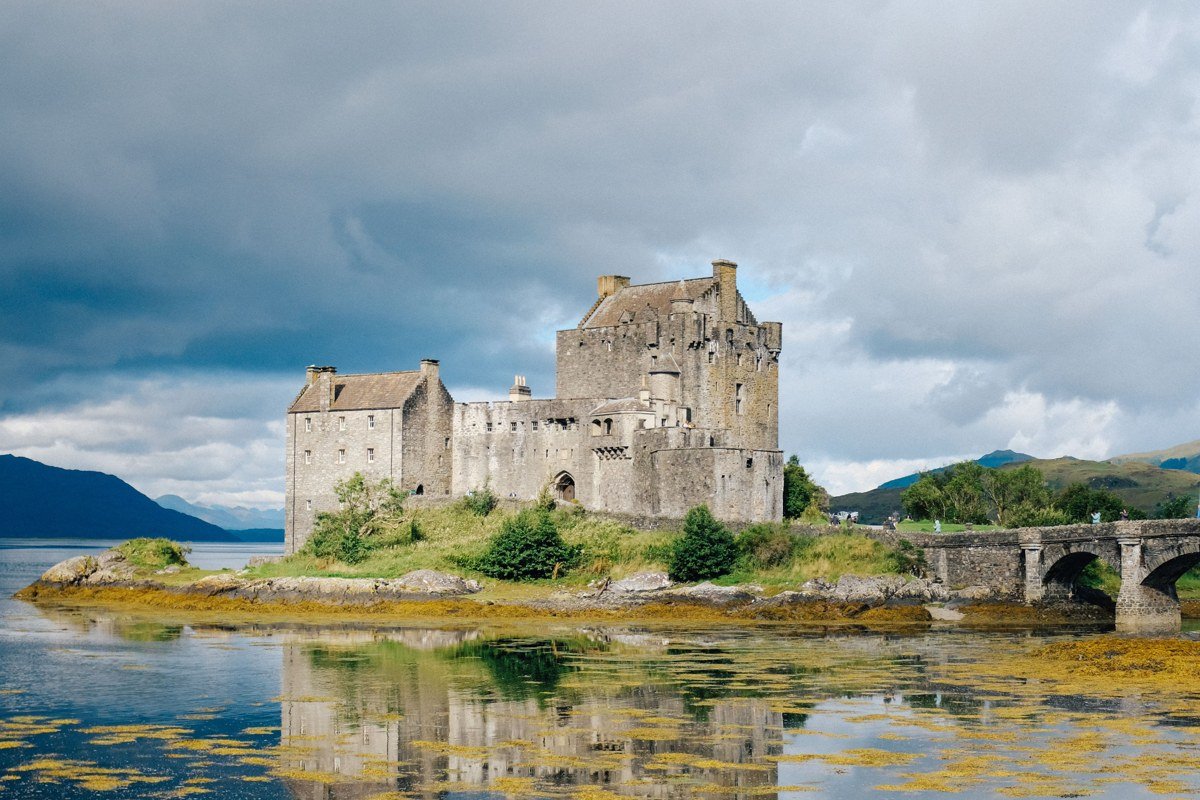
View from the loch path east of Eilean Donan’s main car park, three-quarter aspect, October morning light raking across the causeway.
1. Eilean Donan Castle, Dornie
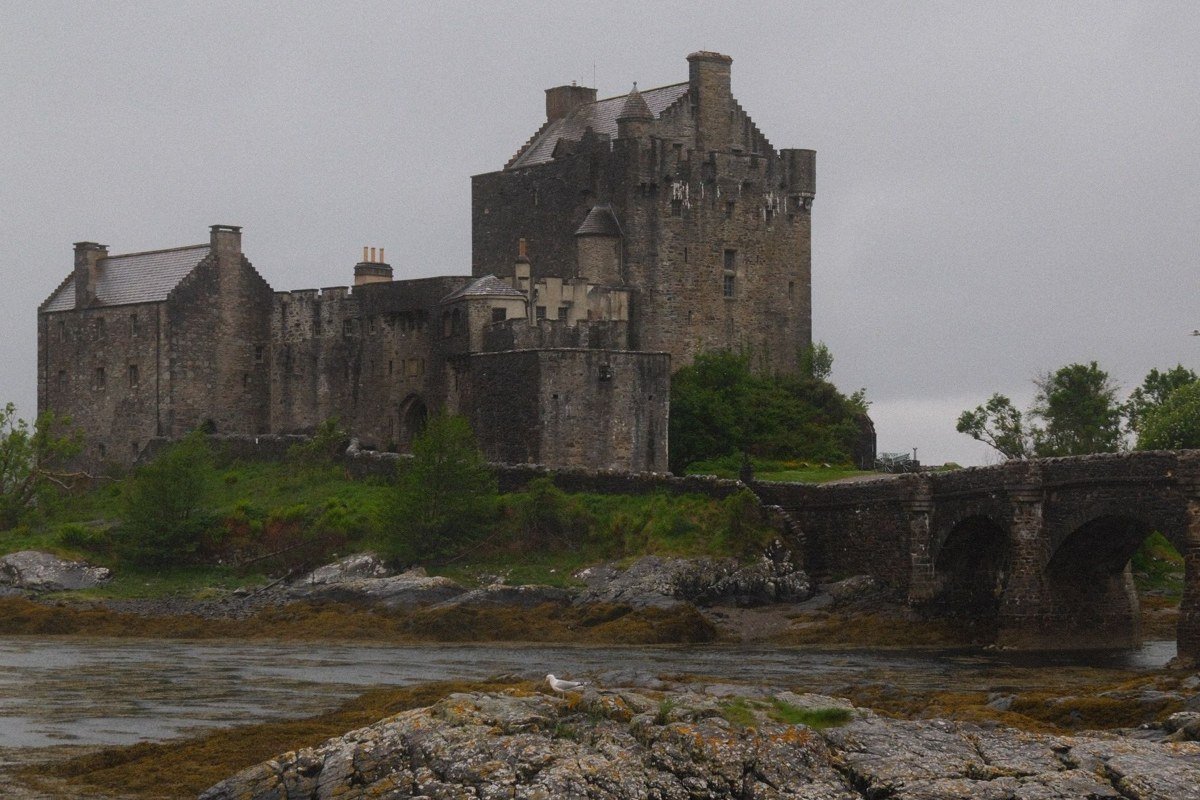
Eilean Donan sits on a small island where three sea lochs converge, and on a grey October morning the reflection in Loch Duich turns the whole scene into a smeared oil painting. The castle was largely rebuilt in the early twentieth century after sitting as a ruin for around two hundred years, which means the interior is tidier than the exterior suggests, but the exterior is what you came for. Walk past the main visitor car park and follow the loch path east for ten minutes to get the three-quarter view with the mountains framing the back. Go on a weekday before 9am or after 4:30pm and you will have that causeway almost entirely to yourself. Midges peak in summer, so May or September give you the light without the insects eating your face.
2. Ardvreck Castle, Loch Assynt
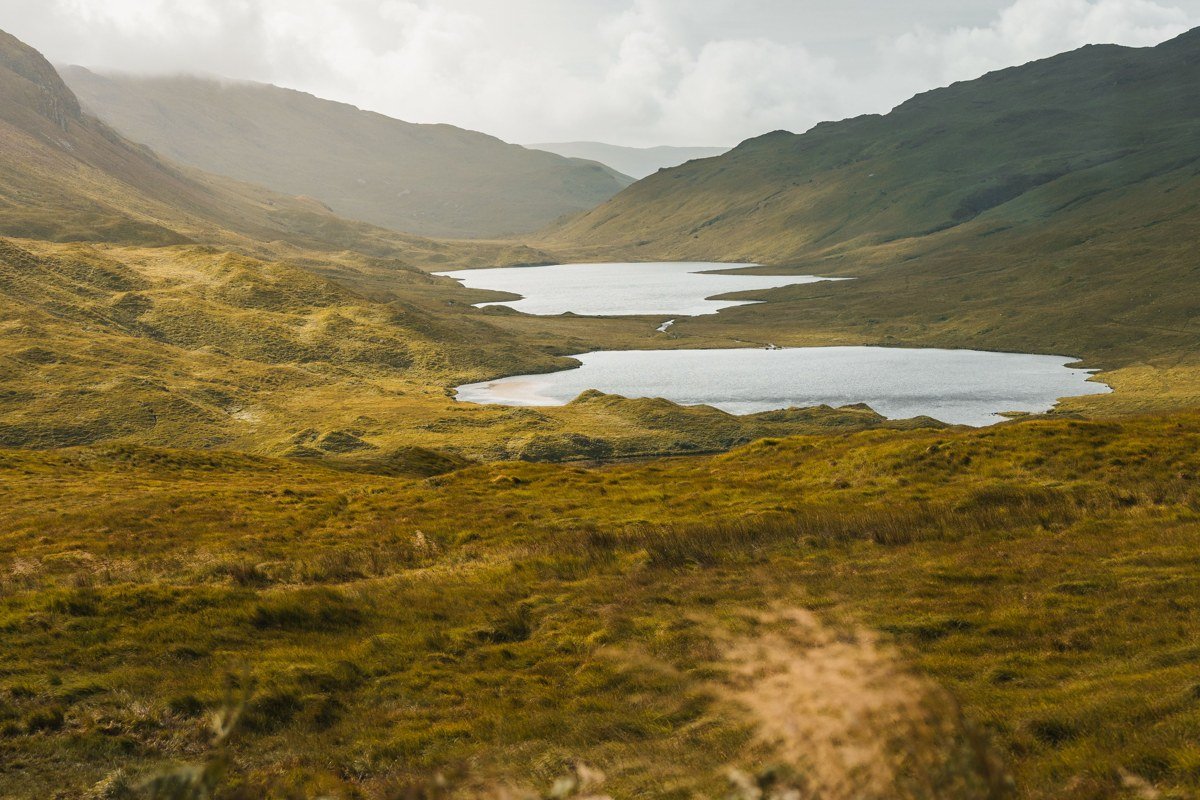
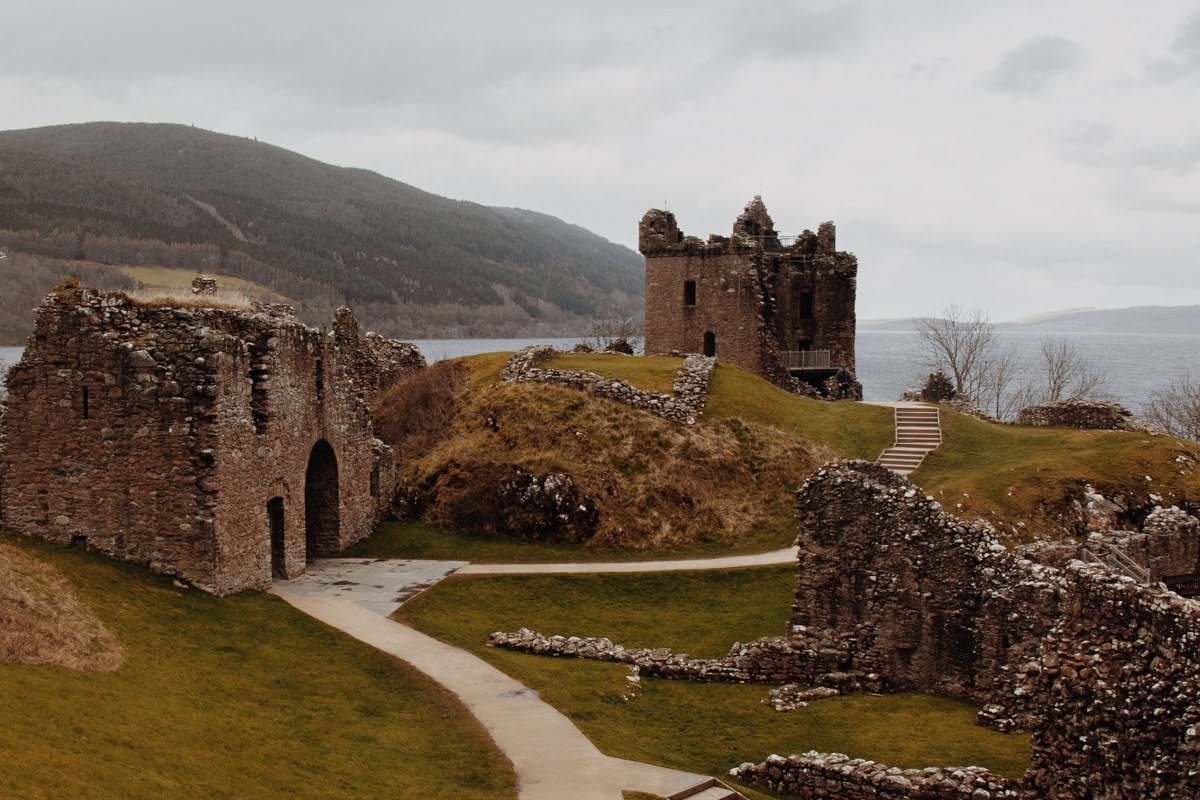
Ardvreck is the castle that landscape photographers know and general tourists reliably miss, sitting as a crumbled tower on a grassy peninsula jutting into Loch Assynt in Sutherland. Built by the MacLeods of Assynt in the late fifteenth century, it saw genuine brutality, including the betrayal and imprisonment of the Covenanting general Montrose, and that history sits heavily in the silence around it. There is no admission fee and no fencing, so you walk right up to the base of the tower and peer through the window sockets at the loch beyond. The A837 runs directly past it, which makes it absurdly accessible for something this remote-feeling. Come at dusk in late spring when the water turns copper and the Ben More Assynt ridge holds its last light behind the ruin.
3. Castle Tioram, Moidart
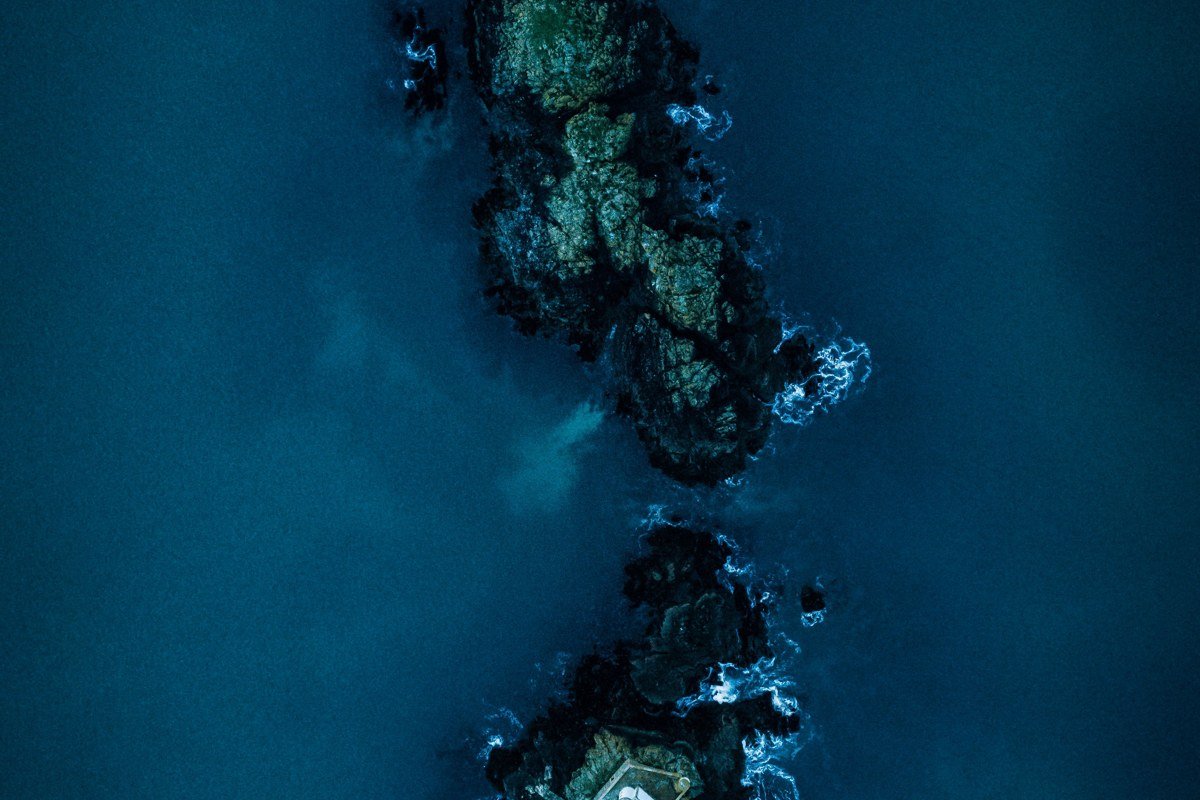
Castle Tioram (pronounced “Cheerum”) sits on a tidal island in Loch Moidart and is only reachable on foot at low tide across a short sand and pebble causeway. The Clanranald MacDonald stronghold was deliberately burned by its own chief in 1715 to prevent it falling to enemy hands during the Jacobite rising, and the fire-blackened interior walls have never been touched since. That detail changes how you look at the place. Restoration controversy has kept it authentically ruined rather than museum-polished, which is either a tragedy or a gift depending on your aesthetic priorities. Check tide tables before you travel: the causeway floods and the crossing window is shorter than it looks on a map. The view back across the loch toward the birch-covered hills is one of the more quietly stunning along the western seaboard.
4. Dunnottar Castle, Stonehaven
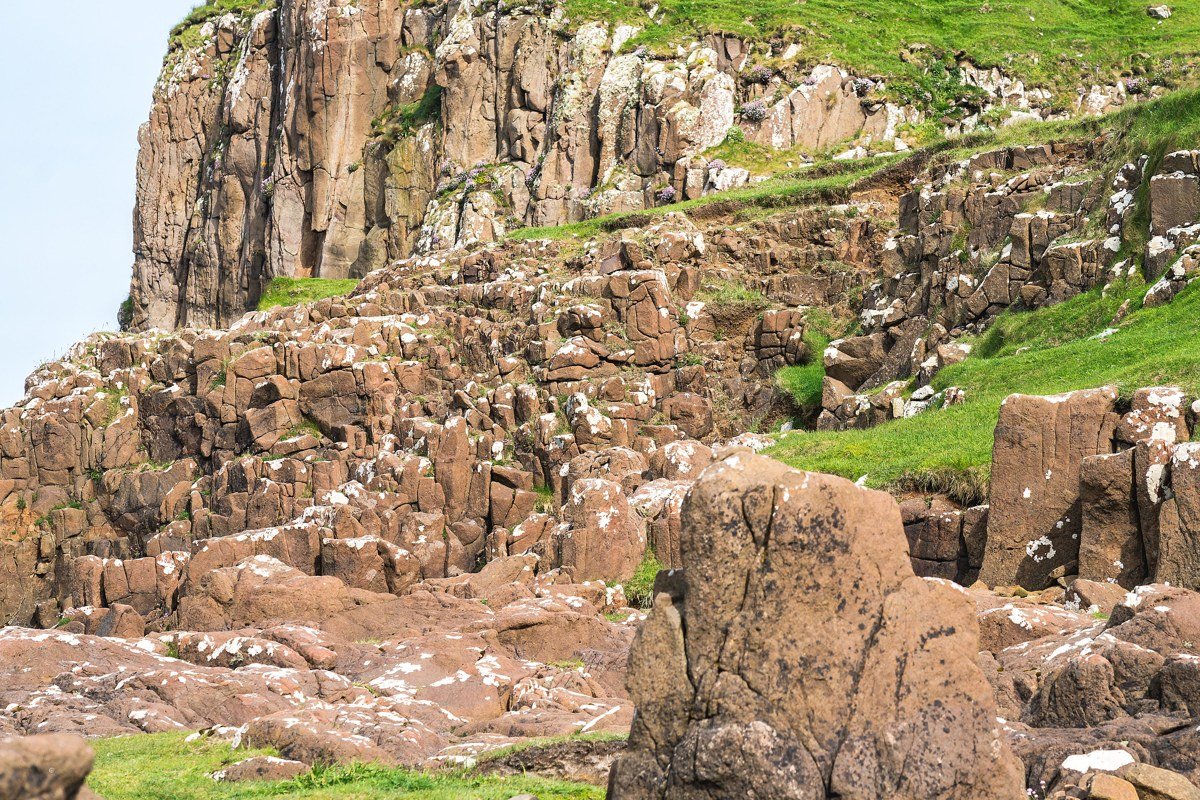
A brief geographic note before we continue: Dunnottar sits on the Aberdeenshire coast near Stonehaven, technically in the northeast rather than the Highlands. It earns its place on this list because the quality of its drama, its isolation, and the particular character of its northern light place it in direct conversation with the Highland castles here, even if the regional boundary does not.
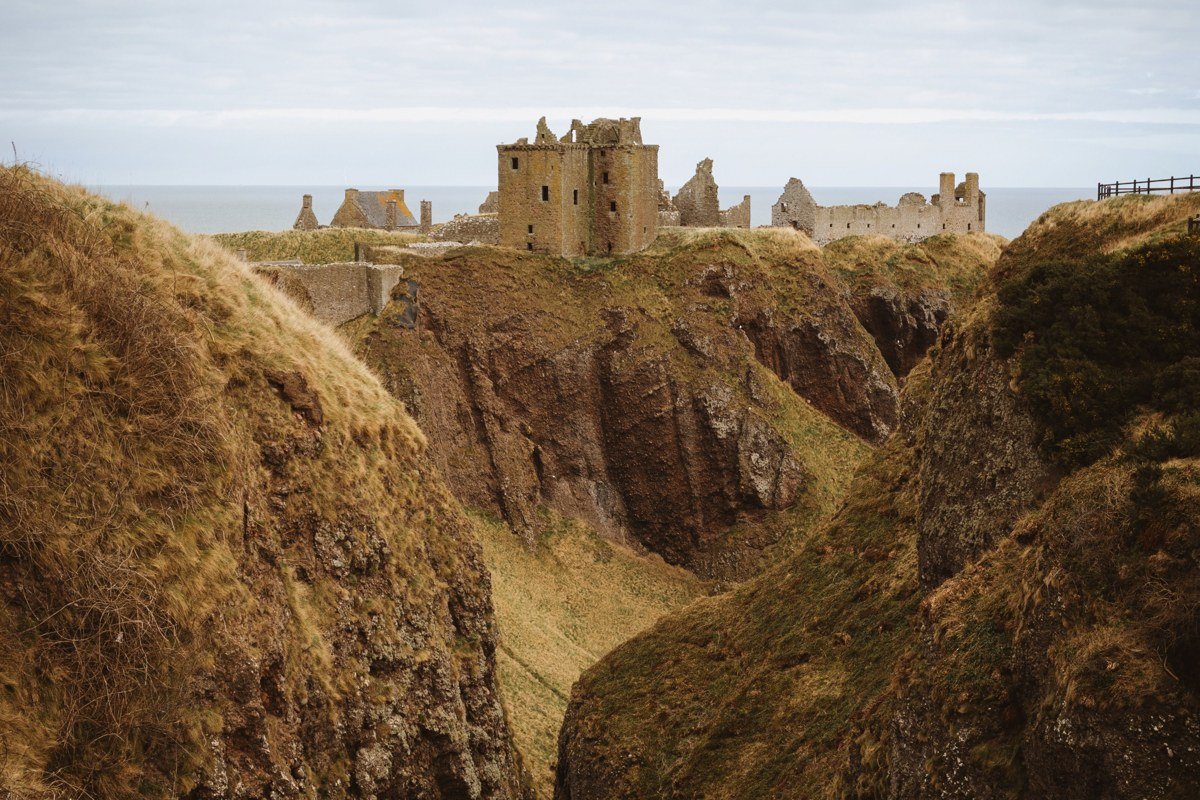
The castle complex sits on a 160-foot sea stack of rock connected to the clifftop path by a narrow ravine descent, which means you arrive at it from below, looking up through a tunnel cut into the rock. The Scottish crown jewels were smuggled out of here during Cromwell’s siege in the 1650s, hidden in a fishing creel according to most accounts. The ruins are extensive: a quadrangular tower house, a chapel, a forge, stables, all slowly being unpicked by North Sea wind. The walk from Stonehaven takes about 25 minutes along the coastal path and is worth doing rather than driving directly to the castle car park, because the approach views are the photograph. Mid-morning in autumn when haar rolls in from the North Sea is the specific light to aim for.
5. Ruthven Barracks, Kingussie
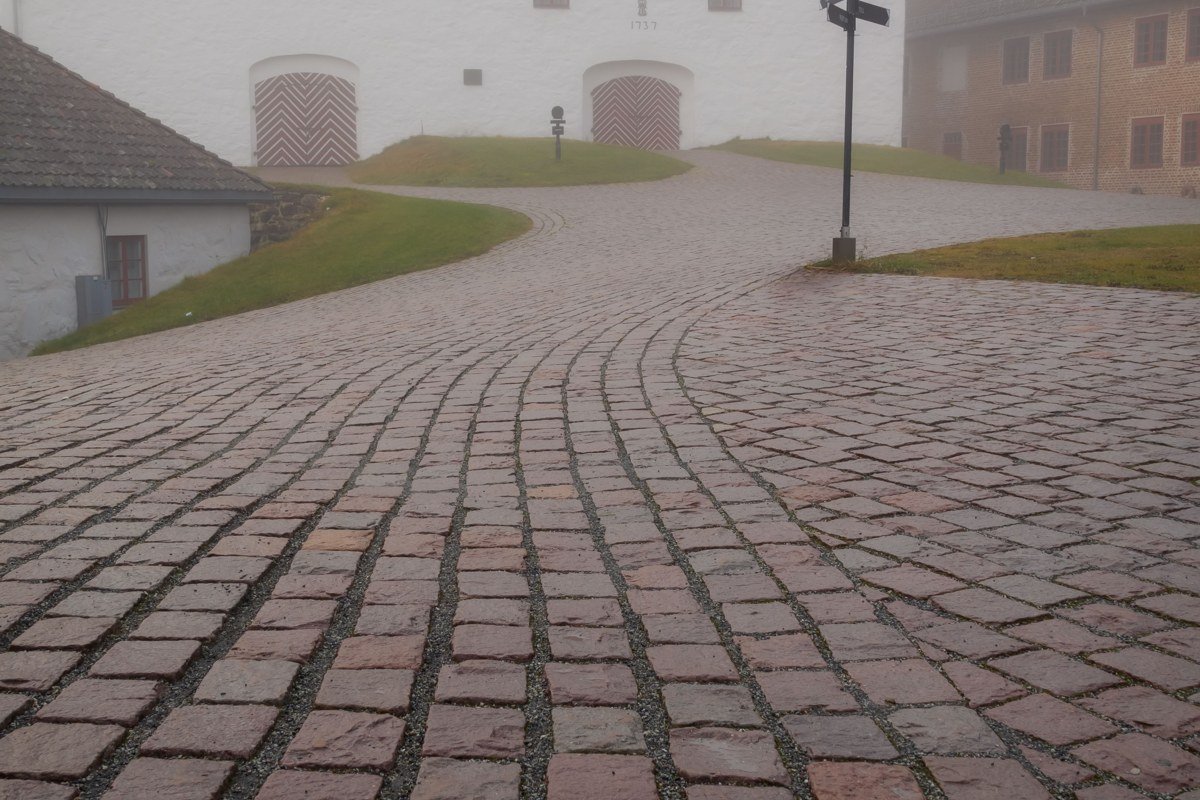
Ruthven is not technically a medieval castle but it earns its place here because it looks more cinematically ruined than anything purpose-built for atmosphere. The Hanoverian barracks were built on a natural mound above the River Spey to suppress Jacobite activity, then blown up by Jacobite forces themselves after Culloden in 1746. The result is a skeletal shell of Georgian military architecture sitting on a glacial mound with the Cairngorm plateau behind it, visible from the A9 as a permanent provocation. It is free to enter, the mound is climbable on a clear path, and from the top you look down onto the flat Spey valley in every direction. In winter after snowfall the contrast between white fields and black stone is the kind of image that performs well for a reason: it is genuinely arresting. This is five minutes from Kingussie and it is chronically undervisited.
6. Gylen Castle, Isle of Kerrera
Getting to Gylen requires a short passenger crossing from Gallanach near Oban on the Kerrera Ferry, which operates seasonally, and then a four-mile walk across the island of Kerrera. Check the Argyll Ferries seasonal schedule before you travel: sailings are infrequent and the timetable shifts between summer and shoulder season. That friction filters out everyone who is not serious, which is exactly why the castle feels like a discovery when you reach it. The MacDougall tower house perches on a headland above sheer sea cliffs at the island’s southern tip, and the view south down the Firth of Lorn on a clear day includes Jura, Scarba, and the Paps of Jura as a jagged purple line on the horizon. The castle was sacked and burned by the Royalist general Colkitto MacDonald in 1647 and left to decay, so the corbelled angle turrets are still readable but the roof is long gone. Pack a lunch and eat on the headland grass.
7. Kilchurn Castle, Loch Awe
Kilchurn offers the kind of image that defines this particular strain of Highland visual identity: a cluster of towers reflected in the flat surface of Loch Awe, wrapped in low cloud, with Ben Cruachan rising behind. The castle was built by the Campbells in the mid-fifteenth century and extended into a barracks later, then abandoned in the eighteenth century after a lightning strike damaged the main tower. It sits on a former island now permanently connected to the shore by a raised shingle ridge, accessible either by a short walk from the A85 layby or by a seasonal ferry from Lochawe village. The interior is freely walkable, though the floors are soft in places. What makes Kilchurn different from postcards is the morning mist: between September and November a temperature inversion frequently fills the loch with white fog while the castle tops sit clear above it. Set an alarm.
8. Caisteal Maol, Kyleakin, Skye
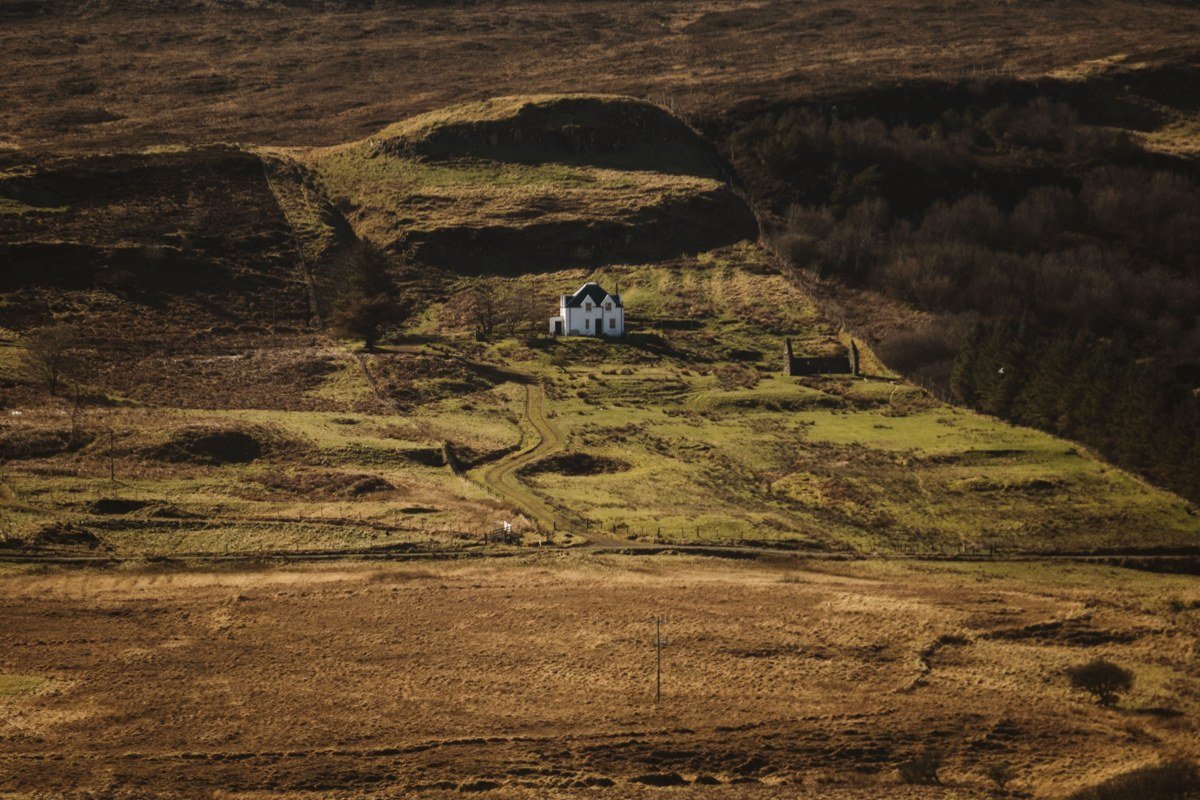
Caisteal Maol sits directly opposite the mainland at Kyleakin on Skye, and most visitors crossing on the Skye Bridge see it and keep driving. That is their loss. The ruin sits on a low headland above the Kyle of Lochalsh straits, one of the fastest tidal passages in Scotland, where currents through the narrows regularly exceed eight knots. The best vantage point is the headland shelf about forty metres northeast of the ruin itself, where the full sweep of the Kyle opens up with the Applecross peninsula and the mainland mountains behind. The history attached to the site is vivid: local tradition holds that a Norse princess stretched a chain across these narrows to collect tolls from passing ships, though this belongs to legend rather than documented record. The masonry is fragmentary and the interior is not much more than a grass platform ringed by broken walls, but the setting on a rough-weather day, with the tide ripping through below and the mountains stacked behind, is legitimately dramatic. Walk down from the village of Kyleakin in ten minutes. If you are staying on Skye and have already done the Fairy Pools and the Old Man of Storr, this quiet ruin is the antidote to their crowds.
9. Findlater Castle, Cullen, Aberdeenshire
Findlater is the most genuinely precipitous castle on this list and possibly in Scotland. The Ogilvie stronghold clings to a sea-stack ledge on the Aberdeenshire coast with vertical drops on three sides, accessed from the clifftop path near Cullen by a scramble down a very steep grassy slope. Historic Environment Scotland rates the access as potentially dangerous, which is accurate, and the interior is more hazardous still, with open drops where floors have collapsed. But the exterior view from the cliff edge above it, looking down onto the jagged towers with the North Sea crashing below, is unlike anything else on this list. Come in October or March when the sea is running high and the spray catches the light. The Cullen to Portsoy coastal walk passes directly above it and is worth doing in full, but Findlater is the reason to start there rather than anywhere else.
Planning Notes

Timing across the region: The western castles (Tioram, Eilean Donan, Gylen, Kilchurn) get the warmest light in May and September with manageable midges. The eastern and northern castles (Findlater, Dunnottar, Ardvreck) are better in autumn and winter when low-angle light rakes across the stone and tourist pressure drops significantly.
Driving logistics: A realistic Highland castle road trip can link Eilean Donan, Ardvreck, and Ruthven across two days using the A87/A835/A9 corridor. Caisteal Maol folds into any Skye itinerary. Castle Tioram and Kilchurn both sit close to the A82 Fort William to Glasgow route.
Mobility access: Eilean Donan, Ruthven, and Kilchurn are all accessible without scrambling and are suitable for most visitors. Findlater and Gylen are not: Findlater requires a steep and uneven descent on a potentially unstable slope, and Gylen demands a four-mile walk across rough island terrain after a ferry crossing.
Practical access note: Several of these castles (Ardvreck, Ruthven, Caisteal Maol, Findlater) have no admission charge and no visitor infrastructure. That is the whole point. Carry OS maps or load the relevant 1:25,000 sheets on ViewRanger or OS Maps before you leave mobile coverage. Highland weather changes within an hour and several of these sites involve cliff edges or tidal crossings where timing matters.
Photography: A polarising filter reduces loch reflection glare in a way that no amount of post-processing replicates. Early morning windows in September and October frequently offer mist with good visibility, whereas midday in summer typically blows out the sky and fills the car parks. The aesthetic that resonates on visual platforms is almost never captured at noon in July. Adjust your schedule accordingly.