
The Scottish Highlands in winter are not a consolation prize for people who missed summer. They are a completely different place, one where low cloud turns every loch into a mirror and every glen into something genuinely cinematic. These nine misty destinations earn that label honestly, and they look best between November and February.
1. Glen Etive, Argyll
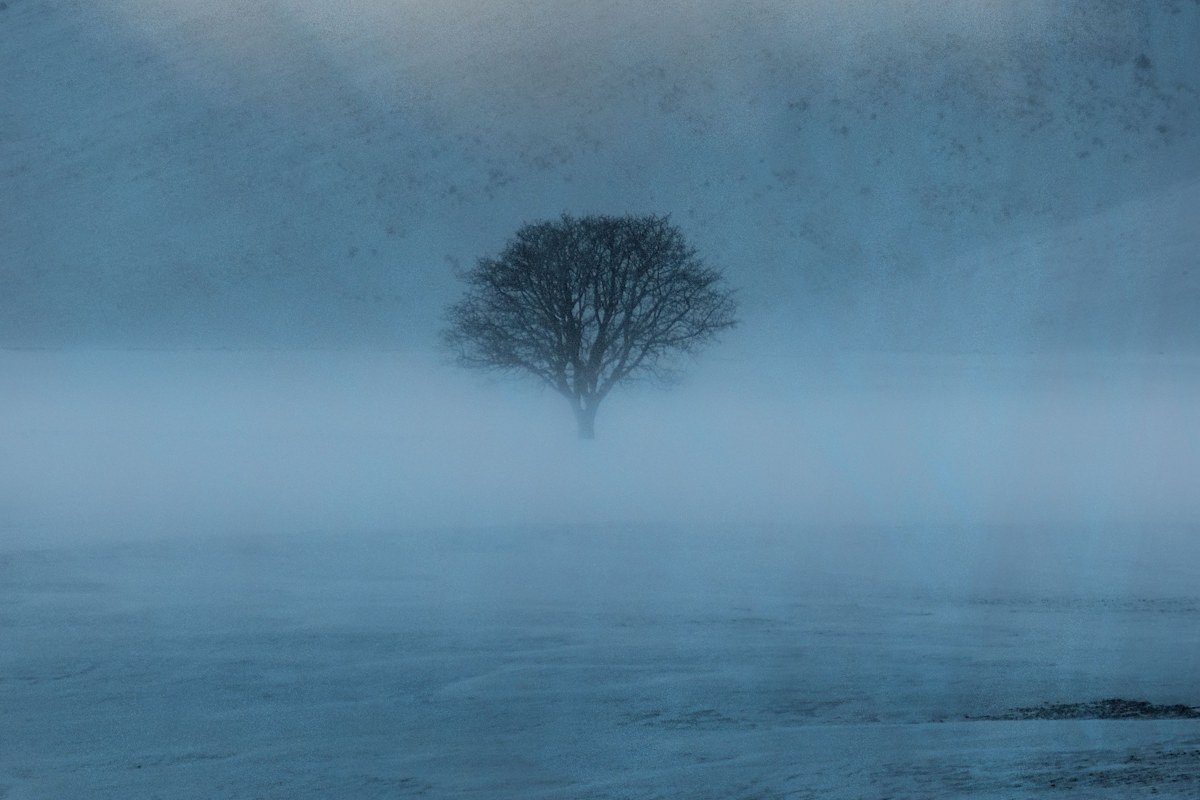
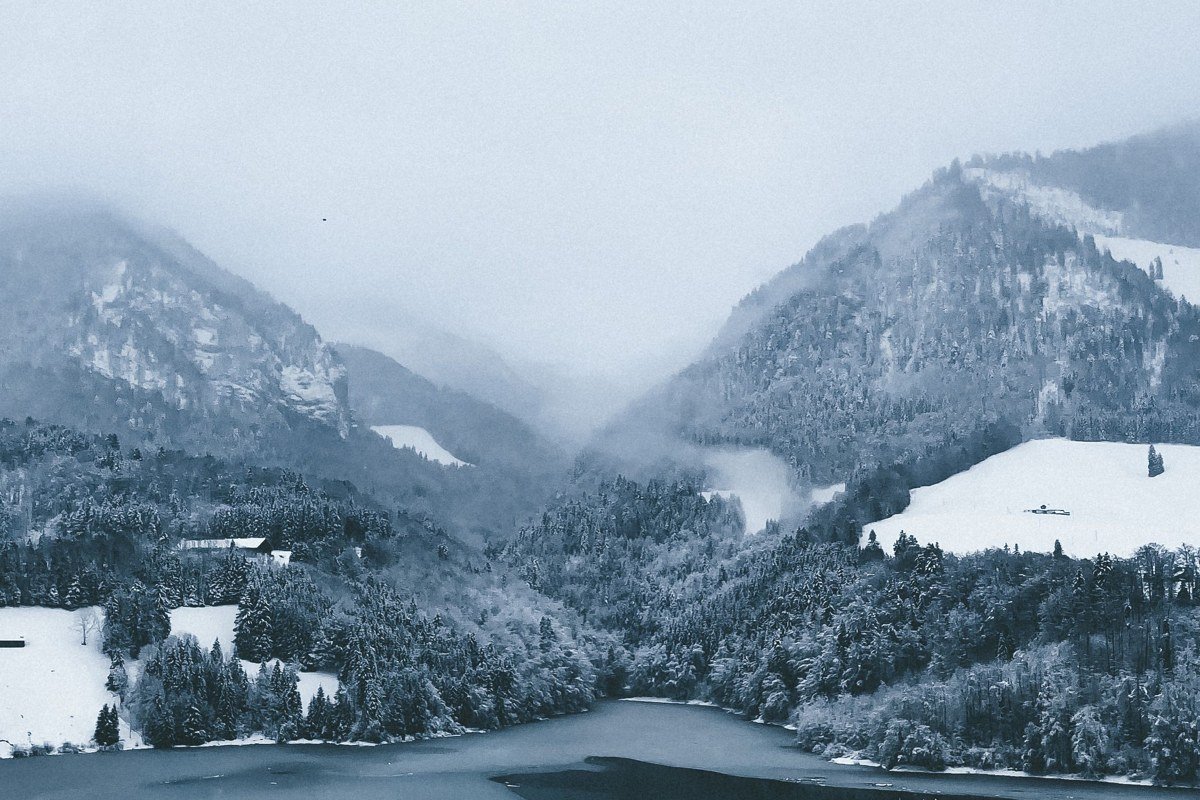
Glen Etive is the road that most people drive past on their way to Glencoe and immediately regret not turning into. The single-track lane follows the River Etive for roughly fourteen miles into a dead-end valley, and in winter the whole corridor fills with a low, slow mist that never quite lifts before midday. The pale grasses turn amber against the grey sky, the river runs high and loud, and there is almost nobody here. The best thing to do is simply walk the riverbank near the lower reaches, where broad pools collect the reflections of the surrounding ridges. Arrive before 9 a.m. if you want the mist still sitting in the valley floor rather than burning off the flanks of Buachaille Etive Mor.
2. Rannoch Moor, Perthshire
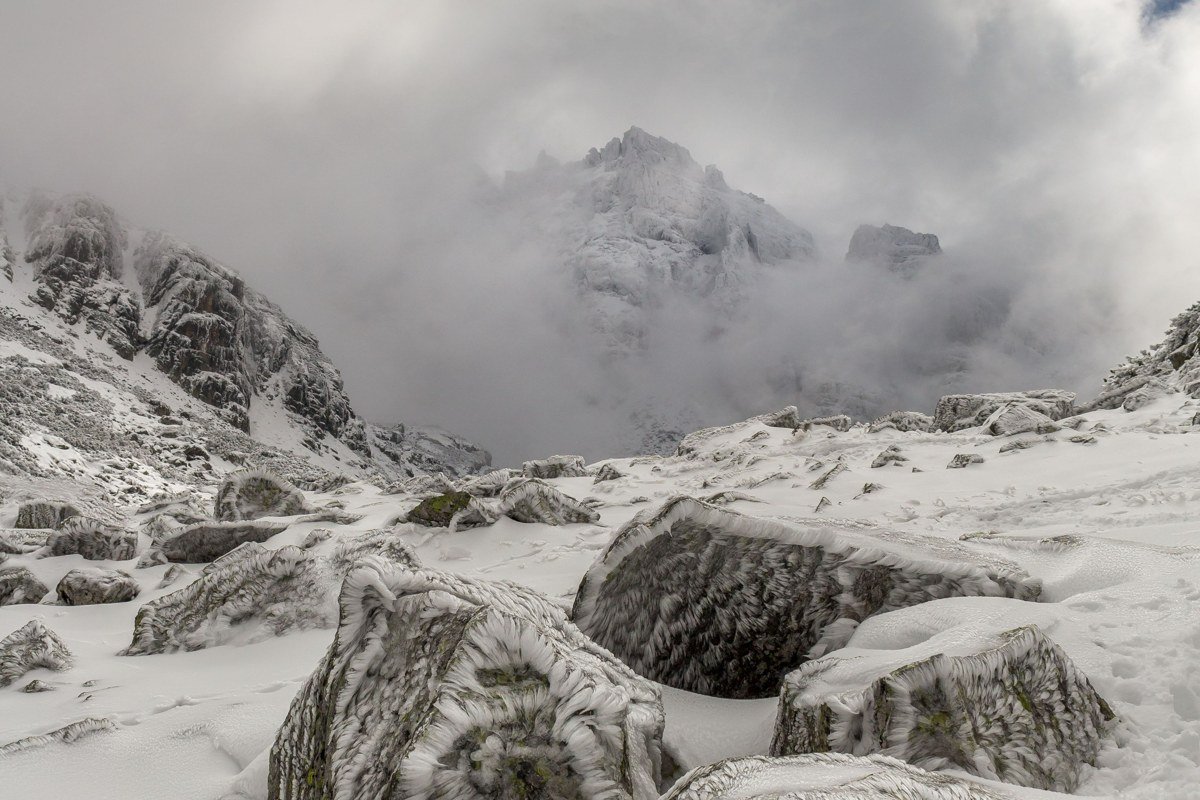
Rannoch Moor is one of the largest blanket bogs in Europe, roughly fifty square miles of peat, lochan, and open sky. In winter it becomes so exposed and so still that mist pools in the hollows for hours, sometimes days. The visual effect is borderline surreal: the distant Black Mount ridge appears and disappears in slow waves of cloud, and the standing water on the moor reflects a sky that is always doing something interesting.
For the best mist-pool visuals, the lochans clustered around Lochan na Stainge and the open ground immediately north of Blackrock Cottage are the places to head. The shallow water there sits just low enough in the peat to hold still air after a cold night, and the reflections of the ridge behind read cleanly even under flat cloud. Park at the layby near Blackrock Cottage and walk north even a short distance to feel the full scale of the place.
3. Eilean Donan Castle, Kintail
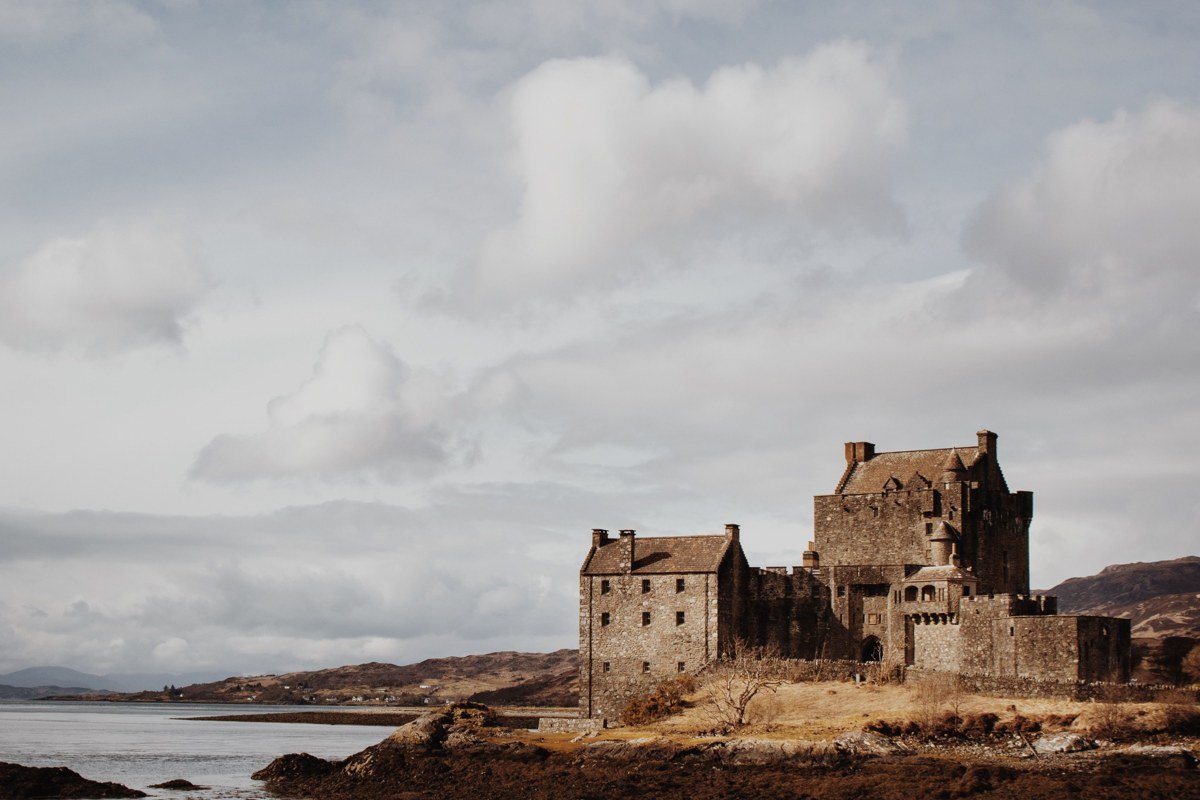
Eilean Donan is the most-photographed castle in Scotland, and the image most people associate with it is also the one most people get wrong. The composition that actually rewards patience is not the straight-on shot from the car park. It is the view looking back west toward the Five Sisters of Kintail, taken from the far side of the bridge at first light, with the castle sitting small in the left third of the frame and the snow-dusted ridge filling the sky behind it. That framing turns a postcard into a landscape photograph.
What goes wrong most often: arriving mid-morning (the car park fills quickly and the flat overhead light flattens the reflection), shooting from the wrong side of the bridge (the car-park side gives you the castle facade but loses the mountain context entirely), and visiting in the expectation of snow on the hills in October or March (November through January is the reliable window for snow at ridge level and cold overnight air that keeps the loch surface glassy). The reflection in Loch Duich, with low cloud on the surrounding mountains, happens most consistently between November and January. Winter hours for the castle interior are reduced, so check ahead if going inside matters to you.
Avoid this mistake: the car park viewpoint is fine for reference. The bridge’s western end, before 9 a.m., is the shot.
A practical base for this area: Kintail Lodge Hotel, on the southern shore of Loch Duich at Inverinate, stays open through winter and is close enough to walk to the castle in the early morning before other visitors arrive.
4. The Quiraing, Isle of Skye
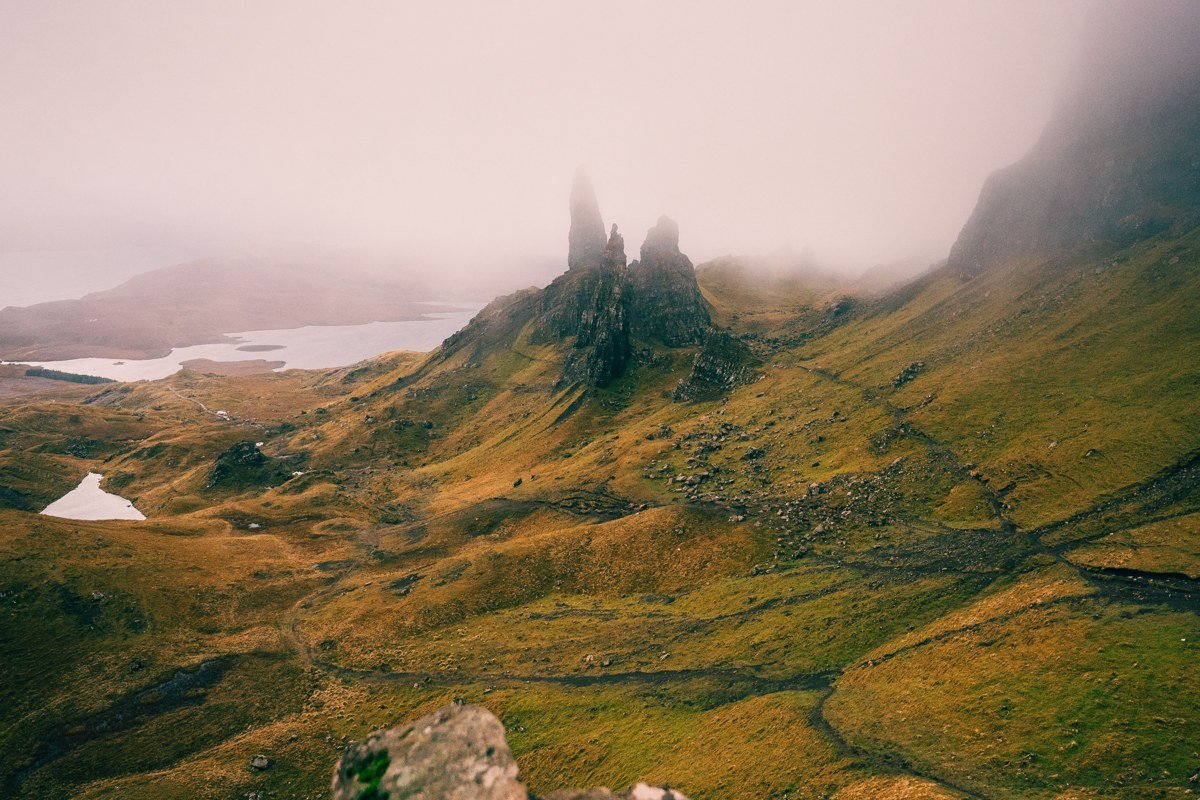
The Quiraing is a landslip on the northeastern tip of Trotternish, and the landscape it created is genuinely strange. The most disorienting feature is the hanging terrace known as the Table, a flat grass platform suspended improbably above the valley floor, ringed on three sides by near-vertical basalt columns that tilt slightly inward as they rise. Standing below it and looking up, the geometry feels wrong in a way that takes a moment to process: the rock leans toward you, the sky is a narrow strip above, and the ground underfoot slopes away into cloud. That specific angle, looking up at the Table’s eastern cliff face from the path below, is what photographs consistently fail to capture at full scale.
In summer the parking area at the top of the Staffin to Uig road is chaotic. In December and January it is almost empty, and the winter light, when it appears at all, is low and directional, hitting the cliffs at angles that simply do not exist in summer. The loop walk from the car park takes roughly three hours at an easy pace. Go on a day when cloud is forecast to clear by mid-morning rather than waiting for a completely clear day, because the partial mist is the whole point.
Avoid this mistake: the car park at the top of the pass fills by 9 a.m. even in winter on clear weekends. Arriving at or before sunrise guarantees you a space and the best light.
For a Skye base within easy reach of both the Quiraing and Sligachan, Sligachan Hotel operates year-round and puts you at the foot of the Cuillins with the Trotternish peninsula under an hour’s drive north.
5. Sligachan, Isle of Skye
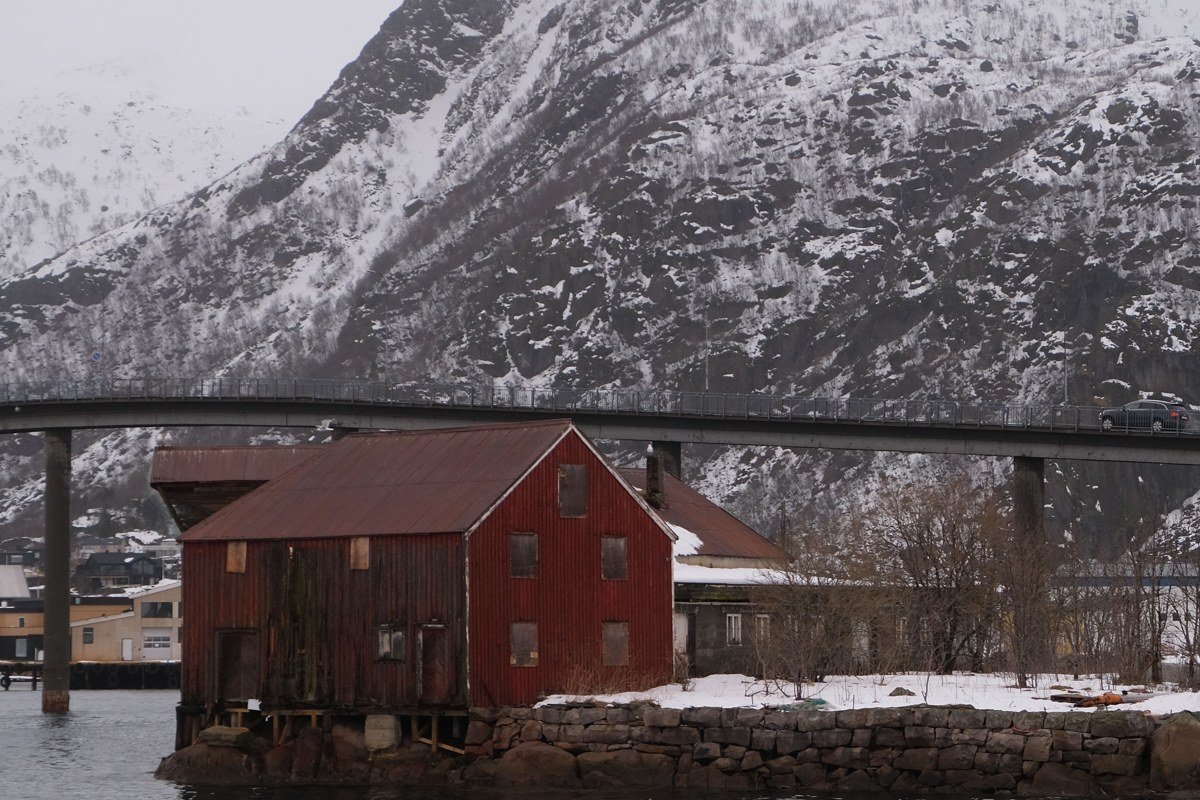
The old stone bridge at Sligachan sits at the foot of the Black Cuillin range and has become something of a pilgrimage spot for people who want the quintessential dramatic Skye image. In winter the Cuillins carry snow on their jagged ridges while mist clings to the lower corries, and the River Sligachan runs fast and tea-dark with peat. The foreground of shallow, rock-strewn river with the mountains rising directly behind works at almost any exposure in winter light. The most photogenic window is the hour after sunrise, roughly 9:30 to 10:30 a.m. in December, when the low sun catches the snow on the Cuillins without flattening the mist below.
Sligachan Hotel stays open year-round and serves decent food, which matters when daylight runs out before 4 p.m. and you need somewhere warm.
Note on road conditions specific to Skye: the Skye Bridge and local council routes have their own closure reporting separate from Traffic Scotland’s mainland feed. The Highland Council roads page covers Skye routes directly, and the Skye Bridge operator posts closures due to high winds independently. Check both before an early start, particularly between December and February when wind closures on the bridge are not uncommon.
6. Glencoe Village and the Study Viewpoint
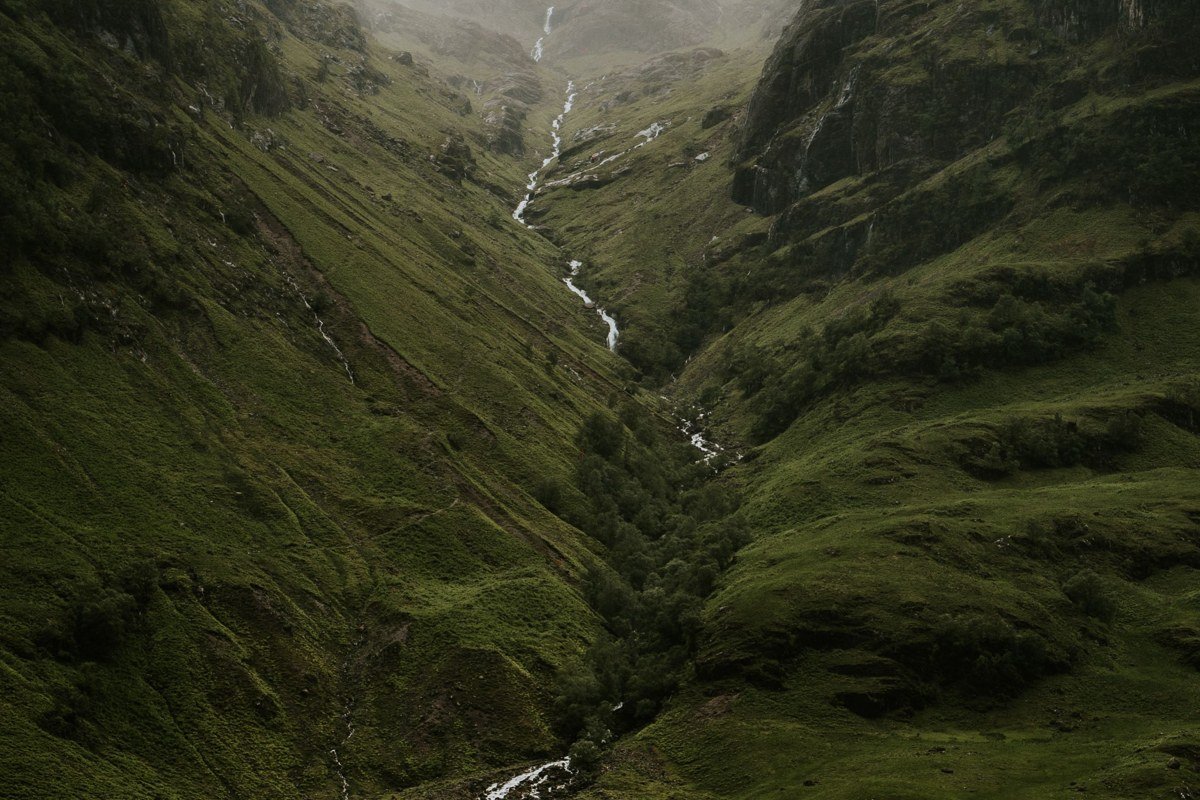
Glencoe the valley is famous. The Study, a specific viewpoint on the old road between Glencoe village and Rannoch Moor, is where photographers who know better actually stop. A short walk from a small parking area brings you to a raised outcrop looking northeast down the full length of the valley, with the River Coe snaking through the valley floor below and the Three Sisters rising sharply on the left. In winter, cold air from the moor drains down into the glen overnight and sits there, sometimes for the entire day, creating the layered mist that makes the valley look inexhaustibly deep. The light quality on an overcast winter day here is softer and more even than anything summer produces.
Worth noting: the road through Glencoe can close in heavy snow, so check Traffic Scotland before planning an early start.
Avoid this mistake: most visitors stop at the large layby on the A82 on the valley floor. The Study sits above it on the old road and gives you elevation over the mist layer rather than immersion in it. That difference in height is everything.
7. Falls of Measach, Corrieshalloch Gorge, Wester Ross
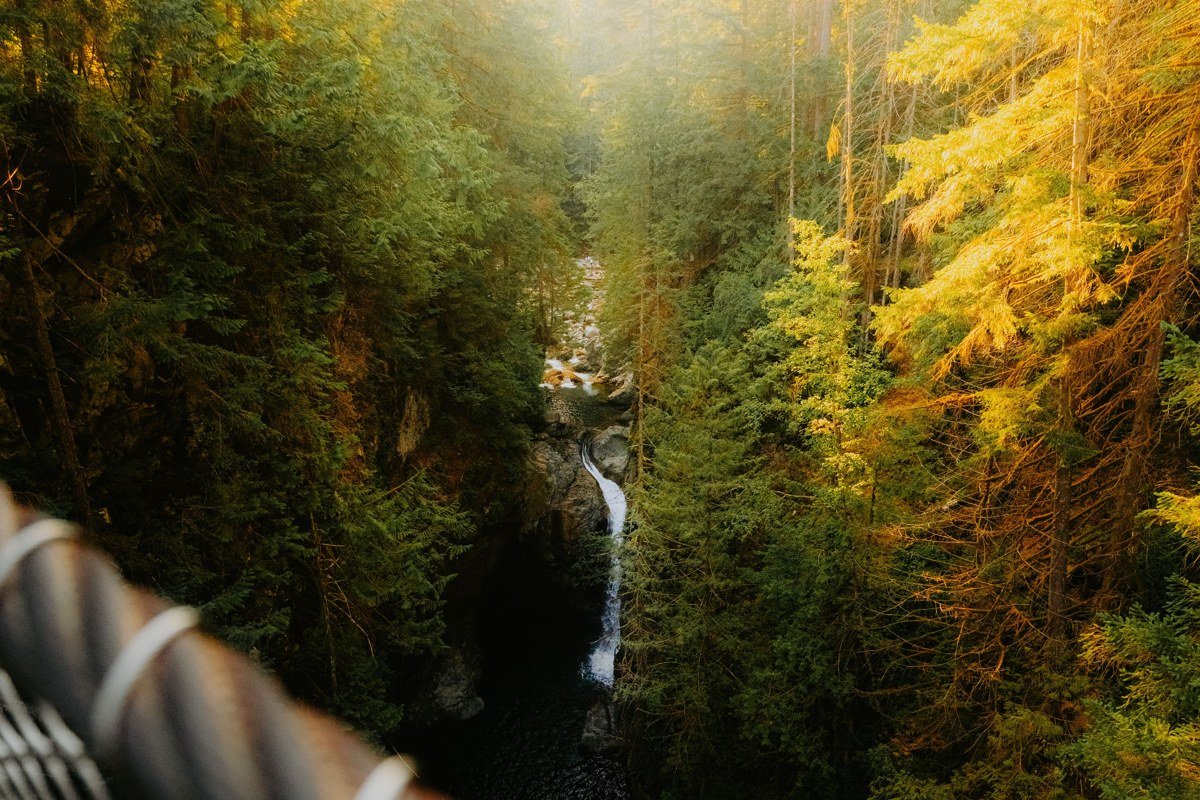
Corrieshalloch Gorge is a slot canyon (technically a gorge formed by glacial meltwater) near Braemore Junction, and in winter it produces its own internal microclimate of mist. The Falls of Measach drop around forty-six meters into the gorge, and the spray combines with cold air to hang as a permanent cloud above the gorge floor. The Victorian suspension bridge that crosses the gorge gives a view straight down into the mist and the dark water below, which is as vertiginous and atmospheric as it sounds. The walk from the car park is short, under ten minutes, which makes this a practical stop on a longer Wester Ross loop. It is one of those places that looks more dramatic in flat winter light than in direct sun, because sun creates harsh contrast while overcast conditions let the waterfall and mist fill the whole frame.
8. Bealach na Ba, Applecross Peninsula
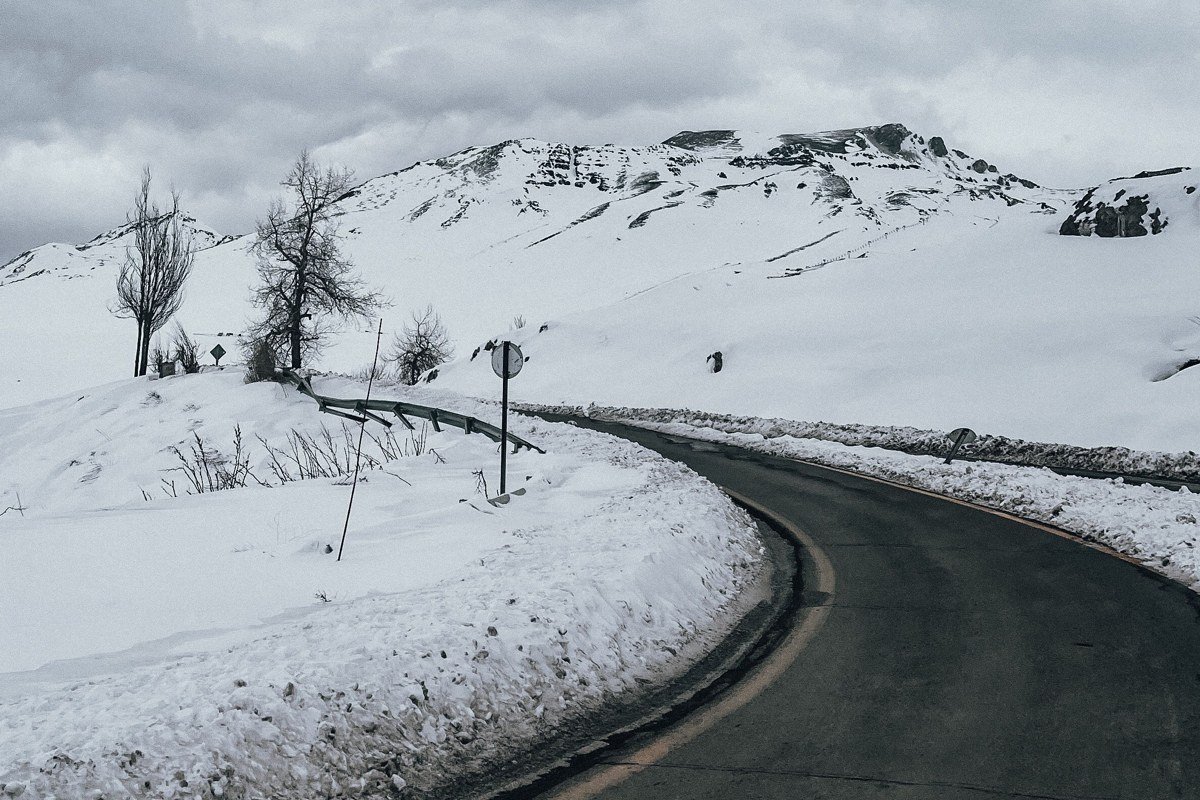
Bealach na Ba is the highest road pass in mainland Britain that you can drive, climbing to around 626 meters in a series of hairpin bends up the eastern face of the Applecross peninsula. In winter the road frequently closes due to ice or snow, and that closure is itself a signal: this is the kind of landscape that does not compromise. On days when it is passable, the drive up through mist and patchy cloud, with the Torridon mountains appearing and disappearing to the east, is extraordinary. At the summit, on a clear winter day, the view toward Skye and the Outer Hebrides can stretch for fifty miles. The descent to Applecross village on the western side is gentler and ends at a beach that turns pink in winter afternoon light. Check the road condition the morning you plan to go and have an alternative ready, because turning back at the bottom is a real possibility.
For accommodation, the Applecross Inn is the obvious anchor point in the village and is well-known enough to book up even in winter, particularly around the December school holidays. Confirm availability and winter opening dates directly with them before building an itinerary around it, as hours can vary by season.
9. Loch an Eilein, Cairngorms National Park
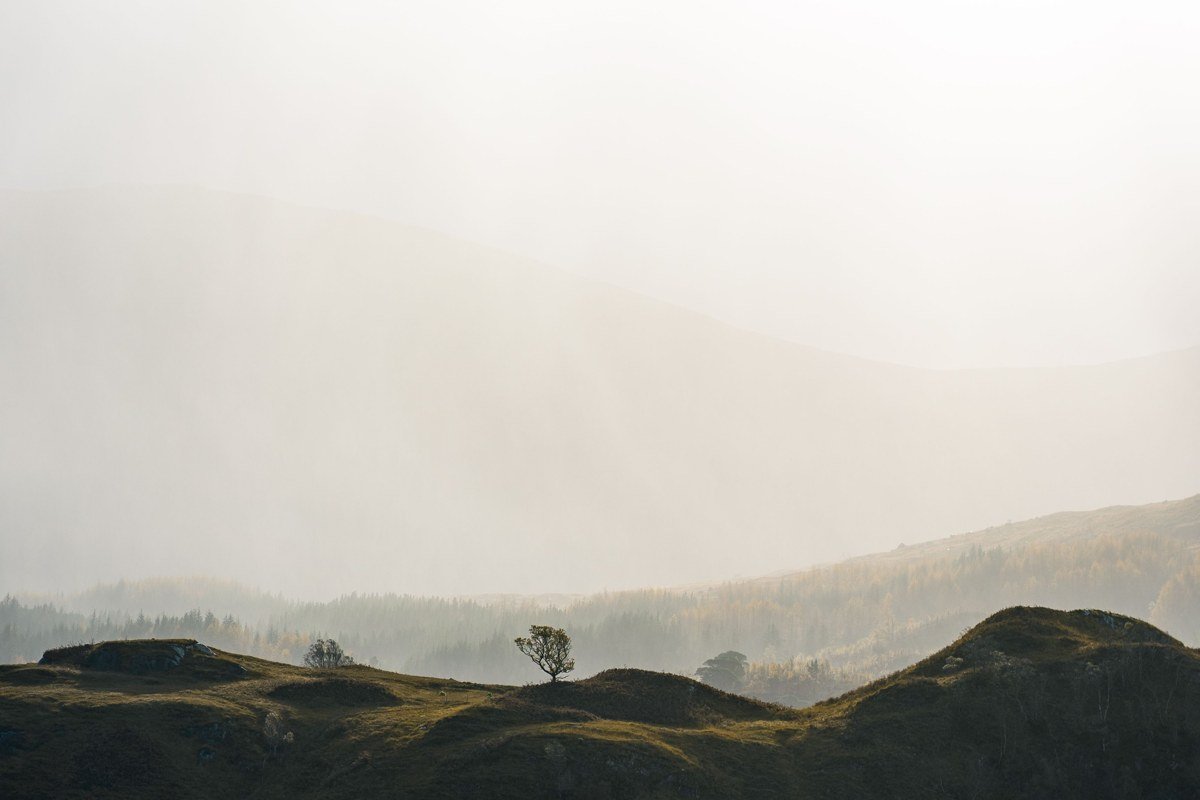
Loch an Eilein sits inside Rothiemurchus Forest near Aviemore and contains a small island with the ruins of a fifteenth-century castle. In winter the Scots pines surrounding the loch carry snow on their branches, the water is often still enough to produce perfect reflections, and mist rises off the surface on cold mornings in a way that looks staged. Unlike several other entries on this list, getting here requires no serious navigation: the car park is signed from the B970 and the circular loch path is around five kilometers of easy walking. It is one of the most quietly beautiful misty destinations in the entire Highlands, and because it lacks the dramatic peaks of Skye or Glencoe, it tends to be overlooked in favor of more obviously dramatic spots. That is entirely to your advantage in winter, when you may have the path almost to yourself before 10 a.m.
Practical Takeaways for a Winter Highlands Trip
Timing matters more than destination. The window between mid-November and late January consistently produces the mist, snow, and low-angled light that make the Highlands look the way they look in the images that keep circulating on Pinterest. Midwinter daylight is short, roughly seven hours in Inverness in December, so plan to be at your first location at or before sunrise.
A few things that make the difference in practice:
- Wear gaiters over your waterproof trousers. This is the single piece of kit most visitors skip and most regret. Bog walking is unavoidable in the Highlands in winter, including on marked and maintained paths, and gaiters keep your boots and lower legs dry in a way that waterproof trousers alone cannot manage once you step through surface crust into wet peat.
- Carry OS maps or download offline maps (the OS Maps app covers all of these locations). Mobile signal is unreliable across most of Wester Ross and parts of Skye.
- Book accommodation early. Good options in places like Applecross, Kintail, and Glen Etive are limited and fill up even in winter, particularly around the school holidays in late December.
- Driving times between these locations are longer than they look on a map. The A87 between Invergarry and Kyle of Lochalsh takes around ninety minutes in good conditions. Build in buffer.
- If mist or low cloud is forecast, go rather than waiting for sun. These are misty destinations for a reason: the atmosphere is the subject.
The Highlands reward people who arrive with a flexible plan and genuine curiosity about what the landscape is doing today, not what it looked like in a photograph taken in August.