
Every Highlands guide tells you to wake before sunrise and chase the golden hour, but the photographers who keep returning to Scotland know the real secret: the most unearthly, genuinely atmospheric shots happen after the overnight rain lingers and the mist rolls in between nine and eleven in the morning. The rain-soaked, mist-layered quality that floods Pinterest boards under every Scottish Highlands tag is almost entirely a wet-weather phenomenon. Here are nine places where a grey, damp morning is not a consolation prize but the whole point.
1. The Quiraing, Isle of Skye
The Quiraing is a landslip on the northeastern edge of the Trotternish Ridge, and on a clear day it is beautiful in a straightforward, postcard kind of way. On a rainy morning, it becomes something else entirely. The basalt columns and tilted tablelands disappear and reappear in the mist in slow motion, and the saturated greens of the grass turn almost luminous against the grey sky. Walk the circular path from the Staffin to Uig road rather than the lower parking area, because the elevated angle gives you sightlines across multiple cloud layers simultaneously.
Arrive by 8:30 a.m. on any morning where overnight rain is tapering off. The road to the parking area is a single-track with passing places, and once other cars and campervans start moving through in volume the constant stopping and reversing breaks concentration and burns the best light. Early arrival means the upper path is often entirely yours.
Accessible year-round, but September through November gives the most reliable low mist without the full winter road closures. Base yourself in Portree, twelve miles south, where the Bosville Hotel offers secure gear storage and a drying room.
2. Glencoe Valley Floor
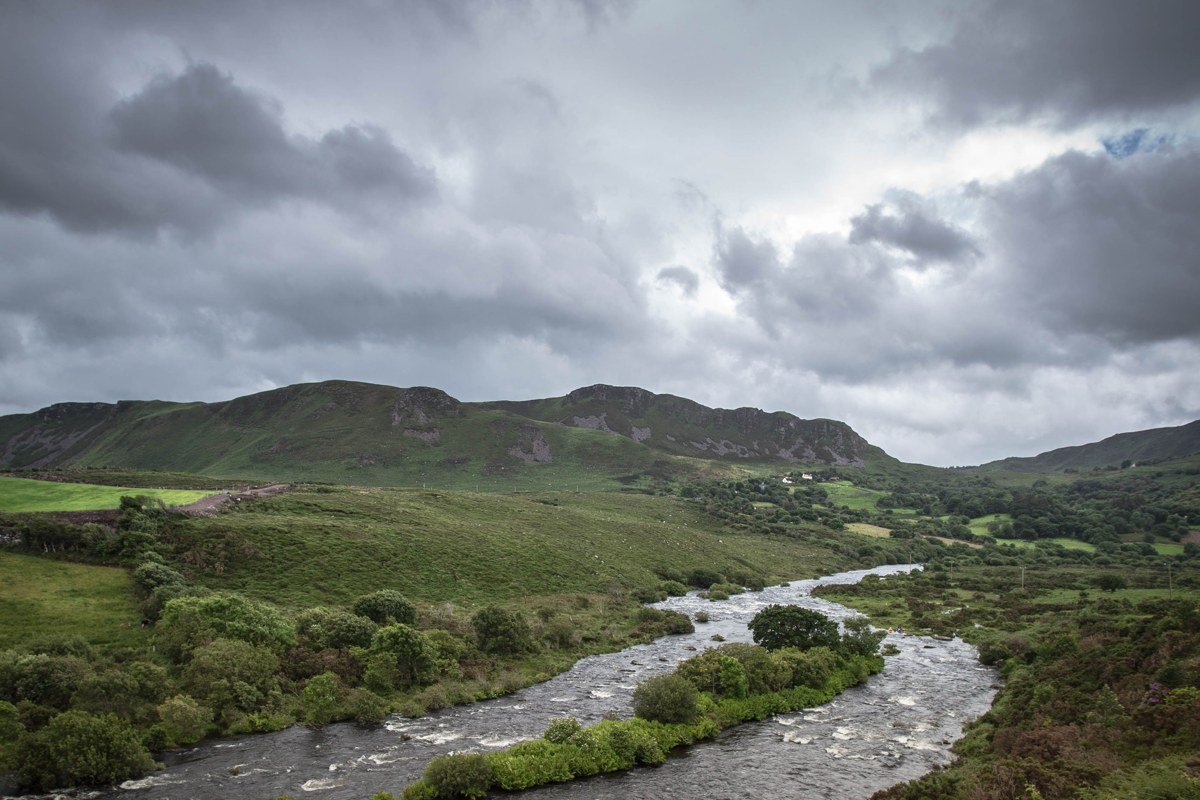
Glencoe is photographed constantly from the roadside layby opposite the Three Sisters, and that shot is fine. The more interesting work happens on the valley floor itself, specifically along the River Coe near Altnafeadh, where the water runs dark with peat and the mist sits low enough to obscure the tops of the ridges while leaving the immediate foreground sharp. This creates a natural layering effect that no amount of post-processing can convincingly fake.
The honest trade-off is that the valley floor path can be genuinely boggy after sustained rain, so waterproof boots are not optional but the admission price. The best frames tend to appear in the half hour after a heavy shower passes and the mist reorganises itself at mid-elevation.
The valley is accessible year-round, though January and February can bring snow that closes the A82 briefly. The Kingshouse Hotel, at the northeastern end of the glen, is one of the most beautifully located hotels in Scotland and a practical base for early starts on the valley floor.
3. Rannoch Moor
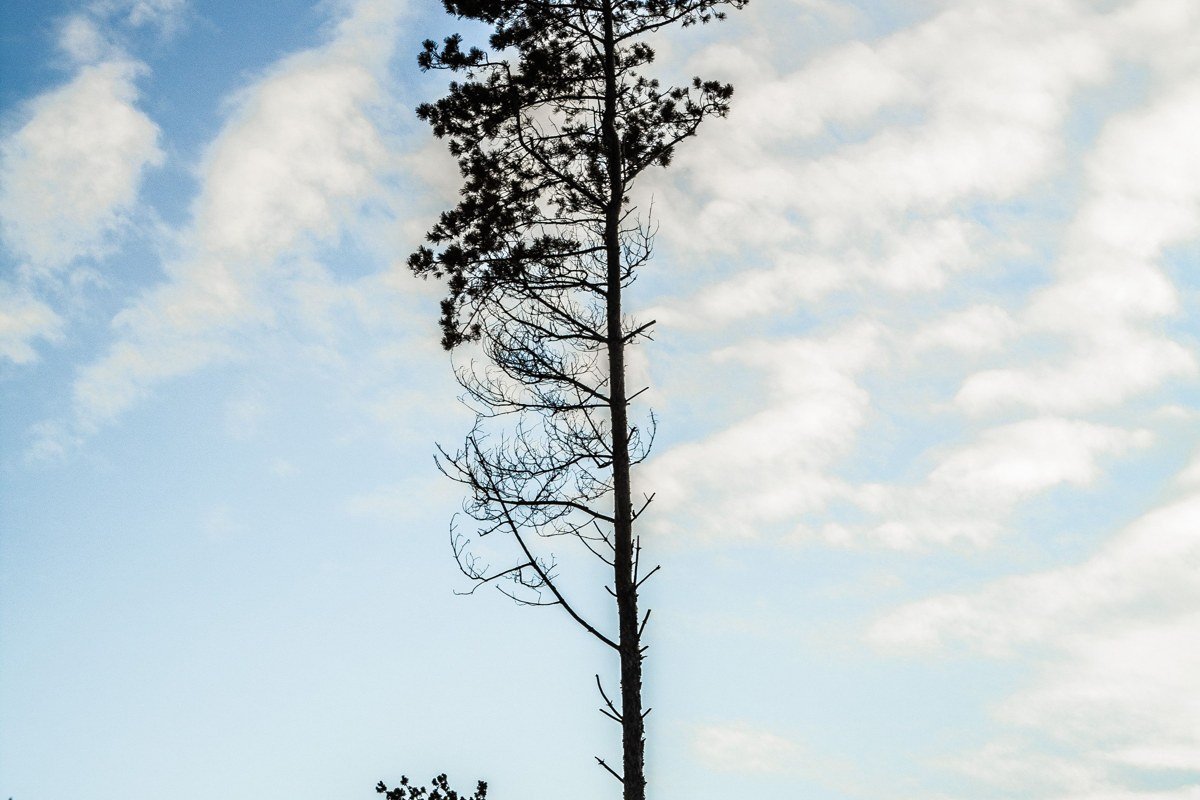
Rannoch Moor is one of the last great wilderness plateaus in Western Europe, roughly 150 square kilometres of blanket bog, lochs, and ancient Caledonian pines. It rewards patience more than any other location on this list. In wet weather the standing water catches whatever pale light filters through the cloud, and the reflections create a disorienting symmetry between sky and ground that makes photographs look composited even when they are entirely straight-out-of-camera.
Access is straightforward from the A82, which cuts along the eastern edge, or from Rannoch Station if you want to arrive by train and walk west into the moor. The insider tip is to focus on the isolated Scots pines rather than the wide expanse. A single gnarled tree with mist behind it consistently outperforms the grand panoramic attempt in terms of actual visual impact.
The moor is at its most atmospheric from October through December, when the dying sedge grass turns amber and the low cloud sits at exactly the right height to frame the trees without swallowing them. Rannoch Station has its own small hotel, the Moor of Rannoch Restaurant and Rooms, one of the more remote places to sleep in mainland Scotland and ideally positioned for a dawn walk onto the bog.
4. Sligachan Old Bridge, Isle of Skye
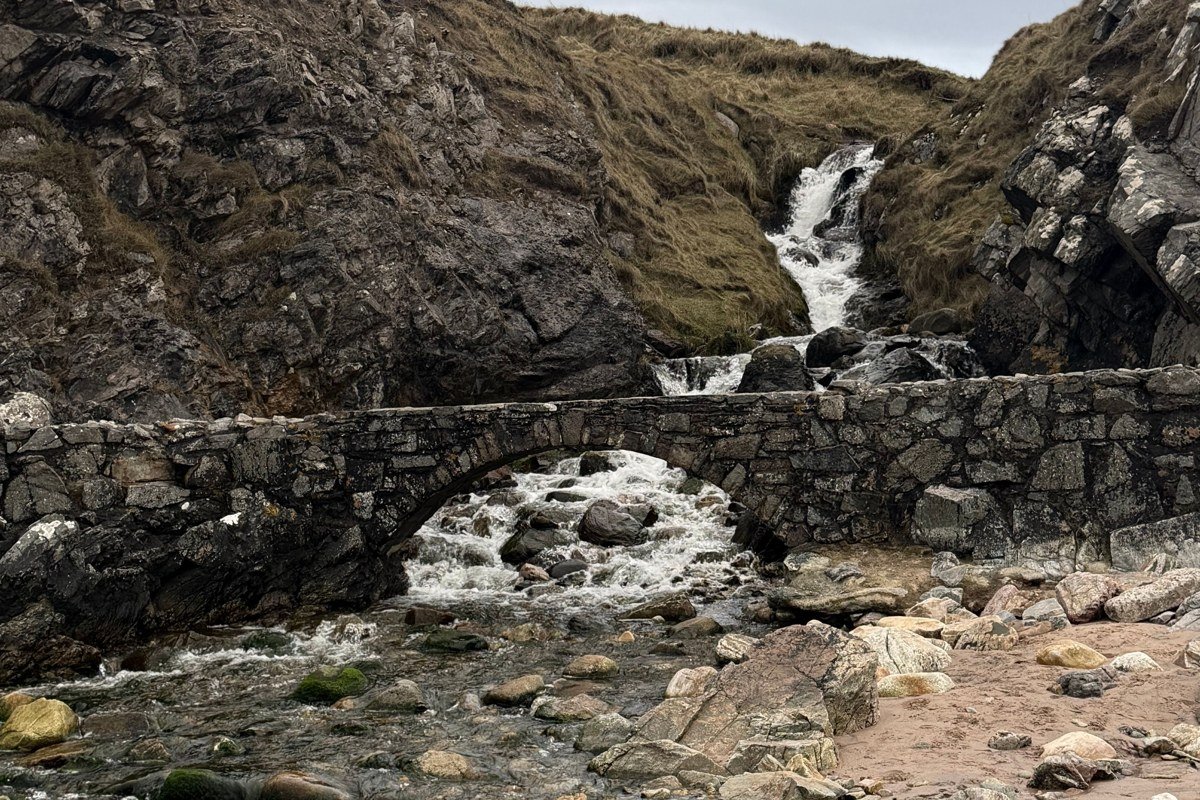
This small stone bridge at the junction of the A87 and A863 has been photographed so often that it risks feeling like a cliche, but the reason everyone photographs it is that it works, and it works best in the rain. The Cuillin Ridge behind it is so dramatic that it almost never fits entirely into a clear sky anyway. In mist, the jagged peaks reveal themselves in sections, and the Sligachan River runs fast and brown and genuinely wild-looking.
Shoot from the downstream side of the bridge in the morning to get the Cuillins behind you in soft backlight. The adjacent Sligachan Hotel has been there since the Victorian mountaineering era and makes an excellent base: it has a real fire, a drying room for gear, and the straightforward practicality of a place that has been housing wet walkers and climbers for over a century.
The bridge is accessible year-round. Late September and October tend to produce the most dramatic partial clearings, where the ridge appears and disappears in the mist repeatedly over the course of a single morning.
5. Fairy Pools, Glen Brittle
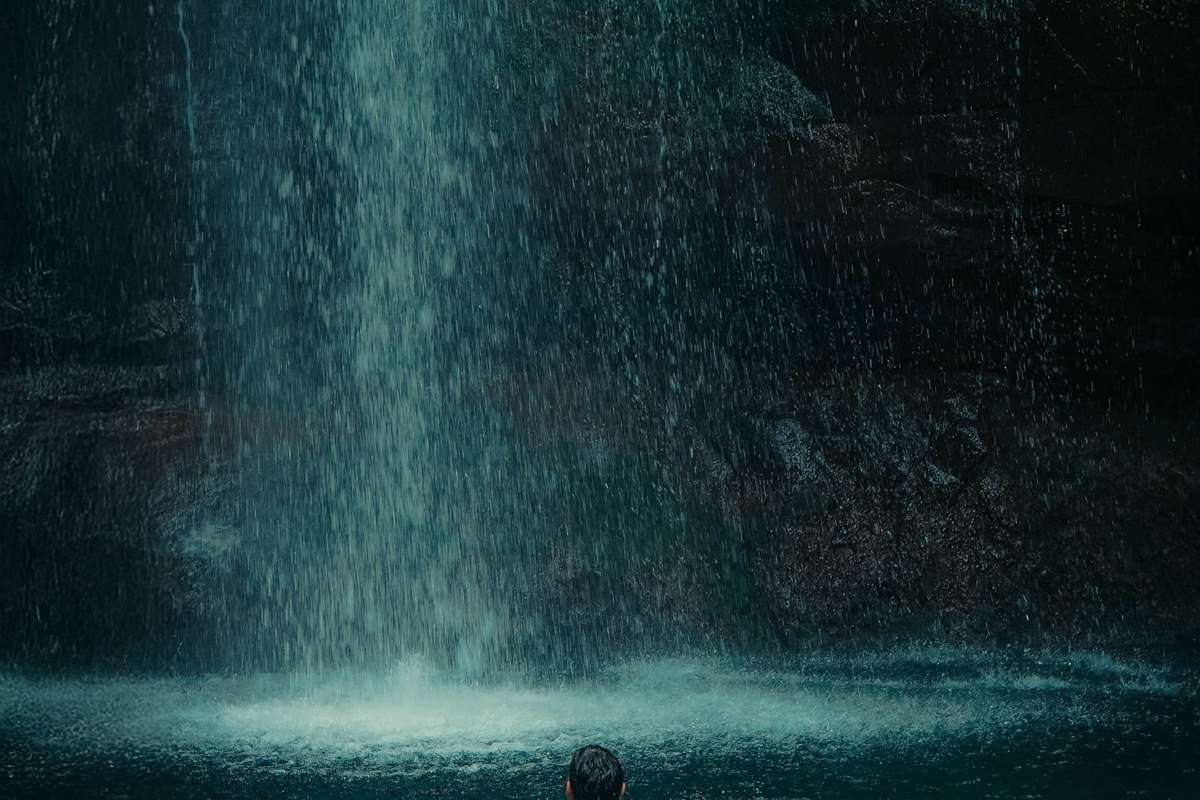
The Fairy Pools are genuinely turquoise even on overcast days because the colour comes from the mineral composition of the water rather than sunlight. Rain actually improves them: the waterfalls run higher and faster, the pools fill to their edges, and the mist that collects in the bowl of the glen gives the whole scene a humid, almost subtropical atmosphere that is completely at odds with what you expect from Scotland.
The walk in from the Glen Brittle car park is about two kilometres each way and manageable in moderate rain, though the stepping stones across the burns can become impassable in very heavy sustained rainfall. Come mid-week in shoulder season, April or October, if you can. The path narrows to single file in places and summer weekends see queues that break the spell entirely.
April and October are the most reliable months for full pools with manageable visitor numbers. The Sligachan Hotel (eight miles north on the A863) doubles as a practical base for both the Fairy Pools and the Old Bridge, making it worth booking for at least two nights.
6. Eilean Donan Castle
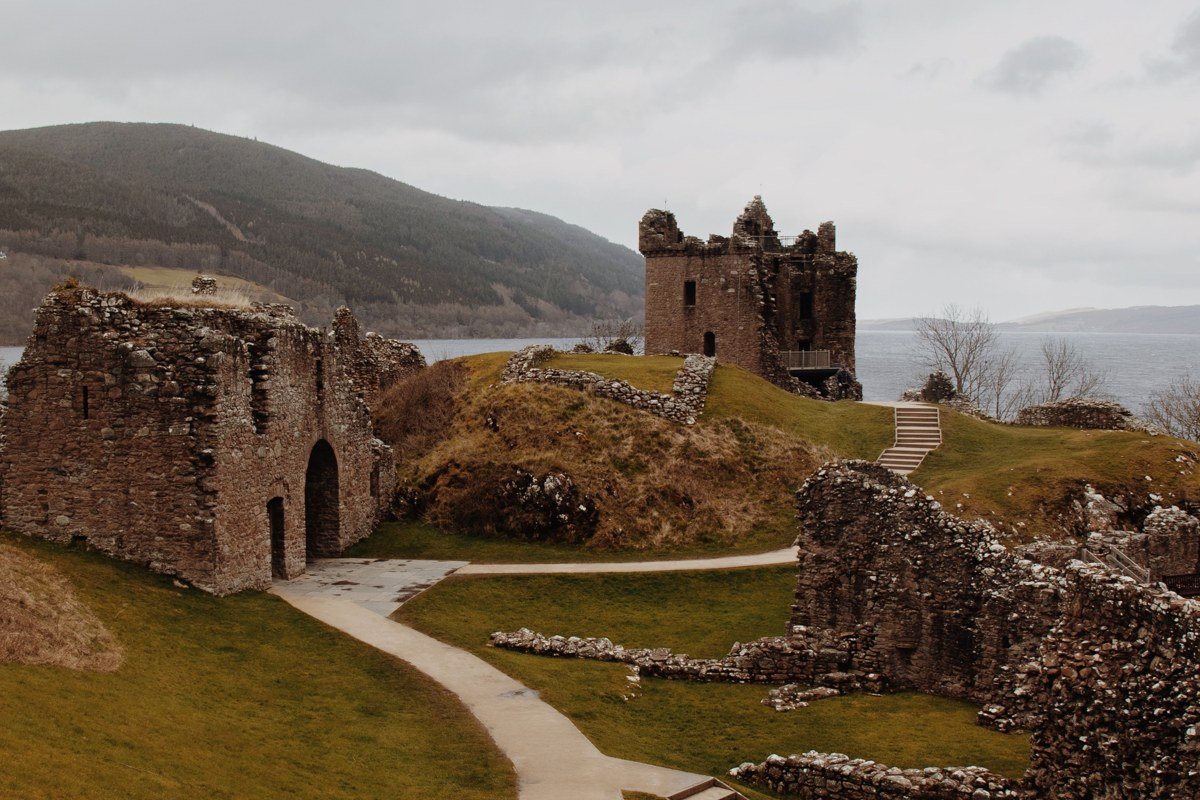
Eilean Donan sits on a small island at the confluence of three sea lochs, Loch Duich, Loch Long, and Loch Alsh. In direct sun the castle’s warm sandstone is attractive but conventionally picturesque, the shadows hard-edged and the loch surface broken by sparkle. In flat, rain-grey light, something more interesting happens. The stone loses its warmth and shifts toward a pale amber-grey, close in tone to the water and the surrounding hills, so the whole scene reads as a single coherent palette rather than a bright subject against a dark background. The reflection in still water becomes almost indistinguishable from the structure above it.
The familiar shot is from the north side of the causeway looking southwest. The less-used angle is from the layby on the A87 a few hundred metres back, which frames the castle against a longer stretch of loch and removes the causeway itself from the foreground. On misty mornings the surrounding hills disappear entirely and the castle occupies a pale, featureless middle distance. Rain also eliminates the harsh shadows cast by direct sun on the stonework, giving the facade an even, painterly quality that no amount of editing achieves in post.
The castle opens at around 10 a.m. in most seasons, which means the exterior photography window between 8 and 9:30 a.m. is quiet by default. September and October tend to produce the calmest loch surfaces and the most reliable low mist. The Kintail Lodge Hotel in Shiel Bridge, eight miles east, is a well-positioned and practical base.
7. Falls of Foyers, Loch Ness
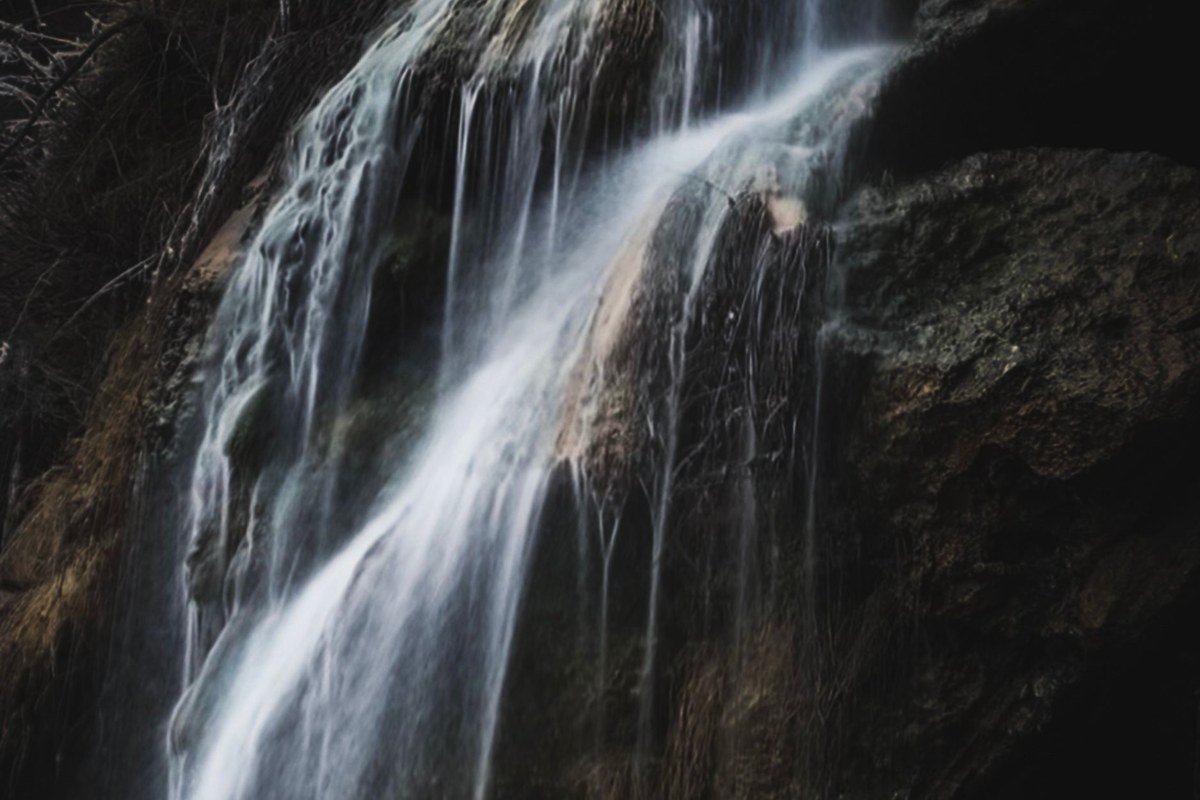
Most visitors to Loch Ness look outward across the water and never find the Falls of Foyers, which drop around thirty metres into a gorge on the southeastern shore. Robert Burns visited and wrote about them, and in drought conditions they are underwhelming. After rain, they are extraordinary: the volume triples, the spray fills the gorge with a fine mist that catches even diffuse grey light, and the surrounding sessile oak woodland turns the colour of old copper.
The path down from the village of Foyers is steep and can be slippery in wet conditions, worth the extra caution and trekking poles if you have them. The upper viewpoint is good, but the lower viewpoint at gorge level is where the scale becomes apparent and the mist envelops you physically, which is an experience that goes beyond the photograph.
October and November are the peak months for both water volume and autumn colour in the gorge. The Whitebridge Hotel, seven miles south, is a small and well-regarded base for the southern Loch Ness shore.
8. Bealach na Ba, Applecross Peninsula
Bealach na Ba is one of the highest road passes in mainland Britain, and the approach to the Applecross Peninsula from the east. The superlative is contested depending on how you measure and which routes you include, but the experience of the road is not in question: the gradient is severe, the hairpins are tight, and in clear weather it offers views to Skye and the Outer Hebrides.
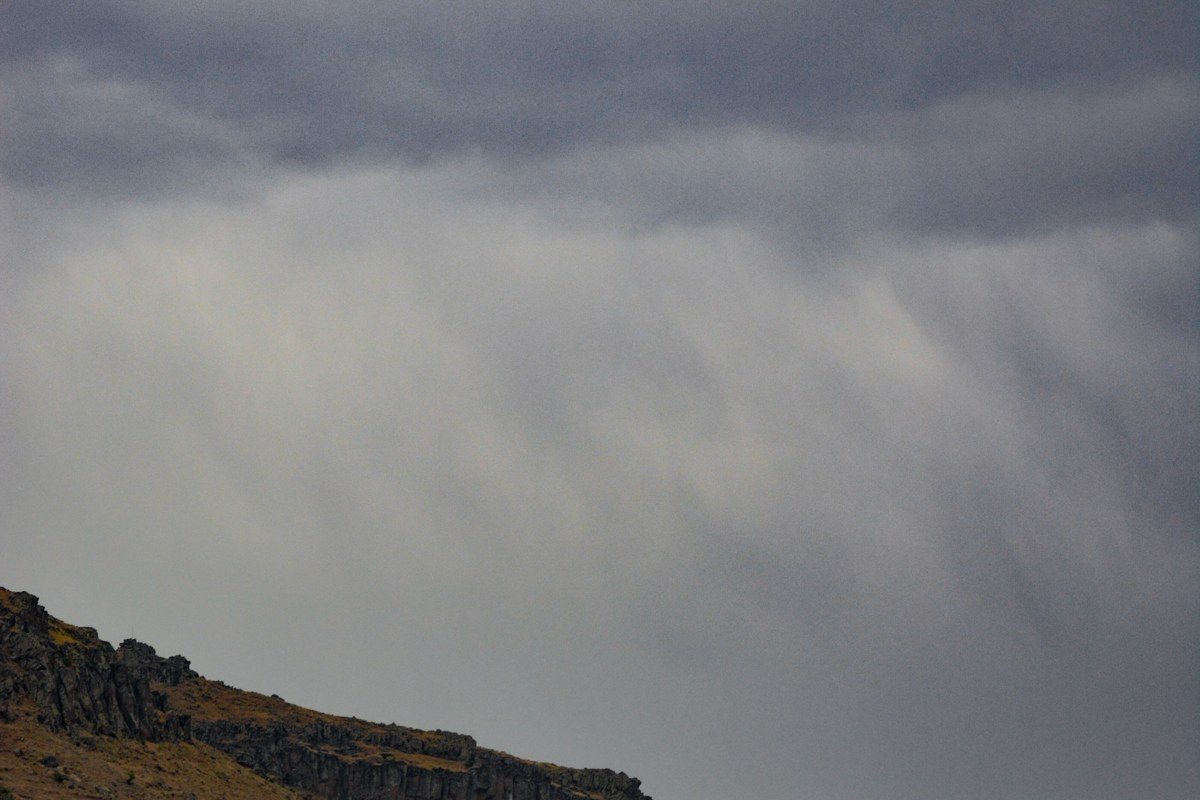
In rain and mist it turns into something close to a cloud forest, with the hairpin bends disappearing into low cloud and the surrounding hillside running with dozens of small temporary waterfalls that appear only after sustained rain and vanish within hours. This location rewards driving slowly with the windows open as much as it rewards stopping and shooting. The honest trade-off is that the road is genuinely challenging in poor visibility and is closed in ice and heavy snow, so check conditions with Transport Scotland before committing. The descent to Applecross village on the far side brings you out into a different microclimate that is often brighter, which makes the contrast feel almost theatrical.
The pass is most reliably passable and most atmospherically misty from May through October. The Applecross Inn in the village at the bottom of the western descent is a deservedly famous anchor point: the seafood is excellent, the rooms are simple and warm, and it is the kind of place that makes a wet and difficult drive feel earned.
9. Calanais Standing Stones, Isle of Lewis
Calanais (also spelled Callanish) is technically in the Outer Hebrides rather than the mainland Highlands, but it belongs to this wet-weather conversation and it earns its place on merit alone. The stones are around five thousand years old, arranged in a cruciform pattern with a central monolith taller than most people, and they predate Stonehenge in their current configuration.
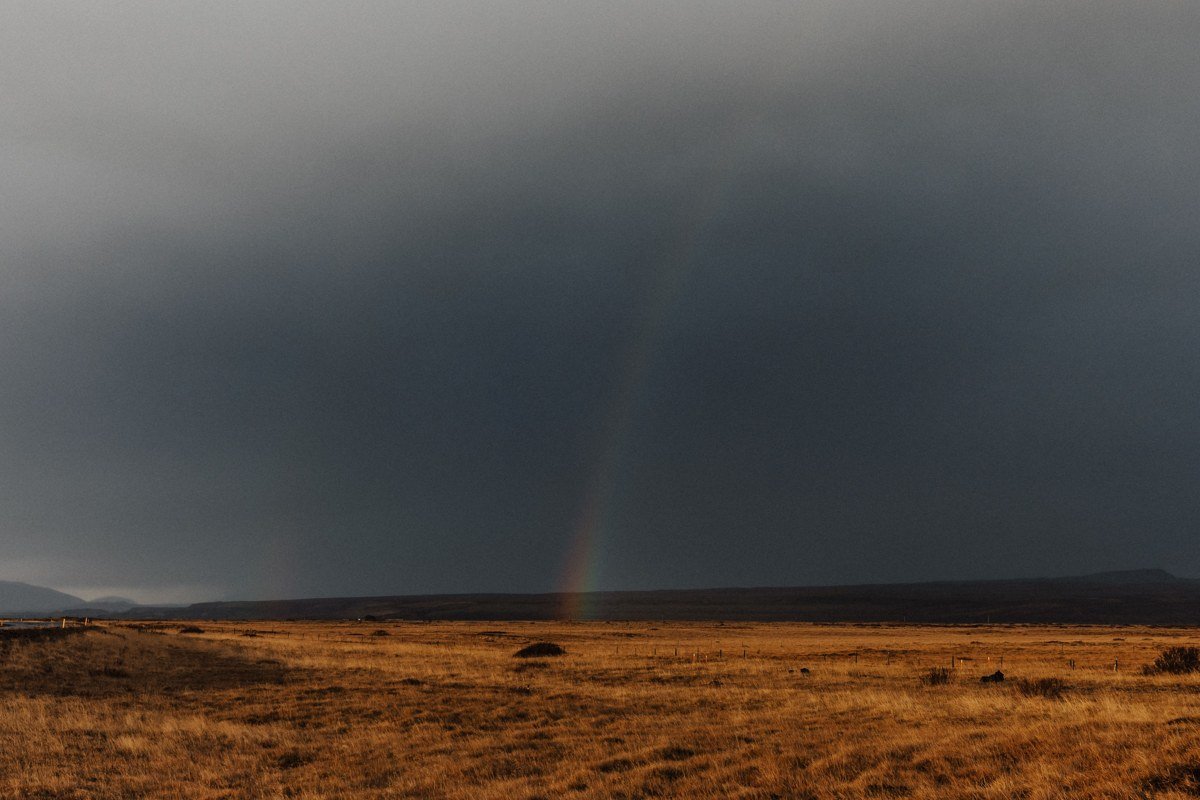
Low cloud and rain transform them from a tourist site into something genuinely uncanny. The stones seem to absorb grey light rather than reflect it, and the surrounding moorland becomes formless, which isolates the monument completely. The small visitor centre closes at five in summer, but the stones themselves are accessible at all hours. The very best conditions are a morning when rain is moving through in bands, with brief clearings between them, because the shifting light changes the mood of the site every few minutes.
Accessible year-round, though winter ferry crossings to Lewis can be cancelled in severe weather. Several small B&Bs operate within a few miles of the stones in the village of Calanais itself, and booking one puts you close enough to walk out before the visitor centre opens and before any coaches arrive from Stornoway.
Practical Takeaways for Shooting the Misty Highlands
A waterproof camera bag matters more than the camera body. Almost everything on this list involves getting genuinely wet, and moisture damage is a real risk if your bag is not sealed properly.
Gear note: If you are shooting in sustained Highland rain rather than brief showers, a weather-sealed body and lens combination is worth prioritising over pure image quality. Entry-level weather sealing on bodies like the Fujifilm X-T5, Nikon Z6 series, or Canon R6 Mark II handles the conditions on this list without anxiety. A rain sleeve (a simple fitted cover that costs a few pounds) adds meaningful protection to any body and is worth keeping in an outer pocket rather than buried in the bag. At minimum, carry a microfibre cloth in an accessible zip pocket for the lens front element, which needs attention every few minutes in horizontal rain.
Check the Mountain Weather Information Service (MWIS) forecast the night before rather than a standard weather app. MWIS gives cloud-base altitude and precipitation timing at a granularity specific enough to plan a morning shoot around.
The window between the end of overnight rain and 11 a.m. is consistently the most productive for mist photography across all nine locations. By midday, even on grey days, the cloud often lifts enough to lose the layered effect.
Shoot RAW if you have the option. Mist scenes have a narrow tonal range that benefits from latitude in post-processing. You are not fixing anything, but making small, precise adjustments to fog density and shadow detail that compressed files cannot hold.
Finally, accept that half of these mornings will produce nothing worth keeping. The morning that does will be specific: one frame, one location, one particular quality of light that lasted eight minutes before the cloud shifted. At Rannoch Moor on a wet October Tuesday, a lone pine appeared out of the mist for exactly that long, its reflection doubled in standing water at the roadside, the bog around it completely featureless. That single frame is why this kind of photography is worth the ratio. Go find yours.