
Crete’s north coast does its job well enough: a string of resorts, decent beach clubs, and the kind of infrastructure that makes package holidays run smoothly. But the island’s real aesthetic depth lives somewhere else entirely, in the limestone gorges and half-forgotten harbor towns of the south, in coves that have no parking lot, no sunbed rental, no sign pointing to them at all.
1. Loutro
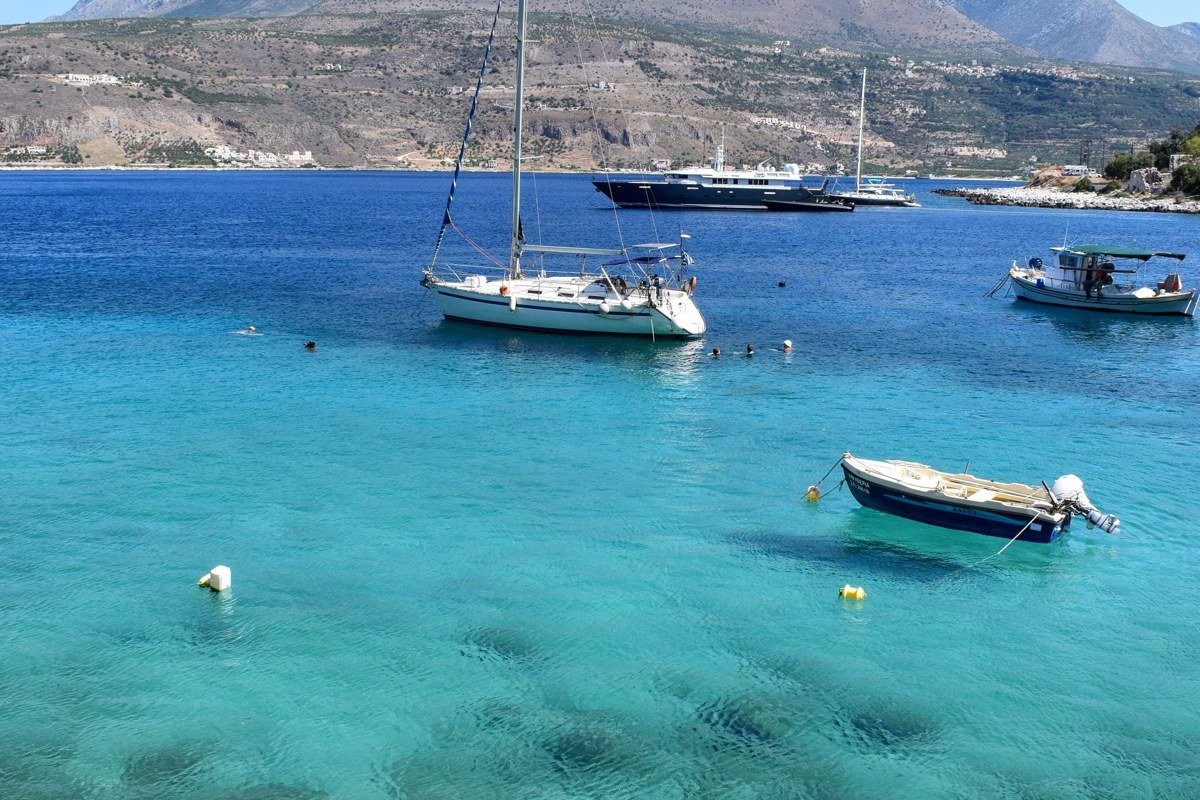
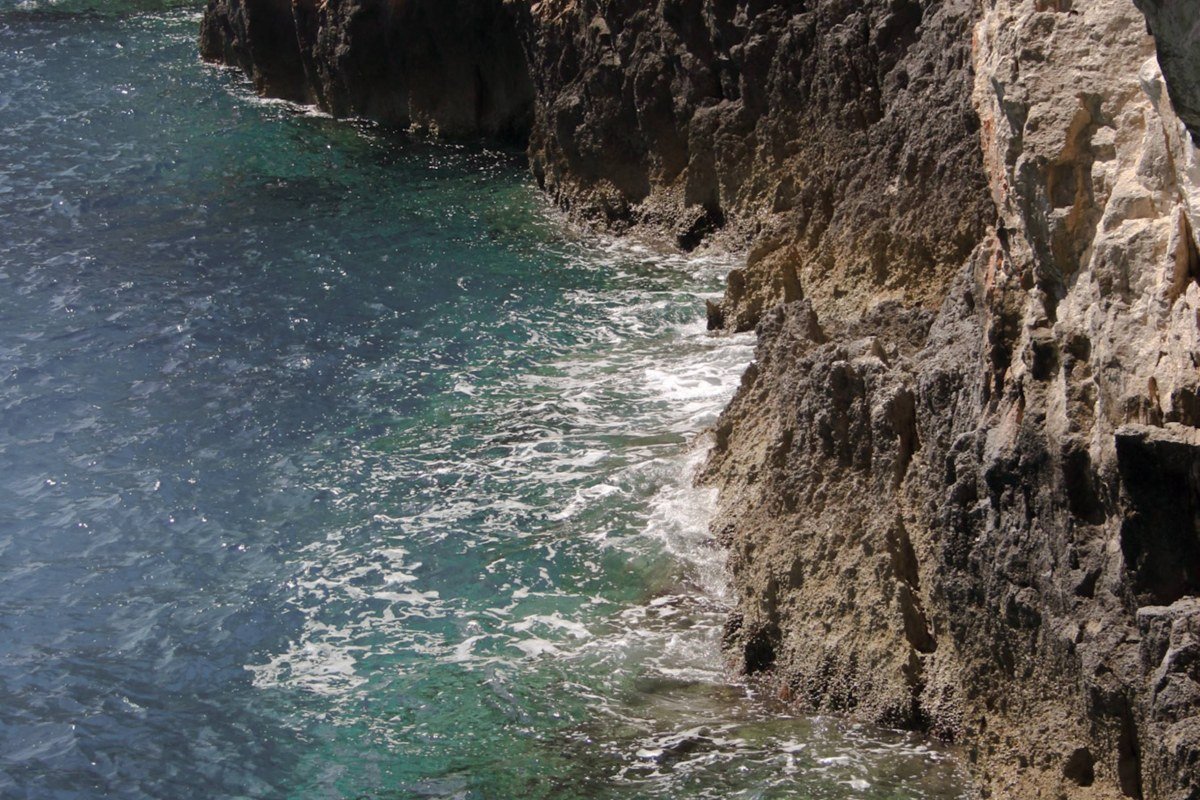
Loutro is only reachable on foot or by ferry, and that single fact filters out a huge portion of the tourist traffic that floods the rest of the Sfakia coast. The village wraps around a perfect horseshoe bay, all white and blue, but with none of the self-consciousness of Santorini. Fishing boats still outnumber sun loungers. The best thing to do here is walk the E4 coastal path west toward Sweetwater Beach, a pebble cove where fresh water seeps up through the stones and the water turns a color that photographs almost suspiciously well. For accommodation, the small family-run rooms perched above the eastern end of the harbor put you directly above the fishing boats, which is a different experience from the larger guesthouses at the far western curve of the bay. Come in May or October: the summer ferries still run but the tiny waterfront tavernas have room to breathe, and the afternoon light on the white walls is softer than the bleached-out midday glare of August.
2. Aradena Gorge
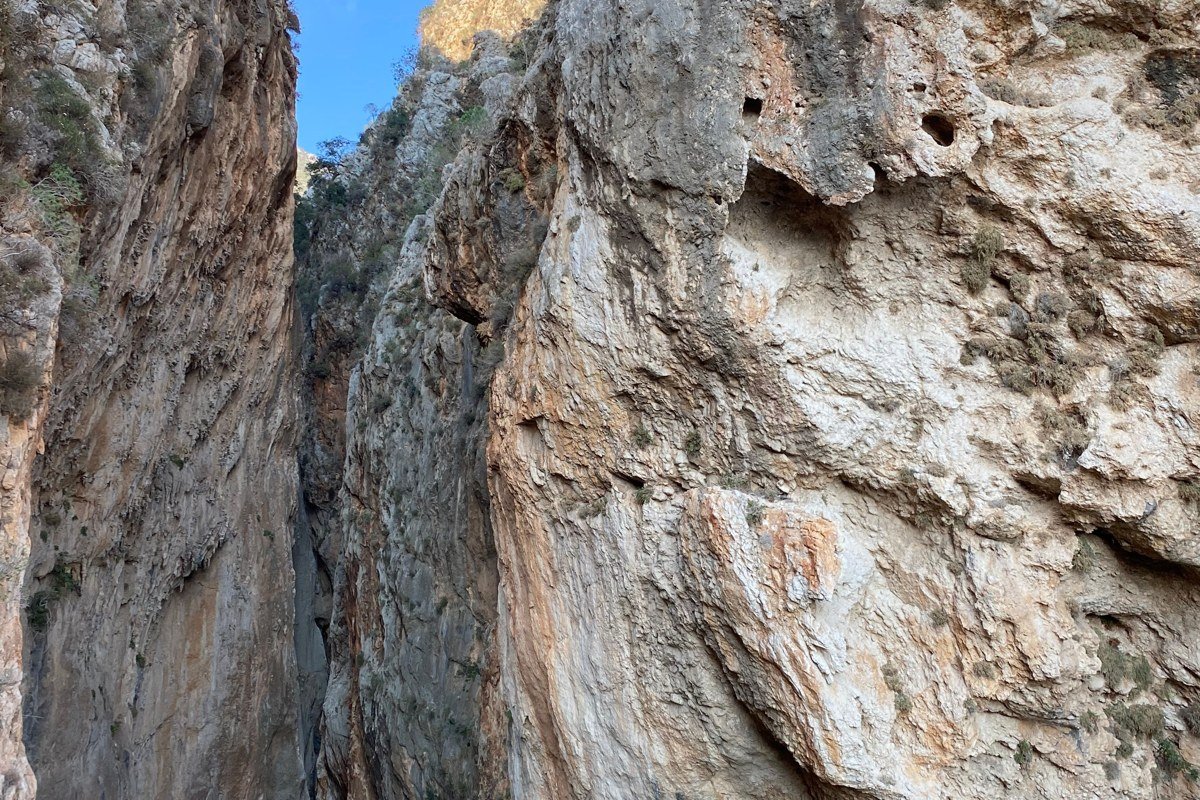
Most visitors to the Sfakia region walk the famous Samaria Gorge and leave it at that, which means Aradena stays genuinely quiet. The gorge cuts through the White Mountains and drops to the sea at Marmara Beach, a wild shingle cove accessible only by walking through the canyon itself or arriving by boat. The walls close in tight enough that you can touch both sides with outstretched arms in some sections, and the vertical limestone is streaked with iron oxide in rust and amber. Start before 8am and the light falls in angled shafts through the narrowest sections, which is the shot most gorge photographs are chasing. By mid-morning that quality is gone. The practical detail most guides skip: the trail descends steeply on loose rock in the lower third, so bring actual hiking shoes rather than the sandals that optimists wear to Samaria. Start that early and you will have the gorge almost entirely to yourself as well.
3. Hora Sfakion
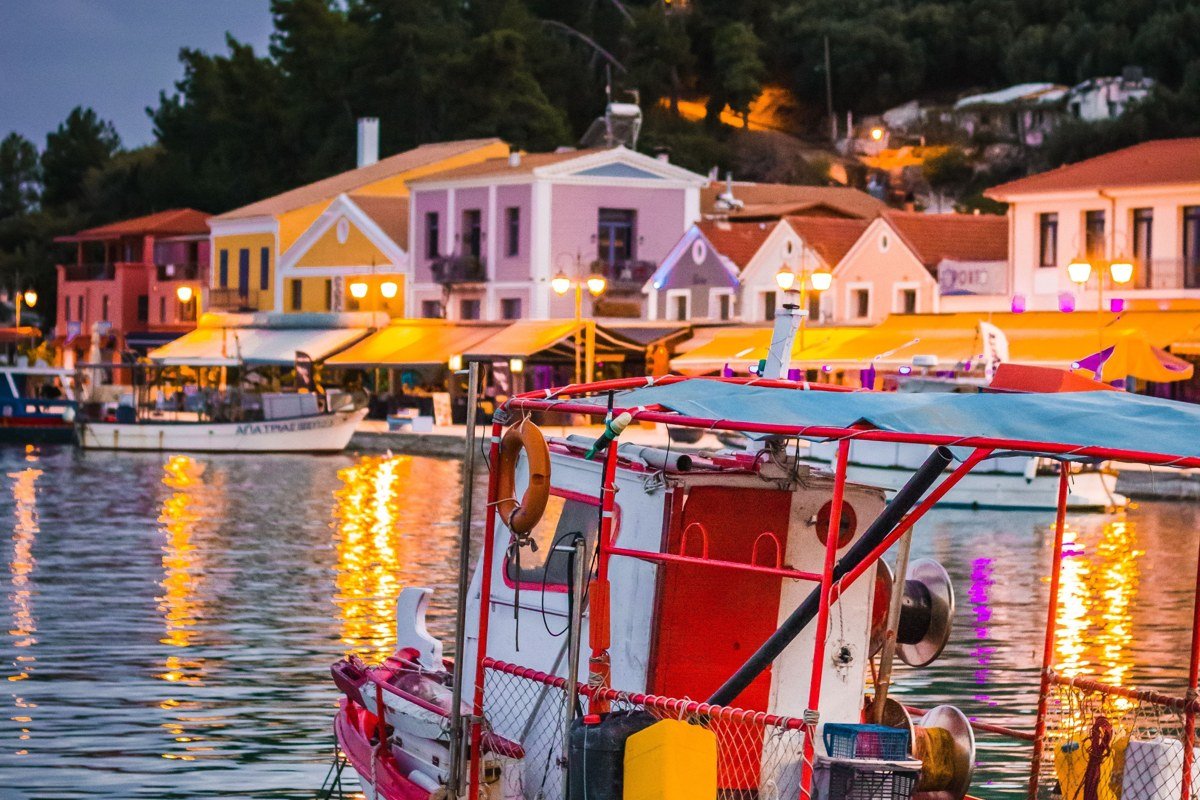
Hora Sfakion functions as a ferry hub for this stretch of coast, which means most tourists pass through it for exactly twelve minutes before boarding a boat. That is a mistake worth correcting. The town has a genuine local pulse that the better-known resorts long ago traded away. Sit at one of the waterfront cafes and you will watch actual Sfakian fishermen unloading catch while the day-trippers shuffle past toward the dock. When you order, ask specifically for staka, the local rendered butter traditionally served with fried eggs, which is a dish almost no tourist thinks to request and which almost every kitchen here still makes. The lamb dishes cooked with lemon and herbs are equally straightforward and confident. Arrive the evening before you plan to catch an early ferry and you get the harbor almost to yourself as the light goes copper over the Libyan Sea.
4. Anopoli Village
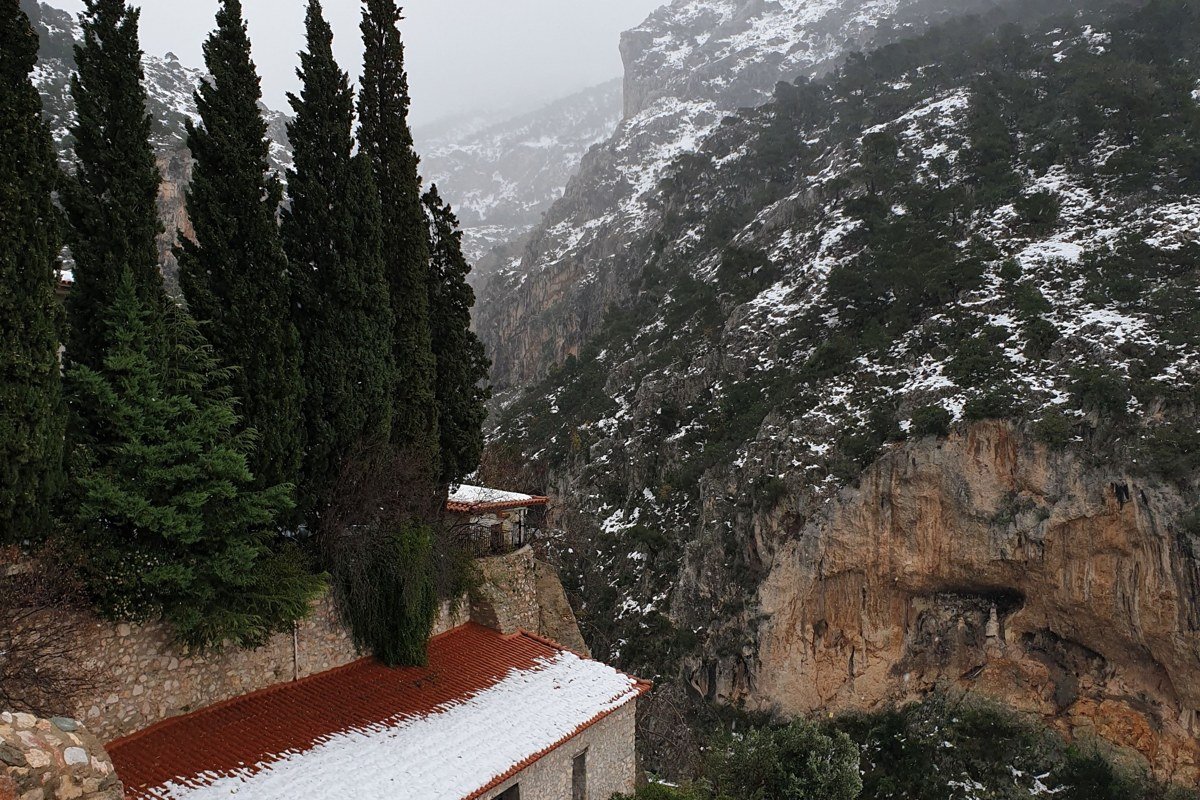
Sitting on a high plateau above Hora Sfakion, Anopoli is the kind of place where the main square cafe operates on its own schedule and the wifi is more of an aspiration than a guarantee. The village is the starting point for the Aradena Gorge trail and also the access point for the ruins of ancient Anopolis, scattered among terraced olive groves with almost no interpretive signage and even fewer tourists. The aesthetic here is austere: stone, lichen, vertical mountain faces. It looks more like the interior of a Maniot village than anything most people picture when they imagine a Greek isle. Morning mist sits on the plateau well into late morning in spring and autumn, and the combination of low cloud, abandoned stone buildings, and olive silver makes it worth arriving the night before a gorge walk rather than driving up on the day. The road up from Sfakia is narrow and switchback-heavy. Rent the smallest car available.
5. Frangokastello
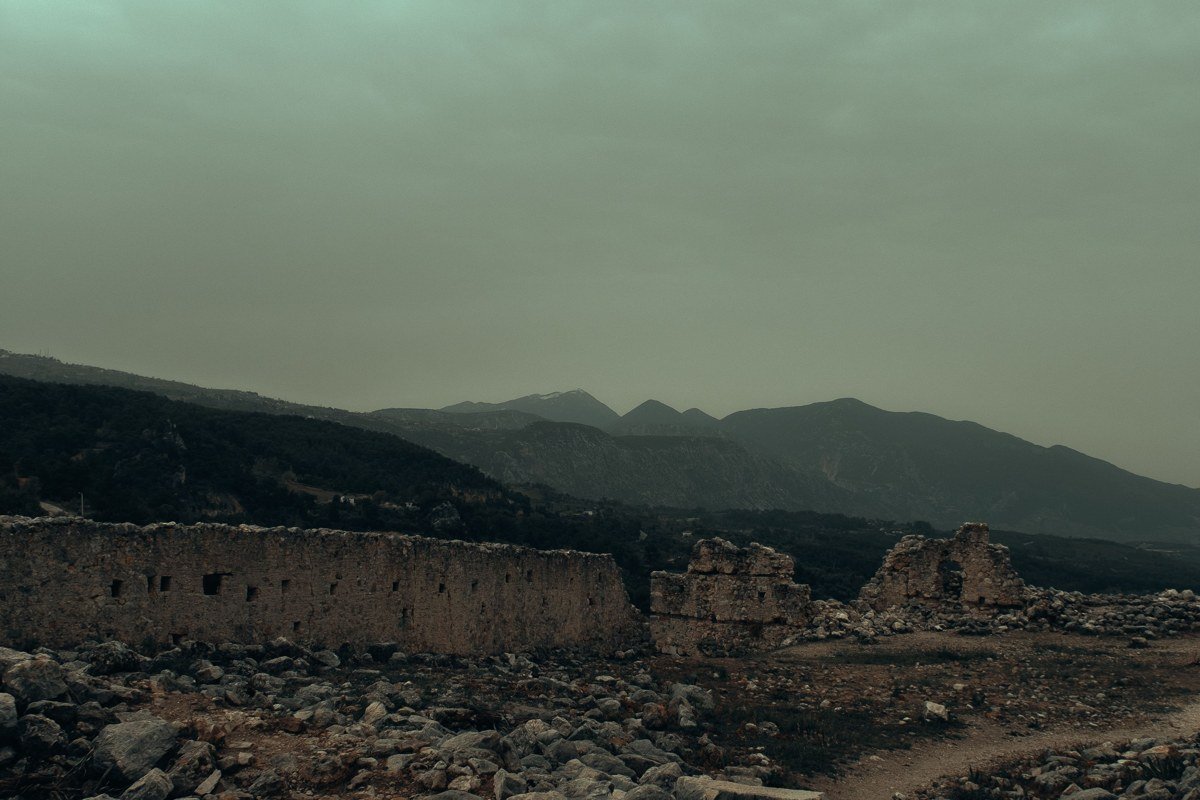
The Venetian fortress at Frangokastello sits on a flat coastal plain in a way that makes it look like someone dropped a medieval castle onto a beach and forgot to add context. That spatial strangeness is precisely what makes it worth building an itinerary around. The beach stretching east from the fortress is long, shallow, and almost entirely uncommercial. One or two small tavernas operate seasonally, but there is no resort infrastructure. In late May, a local meteorological phenomenon called the Drosoulites sometimes produces ghostly silhouettes in the morning mist near the castle, a natural mirage with a lot of local mythology attached. Even without it, the sunrise light on the Venetian stonework is the best photographic opportunity here: arrive around 6am in summer and you get the warm east light raking across the battlements before the flat coastal plain loses its shadow texture entirely. By 9am that quality is gone.
6. Plakias
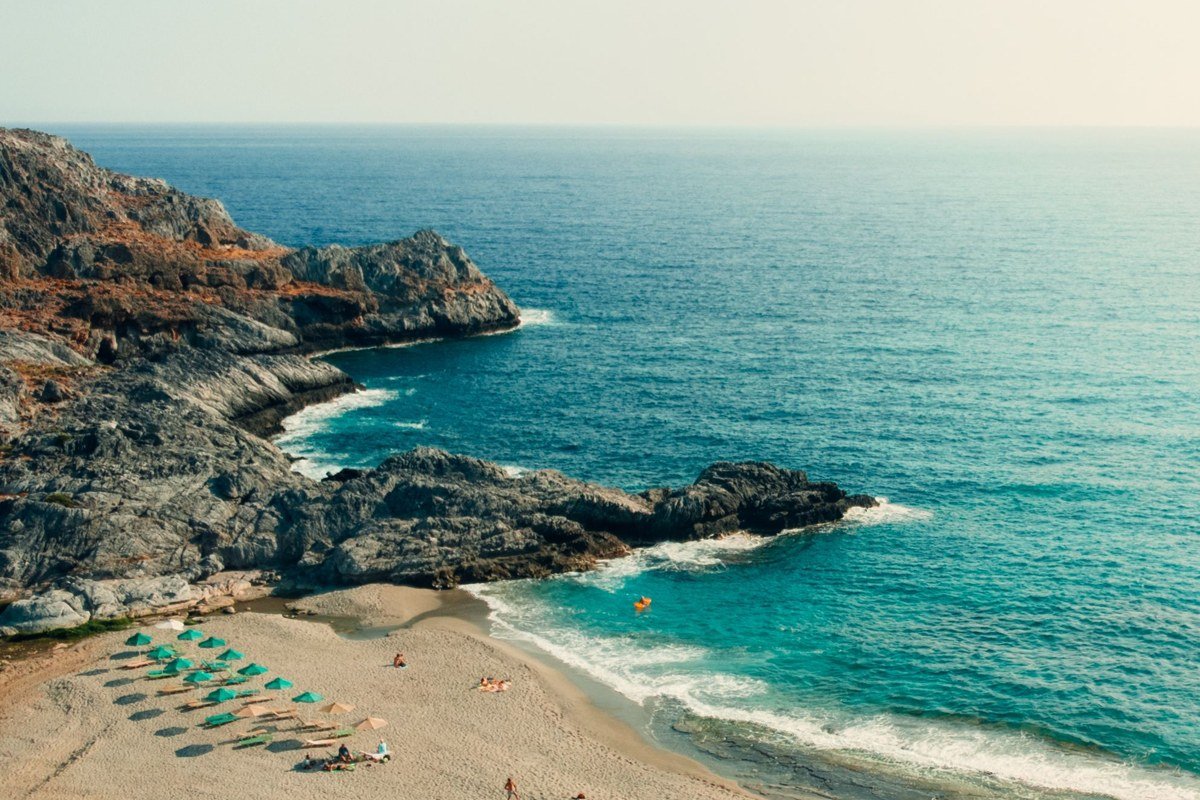
Plakias is not entirely undiscovered, but its scale is still human. It functions as a quiet base rather than a resort destination, which means the people who stay there tend to be walkers, divers, and long-stay travellers rather than package tourists cycling through. The beach is broad and backed by eucalyptus trees, with a mountain wall rising dramatically behind the village. For diving, the reef at Damnoni Point, roughly fifteen minutes by water taxi from the Plakias waterfront, offers a wall dive with good visibility and is well within range for open-water certified divers. The walk to Damnoni Beach along the coastal path takes about forty minutes and passes two smaller coves, Ammoudaki and Plakias East, that are quieter than either endpoint. Stay at one of the small family-run rooms on the eastern side of the village rather than the larger hotels closer to the main road, and you will get practical local knowledge that no guidebook carries.
7. Preveli Beach and Monastery
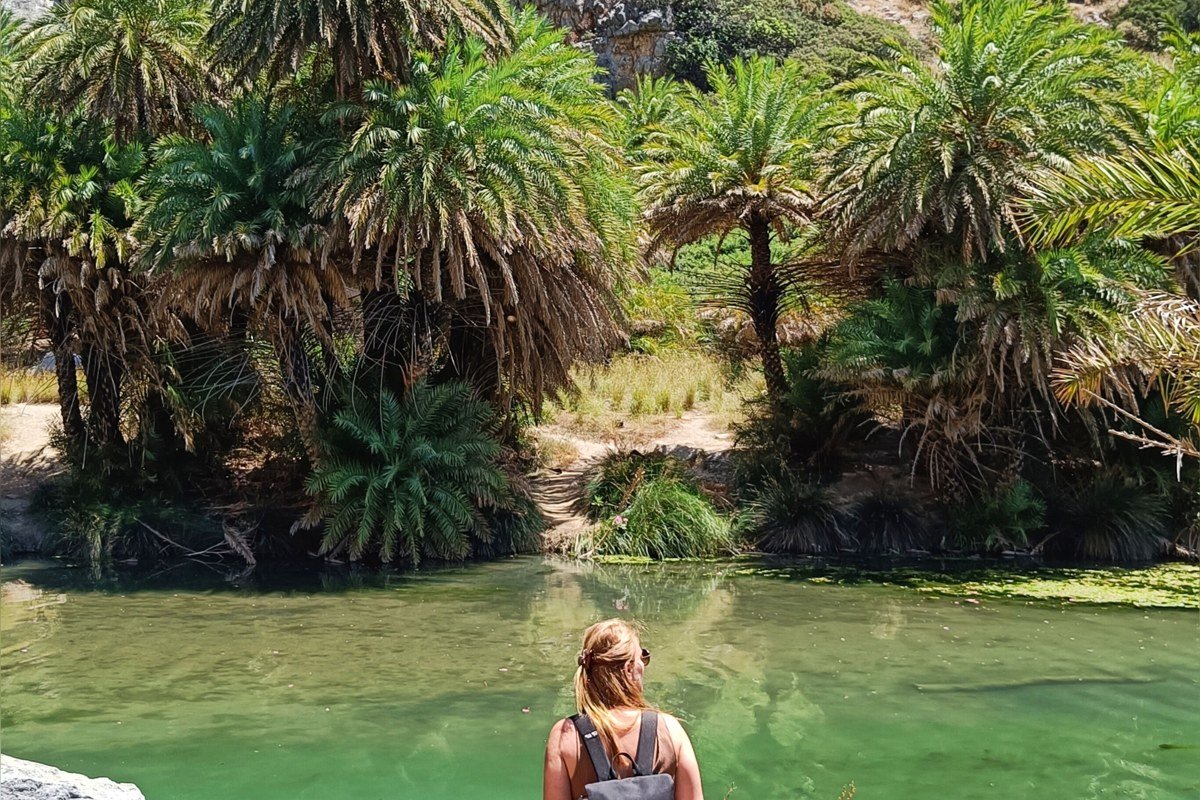
Preveli is arguably the most photographed spot on this list, and it still earns its place here because most tourists who visit either see only the monastery on the ridge or only the beach below, rarely both in sequence. The full experience runs from the Monastery of Preveli (17th century, functioning, with an extraordinary relic collection and a terrace view across the Libyan Sea) down the footpath into the Kourtaliotiko Gorge, past wild oleander, to the palm-lined river that meets the sea at a shallow lagoon. The palm grove is one of a small number of native Phoenix theophrasti forests on Crete, a species found almost nowhere else in Europe. The grove here is smaller than the famous stand at Vai on the north coast but far less visited, which means you can actually sit inside it. Swimming in the lagoon where fresh river water meets saltwater is genuinely distinctive. Get there before 10am in July and August; by late morning the beach path is crowded and the light is flat.
8. Zaros and the Rouvas Gorge
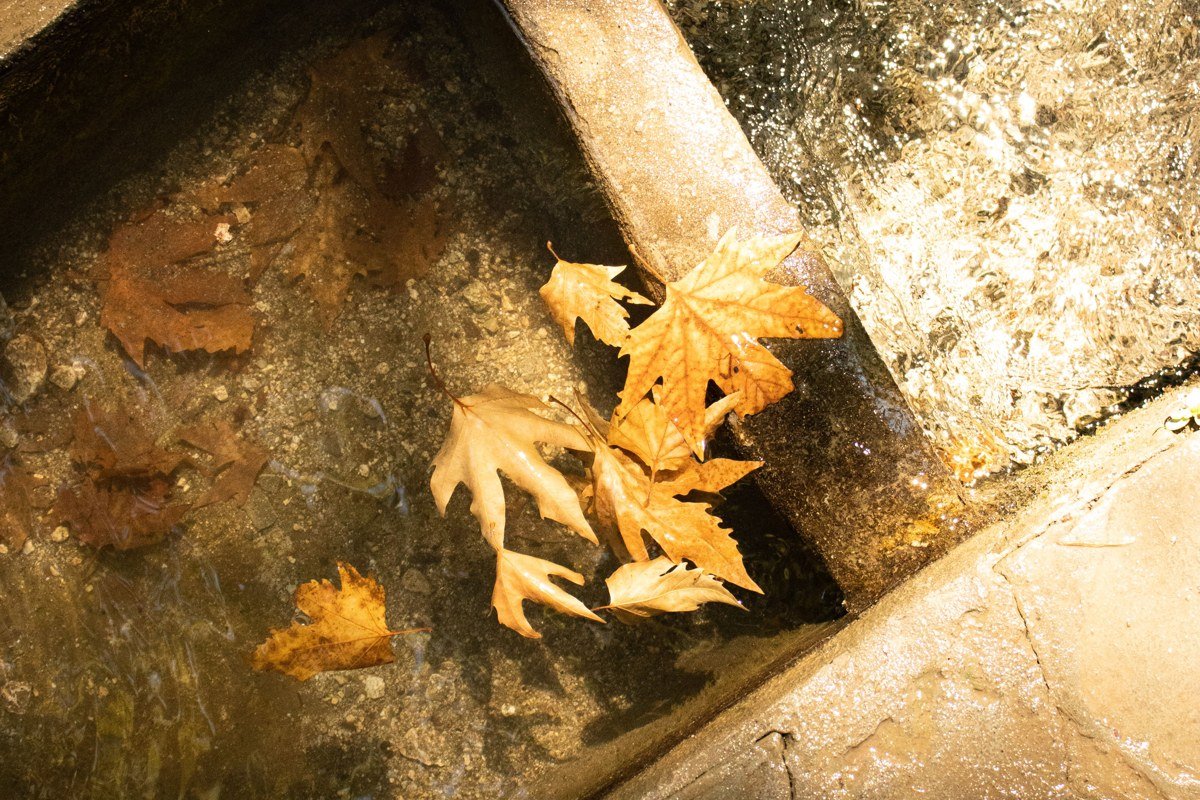
Zaros sits in the foothills of the Psiloritis massif and is best known on the island for two things: its natural spring water (bottled and sold across Crete) and the trout farmed in its lake. The village itself is quietly attractive in a mainland-Greek way, all plane trees and kafeneion chairs, without any concession to a beach-resort aesthetic. The Rouvas Gorge, a thirty-minute walk from the village, cuts through ancient oak forest and passes a Byzantine hermitage carved into the cliff face. A late October afternoon here, when the oak canopy has started to turn and the low sun cuts horizontally through the gorge from the west, is one of the better natural-light compositions available anywhere on the island at that time of year. The tavernas by the lake, including the long-established Votomos beside the water, serve freshwater trout grilled simply with lemon. It is one of the better meals on the island and not something you can replicate anywhere on the south coast.
9. Xerokampos
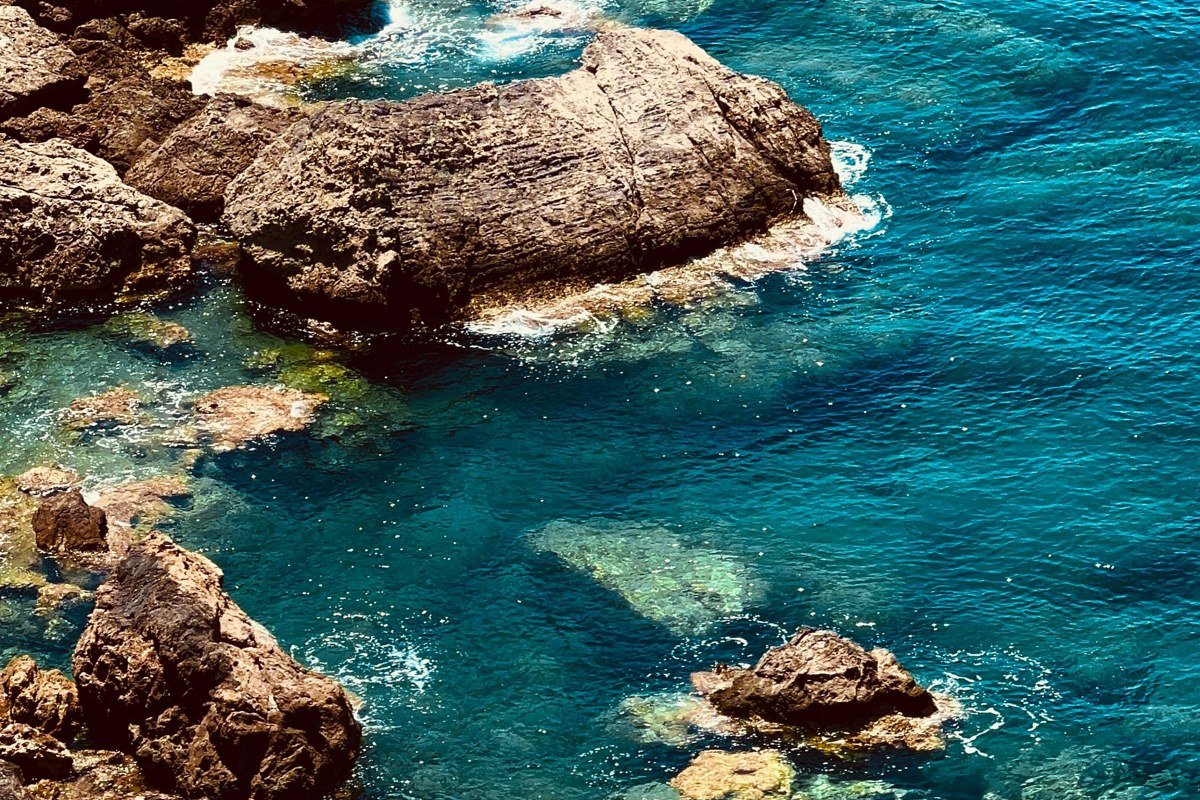
Xerokampos sits at the far eastern end of the south coast, a loose scatter of small houses, a handful of rooms to rent, and a series of small beaches separated by rocky headlands. There is no resort here, barely a village in the conventional sense. The road from Ziros takes about thirty minutes on mostly paved surface and passes through a landscape of carob trees and bare rock that looks more like the Greek interior than any beach destination. The beaches at Xerokampos, particularly Korkos, are shallow, clear, and rarely crowded even in August, which is close to miraculous by Cretan coastal standards. For rooms, the small rental studios operated by the Papadakis family on the low ridge above Korkos Beach are the most practical base, and the family can advise on which of the smaller coves is least visited on any given day. Bring your own provisions for at least one day: the single small shop has irregular hours and the nearest town with reliable supplies is Makrygialos, an hour away.
Planning Your Time in the South
A few practical notes that will save you real friction on the ground.
Getting here from Heraklion vs Chania. Most international flights arrive into one of these two airports, and the access logic differs significantly. From Chania, the western south coast (Loutro, Hora Sfakion, Frangokastello, Plakias, Preveli) is reachable in one to two hours and makes a logical sequence. From Heraklion, the central and eastern destinations (Zaros, Rouvas Gorge, Xerokampos) are more practical starting points, with Xerokampos specifically requiring either an overnight stop at Makrygialos or a very long day. Trying to cover the full south coast from a single Heraklion or Chania base in a short trip means driving times that eat the day.
The south coast road is not a continuous highway. Several sections require backtracking inland or taking ferry connections between villages. Build in more time than you think you need: a journey that looks like forty kilometers on a map can take ninety minutes on mountain roads.
The ferry service connecting Loutro, Hora Sfakion, Agia Roumeli, and occasionally Paleochora runs seasonally, typically May through October, with reduced frequency in shoulder months. Check current timetables locally rather than relying on online schedules, which are often a year out of date.
For the mountain villages and gorge walks, mid-September through October is the single best window: the sea is still warm enough to swim, the hiking temperatures are sane, the light is lower and more photogenic than the bleached-out August sky, and the south coast empties out dramatically after the first week of September.
Rent a vehicle with good ground clearance if your itinerary includes Xerokampos, Anopoli, or any of the unpaved tracks leading to smaller beaches. A small city car will manage the main south coast road but will struggle on the unpaved sections. Most rental desks in Heraklion and Chania will try to tell you a standard compact is fine everywhere. It is not.
Come prepared to slow down. The reward for an extra hour on a mountain road, or an afternoon spent waiting for a ferry that runs twice a day, is something specific: a harbor where the fishing boats have just come in, a gorge with no one else in it, a lagoon where the river cold hits your feet before the sea warmth takes over. That is what you came for. Start there.