
Before dawn on a November morning in Conques, the chestnut forest above the village smells of wet bark and woodsmoke, and the Romanesque abbey appears below you through the mist as though it has been there since before maps. That specific quality of light and atmosphere is what the best travel images from Europe are actually selling. This list is about the ten villages that hold up in person, at the right hour, in the right season, with enough local texture to reward more than a single photograph.
1. Hallstatt, Austria
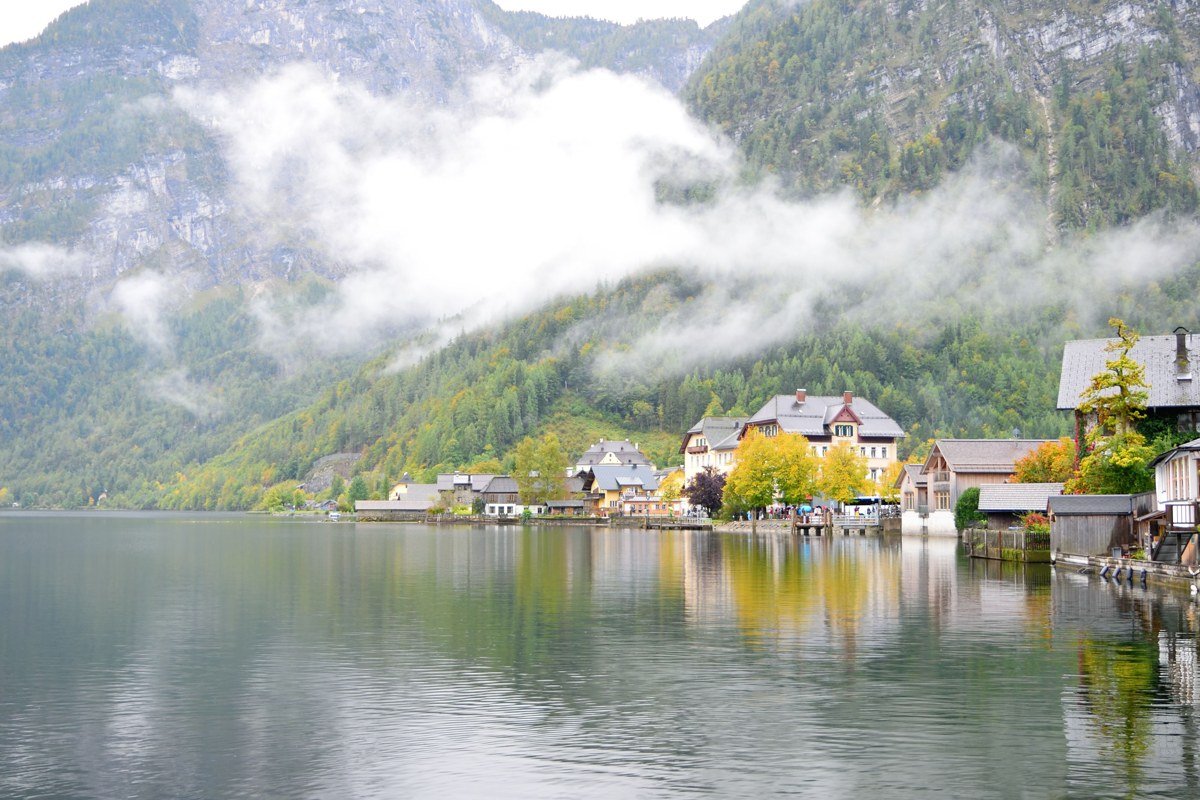
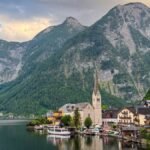
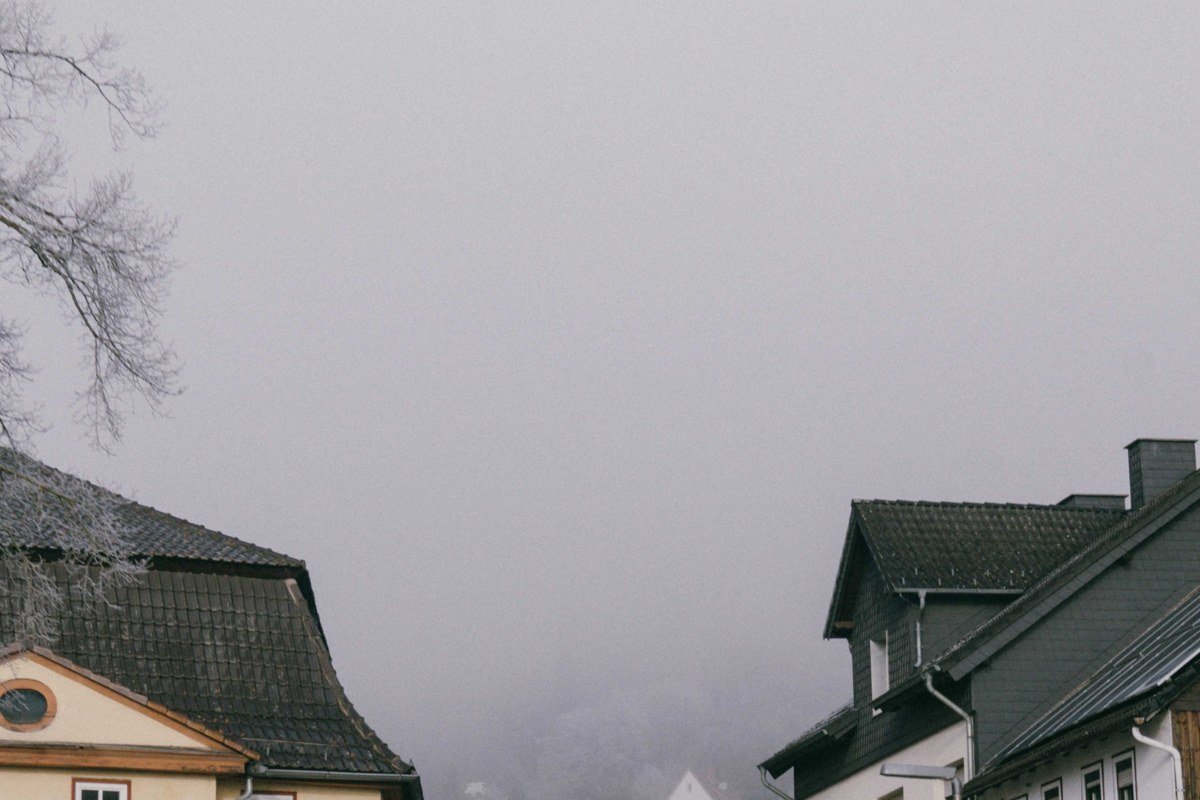
Hallstatt sits on the edge of a glacial lake so narrow and steep-sided that the village had almost no room to expand, which is exactly why it looks frozen in the sixteenth century. The pastel houses stack vertically up the cliff behind the church, and on still autumn mornings the entire scene doubles in the water below with uncanny precision. The mist here is produced by a genuine temperature differential: the Hallstätter See holds warmth longer than the surrounding peaks, and on cold October and November mornings the surface exhales fog that collects in the valley bowl and rarely clears before nine. A 50mm lens at f/2.8 shot from a rowboat at the water’s surface, with the color temperature set to around 5500K, captures the warm glow of the house lights against the blue pre-dawn lake better than any telephoto compression can.
Rent a rowboat from Bootsverleih Hemetsberger before 6:30 a.m. and get out on the lake before the tour buses arrive from Salzburg. By nine the lakeside promenade is crowded. Go in late October or early November: the summer visitors are gone, the larches turn gold above the village, and the fog is at its most theatrical. From the water at that hour, with the oarlocks creaking quietly and the village lights blurring in the surface reflection, the stillness is almost uncomfortable.
Skip if: you need a destination that isn’t already on every travel bucket list in Central Europe. Hallstatt delivers exactly what it promises, but it does so for a very large number of people simultaneously.
2. Giethoorn, Netherlands
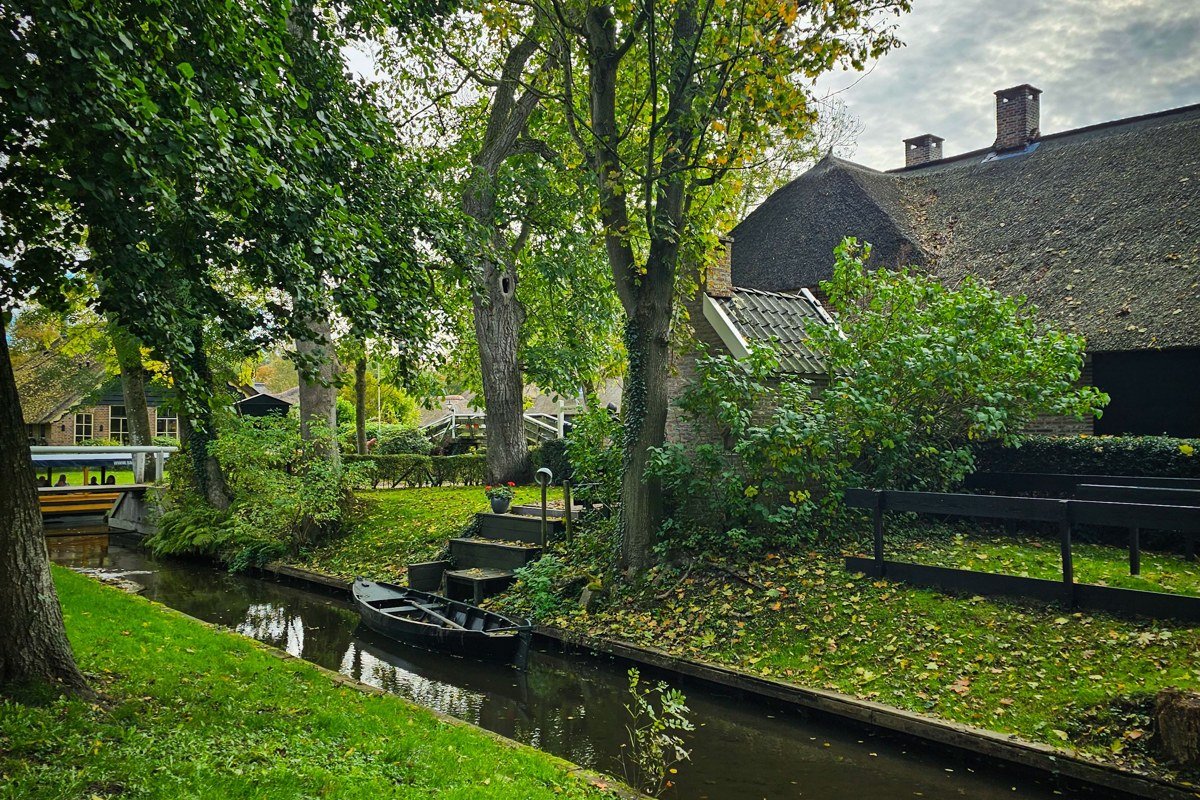
There are no roads in the old core of Giethoorn, only canals lined with thatched farmhouses draped in climbing roses and wisteria. The village is sometimes called the Venice of the Netherlands, but that comparison undersells how quiet and green it actually is. The mist here is structural: Giethoorn sits in the Weerribben-Wieden peat wetlands, and on still mornings the water temperature and the cool air above it generate a low, persistent fog that sits in the canal channels at roughly knee height. From a flat-bottomed punt with a wide-angle lens at 24mm, stopping so the boat is motionless, you can isolate a thatched roofline against a white sky with a band of mist at the waterline in a way that reads as an oil painting.
Punt a whisper boat through the narrow channels yourself rather than taking a guided electric tour. The self-guided northern channels have larger houses, lower tourist density, and a long straight section where willows arch over the water and close off the sky completely. Come in early May, when the wisteria is in full purple bloom and the weeping willows are at their most intensely green. Café ‘t Fanfare on Beulakerweg is a reliable stop for coffee and apple cake run by locals rather than tour operators.
Skip if: you are visiting in July or August on a weekend. The central channels become a slow procession of rental boats and the thatched-cottage quiet evaporates entirely.
3. Bibury, England (Cotswolds)
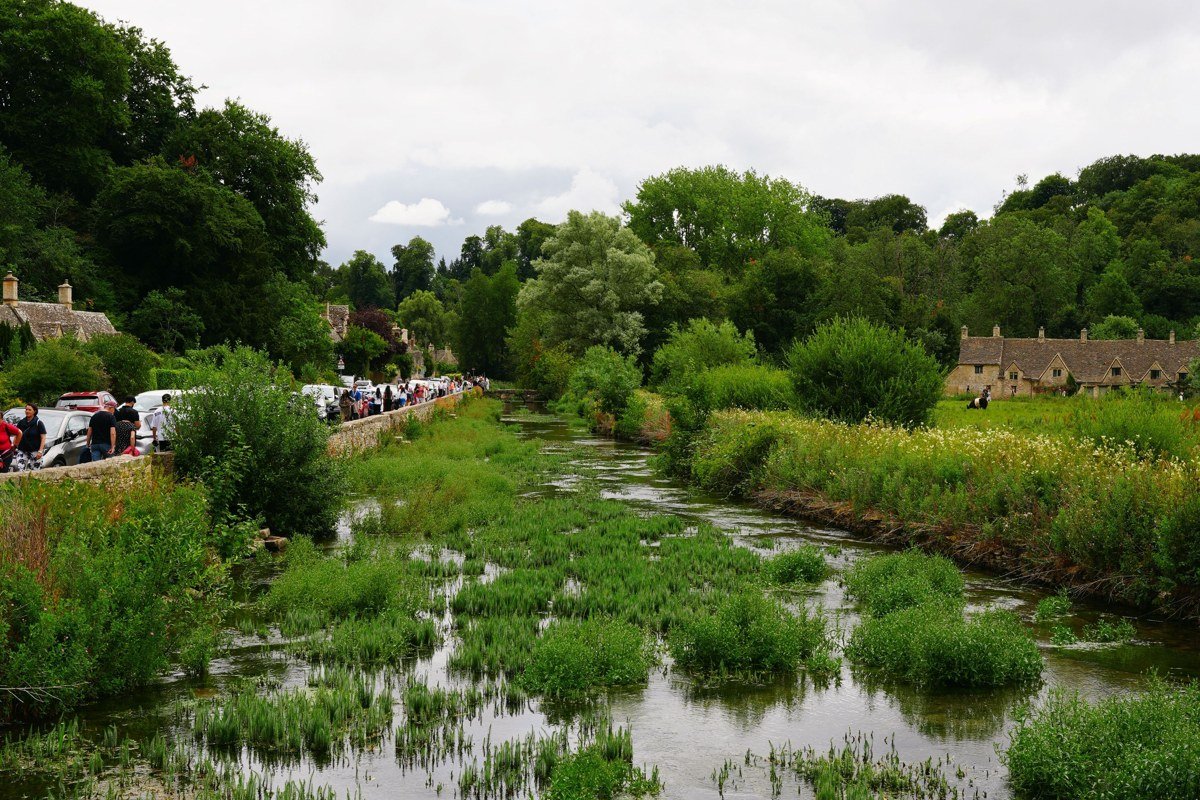
Arlington Row in Bibury is a curved terrace of honey-colored stone weavers’ cottages built in the fourteenth century beside a shallow, trout-filled river called the Coln. The trade-off is honest: this is not a secret. On summer weekends the layby across the stream fills with coachloads of visitors by ten. The fix is simple. Arrive at dawn on a weekday in March or November, when low mist sits over the water meadow and the light rakes at a low angle across the stone. The mist forms here because the Coln runs cold over its limestone bed while the air above the meadow warms slightly at dawn. A 70–100mm focal length from the footpath on the opposite bank, shooting toward the cottages with the meadow grass in the foreground, compresses the row into a single amber mass without including the road or the parking area.
Walk the footpath on the water-meadow side rather than the road for compositions that exclude cars entirely. The village beyond Arlington Row is largely unvisited and worth the extra thirty minutes. The Swan Hotel, which occupies a seventeenth-century building beside the river, is the one property genuinely inside the village and its garden faces the water meadow directly.
Skip if: you are arriving by car on a summer weekend without an early start planned. The parking situation will define your entire experience, and it will not be the one in the photographs.
4. Pienza, Italy (Val d’Orcia)
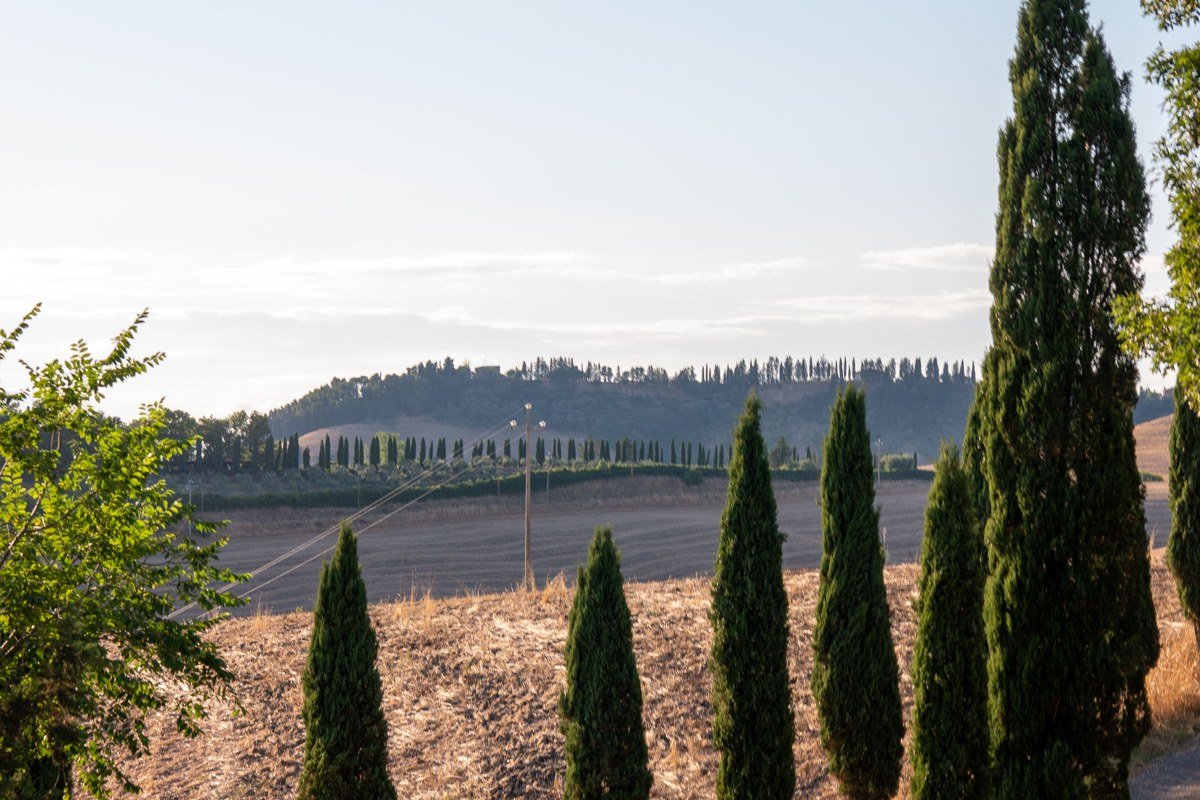
Pienza sits on a narrow ridge in the Val d’Orcia, a UNESCO landscape built by Pope Pius II in the fifteenth century as a model Renaissance town, and it earns its place on a misty list precisely because the valley below it was designed for mist. The Val d’Orcia’s combination of clay hills, shallow river drainage, and cold overnight air produces a ground-level fog that fills the valley floor on autumn mornings while hilltop villages float above it in clear light. Between late October and late November, and again in late February and March, this inversion layer is reliable enough to plan around. Shoot from the Via dell’Amore belvedere at the eastern edge of town at 85mm: the classic cypress-lined lane descending from the ridge into the white valley below is the image, and it rewards patience, because the inversion burns off quickly once the sun clears the horizon.
The town’s main street, the Corso il Rossellino, has barely changed since the 1460s. Marusco e Maria, a small deli on that street, sells the local aged Pecorino di Pienza in three stages of maturation and will let you taste all three. The fresco cycle inside the Duomo, damaged by settling and partly visible through restoration fencing, is worth ten minutes of your morning before the coaches arrive.
Skip if: you want a living village rather than a museum. Pienza’s permanent population is small and its economy is organized almost entirely around visitors, which gives it a stage-set quality that some travelers find slightly airless.
5. Cesky Krumlov, Czech Republic
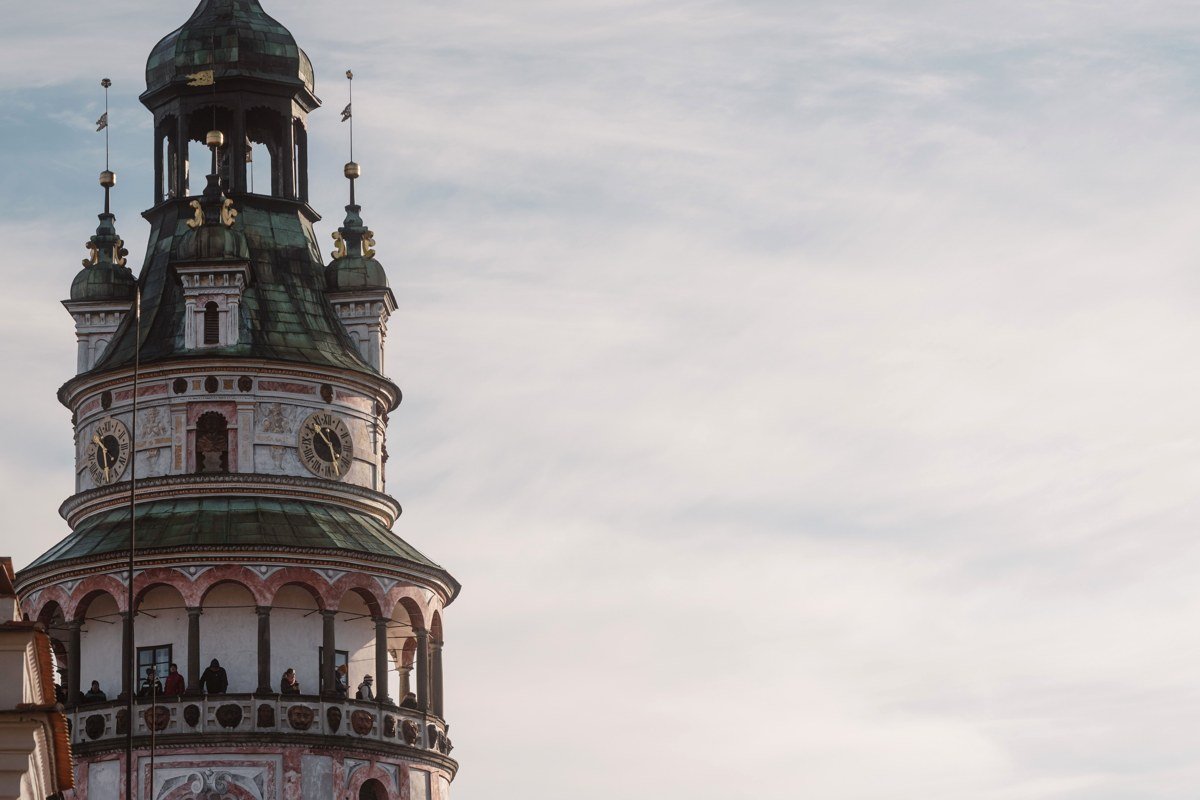
The Vltava River makes an almost perfect horseshoe bend around Cesky Krumlov, and from the castle ramparts above you can look down at a sea of orange-tiled rooftops enclosed on three sides by water. The castle is one of the largest in Central Europe and its interiors include a Baroque theater that is still intact with original stage machinery. The fog here is river fog: the Vltava runs cold through the valley and on October and November mornings a dense mist fills the river bend below the castle to a depth of three or four meters, leaving only the rooftops visible. Shoot from the castle gardens at around 6:30 a.m. with a 35–50mm lens and you get the curved orange roofline emerging from white with the castle tower above it, in a color palette of muted terracotta and grey-blue that is among the most distinctive of any village on this list.
Most overnight visitors stay in Prague, meaning Cesky Krumlov empties after dinner and feels almost entirely local by eight the next morning. The best elevated view is from the Klauni Viewpoint on the hill to the south, a fifteen-minute walk that produces an angle very few travel photographs use. Hotel Konvice, a small property inside the town walls on Horní Street, puts you close enough to be out on the river bend before sunrise without a car.
Skip if: you are visiting in summer and expecting quiet mornings. The day-trip crowd from Prague arrives on morning buses and the historic core becomes very dense by late morning.
6. Positano, Italy (Amalfi Coast)
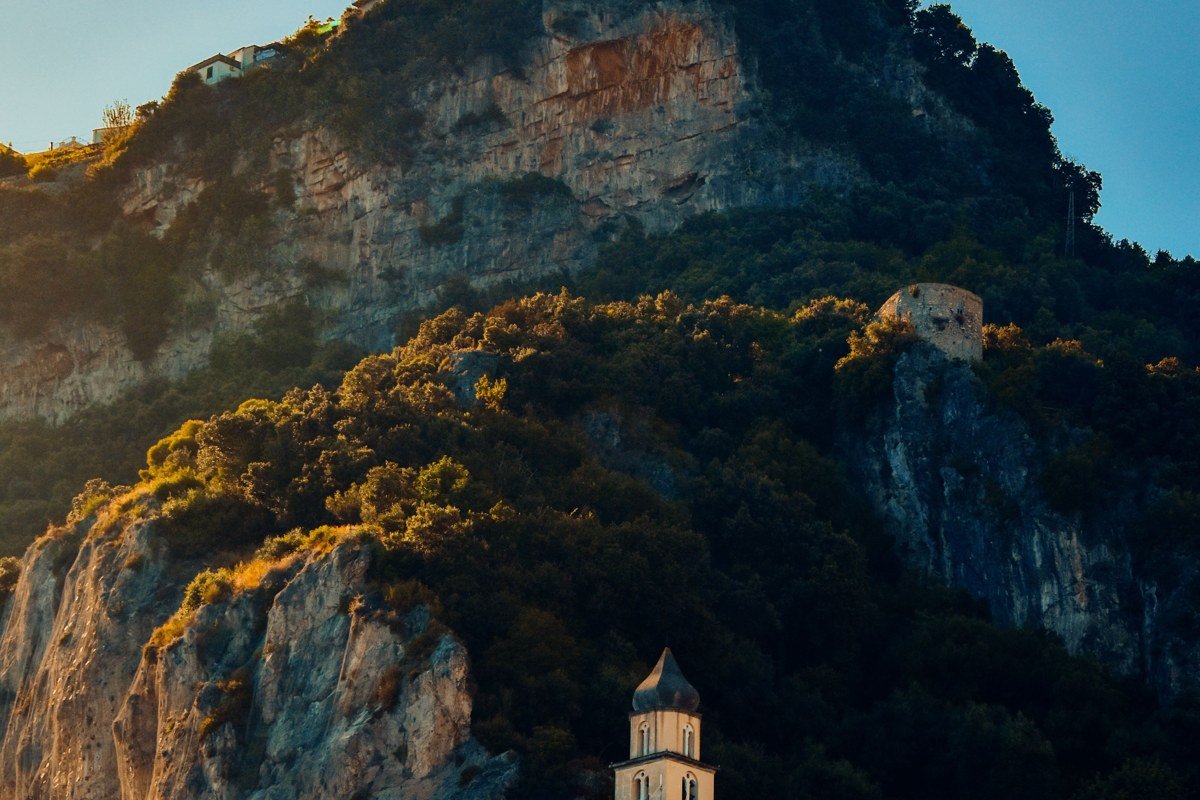
Positano stacks pink, yellow, and terracotta houses down a near-vertical cliff to a black sand beach with a logic that seems engineered specifically for the camera. The honest version: it is expensive, the stairs are relentless, and the road access from either direction involves switchbacks severe enough to cause motion sickness. What makes it worth the trouble is the light in October, when the summer haze burns off, the bougainvillea is still vivid, and the Tyrrhenian Sea turns a darker, more saturated blue. The view from the terrace of the Church of Santa Maria Assunta at 7 a.m., before the ferries arrive from Amalfi and Salerno, is the photograph most people are attempting. Shoot it at 35mm from the church steps with the dome in the left third and the sea filling the right: the color temperature of that early light runs warm against the cool sea and the contrast is the composition.
Stay on the upper streets near Fornillo beach rather than the main Spiaggia Grande to cut costs by roughly a third and gain a quieter neighborhood with the same views. La Tagliata, a family-run restaurant on the road above the village, serves a fixed lunch that has been the same for decades and costs considerably less than anything near the waterfront.
Skip if: you are on a budget or have mobility limitations. The vertical topography is non-negotiable and the pricing in summer is among the highest on the coast.
7. Rothenburg ob der Tauber, Germany
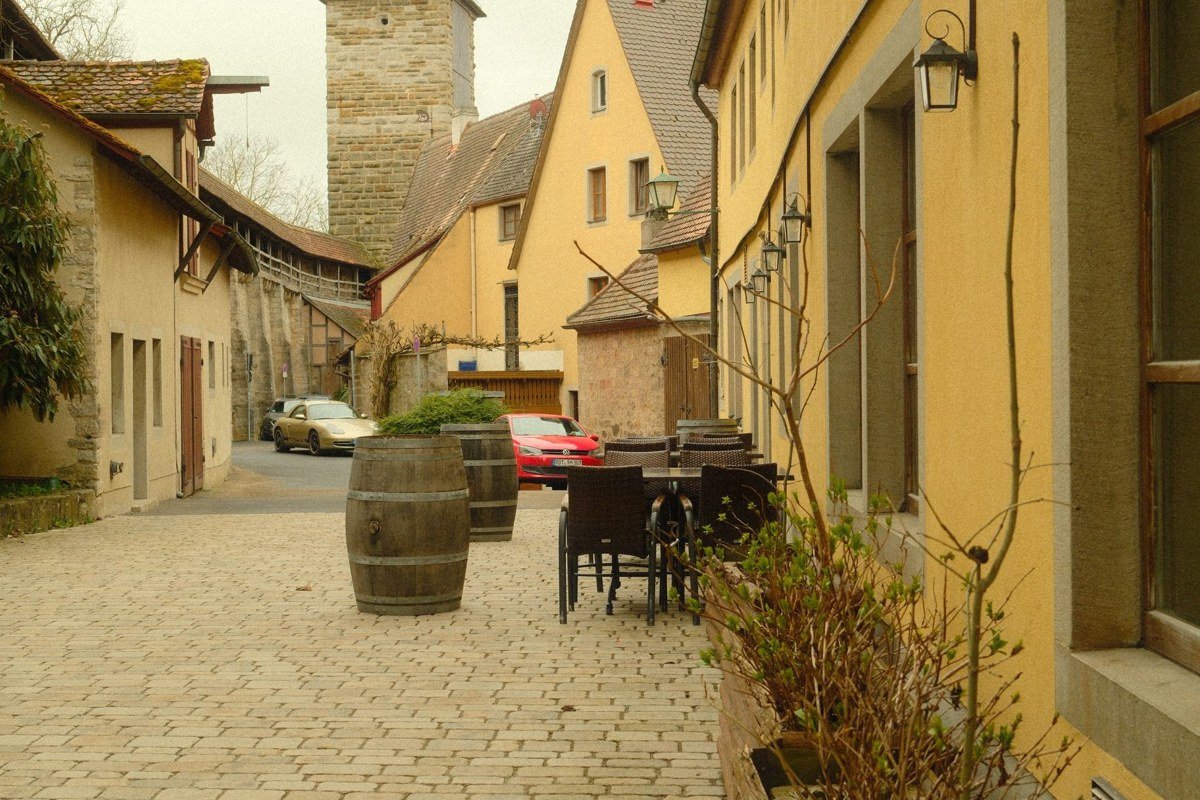
Rothenburg ob der Tauber is so completely preserved that it served as the visual reference for the village in Disney’s Pinocchio, and walking its rampart walls feels like circling the set of a film that never finished shooting. The town survived World War II largely intact through a negotiated surrender, leaving a complete medieval circuit of walls, towers, and cobbled lanes that has barely changed in four centuries. The cobblestones here in fog and light rain smell of cold stone and motor oil from the occasional delivery van, a slightly industrial undercurrent that makes the fairy-tale quality feel more honest rather than less. The Christmas market, running from late November through December, is one of the most atmospheric in Germany: early darkness and persistent Tauber Valley fog make the lantern-lit Marktplatz feel like a scene from a sixteenth-century woodcut.
Visit on a Tuesday or Wednesday in December: weekend crowds thin dramatically, the decorations are up, and the local bakeries sell schneeballen, fried pastry balls dusted in powdered sugar, at a pace slow enough to have a conversation with the people making them. Bäckerei Friedel on Hafengasse has been producing them for decades and the anise-sugar version is not available at the tourist-facing shops near the market square.
Skip if: you are visiting in December on a Saturday. The market is genuinely beautiful and genuinely shoulder-to-shoulder, and the narrow lanes amplify the crowd density.
8. Monsanto, Portugal
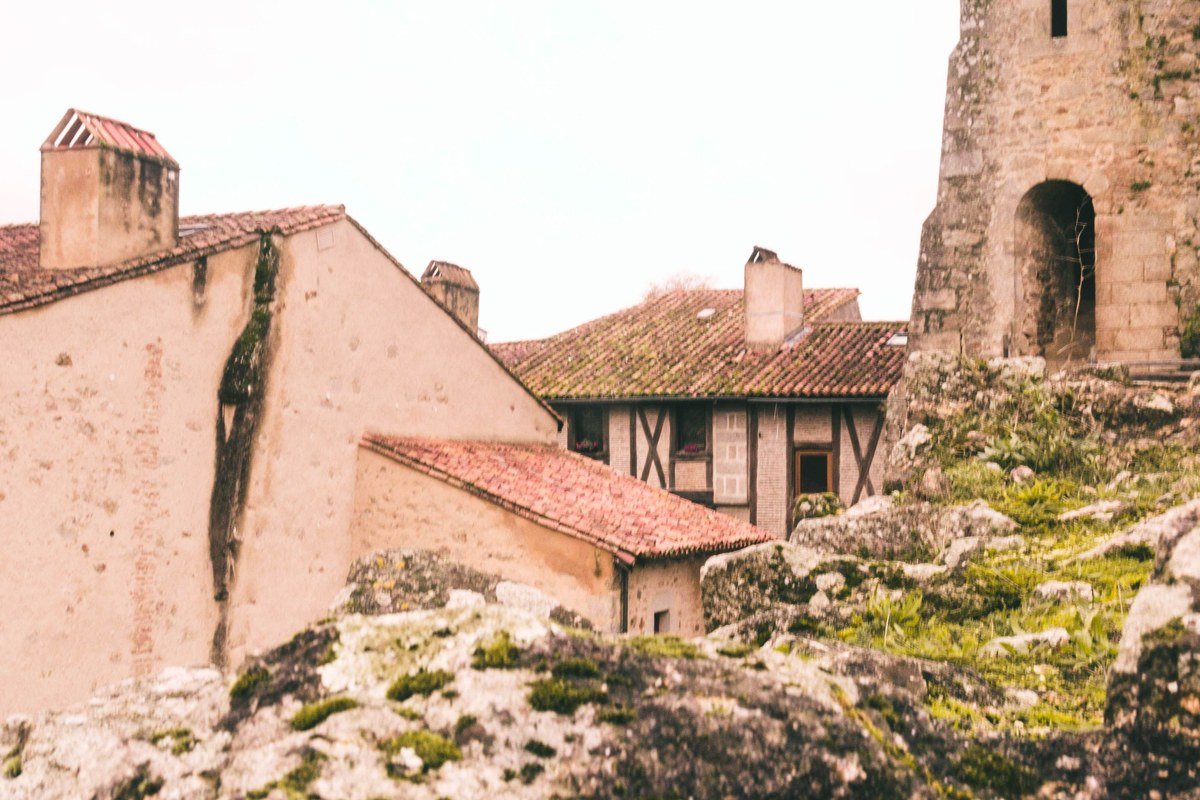
Monsanto is the strangest village on this list: a hilltop settlement in the Beira Baixa region where the houses are not merely built among giant granite boulders but integrated into them. Roofs lean against rocks the size of houses. Staircases are carved directly into stone. The village sits inside a ruined castle and the views across the Iberian plain below are seemingly limitless. It won a formal competition in the 1930s for most Portuguese village in Portugal, which is a real designation, and the granite-on-granite textures photograph in a way that resembles nothing else in Europe. Shoot in late afternoon in September at around 100mm: the low sun turns the granite amber-pink and the plain below dissolves into golden haze, so the village appears to float on color rather than on a hillside.
The population is very small and the village is quiet outside summer weekends. Casa da Lagariça, a guesthouse built directly into the rock formations on the upper lane, offers rooms where the interior walls are the boulder itself, which is either the most or least comfortable sleeping arrangement depending on your tolerance for the theatrical. The smell of the village in the evening, when wood fires start in the small houses below the castle wall, is something no photograph captures.
Skip if: you need infrastructure, reliable restaurants, or easy road access. Monsanto is remote in the way that rewards people who planned for it and frustrates everyone else.
9. Conques, France (Aveyron)
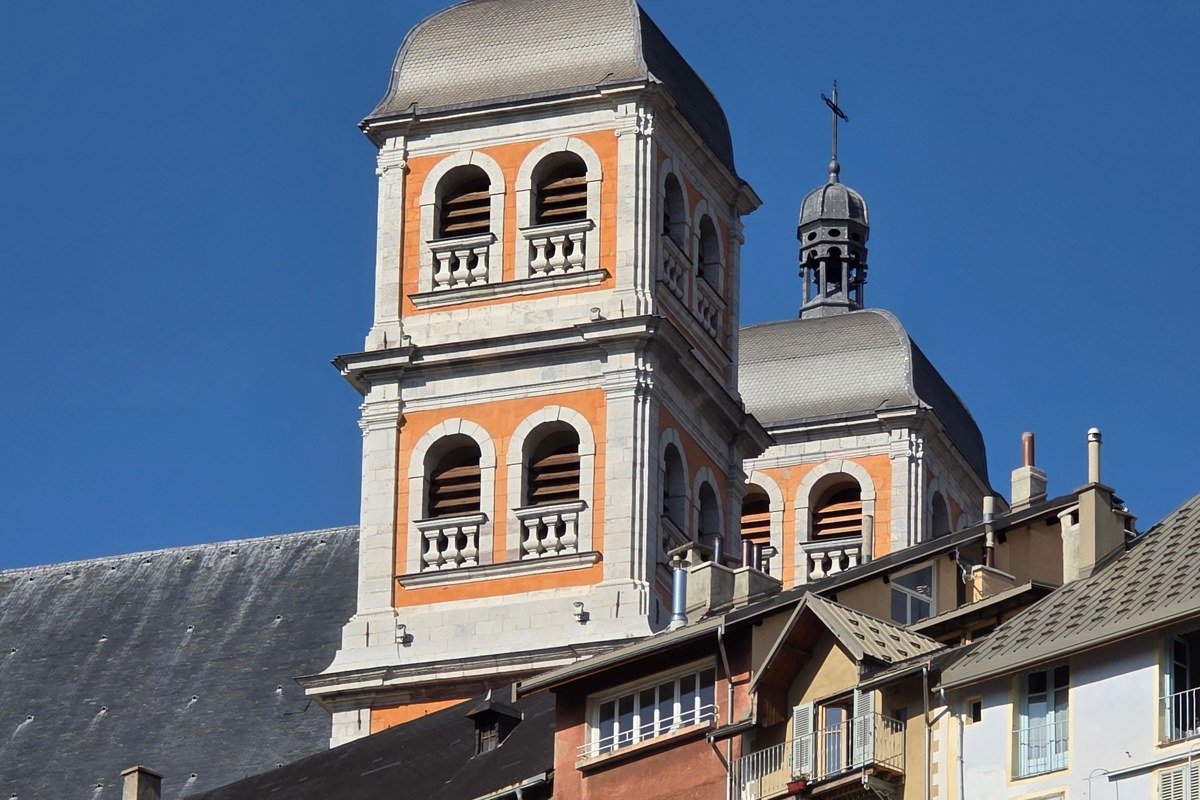
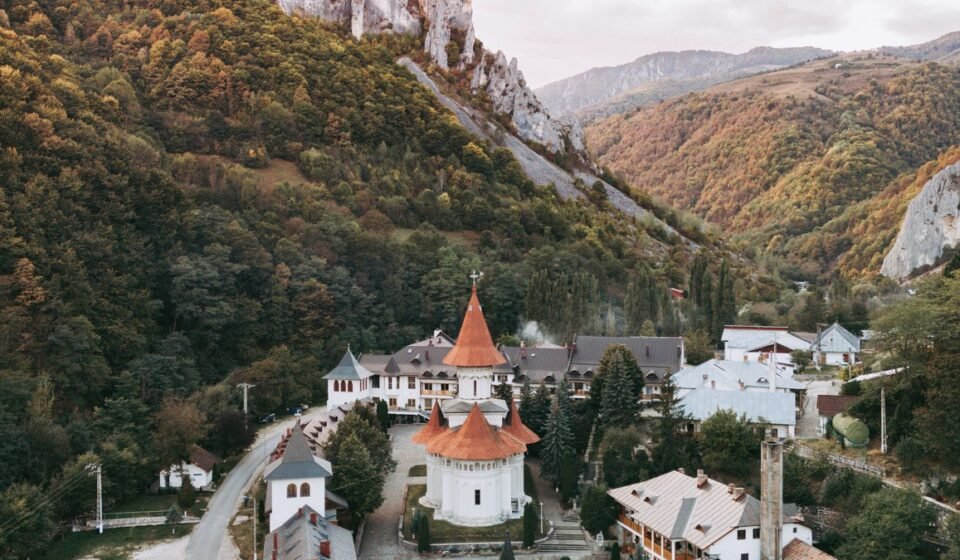
Conques sits at the bottom of a steep, forested ravine in the Aveyron, and the effect of approaching it from the hiking path along the ridge above is one of the great reveals in European travel: the twelfth-century abbey of Sainte-Foy appears below through the chestnut canopy, the whole village audible before it is visible, with the sound of the Ouche stream rising up through the trees. The chestnut forest on the approach smells of fallen leaves and damp earth in October in a way that is as specific to this place as any image. The abbey treasury contains a jeweled reliquary of Saint Foy that has been in continuous use since the ninth century, and the stained glass windows commissioned from Pierre Soulages in 1994 are among the most significant works of twentieth-century sacred art in France.
Accommodation is modest and inexpensive compared to villages of similar quality, because Conques functions as a stop on the GR65 pilgrim route to Santiago de Compostela and prices itself accordingly. Arrive by the GR65 if you can manage even a short section: the descent through chestnut forest into the mist-filled ravine is the most cinematic approach available. The Hôtel Sainte-Foy, a sixteenth-century building within the village walls, has a dining room that serves Aveyron lamb prepared simply and well.
Skip if: you are not willing to stay overnight. Conques is two and a half hours from any major city, and a day trip leaves before the morning light settles into the ravine and the village becomes entirely yours.
10. Civita di Bagnoregio, Italy
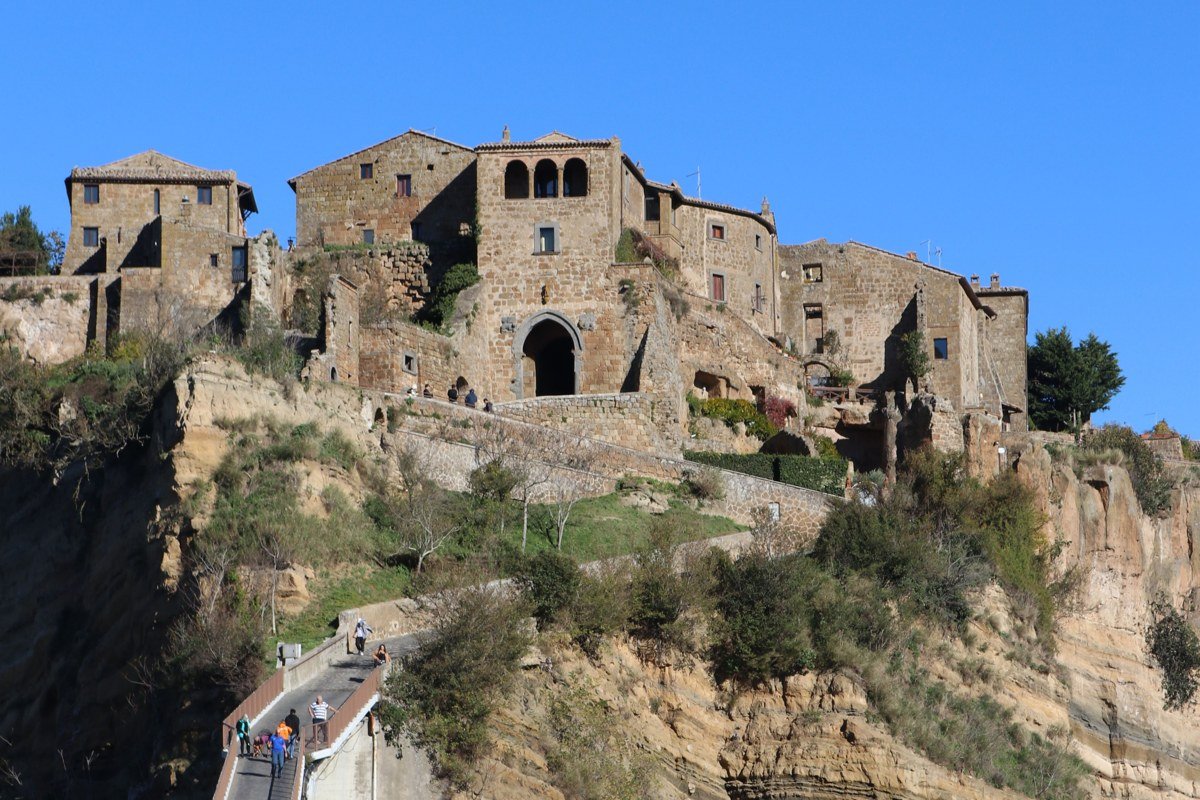
Civita di Bagnoregio is called la citta che muore, the dying city, because the tufa cliff it sits on is slowly eroding away. A single pedestrian bridge connects it to the modern town below, and the permanent resident population has dwindled to fewer than a dozen. Walking across that bridge into a medieval village that is literally disappearing into its own geology is among the most surreal experiences available in Italy, and the tufa dust that rises from the cliff edges on dry afternoons leaves a faint mineral smell on your clothes that you notice hours later. The surrounding valley of eroded tufa formations, called calanchi, looks like a science fiction landscape, particularly when low cloud fills the valley floor and the village floats above it on its disintegrating pedestal.
Go on a weekday in March or November when the entry fee is lower and the village is nearly empty. The bar near the main piazza is run by a family whose presence there predates the tourist infrastructure by several generations, and the bruschetta with local olive oil is one of those unremarkable-sounding things that justifies the bridge crossing in a way the geological drama does not quite manage alone.
Skip if: you are visiting in summer with a tour group. The pedestrian bridge creates a single-file bottleneck and the village, which is genuinely tiny, reaches capacity quickly in peak season.
How to Plan Around These Villages
The single pattern connecting all ten places is timing. Every one of them has a peak-season version that is crowded, expensive, and difficult to photograph, and an off-season or early-morning version that delivers what the best images promise. Booking accommodation inside or adjacent to the village rather than in a nearby city is consistently the decision that changes the experience: being at the viewpoint at 6 a.m. when the mist is in the valley and the lanes are empty is only possible if you are not commuting from somewhere else.
Fog and mist follow predictable physics across all of these locations. Temperature differentials between water or valley floor and the cold air above them are the engine: autumn provides the most reliable conditions because overnight temperatures drop sharply while rivers and lakes retain summer warmth. Shoot into the light in those conditions rather than with it at your back. A warm color temperature setting (5000–5500K) preserves the amber quality of early low sun against cool fog and avoids the flat blue that auto white balance tends to produce in mist.
Travel in shoulder season across all of these destinations. Fog is most reliable in autumn. Spring gives wildflowers and saturated greens. Summer gives crowds and a harsh midday light that flatters none of these places. The storybook versions are accessible and real. They simply require being there before the rest of the world arrives.