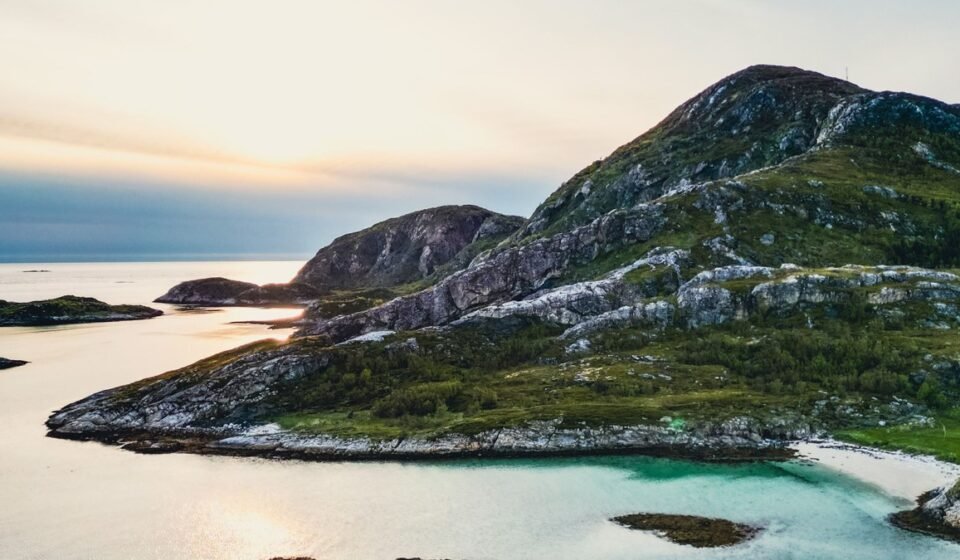

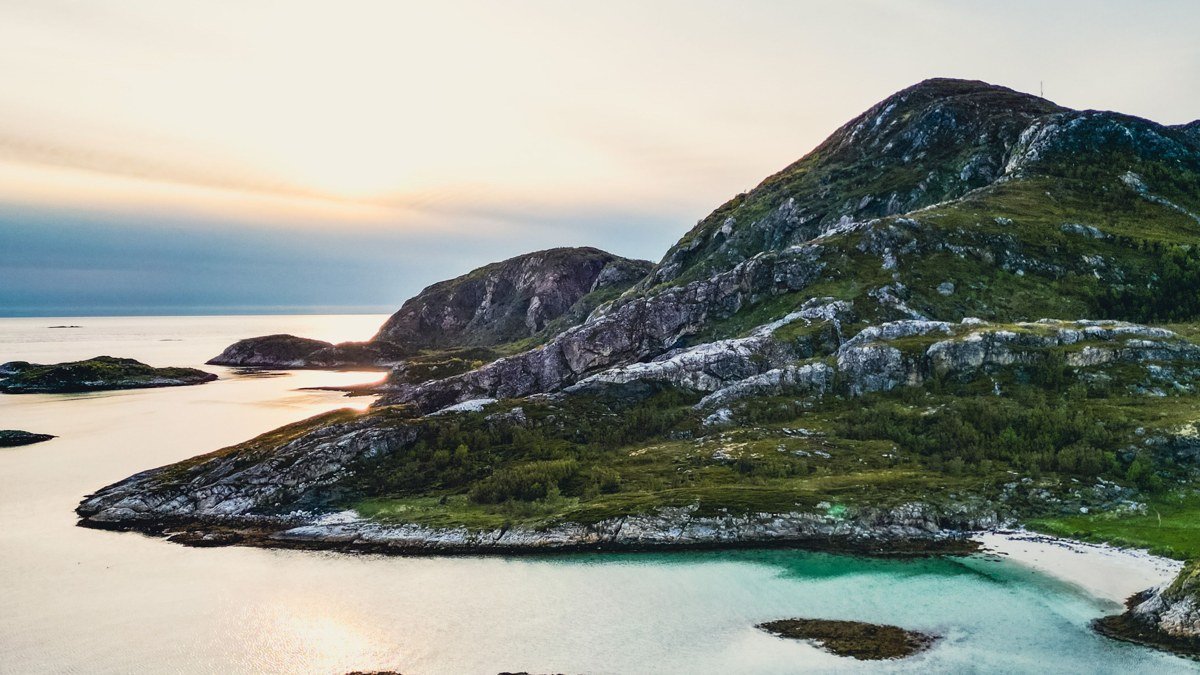
It’s 11:40 pm on a Tuesday in early July, and I’m sitting on a rock above Reinebringen in Lofoten eating a lukewarm gas-station hot dog because everything else closed hours ago. The sun is still up. Not “twilight” up — fully, cheerfully up, casting hard shadows across the fjord like it’s 4 in the afternoon. Two Germans next to me are debating whether to hike back down now or just wait for “sunset,” which technically won’t happen for weeks.
That’s Norway in summer in one snapshot: absurdly beautiful, weirdly disorienting, more expensive than you budgeted for, and — in the famous spots — more crowded than the postcards suggest.
This is the honest version. What July and August actually feel like on the ground, where the crowds are (and aren’t), what the midnight sun does to your sleep and your plans, and the alternatives most itineraries never mention.
Why July and August Are Both the Best and Worst Time to Go
Let’s be clear about the trade-off up front.
The case for summer: This is the only stretch where nearly everything is open and accessible. High mountain roads like the Trollstigen and the Sognefjellet pass are clear of snow. Mountain huts (DNT cabins) are staffed. Ferries run full schedules. You get 18–24 hours of usable daylight depending on latitude. Waterfalls are still fat from snowmelt. It’s genuinely warm enough — often 18–24°C (64–75°F) in the fjords and southeast — to swim in a fjord if you’re brave.
The case against: These are also the two months everyone else has decided to come. Prices peak, popular hikes queue up, and the “authentic quiet fjord village” fantasy is harder to find in the honeypot spots.
Here’s the thing nobody tells you: the crowds in Norway are extremely concentrated. Norway is enormous and thinly populated. The tourist pressure sits on maybe a dozen specific sites — Preikestolen, Trolltunga, the Flåm–Nærøyfjord corridor, Geiranger, central Lofoten, Bergen’s Bryggen. Drive 40 minutes off that trail and you can have a fjord to yourself. More on that below.
The Best Weeks Within Summer
“July and August” isn’t one season — the profile shifts meaningfully across the summer, and knowing this is genuinely worth planning around:
- Late June: The longest light of the whole year (solstice is June 21), waterfalls at their fullest from snowmelt, and crowds not yet at their peak because Norwegians haven’t started their own holidays. The catch: the very highest passes (Sognefjellet) and some high trails may still be clearing late snow, and DNT cabins may not all be staffed yet.
- Peak July: Everything is open, all ferries run full schedules, and the weather is at its most reliably warm. It’s also the busiest and priciest window — cruise ships at maximum frequency, cabins booked out, trail queues at their longest.
- August: The insider’s pick. Slightly thinner crowds (especially late August), ripe berries along the trails, and light that’s still long but starting to bring back real evenings. The trade-off is that the highest hikes begin catching the first hints of autumn weather, and by very late August some seasonal services start winding down.
If you can choose, aim for late June or the back half of August — you get most of the light with a fraction of the peak-July crush.
The Midnight Sun: What It Actually Does to Your Trip
Everyone knows the midnight sun exists. Almost nobody plans for how it changes behaviour.
Where you get it: True midnight sun (the sun never fully sets) only happens north of the Arctic Circle — Lofoten, Tromsø, the North Cape. In early July, Tromsø has the sun above the horizon roughly late May to late July. Lofoten is similar.
Everywhere else: Bergen, Oslo, and the fjord country are not above the Arctic Circle, but in June and July they get “white nights” — it never gets properly dark. Around midsummer, Bergen has a long dim twilight around 1–2 am and that’s it. You can hike at 10 pm without a headlamp.
What this does in practice:
- Your sense of time dissolves. You’ll eat dinner at 9, start a hike at 8 pm because the light is gorgeous, and suddenly it’s 1 am. Multiple travel days back-to-back and you burn out without noticing.
- Sleep gets wrecked unless you prepare. Bring a proper eye mask. Norwegian accommodation often has thin curtains that assume you’re used to it. This is the single most underrated packing item.
- The best light is late. Golden “hour” lasts for hours. If you want empty photos of Reinebringen or Hamnøy, go at 10 pm–midnight when the day-trippers have gone.
Insider move: Use the midnight sun for the crowded stuff. Preikestolen and Trolltunga are miserable at midday in July — car parks full, single-file queues on the trail. Start Preikestolen at 5–6 pm or, if you’re fit and prepared, do a late evening ascent. You’ll pass people coming down and have the cliff nearly to yourself. (For Trolltunga, see the booking warning below — the evening-start trick only works if you already hold a valid timed entry.)
What Summer Weather Is Really Like (Bring the Rain Jacket)
Western Norway — Bergen, the fjords, Lofoten — is one of the wettest parts of Europe. Bergen gets rain on roughly 230 days a year — yes, including July. Summer does not exempt you.
A realistic western Norway forecast in July: a mix of glorious blue-sky days, full-on grey drizzle, and days that do all four seasons before lunch. The east (Oslo, the mountains, Rondane) is drier and often warmer.
Plan for this, don’t fight it:
- Pack layers plus a genuinely waterproof shell, not a “water-resistant” fashion jacket.
- Build flexibility into your route. If you have three fjord days and one is a washout, keep an indoor or town day (Bergen, Ålesund) as a swappable buffer.
- Don’t book weather-dependent bucket-list hikes on your last possible day. Give yourself a spare.
The Crowd Map: Where the Bottlenecks Actually Are
| Spot | Crowd level in Jul/Aug | Worth it? | Quieter alternative |
|---|---|---|---|
| Preikestolen (Pulpit Rock) | Very high midday | Yes, iconic | Go early morning or late evening |
| Trolltunga | Very high | Yes, but a long hard day | Consider skipping if short on time |
| Flåm / Nærøyfjord | Extreme (cruise ships) | The fjord, yes; Flåm town, no | Undredal, Aurland, Gudvangen backroads |
| Geiranger | Extreme when ships dock | Scenery yes, town no | Hjørundfjord, Norangsdalen |
| Central Lofoten (Reine/Hamnøy) | High | Yes | Vesterålen, Senja |
| Bergen Bryggen | High | Yes, briefly | Nearby neighbourhoods, Fløyen at night |
| Atlantic Road | Moderate | Yes, quick | — |
The pattern: cruise-ship towns are the worst. Geiranger and Flåm can go from sleepy to swarmed the moment a 4,000-passenger ship docks, then empty out by evening. Check cruise schedules (ports publish them) and time your visit for late afternoon or early morning.
⚠️ Trolltunga requires advance timed-entry booking. Book your slot at trolltunga.com — just showing up is no longer possible in summer. Turning up without a reservation in July or August can mean being turned away at the trailhead after a long drive, so sort this before anything else if Trolltunga is on your list.
The Alternatives No One Puts on the Itinerary
If you want the Norway that looks like the marketing but without the queues, redirect a day or two here:
- Senja instead of (or after) Lofoten. Similarly dramatic jagged peaks and beaches, a fraction of the traffic. The Bergsbotn and Tungeneset viewpoints are stunning.
- Vesterålen, just north of Lofoten — gentler, greener, quieter, excellent for whale watching out of Andenes.
- Hjørundfjord near Ålesund instead of Geiranger. Arguably more beautiful, almost no tour buses. Base at Sæbø or Urke.
- The Sunnmøre Alps and Norangsdalen — a jaw-dropping mountain valley most itineraries skip entirely.
- Undredal, a tiny goat-cheese village on the Aurlandsfjord, minutes from Flåm but a different universe of quiet.
- Rondane and Jotunheimen national parks for hiking without coastal cruise crowds. Besseggen ridge is popular but nothing like Trolltunga’s crush.
A Real 10-Day Summer Itinerary You Can Copy
This is a fly-into-Bergen, out-of-Tromsø route that mixes the icons with the quiet. It assumes a rental car for the fjord section and a flight north. Costs are rough per-person estimates in a shoulder-of-comfort mid-range (not backpacker, not luxury), 2 travellers sharing.
Days 1–2: Bergen and the Hardangerfjord
- Arrive Bergen. Walk Bryggen, ride the Fløibanen funicular late evening for empty views.
- Day 2: drive out to the Hardangerfjord. Steinsdalsfossen (walk behind the waterfall), fruit farms, the Vøringsfossen viewpoints. Overnight near Odda or Eidfjord.
- Rough cost: hotel ~1,400–1,900 NOK/night; Fløibanen ~160 NOK return.
Day 3: Preikestolen (timed smart)
- Drive toward Stavanger side / Ryfylke. Hike Preikestolen starting late afternoon (~4–5 pm) to dodge the worst crowds. ~4 hours round trip, moderate.
- Routing note: Preikestolen sits well south near Stavanger, so slotting it here means a deliberate southward detour and some backtracking north afterwards. If you’d rather avoid that, fly into Stavanger and tackle Preikestolen as your Day 1 or Day 2, then work your way north to Bergen — you’ll cover the same ground once instead of twice.
- Parking ~250 NOK. Bring water and snacks — nothing at the top.
Days 4–5: The Fjord Core, done the quiet way
- Drive north via the Nærøyfjord region. See it — but sleep in Undredal or Aurland, not Flåm.
- Take the Flåm Railway if you want (it’s genuinely spectacular), but book ahead and take an early or late departure.
- Flåm Railway ~600 NOK; fjord cruise Gudvangen–Flåm ~450–550 NOK.
Day 6: Geiranger area — but base in Hjørundfjord
- See Geiranger from the Dalsnibba viewpoint or on a morning visit before the ships crowd in. Then execute the retreat like this: take the Geiranger → Hellesylt car ferry (roughly an hour, and scenic in its own right — it passes the Seven Sisters falls), then drive from Hellesylt over Norangsdalen to Sæbø/Urke on the Hjørundfjord (about 45 minutes through the Sunnmøre Alps). This is a real, executable combination rather than a vague “it’s doable.”
- Geiranger–Hellesylt ferry plus other short crossings this day: budget 200–400 NOK in ferry fees.
Day 7: Ålesund
- Art nouveau town, climb the Aksla steps for the view, seafood dinner. Return the car here.
- Hotel ~1,600 NOK; a proper seafood meal ~350–500 NOK/person.
Days 8–10: Fly north to Lofoten or Tromsø
- Fly Ålesund → (via Oslo/Bergen) → Bodø or Tromsø. From Bodø, ferry/flight to Lofoten.
- Two nights in Lofoten (base Reine/Hamnøy area) or Tromsø for midnight-sun hikes and, if the timing suits, the sun literally at midnight.
- Domestic flights ~1,000–2,000 NOK depending on booking lead time. Lofoten rorbu (fisherman’s cabin) ~2,000–3,500 NOK/night in peak — book months ahead.
What the 10-Day Budget Actually Looks Like
The ~20,000–30,000 NOK per person ballpark (~£1,500–2,300 / $1,900–2,900, excluding international flights, 2 sharing) hides a lot of variance. Here’s roughly where it lives:
- Accommodation (~9,000–13,000 NOK): This is your biggest lever and where the range is widest. Mid-range fjord hotels run 1,400–1,900 NOK/night; peak-season Lofoten rorbuer can hit 2,000–3,500 NOK/night. Booking early and using a couple of two-night bases keeps this at the lower end.
- Transport (~6,000–9,000 NOK): Domestic flights (1,000–2,000 NOK each), the rental car and fuel, ferries and tolls (a few hundred NOK on a busy fjord day), plus paid experiences like the Flåm Railway.
- Food (~5,000–8,000 NOK): Restaurant dinners at 300–600 NOK/person add up fast; leaning on supermarket lunches and self-catering is where most of the food-cost variance lives.
Norway is expensive; there’s no pretending otherwise. The good news is that the two biggest buckets — accommodation and food — are also the two you have the most control over.
Shorter on time?
- 5 days: Bergen + Hardanger + Preikestolen + one fjord night. Skip the north.
- Only want the north: Fly straight to Tromsø or Bodø and spend the whole time in Lofoten/Senja. Don’t try to do both ends in under 8 days — you’ll spend it in transit.
How to Not Go Broke
Norway will drain your wallet if you treat it like a normal European trip.
- Alcohol is brutally taxed. A beer out is easily 100–140 NOK. Buy wine/spirits at the airport duty-free on arrival; supermarkets only sell weak beer, and the state Vinmonopolet closes early and all Sunday.
- Eat from supermarkets (Rema 1000, Kiwi, Coop) for lunches. A restaurant dinner runs 300–600 NOK/person; a supermarket lunch is a fraction of that.
- Pølse (hot dogs) from gas stations and kiosks are the unofficial national road-trip food — cheap and everywhere.
- Tap water is superb and free. Never buy bottled.
- Book cabins and rorbuer months ahead for July/August. The good, well-priced ones vanish by spring.
- Ferries and toll roads add up on a fjord road trip. Register your rental with an AutoPASS provider (your rental company will explain) so tolls are billed automatically rather than mailed to you months later.
A Note on Travel Insurance
One common misconception worth clearing up: if you get into genuine trouble in the mountains, helicopter rescue in Norway is provided through the national emergency system and won’t leave you with a bill as a foreign visitor in a real emergency. What that does not cover is trip cancellation or curtailment — including weather washouts of your bucket-list hike — so if that risk matters to you, buy standard travel insurance for it rather than assuming rescue coverage does the job.
Common Mistakes (The Non-Obvious Ones)
1. Underestimating drive times. The map lies. Fjords mean you can’t drive in straight lines — you go around, or wait for a ferry. A “2-hour” hop can be 4 hours with a ferry queue. Use a Norway-specific route tool that accounts for ferries (the ferry timetables matter more than the distance).
2. Booking too many single-night stays. Constant packing/unpacking plus ferry logistics burns your holiday. Two-night bases let you actually rest and hike.
3. Treating Lofoten and the fjords as “near” each other. They’re roughly 24+ hours apart by car. You fly between them. People routinely try to drive it and lose three days.
4. Ignoring cruise-ship schedules. Showing up in Geiranger or Flåm at 11 am on a two-ship day is self-inflicted misery.
5. Packing for “summer.” Cotton and no rain shell in western Norway is a rookie error. And no eye mask, so you don’t sleep.
6. Assuming everything’s open late. Small-town shops and kitchens close early — often kitchens stop at 8–9 pm even with sun blazing. Stock up before you’re stuck with the pølse.
7. Doing Trolltunga and Preikestolen and Besseggen in one trip. These are big days. Pick your battles; you’re on holiday, not a hiking competition.
Insider Tips That Signal You’ve Actually Been
- Download offline maps. Mobile coverage is good on main roads but drops in mountain valleys and tunnels — and there are a lot of tunnels.
- The DNT cabin network lets you hike hut-to-hut without a tent. Get a DNT membership and, for the unstaffed self-service and no-service cabins, a standard DNT key (ordered in advance — it’s the same key that opens hundreds of huts across the country, so you can’t just buy one at the trailhead). Staffed cabins take card payment and often need booking in July/August; the self-service ones work on trust, with a stocked larder you pay for and a logbook you sign. Always leave the cabin as you’d want to find it — restock the wood, sweep up, and pack out your rubbish.
- Fill the tank when you can in the north and the interior — stations are sparse.
- The best fjord “cruise” is often a regular car/passenger ferry at a fraction of the tourist-cruise price, with the same scenery. The Hurtigruten/Havila coastal ships are also a way to see the coast without driving.
- August over July if you can choose. Slightly fewer crowds late August, berries are ripe, and the light is still long. The trade-off: the very high mountain hikes may start getting the first hints of autumn weather.
- Norwegians take their own holidays in July (the fellesferie). Some small local businesses close. Cities can feel quieter locally even as tourist sites get busier.
- Carry a contactless card everywhere. Norway is nearly cashless — ferries, kiosks, parking, and even remote farm stands expect card or Vipps. You’ll rarely need physical cash, but a working card is non-negotiable.
The Honest Bottom Line
Norway in summer delivers on its promise — but only if you plan around the two things that break most trips: the concentrated crowds and the geography that makes distances lie. Time the famous hikes for evening light, base yourself two nights at a time, keep one weather buffer day, and swap at least one honeypot (Geiranger, Flåm) for its quiet twin (Hjørundfjord, Undredal).
Do this now: open a booking site and lock in your Lofoten cabin or Hjørundfjord room for July/August today — those specific beds sell out months ahead, and everything else in your itinerary can flex around them later. And if Trolltunga is on your list, book that timed slot at trolltunga.com in the same sitting.