How to Build a 7-Day Tourist Travel Itinerary Sample for Europe on a $1,500 Budget (With Real Day-by-Day Breakdown)

Last spring I helped a friend plan her first solo trip to Europe. She had $1,500, seven days off work, and a spreadsheet she’d opened and closed about forty times. Every itinerary she found online either assumed she had a trust fund or told her to “embrace spontaneity” — which is great advice until you’re standing in Florence at 9pm with no bed booked.
So we built it properly. This is that 7 day tourist travel itinerary sample for Europe, refined after running the actual numbers and walking the actual routes. It’s a copyable plan, not a fantasy. Excludes your transatlantic flight (that’s a separate budget), but covers everything once you land: trains, beds, food, sights, and the small costs people forget.
The $1,500 Math (Before We Pick Cities)
Here’s the honest constraint. $1,500 over 7 days is roughly $214 per day. That’s comfortable in Central and Eastern Europe, tight in Western Europe, and impossible in Switzerland or Scandinavia. So the first rule of building this itinerary:
Pick a region, not a wishlist.
The single biggest budget killer is geography. Two cities 90 minutes apart cost a fraction of two cities a flight apart — not just in transport money, but in lost half-days spent in transit.
Here’s how the same budget stretches across regions:
| Region | Avg. bed/night (hostel/budget hotel) | Daily food | Verdict on $1,500/7 days |
|---|---|---|---|
| Central Europe (Czech, Hungary, Poland) | $25–45 | $20–30 | Very comfortable |
| Iberia (Spain, Portugal) | $35–55 | $25–35 | Comfortable |
| Italy (non-Venice) | $45–70 | $30–40 | Doable with discipline |
| France / Benelux | $60–90 | $35–50 | Tight, needs hostels |
| Switzerland / Nordics | $90–150 | $50–80 | Not realistic |
For the worked example below, I’m using Central Europe — specifically Prague, Vienna, and Budapest. It’s the best value-to-beauty ratio on the continent, the three cities form a tight triangle connected by cheap trains, and a first-timer gets three wildly different capitals without a single flight.
How to Structure a 7-Day Trip (The 3-City Rule)
For a week, three cities is the sweet spot. Two feels thin; four means you spend two of your seven days packing and unpacking.
The pattern I use:
- City 1: 3 nights (you arrive jet-lagged, give yourself room)
- City 2: 2 nights
- City 3: 2 nights, fly home from here
Always fly out of a different city than you flew into (“open-jaw” or “multi-city” tickets). It costs roughly the same as a round-trip but saves you backtracking an entire travel day. This is the tip that separates planners from amateurs.
So: fly into Prague, out of Budapest. The route flows in one direction.
The Full 7-Day Sample Itinerary (Prague → Vienna → Budapest)
All prices are realistic 2024-ish estimates in USD, leaning toward what you’ll actually pay, not the rock-bottom listicle number.
A note on how accommodation is counted: You book 6 nights of beds total (3 in Prague, 2 in Vienna, 1 in Budapest — you fly out before a 7th night). To keep each day’s math honest, I’ve allocated the cost of the bed you sleep in that night to that day. So Day 1’s $40 Prague bed sits in Day 1; the Day 4 figure includes the Vienna bed you check into that afternoon; Day 7 carries no accommodation because there’s no 7th night. The “Day total” lines below add up to the same number as the master table at the end — no hidden double-counting.
Day 1 — Arrive Prague
You land tired. Don’t over-plan today.
- Airport bus (Line 119) + metro to center: ~$2
- Check into a hostel in Žižkov or New Town (private room in a hostel runs ~$40)
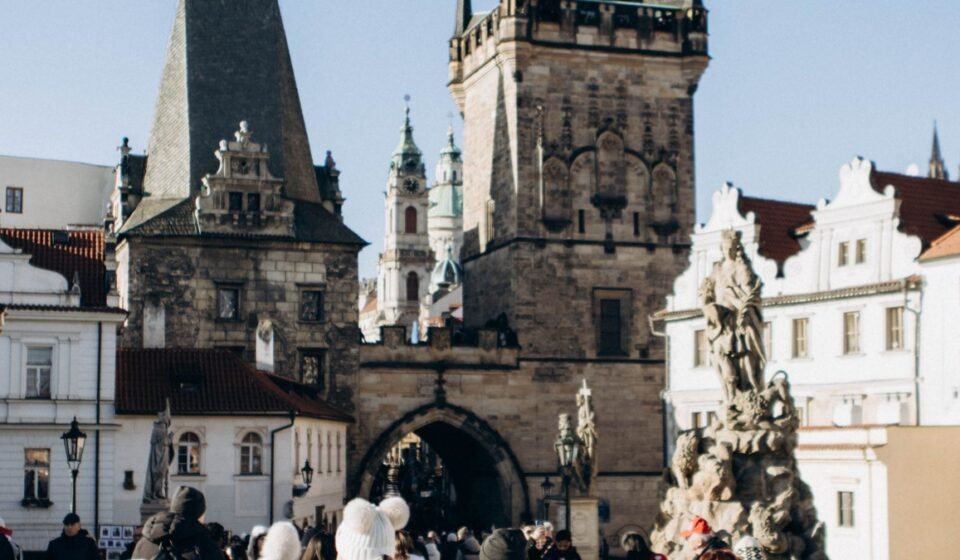
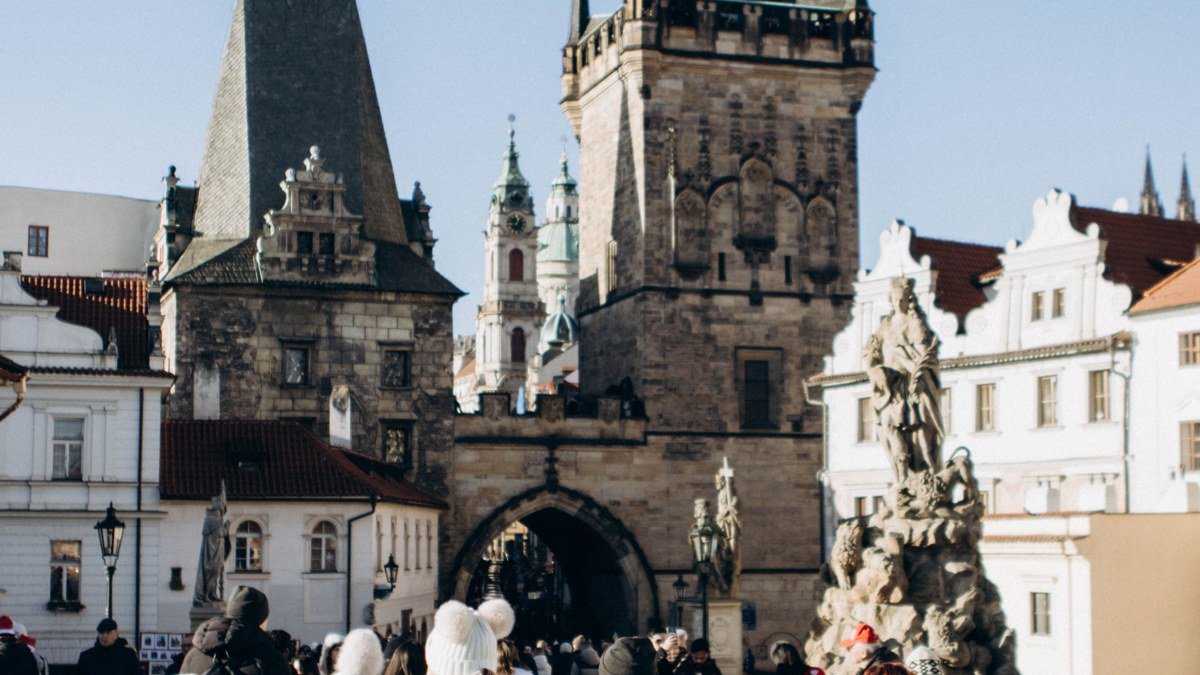
- Walk to the Old Town Square and Charles Bridge at dusk — free, and stunning when the day-trippers thin out
- Dinner: a svíčková (beef in cream sauce) at a local pub, ~$9 with a beer
Day total: ~$60 (of which $40 is the Prague bed)
Day 2 — Prague Old Town + Castle
- Free walking tour, 10am (tip ~$8 — these are excellent for orientation)
- Prague Castle grounds: free to wander; the paid circuit (St. Vitus interior, Golden Lane) is ~$11
- Lunch: a langoš or street food, ~$6
- Afternoon: cross to Lesser Town, climb to Petřín Hill for the view (funicular ~$2)
- Dinner + a couple of Czech beers, ~$15
Day total: ~$82 (of which $40 is the Prague bed)
Insider tip: Beer in Prague is often cheaper than water. A half-liter of excellent Pilsner is $1.50–2.50 in local spots. The catch: tourist-trap restaurants near the Astronomical Clock charge triple. Walk three streets off the square and prices halve.
Day 3 — Prague (deeper) + evening train prep
- Morning: Jewish Quarter (Josefov) — the combined ticket is ~$22 if you go in; the streets are free to walk
- Or skip the ticket and do the Vyšehrad fortress instead — free, peaceful, locals’ favorite, with the best skyline view in the city
- Lunch picnic from a supermarket (Billa/Albert), ~$5
- Afternoon: relax, do laundry, buy your Vienna train ticket
- Cheap dinner, ~$10
Day total: ~$57 (of which $40 is the Prague bed)
Day 4 — Train to Vienna, afternoon in the city
- RegioJet or ÖBB train, Prague → Vienna: ~4 hours, $20–35 if booked 2–3 weeks ahead (it jumps to $60+ last-minute — book early)
- Drop bags at your Vienna accommodation (budget hotel/hostel ~$55)
- Afternoon: walk the Innere Stadt, see St. Stephen’s Cathedral (free to enter the nave), stroll Graben and Kärntner Straße
- Dinner: a sausage from a Würstelstand (~$5) — genuinely a Viennese institution, not a cop-out
Day total: ~$95 (train ~$30 + Vienna bed $55 + food ~$10)
Insider tip: Vienna’s Würstelstände (sausage stands) are where office workers and opera-goers in tuxedos eat side by side at 1am. A Käsekrainer with bread and mustard is the best $5 you’ll spend, and it sidesteps Vienna’s pricey restaurant scene entirely.
Day 5 — Vienna’s palaces + coffee culture
- Schönbrunn Palace: gardens are free and gorgeous; the Imperial Tour (interior) is ~$24. My honest take: walk the gardens for free, skip the interior unless you love Habsburg history. Climb to the Gloriette for the view.
- Lunch near the palace, ~$10
- Afternoon: a proper Viennese coffeehouse. Skip Café Central — it’s beautiful but now firmly tourist-facing, with a queue out the door and prices to match. The locals’ actual choices are Café Sperl (wood-paneled, billiard tables, gloriously unbothered) or Café Hawelka (tiny, smoky-feeling, served by the same family for generations). A Melange and a slice of Sachertorte, ~$12. Sit as long as you want; that’s the deal in Vienna.
- Evening: standing-room opera tickets (Stehplatz) at the Vienna State Opera are ~$15, or as low as $3–4 for the cheapest tier — one of the best cultural bargains in Europe. The catch: Stehplatz tickets only go on sale 80 minutes before curtain, sold in person at the side entrance, and the queue forms well before that on popular nights — show up at least 90 minutes early or you’ll watch from the pavement.
- Dinner: light, ~$8
Day total: ~$117 (of which $55 is the Vienna bed)
Day 6 — Train to Budapest, thermal bath evening
- Vienna → Budapest train: ~2.5 hours, $20–30 booked ahead
- Check into accommodation in District VII (the lively Jewish Quarter) — hostel private ~$35, and Budapest is the cheapest of the three
- Afternoon: walk Andrássy Avenue to Heroes’ Square (free)
- Evening: Széchenyi Thermal Baths, ~$22 entry — the iconic outdoor thermal pools, magical at night
- Dinner: a hearty gulyás, ~$8
Day total: ~$93 (train ~$25 + Budapest bed $35 + bath $22 + food ~$8, rounded with transfers)
Day 7 — Budapest highlights + fly home
- Morning: cross the Chain Bridge, walk up to Buda Castle and Fisherman’s Bastion (free to wander the terraces)
- Central Market Hall for lunch and souvenirs, ~$8
- Afternoon: relax at a ruin bar (Szimpla Kert) for a drink, ~$5
- Airport: the 100E bus to Budapest Airport is ~$5
- Flight home (separate budget)
Day total: ~$60 (no accommodation — you’re flying out before a 7th night)
One decision this itinerary lives or dies on: your Day 7 flight time. An evening departure (say, after 6pm) gives you the full day above — castle, market, ruin bar, then the airport. A morning departure quietly deletes all of it. Budapest Airport (BUD) recommends arriving ~2.5 hours before international flights, and the 100E bus to the terminal takes 35–45 minutes, so a 9am flight means leaving your bed before dawn and seeing none of Day 7. If your only cheap option is a morning flight, flip the plan: do the Buda Castle / Fisherman’s Bastion walk on the evening of Day 6 instead (it’s free and arguably better at sunset), and treat Day 7 as pure transit. Book the flight first, then build the day around it — not the reverse.
The Total Tally
| Category | 7-day estimate |
|---|---|
| Accommodation (6 nights) | ~$260 |
| Intercity trains (2) | ~$55 |
| Local transport | ~$30 |
| Food & drink | ~$210 |
| Sights & activities | ~$130 |
| Buffer / souvenirs / “oops” | ~$115 |
| Running total | ~$800 |
These categories reconcile with the per-day lines above: the six allocated beds ($40 + $40 + $40 + $55 + $35, plus the rounding folded into Day 6) sum to roughly $260; the two trains to ~$55; and food, sights, and small transfers spread across all seven days into the remaining lines.
That leaves you roughly $700 of headroom under $1,500 — which is the point. A real itinerary builds in slack. That cushion absorbs a last-minute train booking, one nicer dinner, a museum you didn’t plan for, or a day you splurge on a private room instead of a dorm.
If you upgrade every hostel to a budget hotel and eat more sit-down meals, you’ll land closer to $1,300–1,400. Still under budget.
What to Cut If You’re Over Budget
Costs don’t flex evenly — most of this trip is locked-in essentials. But three line items have real give if you need to claw back $100–150:
- Beds are your biggest lever. Swapping the three Prague private hostel rooms for dorm beds saves ~$60–75 across those nights alone. The Budapest night is already your cheapest, so leave it.
- The paid interiors are optional, not the trip. Schönbrunn’s Imperial Tour (~$24), Prague Castle’s paid circuit (~$11), and the Josefov combined ticket (~$22) total nearly $60 — and the free grounds, gardens, and streets are genuinely the better part of each. Cut all three and you’ve barely dented the experience.
- Drink local, not seated. The Würstelstand-and-supermarket-picnic days (4 and 3) cost a third of a sit-down dinner day. Tilt two more days that way to recover ~$30–40.
What I’d protect: the Széchenyi baths and the opera Stehplatz. They’re cheap, irreplaceable, and the reason you came.
Common Mistakes (The Non-Obvious Ones)
1. Booking the cheapest flight into a city you then have to leave.
A $40 round-trip into Prague looks great until you realize you’ll lose a full day backtracking from Budapest. The multi-city ticket is worth more than its tiny price premium.
2. Buying intercity train tickets last-minute.
Czech and Austrian trains use dynamic pricing like airlines. The Prague–Vienna route can be $22 three weeks out and $65 the day before. Book on RegioJet, ÖBB, or MÁV as soon as your dates are firm.
3. Over-scheduling Day 1.
Jet lag is real. People who book a packed first day end up miserable and behind. Treat Day 1 as a soft landing.
4. Falling for the “skip-the-line for everything” upsell.
For Schönbrunn or Buda Castle, the grounds are free and often the best part. You don’t need every paid interior. Choose two or three “splurge” sights for the whole trip, not one per day.
5. Ignoring the cost of small transfers.
Airport buses, metro tickets, luggage lockers, the funicular — none of these is big, but they add up to $30–50 across a week. The buffer line in the table exists for exactly this.
6. Carrying only cash, or only card.
Hungary uses the forint, Czechia the koruna, Austria the euro — three currencies in one week. Use a card with no foreign transaction fees (Wise, Revolut, or a fee-free travel card) and carry a little local cash for markets and small pubs. Always pay in the local currency when a card terminal asks — “pay in USD” (dynamic currency conversion) quietly skims 3–8%.
Insider Money-Savers Most Guides Skip
- Free museum windows exist in all three cities. Many of Vienna’s federal museums admit visitors under 19 free year-round, and Prague’s National Gallery offers free entry to under-26s; Budapest’s state-run museums (the National Museum, the Fine Arts Museum) traditionally open their doors free on Hungary’s national holidays (e.g., March 15, August 20, October 23). Always check the specific museum’s site before you go — windows shift — but the savings are real and easy to plan around.
- Travel insurance is not optional for a solo trip. A week of basic travel-medical cover runs roughly $30–50 through providers like SafetyWing or similar nomad/traveler plans. Skipping it to save $40 is the single worst trade in this whole budget — a minor clinic visit abroad can cost ten times that. Build it into the buffer line.
Honest Trade-Offs
Hostels vs. budget hotels. A hostel dorm saves ~$25/night and is great for meeting people. A private hostel room or budget hotel gives you quiet and security. Do dorms if you’re under 30 and social; do private rooms if you sleep badly or are traveling as a couple (a private room split two ways often beats two dorm beds).
Trains vs. budget flights. Within this triangle, trains win — they’re cheap, city-center to city-center, no airport hassle. But if you swap Budapest for, say, Lisbon, a budget flight (Ryanair/Wizz) becomes unavoidable. Just factor in $40–60 of airport transfers and the lost half-day.
Slow vs. fast. This itinerary is deliberately three cities, not five. You could add Bratislava (an hour from Vienna) or Český Krumlov as a day trip. Add them only if you’d rather see more places than know any place well. For a first European trip, depth beats checklist-ticking.
Shoulder season vs. summer. Go in late April–May or September–October. Beds are 20–30% cheaper, the heat is bearable, and the squares aren’t a sea of selfie sticks. Avoid August unless you enjoy crowds and peak prices.
Tools That Actually Help (And Exactly What For)
- Rome2Rio — when you’re not sure two cities are even sensibly connected. Plug in “Prague to Budapest” and it’ll show you the train-vs-bus-vs-flight split and rough times before you commit to a route.
- RegioJet app — RegioJet often shows the same Prague–Vienna route a chunk cheaper than ÖBB on certain dates (sometimes $15 less), with assigned seats and onboard service included. Always check both apps for the same date and pick the cheaper.
- ÖBB app — your default for anything touching Austria and for the Vienna–Budapest leg; it surfaces the cheap Sparschiene advance fares that vanish as the date approaches.
- Hostelworld + Booking.com — pull up the same property on both. The exact same private room is frequently priced differently, and one will occasionally waive the deposit the other charges.
- Google Maps offline maps — download the full map of each city (Maps → your profile → Offline maps) before you leave home, so you can navigate without burning roaming data the moment you land.
- A no-FX-fee card (Wise/Revolut) — for spending across three currencies without the 3% sting; Wise also lets you hold koruna, euro, and forint balances and convert at the real rate before you go.
Your Actionable Takeaway
Don’t try to copy a famous travel influencer’s route. Instead, do this in order, today:
- Pick one tight region where $214/day is comfortable (Central Europe, Iberia, or non-Venice Italy).
- Choose three cities in a line, and book an open-jaw flight — into the first, out of the last. Check your Day 7 departure time before you book everything else.
- Lock your dates, then immediately book the two intercity trains while they’re cheap (check RegioJet and ÖBB against each other).
- Buy a week of travel insurance ($30–50), reserve 6 nights of beds (mix of hostel and budget hotel to taste), and leave a $700 buffer untouched.
Do those four things and you’ll have a real, spend-able, walkable week in Europe — not a spreadsheet you keep reopening. The plan above costs about $800 of locked-in essentials, which means the trip isn’t just possible on $1,500. It’s easy.