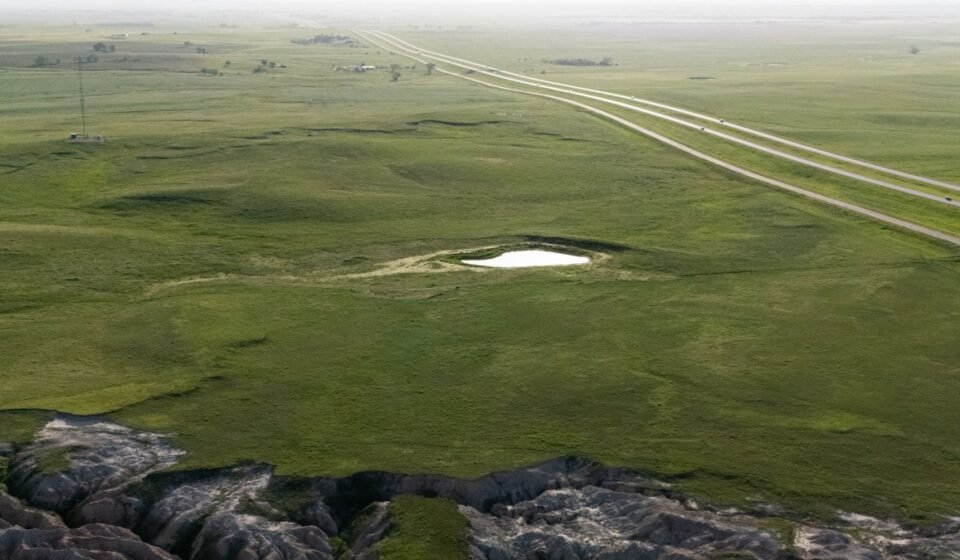

Yes, the Badlands are in South Dakota, inside Badlands National Park in the southwestern part of the state, about a 45-minute drive east of Rapid City on I-90. The confusion with North Dakota is fair since that state has its own, geologically unrelated badlands near Theodore Roosevelt National Park, but when someone says “the Badlands” as a single proper noun, they almost always mean this one.
I’ve worked out the overlook order below by driving Badlands Loop Road (Highway 240) at first light in three different seasons, watching where the sun actually hits the striped rock first versus where it’s still in shadow twenty minutes after sunrise. The park runs on Mountain Time, one hour behind Rapid City’s neighbors to the east feel but exactly in step with the rest of western South Dakota, and that hour matters more than people expect when they’re trying to catch the light before a tour bus does.
Entrance costs $30 per private vehicle for a seven-day pass, $25 per motorcycle, or $15 per person on foot or bike. If you’re hitting more than two or three national parks or monuments this year, the America the Beautiful annual pass ($80, covers everyone in the vehicle) pays for itself fast.
| Place | Best for | Getting there |
|---|---|---|
| Big Badlands Overlook | First light, easiest access | Right off I-90 Exit 131, 1 minute from the road |
| Pinnacles Overlook | Wide-open first stop from the west | Pinnacles Entrance, park’s northwest corner |
| Yellow Mounds Overlook | Color, not the classic spires | Highway 240, between Pinnacles and Conata |
| Door Trail | Walking into the formations | Door/Window/Notch parking area, near Cedar Pass |
| Window Trail | Quick payoff, low effort | Same lot as Door Trail |
| Notch Trail | The dramatic ladder climb | Same lot, trailhead marked separately |
| Panorama Point | Sweeping canyon views | East end of Loop Road, near Cedar Pass |
| White River Valley Overlook | Fewer crowds, deep valley views | Southeast section of Loop Road |
| Conata Basin Overlook | Wildlife and open prairie | West-central Loop Road, past Yellow Mounds |
Big Badlands Overlook, South Dakota
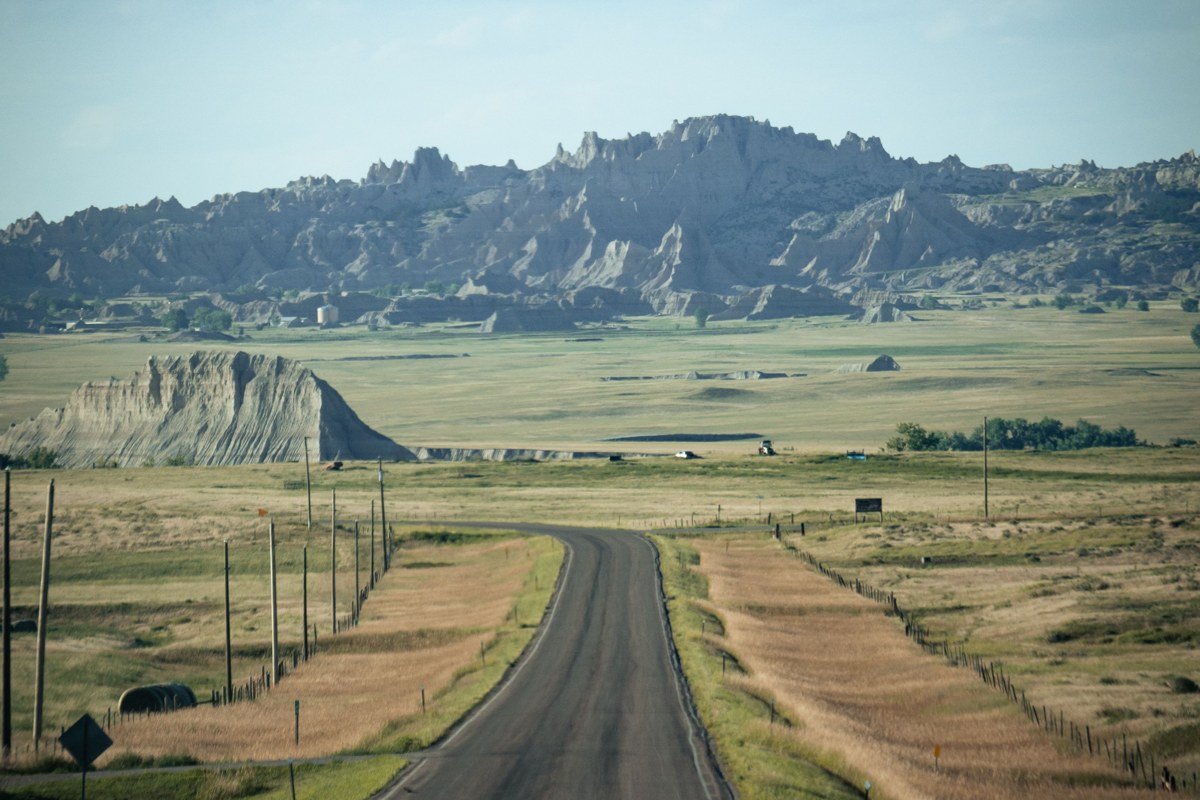
This is the one to hit first, and not because it’s the prettiest, but because it’s fifty feet from your car and it’s the closest formation view to I-90 Exit 131. If you’re driving from Rapid City and cutting it close on sunrise, this is your insurance policy. The light comes in low and orange across the eroded buttes, and because it’s the first overlook most people reach, you’ll often have it half to yourself for the first ten minutes after the sun clears the horizon. Don’t linger past that. The parking lot fills fast once the interstate crowd wakes up.
Pinnacles Overlook, South Dakota
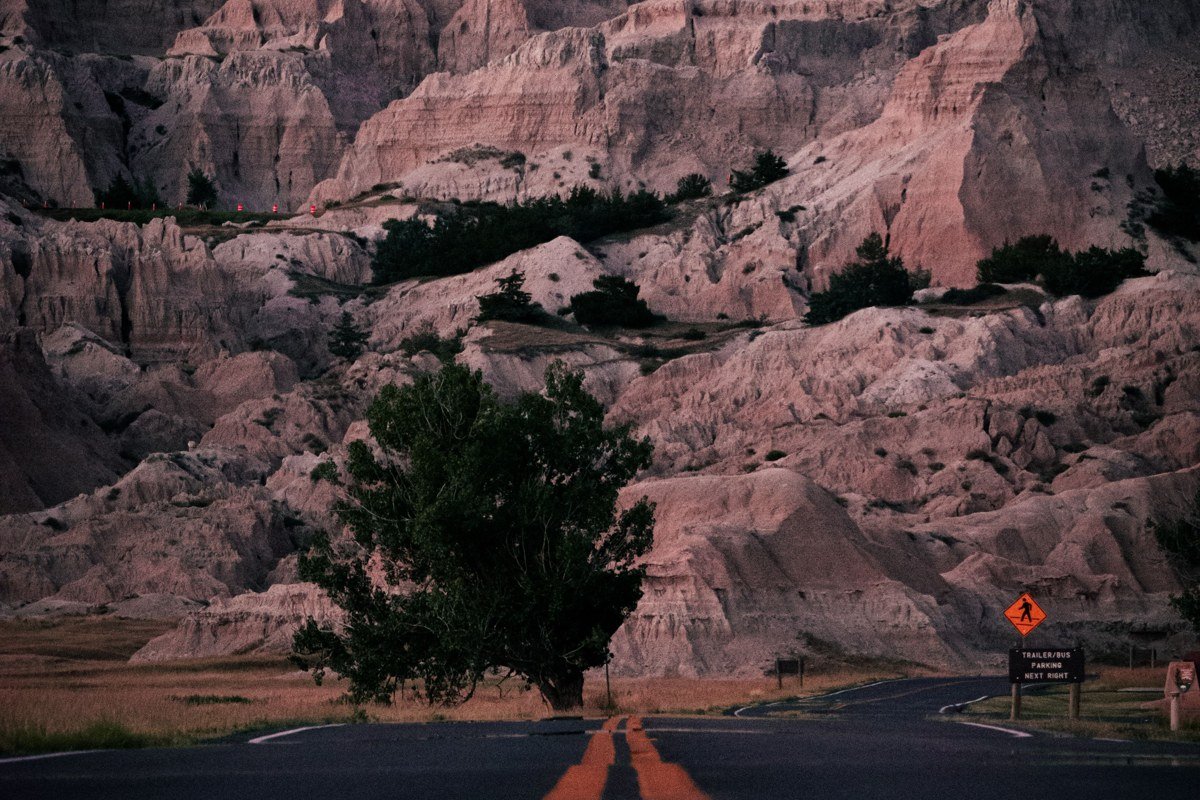
If you’re coming in through the Pinnacles Entrance on the park’s northwest side, this is your first real look at the scale of the place, a wide, jagged basin that drops away below a simple rail fence. It works best about fifteen to twenty minutes after actual sunrise, once the light has climbed enough to reach into the folds of the canyon rather than just skimming the top edges. This entrance sees far less traffic than the interstate-adjacent side of the park, which makes it the better choice if solitude matters more to you than convenience. I watched a small herd of bighorn sheep work along the rail fence line here on a September morning, well before any other cars had pulled in. There’s a small ranger station here that’s seasonal, so don’t count on it being staffed for information in shoulder months.
Yellow Mounds Overlook, South Dakota
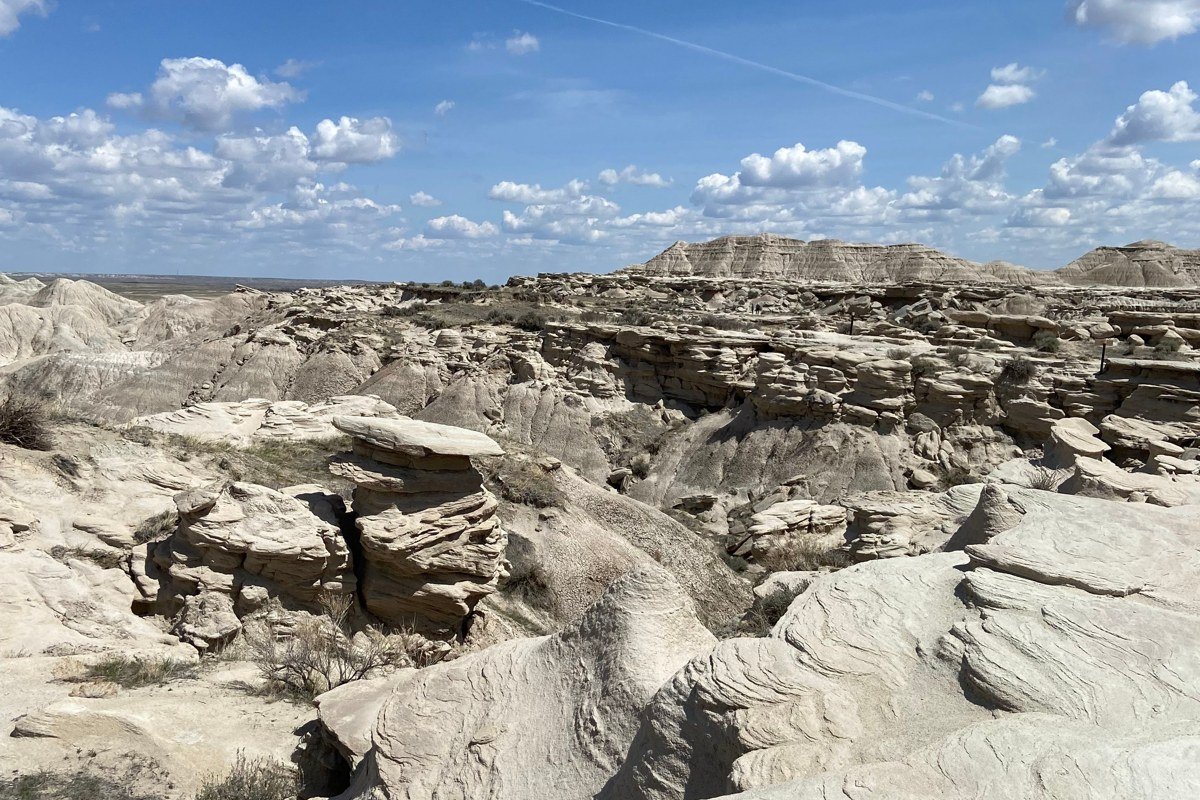
Most Badlands photos you’ve seen are gray and white spires. This overlook is the exception, and people underrate it because it doesn’t match the postcard. These rounded hills are ancient fossilized soil (a paleosol), streaked in mustard yellow and a dusty red-orange that some park literature calls “scoria red,” and they hold warm color for longer after sunrise than the paler formations do. Come here second or third on your loop, once the sun is a little higher and the yellow tones have fully lit up. It’s a pull-off, not a hike, so it costs you five minutes at most.
Door Trail, South Dakota
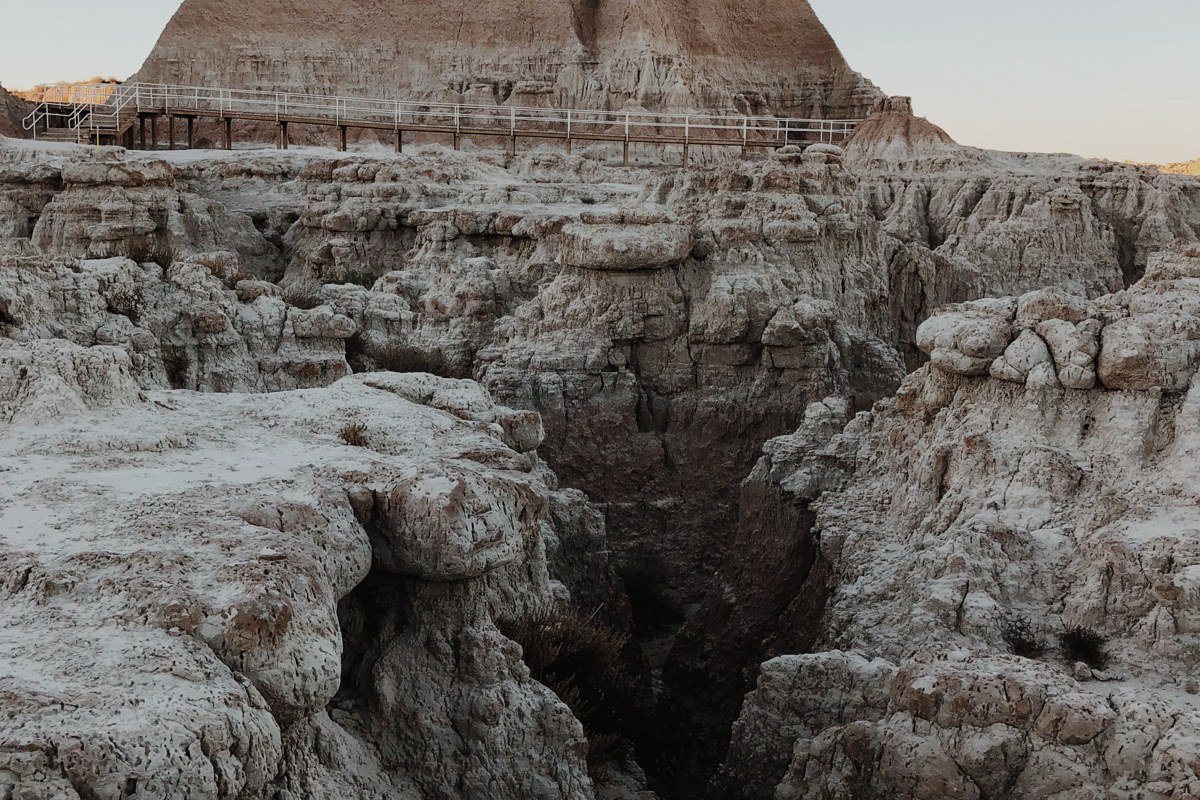
The Door Trail starts as a boardwalk and then dumps you straight into the formations themselves, no permit or reservation needed, just the standard park entrance fee. It’s short, under a mile round trip, and it’s the best sunrise option if you want to be inside the landscape rather than looking at it from a rail. Wear real shoes; the trail past the boardwalk is unmarked, crumbly, and slick if there’s been recent rain. This is also the trail I’d send someone to if they only have one sunrise and want photos that don’t look like everyone else’s.
Window Trail, South Dakota
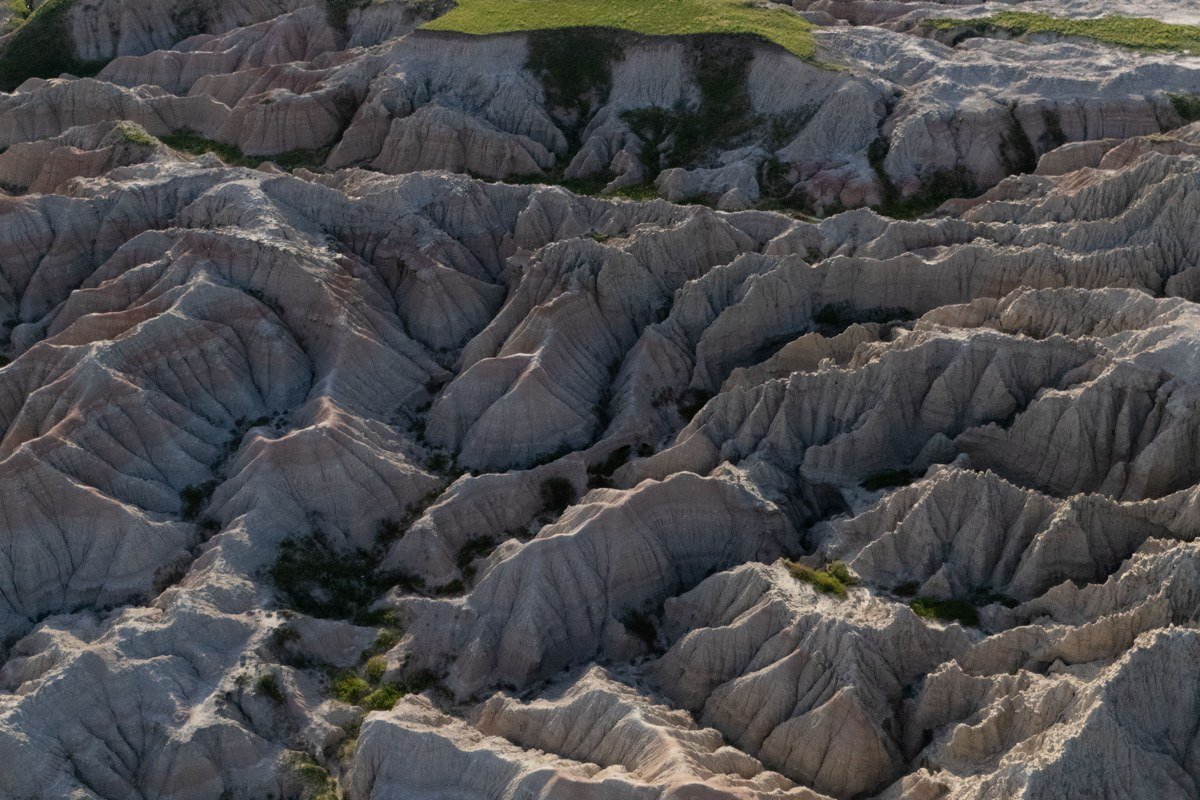
Same parking lot as Door Trail, but this one is a flat, five-minute walk to a natural opening in the rock that frames a canyon view like a rough window. It’s the easiest payoff-to-effort ratio in the entire park, which makes it the one to do with kids, older relatives, or anyone who’s skeptical about getting up before dawn for a rock formation. Get here in the first half hour of light and the frame itself glows warm while the canyon beyond is still cool and shadowed, a contrast that’s hard to get later in the day. Skip it at midday; the flat overhead sun drains all the shape out of the scene.
Notch Trail, South Dakota
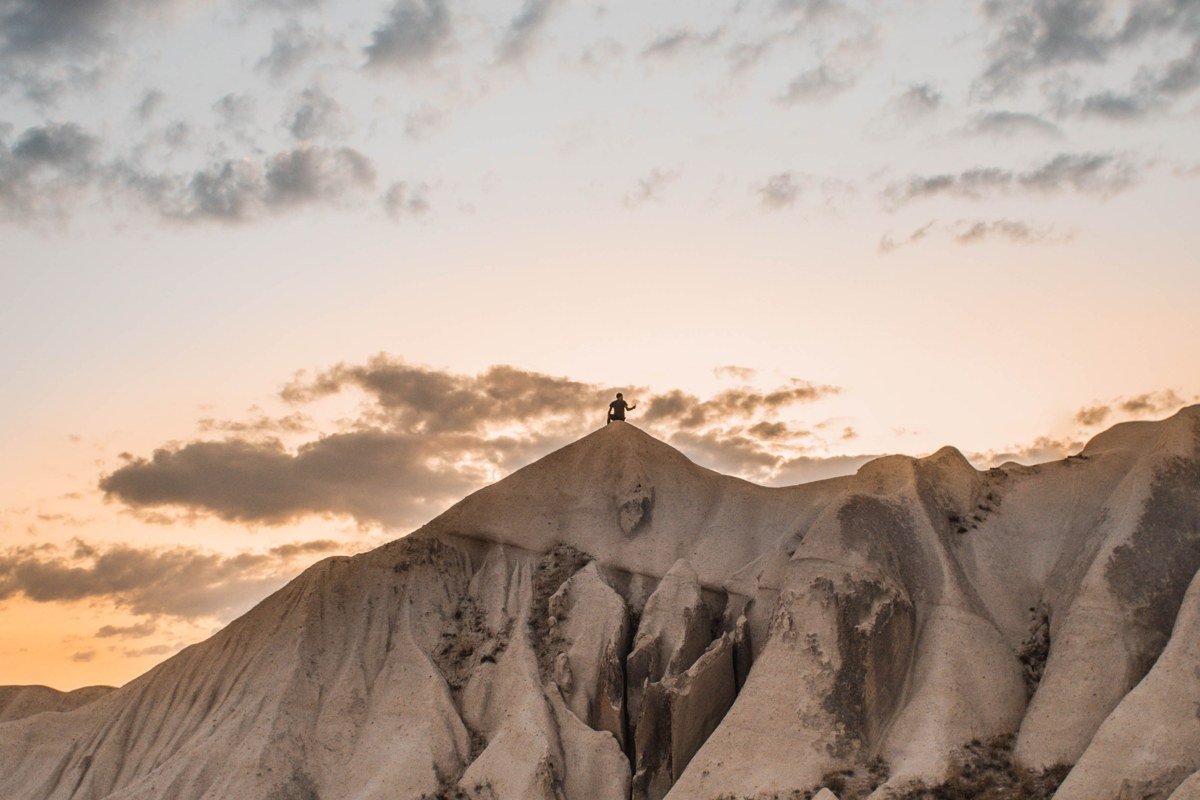
This is the trail people call the “real” Badlands hike, and it earns that reputation with a wooden log ladder, roughly 30 feet long, bolted to the canyon wall, that you climb to reach a ledge overlooking the White River Valley. Past the ladder, the trail narrows to a path with maybe two or three feet of clearance along the drop-off before it opens back up. Do it early both for the light and because the ladder and narrow ledge get uncomfortably crowded by mid-morning in summer. Budget close to an hour round trip if you want to actually stand at the notch and watch the valley light up rather than just tag it and turn around.
Panorama Point, South Dakota
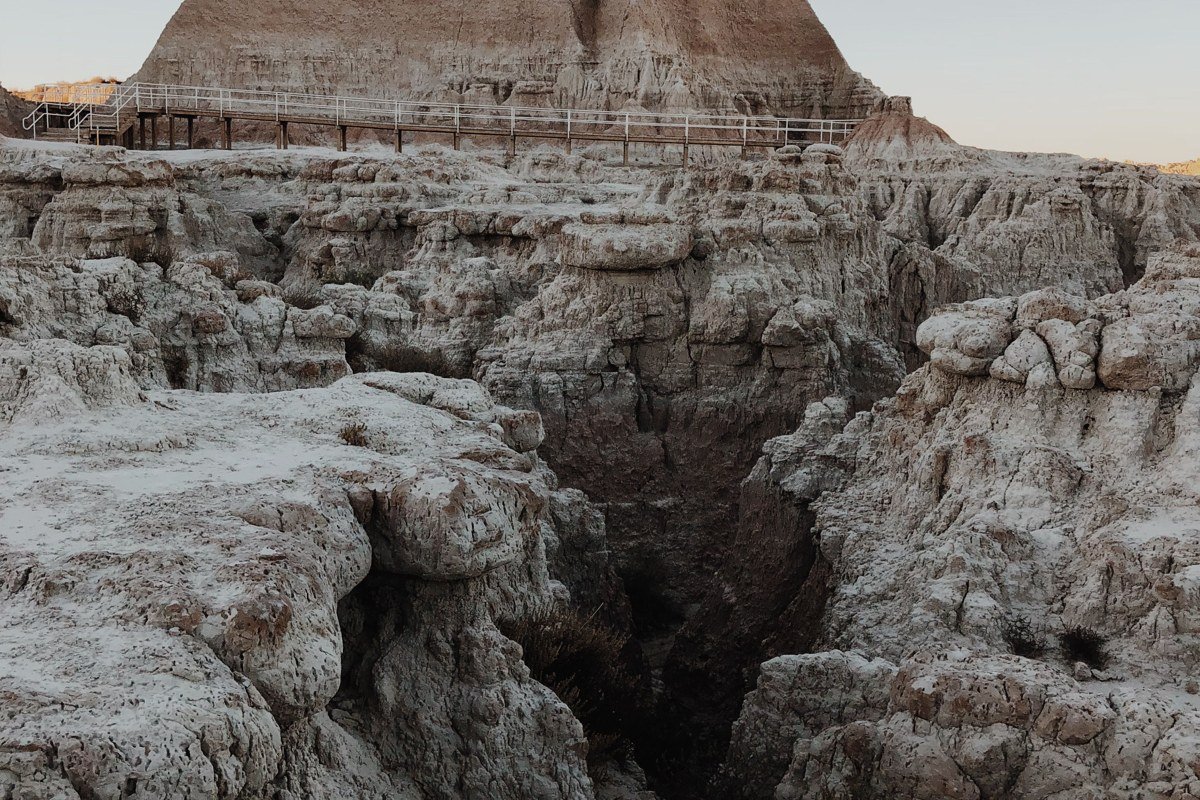
Near the Cedar Pass area toward the east end of Loop Road, Panorama Point does what its name promises: a long, open view across a canyon system that stretches farther than most single overlooks in the park. This is a strong spot if you’re staying at Cedar Pass Lodge, the only in-park lodging, since you can walk or drive here in minutes without needing to plan a whole loop drive around dawn. The lodge closes for the season in mid-October and reopens in mid-April, so if a South Dakota winter Badlands sunrise is the plan, you’re staying outside the park and driving in in the dark. That’s fine; the roads are paved and well-marked, just budget extra time for ice.
White River Valley Overlook, South Dakota
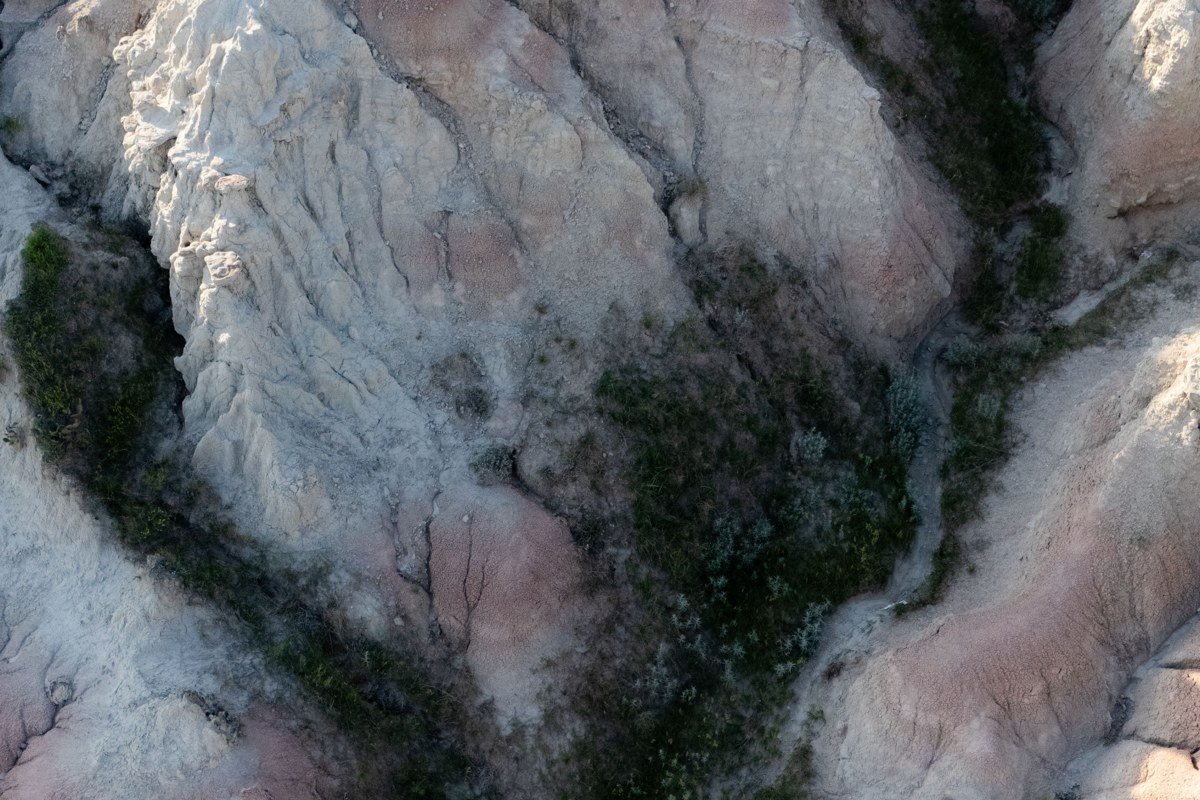
This overlook sits in the park’s southeast section and gets a fraction of the visitors the western overlooks do, mostly because it’s a longer drive from either entrance and doesn’t sit directly on the most-traveled stretch of Loop Road. That’s exactly the appeal. The valley drops deep and wide here, and on cool mornings there’s often a thin haze sitting in the low ground that burns off within the first hour of sunlight, adding a soft depth to photos you won’t get elsewhere in the park. If you’ve already done the big-name overlooks on a previous trip and want something quieter, this is where I’d send you.
Conata Basin Overlook, South Dakota
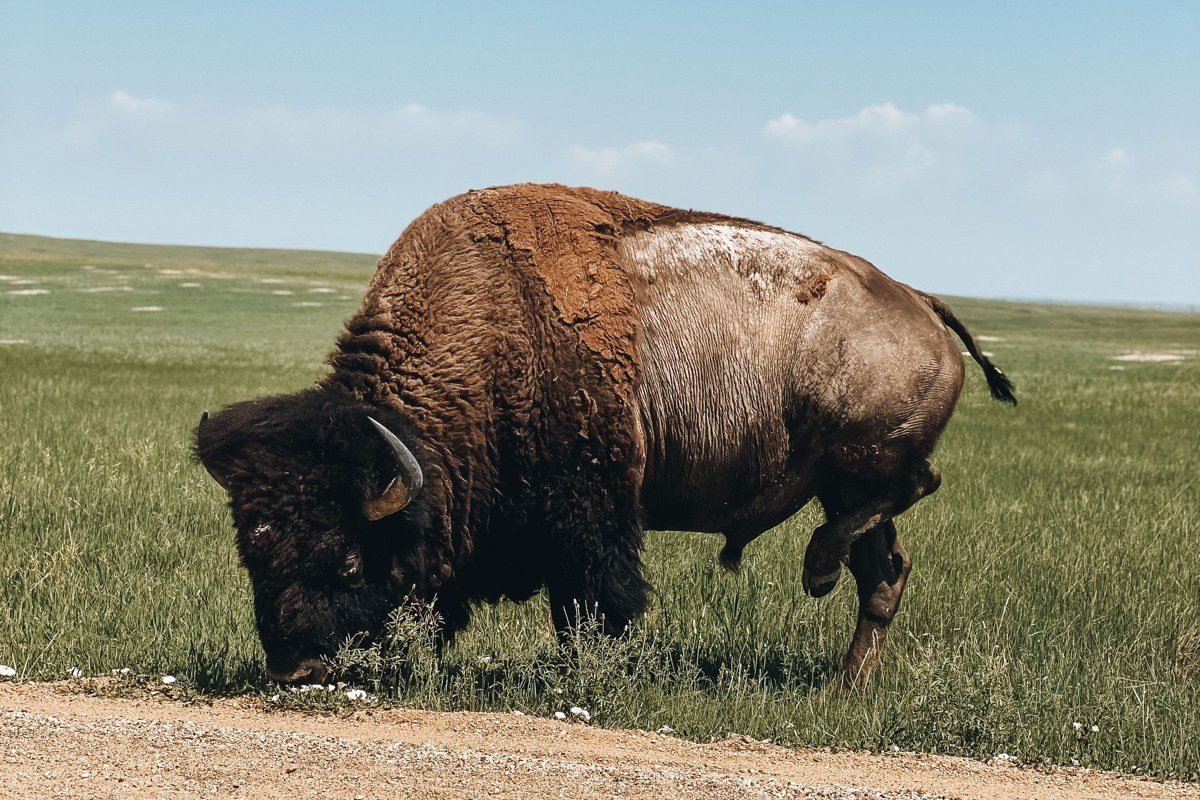
Conata Basin is less about the rock and more about what’s living in front of it: an open prairie basin that’s one of the better spots in the park for spotting bison, bighorn sheep, and prairie dogs, especially in that first hour of light when animals are most active and the heat hasn’t pushed everything into shade. It’s also part of the black-footed ferret reintroduction effort that began here in the 1990s after the species was rediscovered in Wyoming in 1981, though the ferrets themselves are nocturnal and not something you’ll casually see. Treat this stop as fifteen minutes with binoculars rather than a photo-first overlook, and you’ll get more out of it.
FAQ
What’s the best time of year to visit Badlands National Park?
Late spring and early fall give you cooler temperatures, thinner crowds, and softer light than the peak of summer, when it regularly hits triple digits by early afternoon. Summer is still the most reliable window for open facilities and services, but if you can shift your trip to May, September, or early October, do it.
How far is Badlands National Park from Mount Rushmore and Rapid City?
Rapid City to the park’s Pinnacles Entrance is roughly 45 to 50 minutes on I-90, and Mount Rushmore is another 30 to 40 minutes past Rapid City, making a Badlands sunrise plus Rushmore afternoon a realistic single-day pairing. Most people base themselves in Rapid City and day-trip both.
Where should I stay near the Badlands?
Cedar Pass Lodge is the only lodging inside the park and puts you closest to sunrise, but it’s seasonal (mid-April through mid-October) and books up well ahead for summer. Otherwise, Wall, South Dakota, sits just north of the park and has budget-friendly motels, or you can base in Rapid City and accept the extra 45-minute drive each way.