
Show up on the wrong morning and the Badlands look like a parking lot with a view. Show up when the air temperature drops fast after a warm day, when a cold front slides through overnight, or when a late-summer rain is drying off the grasslands, and the canyons fill with fog that pools in the low channels like water. Timing matters more here than at almost any other spot in this misty-America series, because the fog window at each overlook can be a single hour on a single kind of morning. This is one of the most beautiful places in the US to visit precisely because so few people plan around that fact.
A practical note before any of this: entrance is $30 per vehicle for a seven-day pass, or free with an interagency annual pass, at the Pinnacles, Northeast, and Interior entrance stations. Cedar Pass Lodge rooms run roughly $150 to $200 a night in peak season and book out months ahead for September and October weekends. Cedar Pass Campground takes reservations through recreation.gov; Sage Creek Campground, out on the gravel western edge, is first-come, free, and has no potable water.
Big Badlands Overlook, South Dakota, best in mid-to-late September
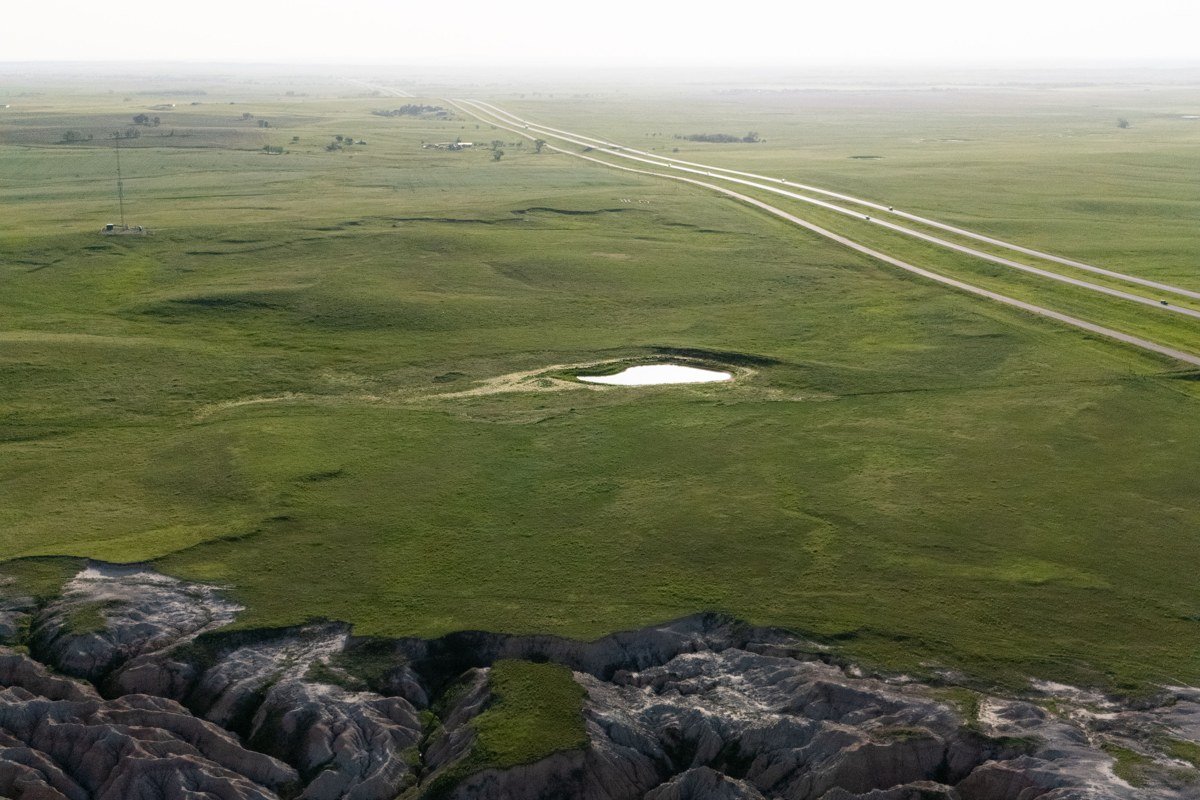
I pulled in here on September 27 a few years back, half-asleep, expecting nothing, and watched a fog bank rise out of the draw below the rim like someone had opened a vent. It lasted maybe twenty minutes before the sun burned it off. This is the first overlook you hit coming from the Pinnacles entrance, just off I-90 near Wall, and it earns its spot on this list mostly because of how easy it is to find in the dark. Mid-to-late September brings cool nights and still-warm soil, a combination that (in my experience, and echoed by park rangers at the visitor center talks) tends to push ground fog up out of the draws. Go in July and you will get heat shimmer and a lot of RVs by 8 a.m. instead. Stay the night before at Cedar Pass Lodge or the campground so you are not driving in groggy from Rapid City, about an hour west.
Door Trail Overlook, South Dakota, best in early October
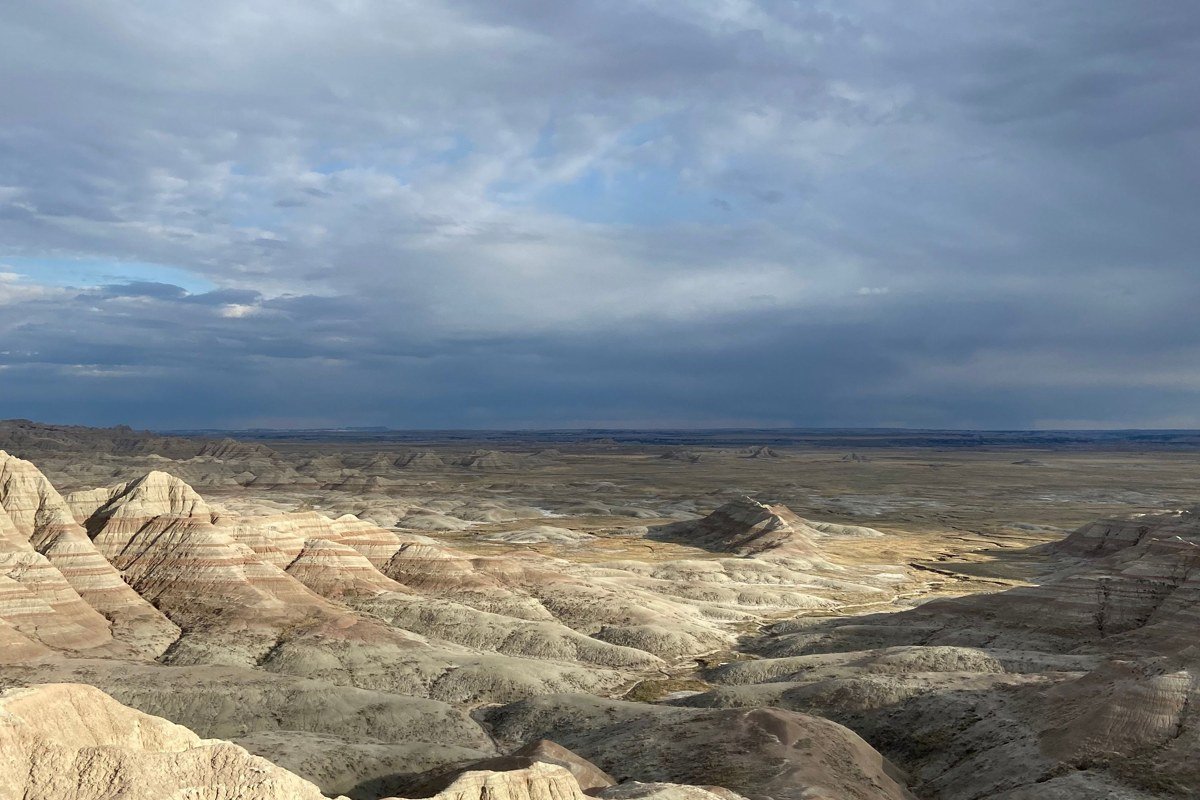
Early October is the sweet spot: the park has emptied out after Labor Day, and the day-to-night temperature swing widens enough to condense fog into the Door’s jagged opening in the wall. Walk the first quarter mile on the boardwalk, then push onto the yellow-marked trail into the formations themselves, where fog settles between the spires rather than just hovering over the rim. Bring a polarizer if you’re shooting past sunrise; it cuts the haze that builds once light starts hitting the moisture directly and will save the color in the rock. Outside this window you mostly trade fog for crowds in summer, or for wind that scours the moisture out not long after sunrise once you get into late October. There is no separate fee booth at this trailhead, just the general park pass, so the only real planning is arriving before the light hits the rock.
Notch Trail Overlook, South Dakota, best in late September at dawn
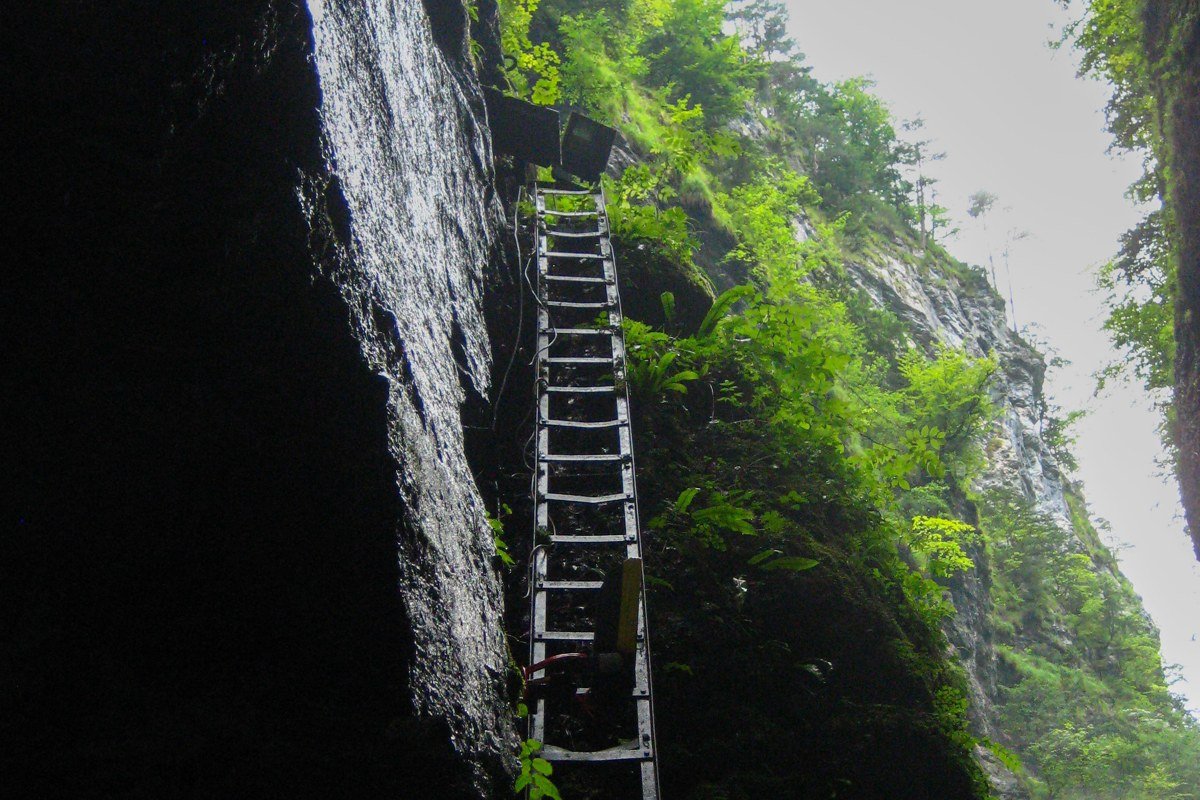
The log ladder and the ledge walk make this one feel earned. At dawn in late September, the canyon floor below the notch often holds a fog layer while you stand in clear air above it, an inversion effect that is the whole reason this series exists. It’s a short trail, under two miles round trip, but don’t attempt the ladder in true darkness; wait for first light even if it costs you the earliest color in the sky. Midday here in summer is genuinely miserable, full sun on pale rock with no shade anywhere on the route. The payoff window is narrow, generally the hour or so after sunrise in late September, so this isn’t a stop for lingering over coffee beforehand.
Pinnacles Overlook, South Dakota, best in late September to early October
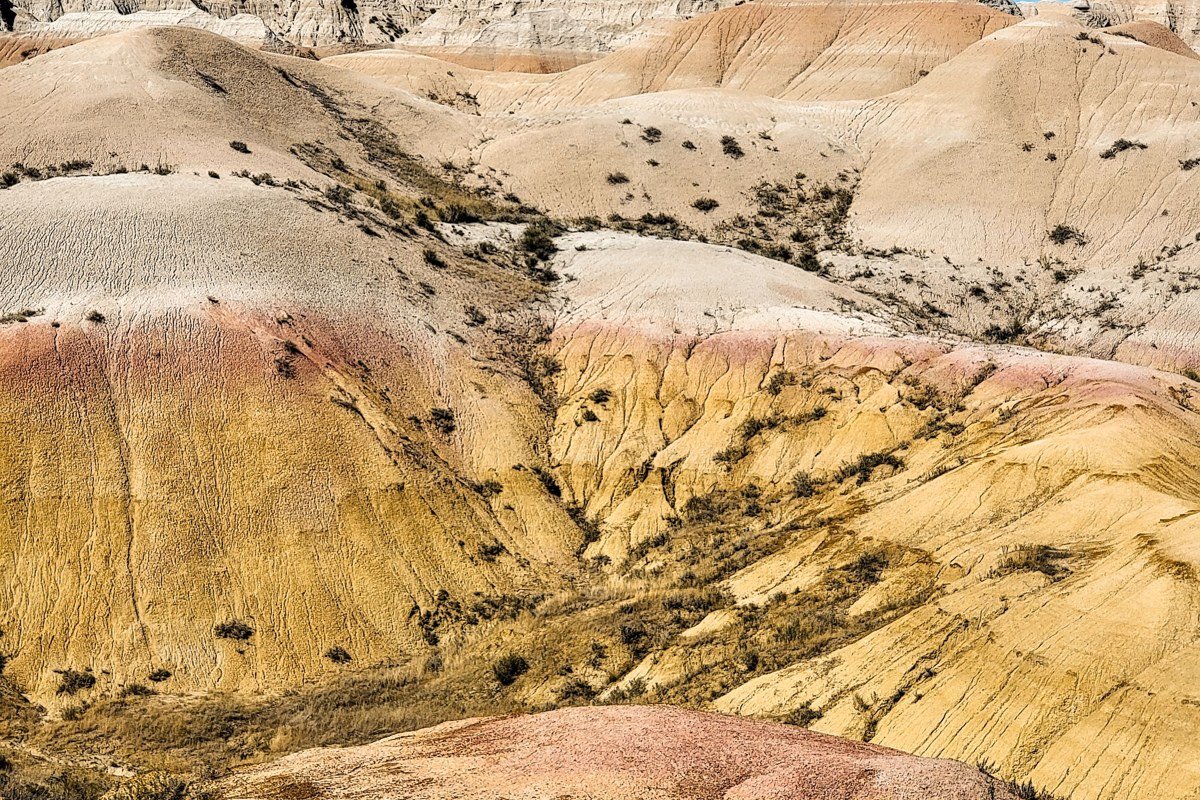
Pinnacles sits near the park’s northwest entrance and gives you the widest sweep of any overlook on this list, which matters because fog pooling here is a landscape-scale event, not a single-canyon one. I sat at Pinnacles on September 28 one year and watched the whole fog bank shift and thin as the sun climbed, filling back in behind buttes that had been clear just minutes before. It was less like watching weather and more like watching the land breathe. This is also the overlook to pick if your first choice elsewhere turns out to be a total whiteout, since the wider vantage gives you something to shoot regardless. For photographers: a mid-range zoom (24-70mm equivalent) handles the layered buttes better than a wide-angle, which tends to flatten the fog into a single gray band. The gravel pullout fits maybe a dozen cars comfortably, so get there by first light on peak fall weekends or you’ll be parking on the shoulder.
Panorama Point, South Dakota, best in late September
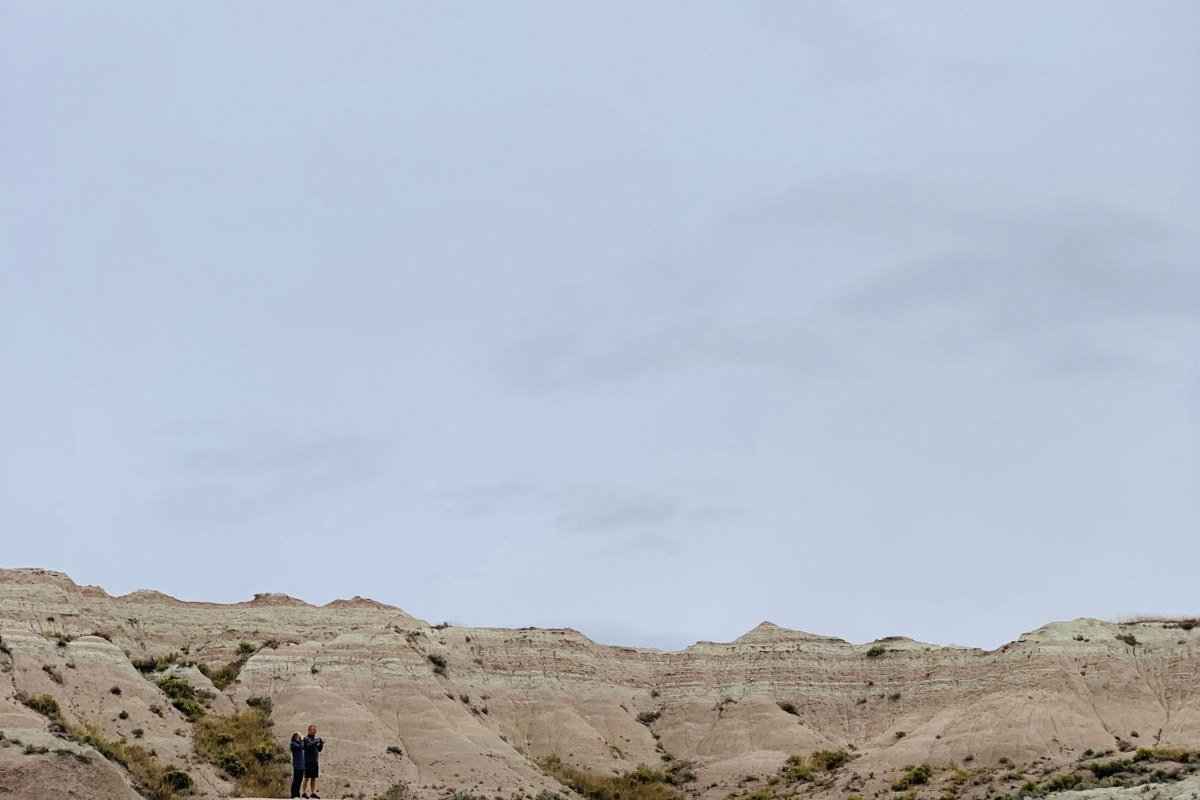
Panorama Point lives up to its name on a clear morning, but its real value in fog season is elevation. You’re looking down into a broader valley system than at the smaller pullouts, so even a thin fog layer reads as a visible, photographable line instead of just haze. Late September tends to work best, when daytime highs are still warm but nighttime lows have started dropping into the 40s. Winter can produce fog here too, but the loop road occasionally closes after storms and ices over fast, so check conditions before committing to a pre-dawn drive in that season. There’s no entrance station at this end; if you’re coming from Rapid City via Highway 44, pay ahead at Pinnacles or Interior.
Yellow Mounds Overlook, South Dakota, best in late September, about an hour after sunrise
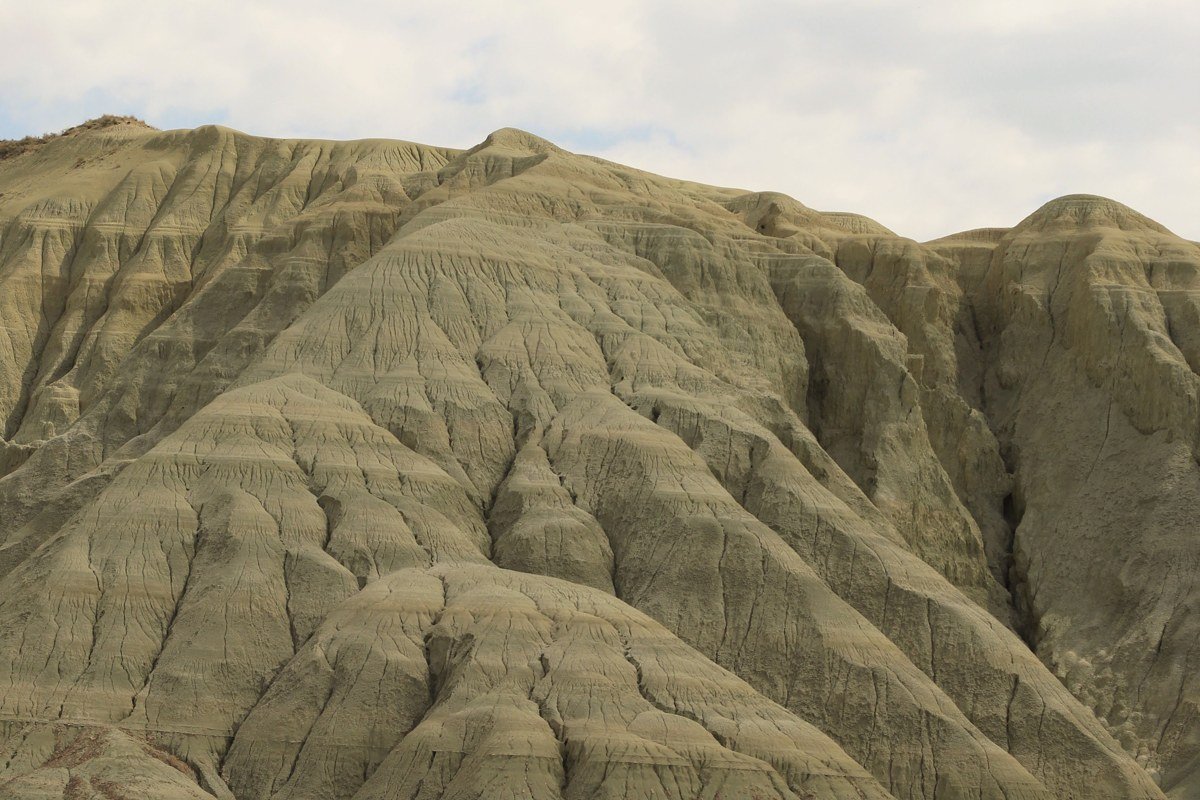
Yellow Mounds is the one overlook on this list where you want to arrive later than the others. The mustard-and-rust hills here (ancient soil layers, not the gray Badlands rock) photograph best once the fog has started lifting, roughly 45 minutes to an hour after sunrise, catching soft light without the flat gray of full fog cover. A warm polarizing filter helps pull the rust tones forward once the mist thins. Go too early and the color stays muted under the haze; go too late, and you lose the mist along with the long shadows that define the mounds’ texture. It’s a natural second or third stop on a morning loop, after you’ve caught the pooling fog elsewhere first.
Conata Basin Overlook, South Dakota, best in late September at dawn
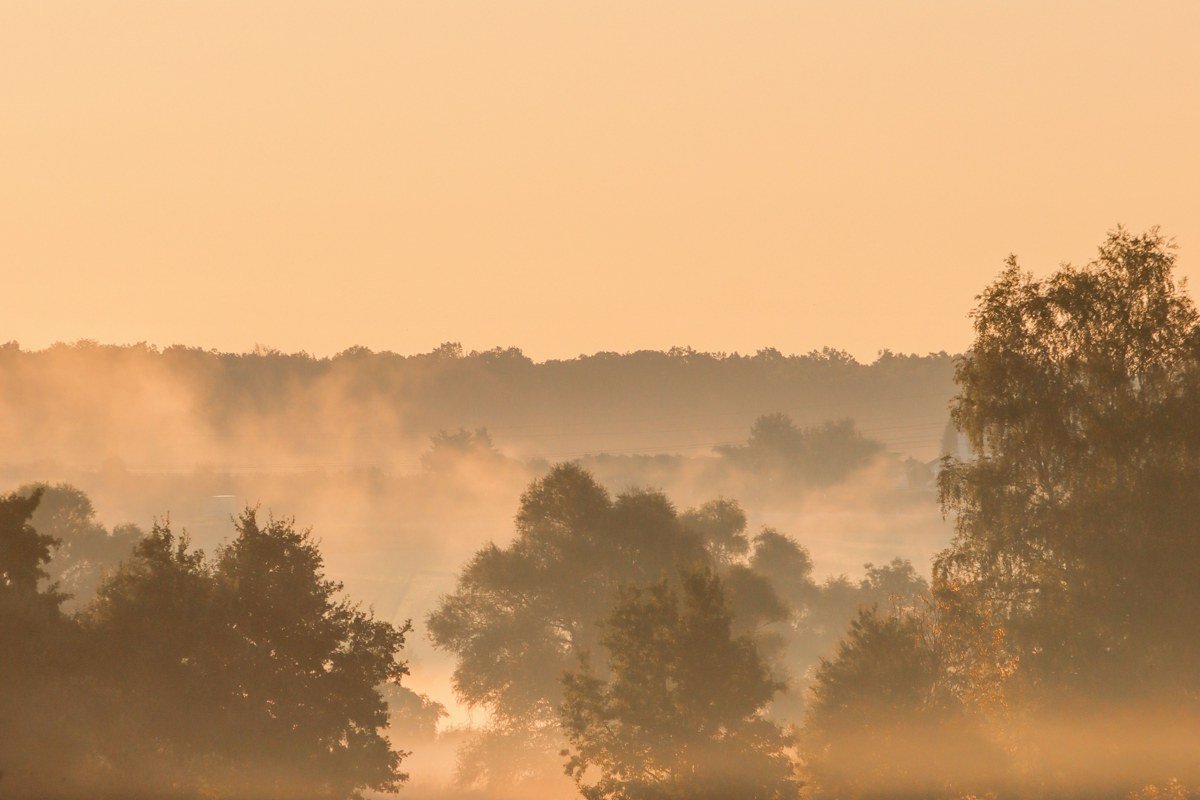
Conata Basin looks out over prairie and reintroduced black-footed ferret habitat rather than the classic spire formations, and most visitors skip it entirely. That’s the appeal. On a foggy late-September dawn you can have the pullout to yourself while fog sits low over the grassland in a way that feels closer to the open Great Plains than to a national park postcard. It’s a short detour off the main Badlands Loop Road (Highway 240), adding maybe 15 minutes each way, which is exactly why it gets overlooked and exactly why it’s worth the extra time. There’s no facility here at all, not even a vault toilet, so plan accordingly before leaving Cedar Pass.
White River Valley Overlook, South Dakota, best in early October
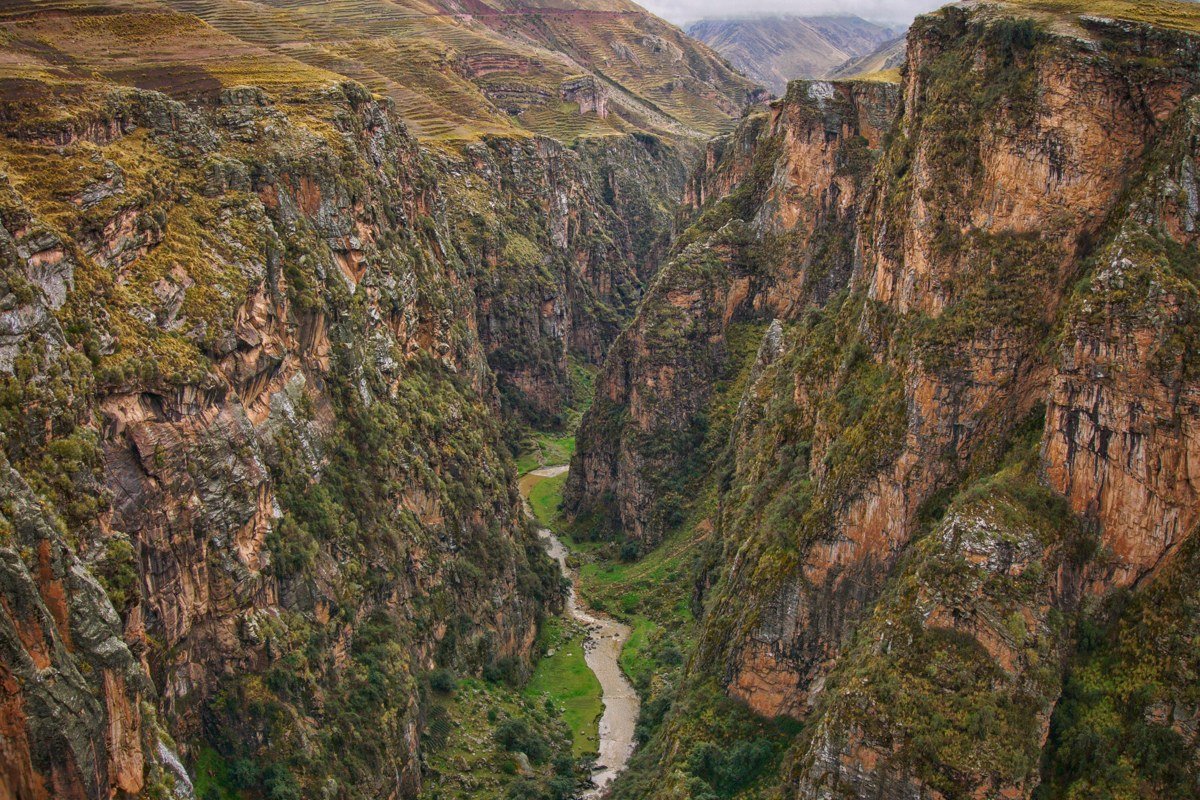
This southern-loop overlook faces the White River itself, and because there’s actual moving water nearby, the fog behaves differently: river mist mixes with canyon fog from the drier formations above it, producing layered effects you won’t see at the northern overlooks. Early October mornings, after the first real cold snap of fall, tend to be the most reliable window. The road out is a longer haul than most on this list, and it’s one of the first sections of the loop to see winter closures, so treat this as a fall-only recommendation rather than a year-round stop. Fill your gas tank in Interior before heading out; there’s nothing out this way.
Sage Creek Rim Road Overlooks, South Dakota, best in late September to mid-October, after rain
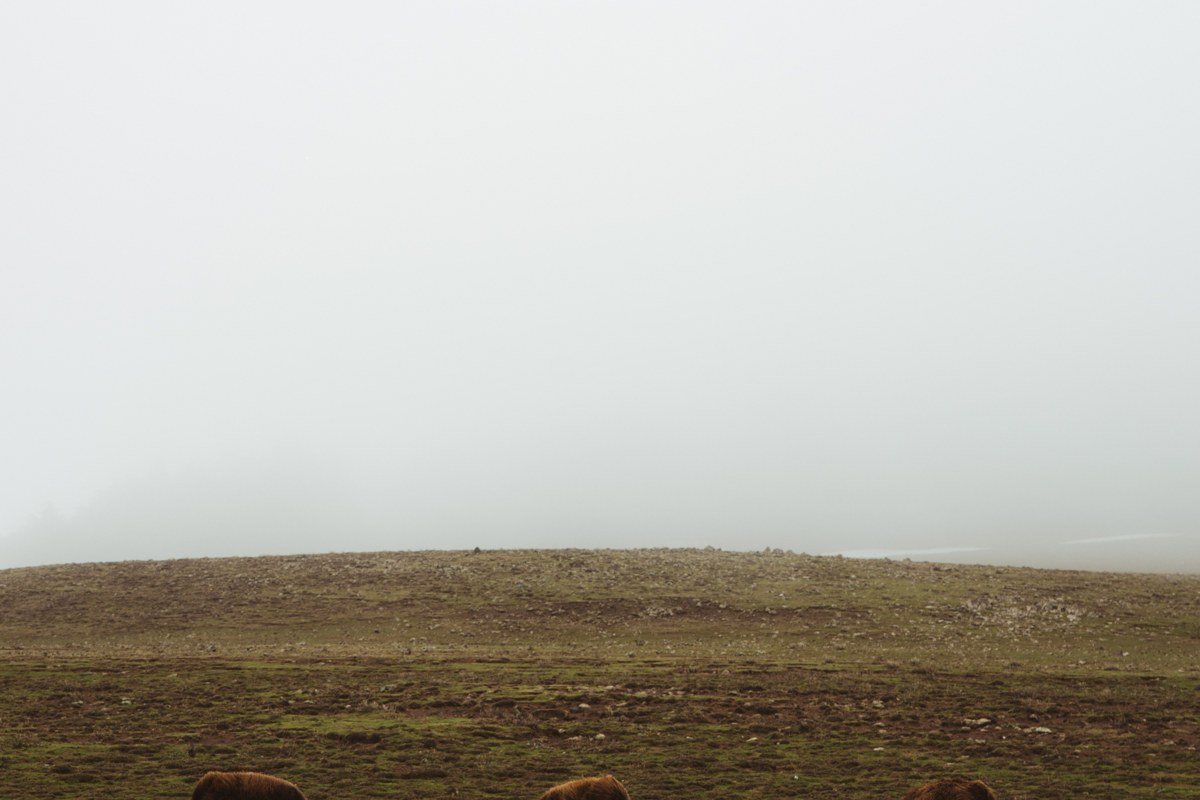
Sage Creek Rim Road is unpaved, a washboard gravel stretch along the park’s wilder western edge, and it rewards exactly the weather that makes other roads miserable: a passing overnight rain followed by a clear, cool morning. Fog here tends to hang low over open grassland rather than pooling dramatically in canyons, and it’s often mixed with the chance of bison emerging through the mist, which nothing else on this list offers. The road gets genuinely difficult, sometimes impassable, after heavy rain, so call the visitor center before you go rather than deciding spontaneously; conditions change overnight and there’s no cell service once you’re out on it. Mid-October can still work here even after fog season has thinned out elsewhere, since the open basin holds its own microclimate longer than the rimrock overlooks do.
Month by month
- January through March: skip for fog; icy loop road sections, short days, though Yellow Mounds and Pinnacles are still worth a clear-sky winter visit
- April: transitional, occasional fog after spring storms, unreliable but the park is nearly empty
- May: green-up on the grasslands, fog rare, better for wildflowers than mist
- June through August: heat, crowds, fog essentially absent, visit before 6 a.m. if you go at all
- September: the real season begins mid-month, with Big Badlands Overlook, Notch Trail, Conata Basin, Panorama Point, and Yellow Mounds all in play
- Early October: peak window overall, best for Door Trail, White River Valley, Pinnacles, and Sage Creek Rim Road
- Mid-to-late October: still good, thinning crowds, Sage Creek Rim Road often the last reliable spot
- November: hit or miss, cold enough for fog but roads start closing after storms
- December: rare clear, cold mornings can produce ice fog, but plan for closures and call ahead first