
Somewhere on a harbor wall in the Greek islands there is a door painted the particular shade of faded blue that no filter has ever quite captured, and the fishing boat reflected in the water below it belongs to someone who will be back for it by noon. If you have been trying to find that image without standing in a crowd to get it, the islands on this list are where it still exists. Each one is deeply, stubbornly itself.
1. Folegandros, Cyclades
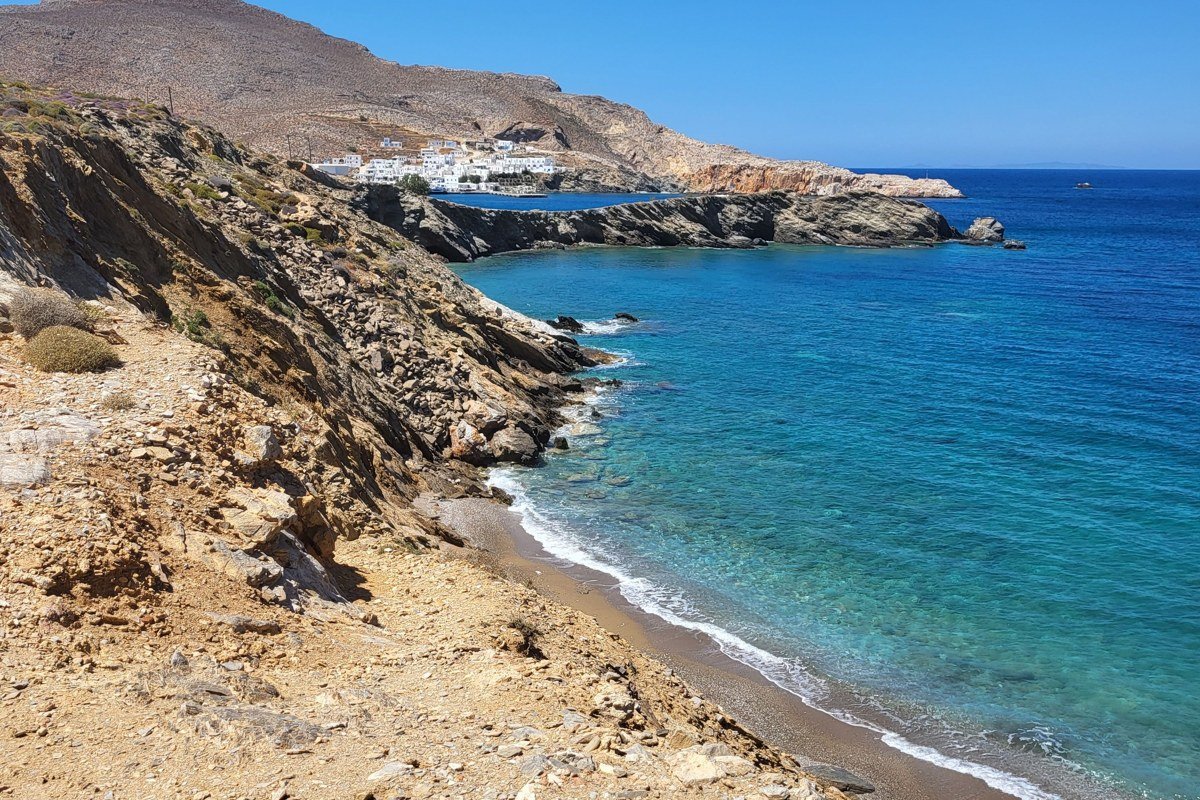
Folegandros sits on the edge of the Cyclades like it is daring you to make the trip. The Chora, perched on a sheer cliff nearly 300 meters above the water, has not been softened by souvenir shops or international hotel chains. The streets are narrow enough that two donkeys cannot pass each other comfortably, and that is still the actual governing width constraint in parts of the old town. The single best thing to do here is walk the path from Chora down to Agios Nikolaos beach at dusk, when the pink light catches the terraced fields and the sea below turns the color of old copper. Ferries from Piraeus and Santorini run regularly, but services drop sharply after October, so arriving in late September gives you nearly empty beaches with water still warm enough to swim.
Shooting note: The cliff face below Chora faces west and catches direct afternoon sun from around 3 p.m. onward. Position yourself on the path toward Agios Nikolaos rather than shooting back from the village square, and the terraced rock drops into the frame cleanly with no rooftop clutter.
Skip it if: you need reliable daily ferry connections. Folegandros runs on its own schedule, and weather cancellations in shoulder season are common enough to plan around.
2. Ikaria, Eastern Aegean
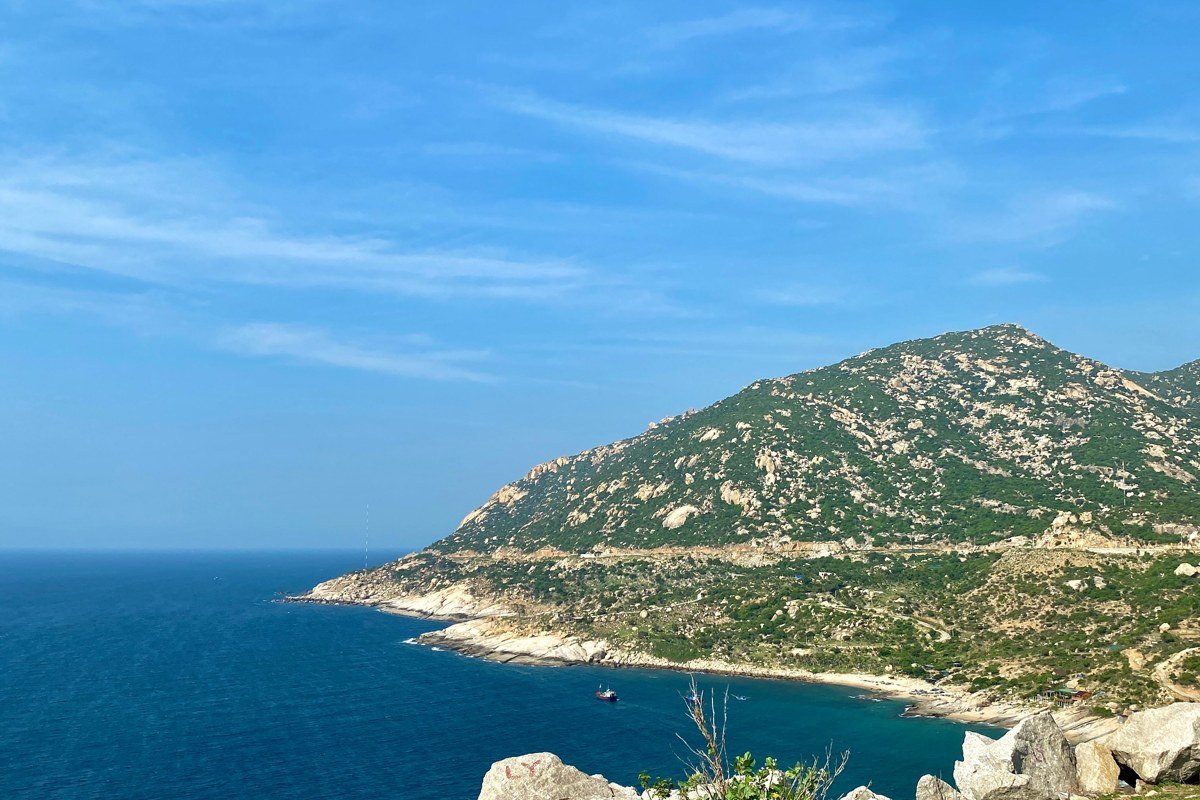
The old man refilling your wine glass at a panigiri in Raches probably does not know he is part of a longevity study. He just knows the music started two hours ago, the dancing is still going, and it is well past midnight. That is closer to the truth of Ikaria than any research paper: the island runs on a rhythm that is genuinely indifferent to the outside world’s schedule. The landscape reinforces it, dense pine forests spilling down to rocky coves, Byzantine-era thermal baths still used daily by locals, and a road network that feels like it was designed to discourage urgency. The photogenic pull is specifically the northern coast around Nas, where a river mouth meets the sea inside a small sheltered bay framed by pink oleander. If a panigiri overlaps with your dates, go. They are free, they start after midnight, and locals will hand you wine before you have introduced yourself. Avoid the peak of August if you want any sense of the island’s actual character.
Shooting note: The bay at Nas is northeast-facing, which makes it a flat-light morning location. Arrive early enough to catch the river current meeting the incoming tide; the two textures of water read clearly in calm conditions before the afternoon wind picks up.
3. Halki, Dodecanese
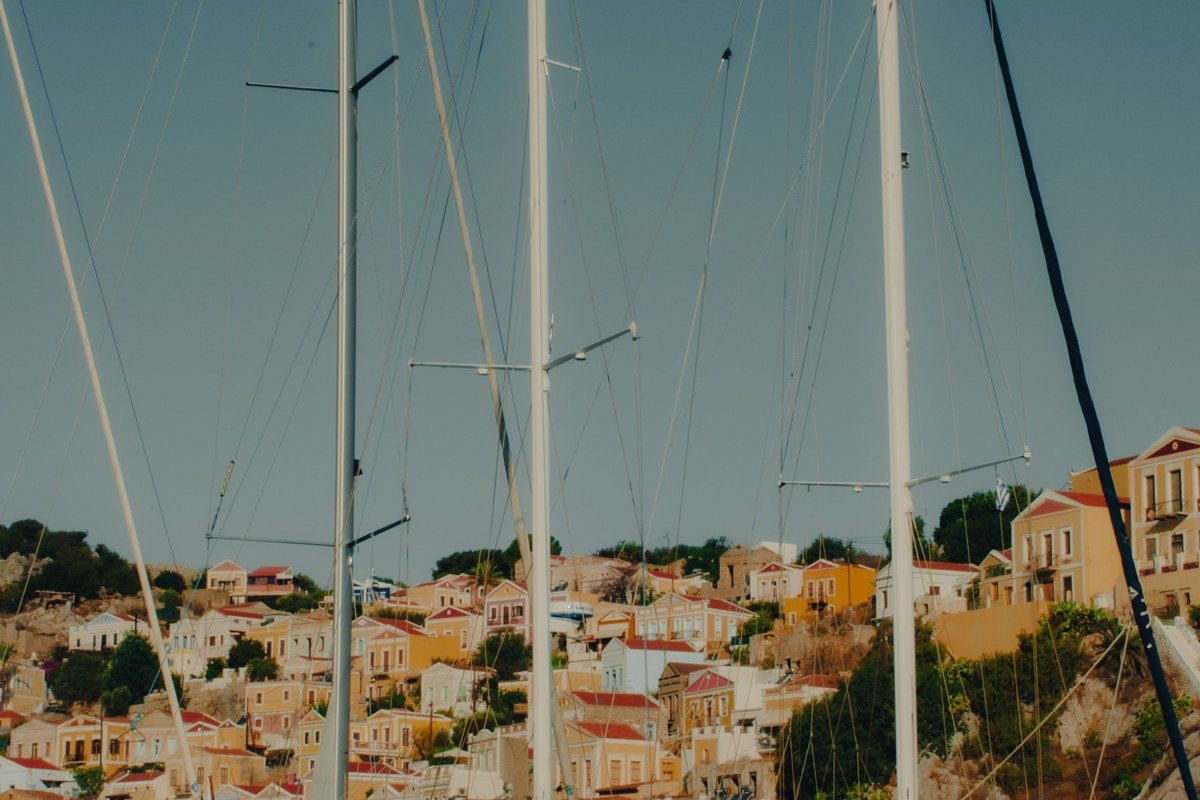
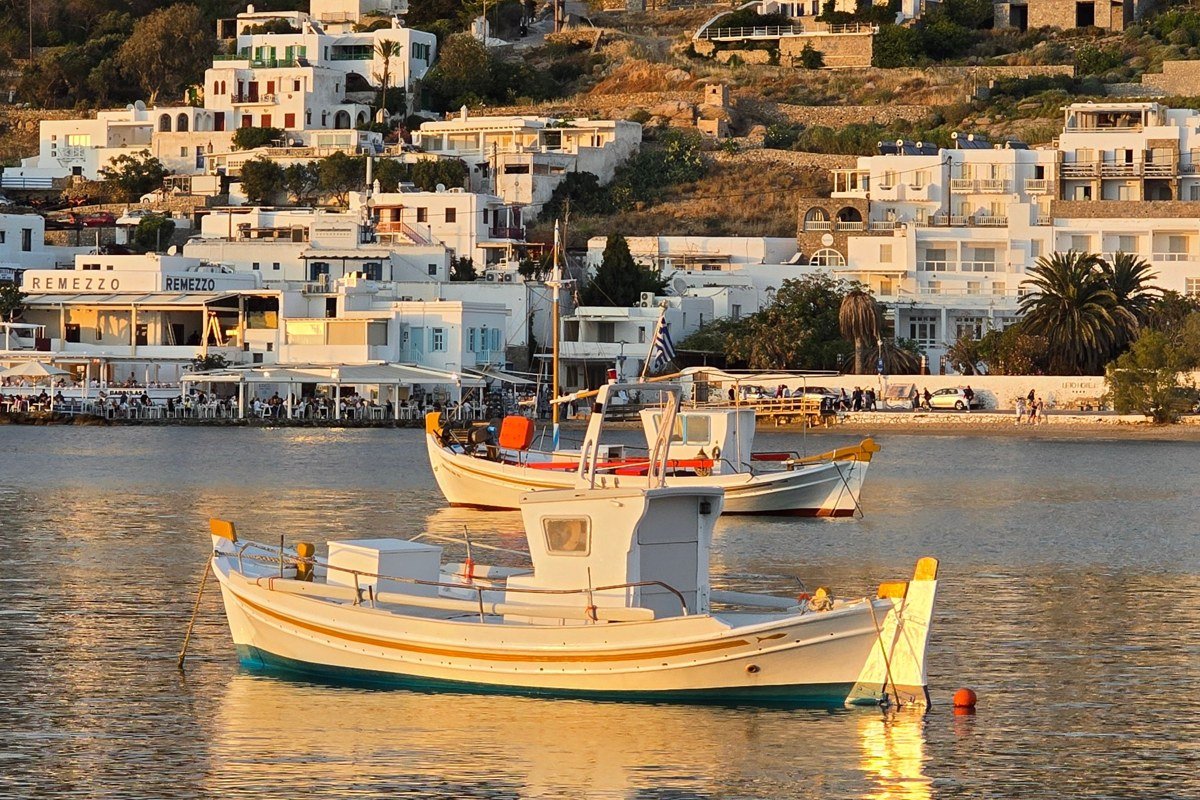
Halki is a tiny island off the northwestern tip of Rhodes that receives a fraction of Rhodes’ tourist traffic despite being a forty-five-minute ferry ride away. The harbor front at Nimborio is lined with neoclassical mansions built by wealthy sponge merchants in the nineteenth century, painted in faded ochre, terracotta, and dusty rose. Many have been restored but not over-restored; the peeling shutters and sun-damaged paint are part of the composition. There are no cars on the island (only a small number of utility vehicles are permitted), so the silence is a genuine feature of the place, not a marketing claim. Walk to the abandoned hilltop village of Horio in the morning before the heat sets in, and you will have the ruined windmills and the view over the strait completely alone. The island has almost no nightlife, which is either a warning or the whole point, depending on who you are.
Shooting note: The harbor at Nimborio faces roughly northeast, so the mansion facades are in direct, even light from mid-morning until around noon. Reflections in the harbor water are sharpest in the first hour after sunrise before the tourist caiques begin moving.
4. Nisyros, Dodecanese
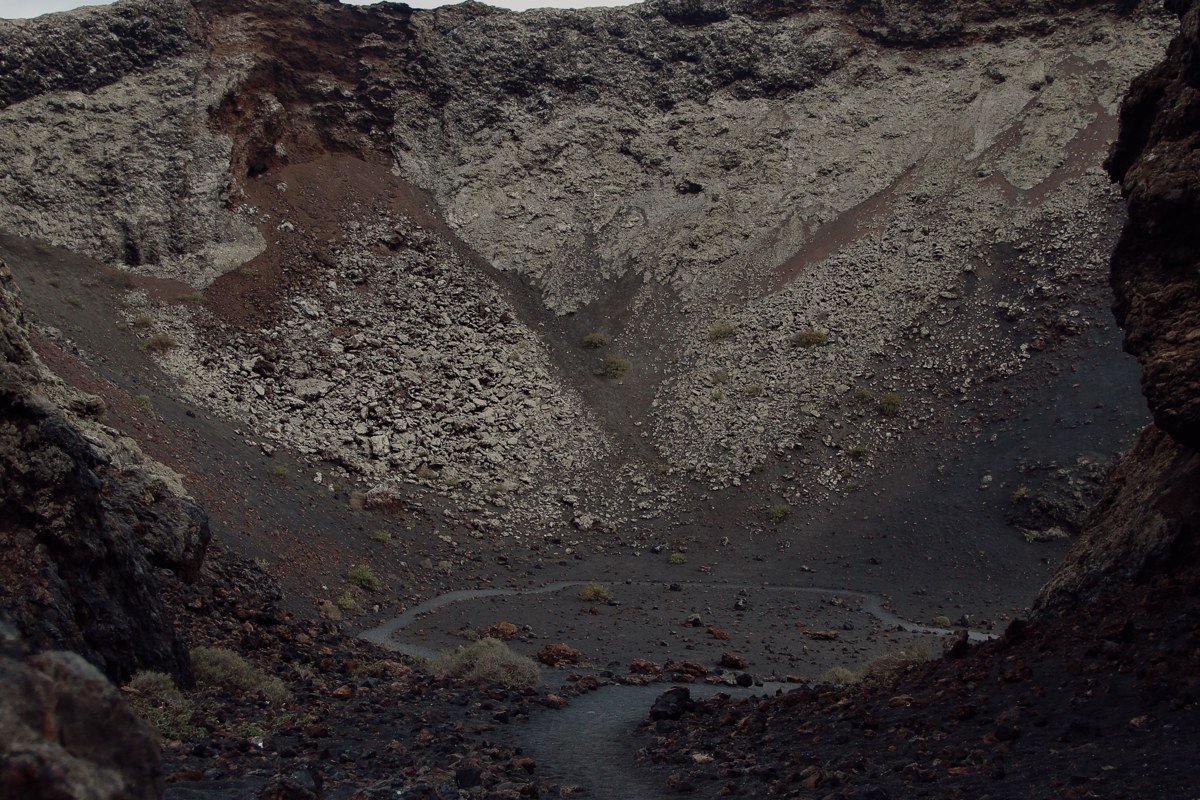
Nisyros is built on top of an active volcano, and the caldera at its center is one of the most visually alien landscapes in Greece. The main village of Mandraki has a black-stone fortified monastery and alleyways so narrow and cool they feel like a different climate from the harbor below. The greece hidden gems quality here is specifically in Nikia, a village perched on the caldera rim that gets overlooked because most day-trippers from Kos only descend to the crater floor and leave. Nikia has a circular mosaic-paved square, maybe a dozen year-round residents, and views across the caldera with no guardrails and no explanatory signage. The volcanic soil makes the local fig trees extraordinarily productive; buy a bag of dried figs from anyone selling them from their gate. The last ferry back to Kos leaves mid-afternoon, so staying overnight is the decision that actually lets you see the island.
Shooting note: The caldera rim at Nikia faces south-southwest. In the afternoon the sulfur vents on the crater floor catch backlight that gives the grey pumice a faintly warm tone, which reads better in photographs than the flat midday version.
5. Lipsi, Dodecanese
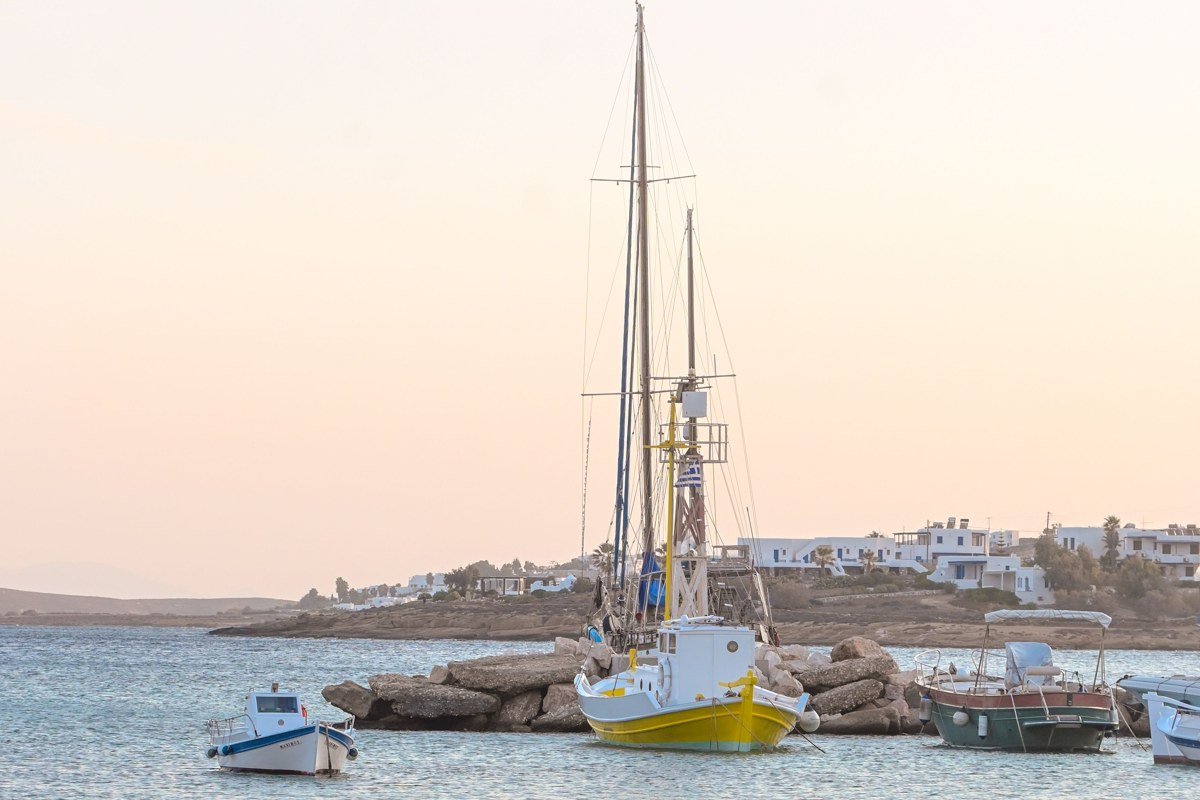
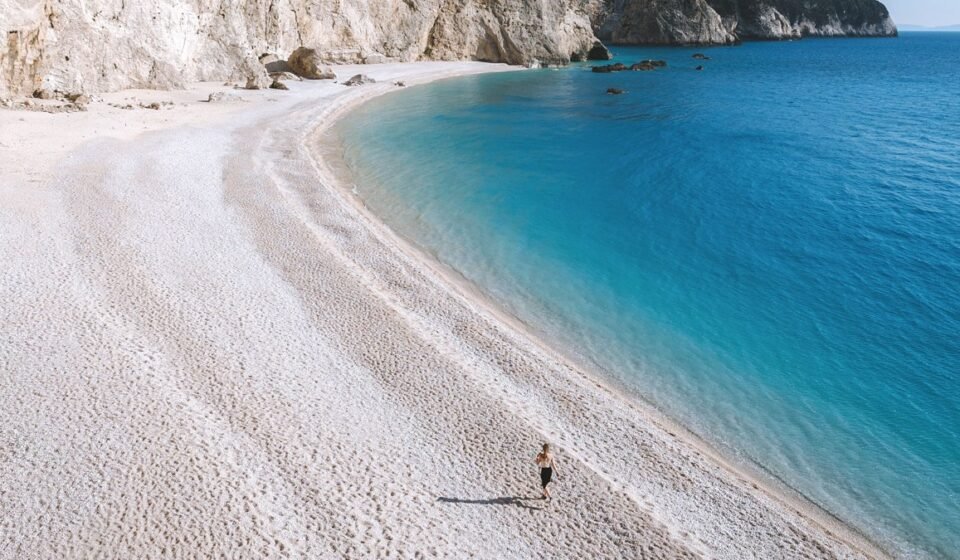
Lipsi is surrounded by more famous neighbors (Patmos is nearby, Leros is nearby), which is precisely why it still looks the way it does. The harbor is small enough that you can see its whole arc from a single vantage point, lined with tavernas where the fishing boats bump against the quay and the owners are usually the ones cooking what was caught that morning. The island has a few beaches, but Platis Gialos is the one worth finding: the seabed shelves so gradually that the water moves through a visible gradation from white sand to pale turquoise to deeper teal, a color transition that reads distinctly from any elevated vantage point and accounts for most of the aerial photographs you will find of the island. The photogenic detail that separates Lipsi from more developed islands is the complete absence of branded umbrellas and sun lounger rows; you bring a towel or rent one from the single reed-roofed cantina that has operated in effectively the same form for decades. Visit in June when the wild oregano is still flowering on the hillsides and the island has not yet filled its modest accommodation entirely.
6. Agathonisi, Dodecanese
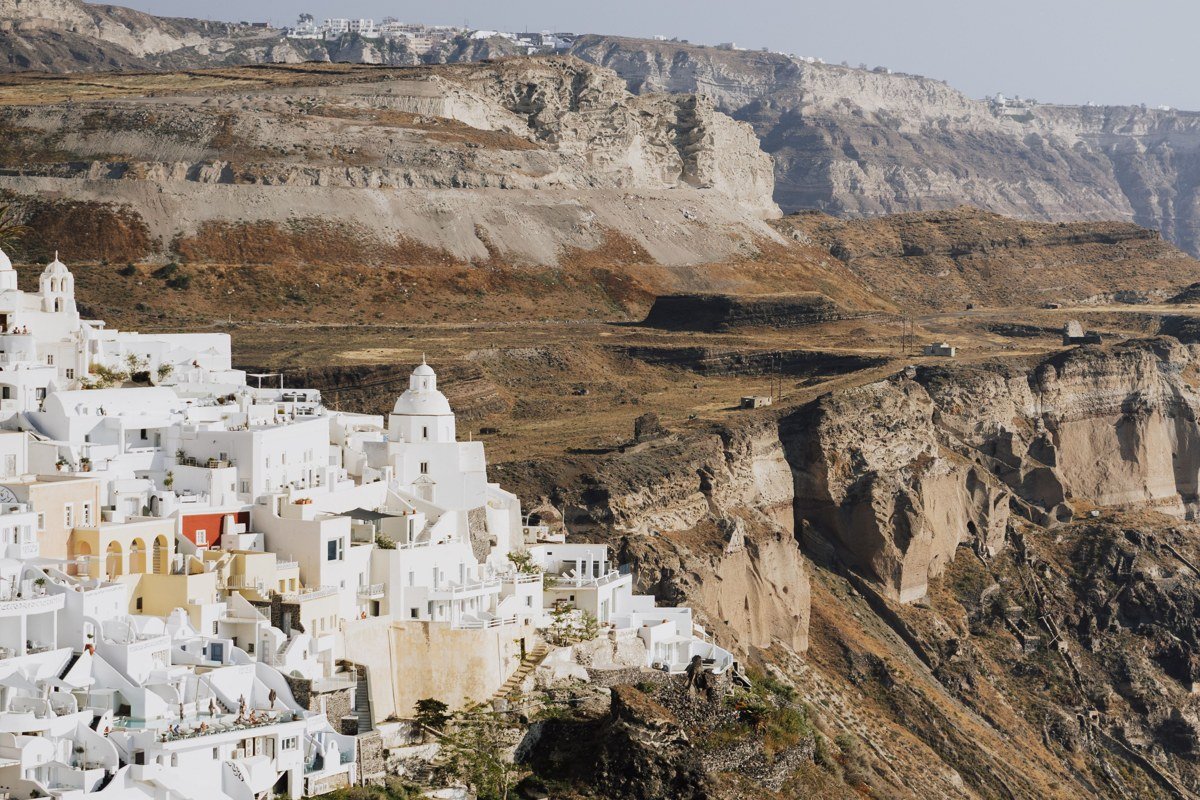
Agathonisi is genuinely off-grid in the sense that reaching it requires either a long ferry from Patmos or a crossing from the Turkish coast that operates on schedules which feel more aspirational than fixed. There are roughly one hundred and fifty permanent residents, two beaches, a handful of tavernas, and accommodation that runs to simple rooms with tiled floors and wood-shuttered windows. The case for Agathonisi is made entirely by its refusal to be anything other than what it is: a working Greek micro-community that happens to sit inside extraordinarily clear Aegean water. Snorkeling directly off the rocks at Spilia bay, where visibility runs to fifteen meters or more, is the activity that repays the effort of getting here. Do not arrive expecting ATMs; bring cash from Patmos.
Skip it if: you need a beach with amenities, reliable Wi-Fi, or the option to change your departure date at short notice. Agathonisi rewards flexibility and penalizes fixed plans.
7. Thirasia, Cyclades
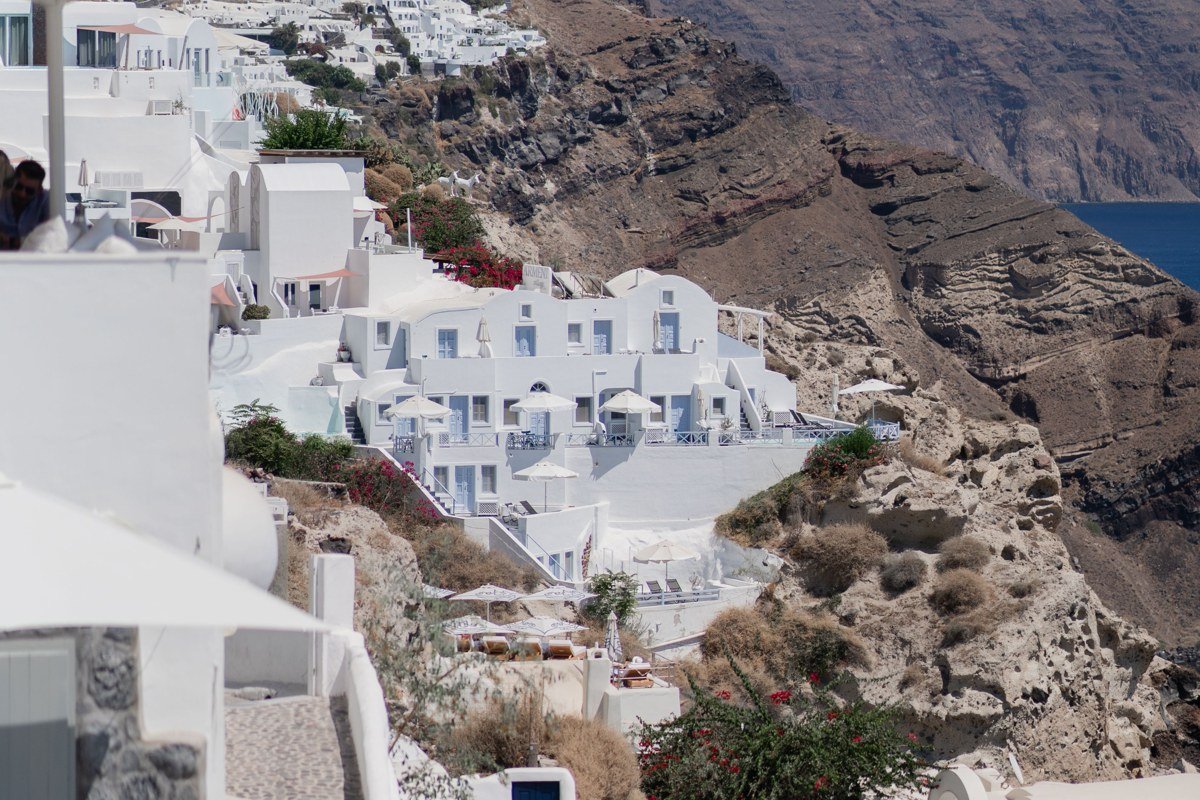
Thirasia is the smaller, quieter crescent that completes the Santorini caldera from the opposite side, and it receives a tiny fraction of Santorini’s millions of annual visitors. The view from Manolas, the main village perched on the caldera rim, looks out over the exact same volcanic landscape and burning sunsets that made Santorini famous, except you are watching the crowds from across the water rather than standing inside them. The donkey path from the port of Riva up to Manolas is steep, genuinely so, and it is the primary way to reach the village (there is also a small bus). The caldera-edge tavernas serve grilled octopus and local wine at prices that would have felt reasonable in 2005. The ferry crossing from Santorini’s Old Port takes about twenty-five minutes, making a day trip feasible, but the island feels most itself in the early morning before the excursion boats arrive.
Shooting note: The caldera view from Manolas faces west-southwest. In the hour before sunset, Santorini’s white buildings across the water catch a deep gold that photographs cleanly against the dark volcanic cliffs in the foreground. This is the shot, and it requires being in Manolas by late afternoon, not arriving on the last boat.
8. Kastellorizo (Megisti), Dodecanese
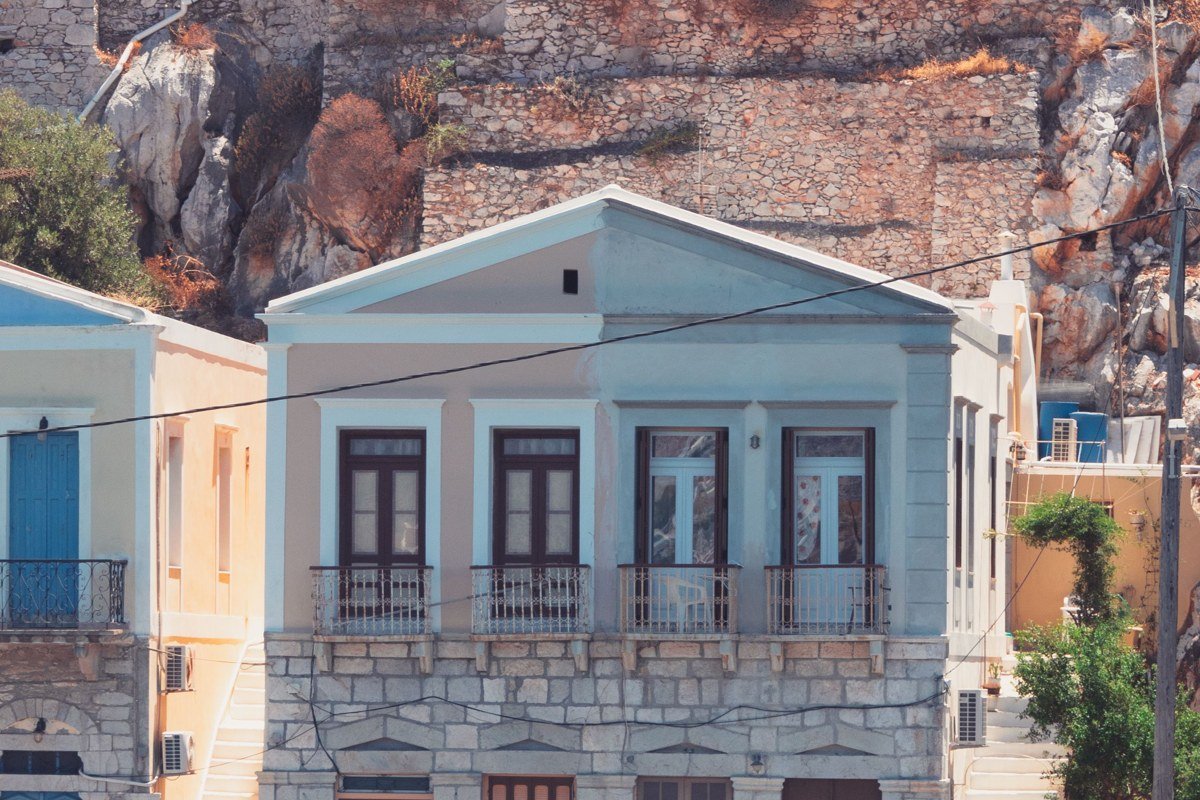
Kastellorizo is a forty-minute flight from Rhodes or a long overnight ferry, sitting closer to the Turkish town of Kas than to any Greek city. The population has collapsed from several thousand in the early twentieth century to a few hundred today, and that gap is written into the fabric of the place. The harbor front is lined with neoclassical mansions in burnt orange, cobalt, and dusty yellow: some freshly painted, others permanently shuttered, their upper windows blank and salt-filmed. Walking the harbor in the early morning, before the day-trippers arrive from Kas, you can count the closed ones against the open ones and feel the arithmetic of that decline without needing it explained. The harbor reflects all of it in water that is often completely calm, giving the impression of a place preserved under glass. The Galazia Spilaion (Blue Grotto), accessible only by small boat, produces a bioluminescent blue light inside the cave that is genuinely worth the short crossing. No beach to speak of, no clubs, no large hotel: Kastellorizo self-selects for the kind of traveler who will be happy with a glass of wine on a wooden pier watching the lights of the Turkish coast come on after dark.
Shooting note: The harbor faces roughly north-northeast. The mansion facades catch warm side-light in the late afternoon rather than direct sun, which softens the color contrast between the painted walls and the shuttered windows and tends to produce more balanced exposures than midday shooting.
Practical Takeaways for Island-Hopping These Greece Hidden Gems
Timing. Late May through mid-June and the whole of September are the windows when these islands are accessible (ferries running, tavernas open) but not overwhelmed. The photographic light in September is particularly warm and low-angled.
Getting there. Most of these islands are reached via Athens (Piraeus ferry port) or by using a larger Dodecanese hub like Rhodes or Kos as a base and taking smaller ferry connections onward. The KTEL ferry network timetable site and Ferryhopper are both reliable for current schedules.
Accommodation. Book any accommodation on micro-islands (Agathonisi, Halki, Lipsi, Thirasia) at least six to eight weeks ahead for summer, even though these are not famous islands. Supply is genuinely small.
Cash. Several of these islands have one ATM that may or may not be stocked. Withdraw cash in Athens or at your hub island before traveling onward.
The aesthetic trade-off. The reason these places still look like 1970s postcards is that they have limited services, slower internet, and fewer amenities than Santorini or Mykonos. That is the product, not a bug to work around.