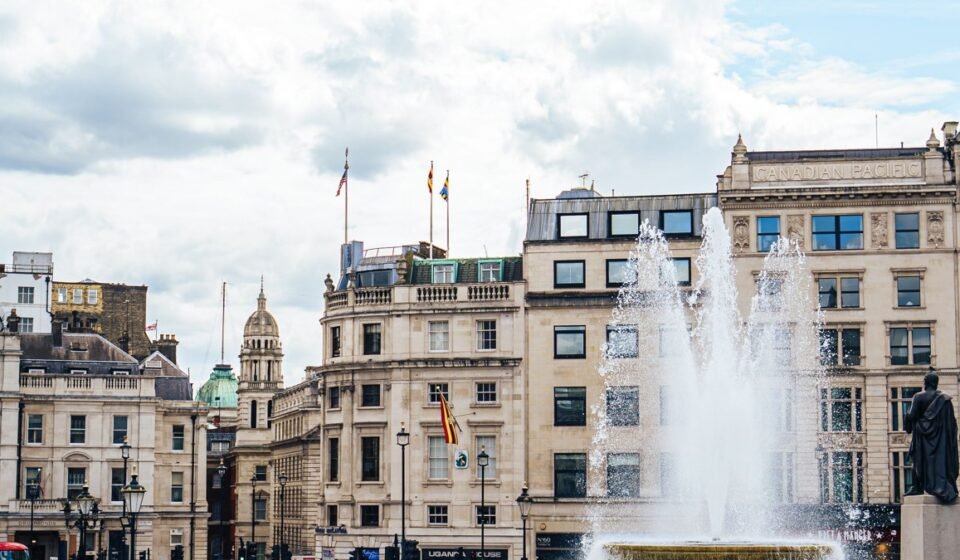

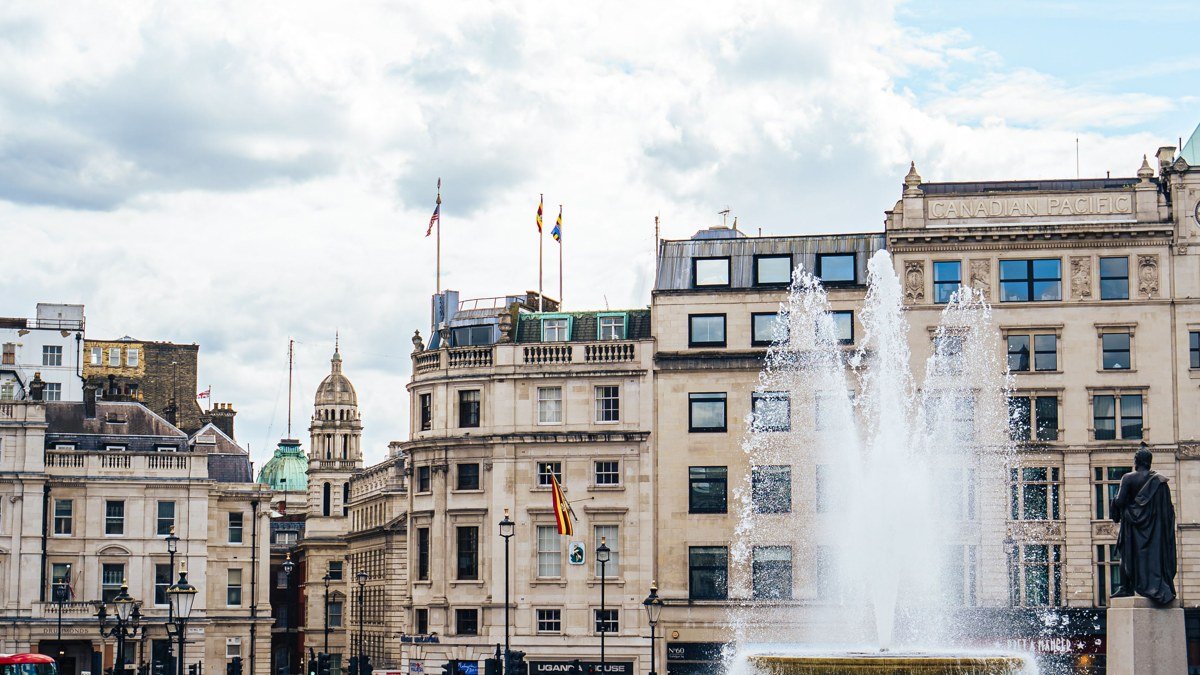
Most people land at Heathrow, spend seven days circling Zone 1, and fly home believing they’ve “seen England.” They’ve seen London — a magnificent city that is roughly as representative of England as Manhattan is of America.
This England itinerary for 7 days fixes that. It keeps two days in London (you should see it), then pushes you west into the Cotswolds, down to Bath, and up to York — a loop that shows you honey-stone villages, Georgian crescents, Roman baths, and a medieval walled city, all connected by trains that mostly just work. I’ve run versions of this route four times, twice with luggage-averse friends who complained the entire time and then admitted it was the best week they’d had.
Here’s the plan, the logistics, the costs, and the mistakes that will otherwise cost you a wasted afternoon.
The route at a glance
The shape matters. You want a loop that doesn’t double back, so you’re not paying for the same rail segment twice or wasting daylight retracing steps.
| Day | Base | Highlights | Travel that day |
|---|---|---|---|
| 1 | London | Arrival, Westminster, South Bank walk | — |
| 2 | London | British Museum, a market, a proper pub | — |
| 3 | Cotswolds (Moreton-in-Marsh) | Arrive midday, village hop by car/bus | Train Paddington → Moreton (~1h40) |
| 4 | Cotswolds | Bibury, Bourton, Stow, walking | Local only |
| 5 | Bath | Roman Baths, the Crescent, evening in the city | Cotswolds → Bath (~1h30–2h with change) |
| 6 | York | Travel day + York Minster, city walls | Bath → York (~4h30, one change) |
| 7 | York → home | The Shambles, Jorvik or Yorkshire Museum, depart | York → London/airport (~2h to Kings Cross) |
Two nights London, two Cotswolds, one Bath, two York. If you’d rather sleep in fewer beds, see the trade-offs later.
Days 1–2: London, done efficiently
You have jet lag and roughly a day and a half of usable time. Don’t try to “do” London — pick a spine and walk it.
Day 1: Land and stay upright
Fight the urge to nap. Drop bags, then do a walking loop that requires zero planning:
- Westminster → Big Ben and the Houses of Parliament (photos from Westminster Bridge, not the queue side).
- Walk across the bridge to the South Bank.
- Follow the Thames east past the London Eye, the National Theatre, and Gabriel’s Wharf to Borough Market (arrive before 4pm on weekdays or it’s winding down).
- End at a pub. The Anchor or a quieter Bermondsey spot beats anything in a guidebook’s top ten.
Day 2: One big thing, one neighbourhood
Pick one major museum. The British Museum and the National Gallery are both free and both overwhelming. Give it two hours, no more — museum fatigue is real and you have a country to see.
Then walk a neighbourhood with a pulse: Marylebone for handsome streets and independent shops, Spitalfields and Brick Lane on the weekend for markets and curry houses, or Hampstead if you want green space and a village-in-the-city feel.
Insider tip: Buy a contactless card or use your phone for the Tube and buses. Don’t buy an Oyster card as a tourist anymore — contactless has the same daily fare cap and you skip the queue and the deposit. Just tap in and out with the same card all day.
Day 3: Escape to the Cotswolds
This is where the trip actually opens up.
The train: London Paddington to Moreton-in-Marsh takes about 1h40 direct on the Great Western line. Book direct with GWR — booking straight through the operating train company avoids the per-transaction booking fee that resellers like Trainline add, and the fares and advance-release timing are identical. An advance single can be £20–£35; walk-up on the day and you’re looking at £50+. Moreton is the only Cotswolds village with a mainline station, which is exactly why you base there or nearby.
The catch nobody warns you about: the Cotswolds have almost no useful public transport between villages. The postcard hamlets — Bibury, Bourton-on-the-Water, the Slaughters — are connected by infrequent local buses (some run only a few times a day, some not on Sundays). If you don’t want to build your day around bus timetables, you have two real options:
- Rent a car for two days. Pick it up near Moreton or at a larger nearby town. This is the single biggest quality-of-life upgrade for this leg. Roughly £40–£70/day plus fuel.
- Stay put and go slower. Base in one walkable village and use the Cotswold Voluntary Wardens’ walking routes or the paths between Lower/Upper Slaughter and Bourton, which are genuinely lovely on foot.
A note for international drivers: UK hire cars default to manual transmission. If you can’t (or don’t want to) drive a stick shift on the wrong side of the road down a single-track lane, you must specifically request an automatic when booking — and book well in advance in high season, because automatics are a small slice of most rural fleets and sell out first.
Spend the first afternoon settling in — Stow-on-the-Wold has good pubs and antique shops, and it’s close to Moreton.
Where to sleep: In Stow, The Porch House bills itself as one of England’s oldest inns and is a characterful mid-to-upper-tier coaching inn (roughly £150–£200/night). For something gentler on the wallet, the smaller B&Bs around Moreton-in-Marsh run £110–£150/night. Book early; the good rooms in high season go months out.
Day 4: The Cotswolds proper
With a car, a realistic loop:
- Morning: Bibury early (before the coach tours, ideally by 9am). Arlington Row is the row of weavers’ cottages on every England calendar. Fifteen real minutes here is enough; it’s tiny.
- Late morning: Bourton-on-the-Water — nicknamed “Venice of the Cotswolds,” pretty but touristy. Good for a coffee and the low bridges over the Windrush.
- Lunch: the Slaughters (Upper and Lower Slaughter) — quiet, no shops, just streams and stone. Park in Bourton and walk the mile between them.
- Afternoon: Stow-on-the-Wold or Chipping Campden, the latter being the prettiest market town in the north Cotswolds and less mobbed.
Insider tip: The villages are best at the edges of the day. Between roughly 11am and 3pm, coach tours from London and Bath descend on Bibury and Bourton. Do those two before 10am, then spend your midday in less-visited spots like Chipping Campden, Broadway, or on a footpath.
When it rains (and it will): This is England — build a wet-weather plan before you need it. The Cotswolds’ great indoor asset is its “wool churches,” the outsized medieval churches built on the fortunes of the medieval wool trade. St James’ Church in Chipping Campden is the finest of them and worth a slow half-hour. String a few together — Northleach and Fairford (for its rare complete set of medieval stained glass) — into an informal wool-church crawl. Failing that, the Cotswold Motoring Museum in Bourton-on-the-Water is a dry, kid-friendly hour among vintage cars and toys.
Honest trade-off: If you truly hate driving on the left down single-track lanes with hedgerows and blind corners, skip the car and accept a slower, one-village day. The Cotswolds reward slowness anyway. But you’ll see far less.
Day 5: Bath
Return the car (or take the local bus/train connection) and head to Bath.
Getting there: There’s no single glamorous train. From Moreton you’ll usually go back toward the mainline and connect — reckon on 1h30 to 2h with one change, or drive it in about an hour if you still have the car and drop it in Bath. The connection via Kemble or Swindon is common; check on the day because engineering works on weekends are frequent.
Bath is compact and completely walkable. In a single afternoon and evening you can genuinely see the highlights:
- The Roman Baths — book a timed entry online to skip the queue. Budget 90 minutes; the audio guide is worth it and included.
- Bath Abbey and the surrounding streets.
- The Royal Crescent and The Circus — Georgian architecture at its most theatrical. Walk up Gay Street to reach them.
- Pulteney Bridge over the weir — one of the few bridges in the world with shops built across it.
Insider tip: The Thermae Bath Spa lets you swim in naturally warm mineral water in a rooftop pool with the whole city below you. Book an evening slot — sunset over Bath from the warm rooftop pool is the memory people bring home, not the Roman ruins. It’s about £40 for two hours and you should reserve ahead.
Where to sleep: Central Bath is expensive; a B&B on a hill (Bathwick or up toward Lansdown) is cheaper and gives you a walk with a view. Try a Bathwick guesthouse such as one along Pulteney Road, where doubles run £100–£160/night — twenty minutes’ walk downhill to the Abbey, and a proper cooked breakfast to send you out.
Day 6: The long haul to York
This is your travel day, and it’s the one leg that takes real time.
Getting there: Bath Spa to York is roughly 4h to 4h45 with one change, usually at Bristol or via Birmingham New Street. This is the day to book a proper reserved seat in advance. Advance fares booked a few weeks out run £40–£70; buy on the day and it can double. Book direct with the operating company (GWR to Bristol, CrossCountry or Avanti onward) rather than through a reseller to skip the booking fee.
Leave mid-morning, eat lunch on the train, and you’ll roll into York in the afternoon with time to spare.
Why York earns the long journey: It’s the anti-London — a walled medieval city you can cross on foot in twenty minutes, stuffed with genuine history rather than reconstructed history.
Afternoon plan on arrival:
- Walk a section of the medieval city walls (the full circuit is about 2 miles; do the stretch near Bootham Bar and Monk Bar for the best Minster views).
- York Minster — one of the largest Gothic cathedrals in Northern Europe. If you’re fit, climb the central tower for the view, but book the timed climb slot early in the day as spots are limited.
Where to eat: Head to Gillygate, the street just outside Bootham Bar, for dinner. It’s lined with independent restaurants and pubs a world away from the Shambles crowds — pick a spot with a chalkboard menu and locals in it. On Bishopthorpe Road (locals call it “Bishy Road”), the independent cafés and delis make a good relaxed lunch stop if you’re staying on that side of the walls.
Where to sleep: Inside the walls if you can afford it; just outside (Bootham or the Bishopthorpe Road area) for better value and good local restaurants. A Bootham guesthouse typically runs £90–£140/night and puts you a five-minute walk from the Minster.
Day 7: York and home
Depending on your flight, you have a morning or a full day.
- The Shambles — a genuinely medieval street of overhanging timber-framed shops, best walked before 10am before it fills up.
- The Viking morning, decided: If you’re travelling with kids, the Jorvik Viking Centre — built over a real excavated Viking settlement — is worth the money for the ride-through recreation and the sheer engagement factor. If it’s just adults and you only have one morning, skip Jorvik and spend it at the Yorkshire Museum instead: real Roman, Viking, and medieval artefacts (including the Middleham Jewel) in a calm gallery set in botanical gardens, with none of the theme-park queueing.
- York’s snickelways — the tiny named alleyways threading between streets. Just wander.
Getting home: York to London King’s Cross is a fast, mostly direct 1h50–2h10 on LNER — one of the best train journeys in the country and a fitting end. From King’s Cross you connect to Heathrow (Piccadilly line, ~50 min) or Gatwick (via the Thameslink). If your flight’s from Manchester, York is only about 1h20 away by train, which can save you the London backtrack entirely.
Rough budget for one person (mid-range, high season)
| Item | Estimate |
|---|---|
| 6 nights accommodation | £700–£950 |
| Trains (4 intercity legs) | £120–£220 if booked in advance |
| Car hire (2 days, Cotswolds) | £100–£160 incl. fuel |
| Attractions (Roman Baths, Minster, Jorvik/Yorkshire Museum, spa) | £90–£130 |
| Food & drink | £280–£420 |
| Total | ~£1,300–£1,850 |
Two people traveling together drop the per-person cost significantly, since accommodation and the car split in half.
Common mistakes
Buying train tickets at the station on the day. Walk-up fares are punishing. Advance singles released ~12 weeks out are often a third of the price. Book each leg as a single, not a return — split singles are frequently cheaper than a return fare, and there’s no penalty.
Paying a reseller’s booking fee. Apps like Trainline are convenient but add a per-transaction fee on top of the fare. Book direct with the operating company instead — GWR (Paddington→Moreton, and toward Bath), LNER (York→King’s Cross), Avanti or CrossCountry (long cross-country legs) — for the identical fare with no surcharge.
Trusting Cotswolds public transport. People plan a bus-based Cotswolds day, then discover the bus runs at 9:12am and 4:40pm and nothing between. Either get a car or accept a single-village pace.
Over-scheduling the villages. Bibury is a five-minute walk. Bourton is a coffee stop. If you allot half a day to each, you’ll be bored and the coaches will arrive. The Cotswolds are about the spaces between villages — the footpaths, the pub lunch, the hedgerows.
Booking the Roman Baths and Minster tower without timed slots. Both sell timed entry; turning up unplanned in summer means a real queue or a full climb. Book online the night before.
Ignoring weekend rail engineering works. Network Rail does track maintenance on weekends, often replacing trains with buses on exactly the connecting segments you need (looking at you, Cotswolds and Bristol connections). Check your specific journey on the day at National Rail Enquiries.
Flying out of Heathrow when York is your last stop. You backtrack all the way to London. If flexible, fly out of Manchester instead and cut hours off your last day.
Trade-offs: tune the trip to you
No itinerary survives contact with your own priorities, so here’s how to bend this one without breaking it:
- Fewer hotel changes? Cut York and do three nights in London with day trips, or make Bath a day trip from the Cotswolds. You lose the north-of-England contrast, which is the whole point, but you unpack less.
- No driving at all? Base entirely in Bath and treat the Cotswolds as a guided day tour (several run daily from Bath, typically £45–£65 for a full day hitting Bibury, Bourton, and the Slaughters). You give up the freedom to linger and the early-morning empty villages, but you dodge every ounce of left-side-of-the-road stress and the automatic-hire-car scramble.
- Adding a fourth region? Swap York for Edinburgh — the LNER line runs straight there in about 4.5 hours from York and it’s spectacular. But that’s an eight- or nine-day trip, not seven; don’t try to bolt Scotland onto a week without adding days, or every stop turns into a train platform.
- Traveling with less money? Shift your beds outward — a Moreton B&B over a Stow coaching inn, a Bathwick guesthouse over a central Bath hotel, a Bootham room over one inside York’s walls. Each move saves £30–£60 a night in exchange for a ten-to-twenty-minute walk, and those walks are often the nicest part of the day.
- Traveling in winter? Everything above works, but villages close earlier and some rural pubs shut mid-week. Bath and York are better cold-weather bases than the Cotswolds — both have plenty of indoor sights, evening life, and warm places to eat when the light dies at four o’clock.
The one trade-off worth resisting: don’t compress this into fewer than seven nights to save money. Under a week and you’ll spend more of the trip in transit than in the places you came to see.
Your actionable takeaway
Do this now, before anything else: open the GWR and LNER booking sites about 10–12 weeks before your trip and buy the four intercity legs — Paddington→Moreton, Cotswolds→Bath, Bath→York, York→King’s Cross — as advance singles the day they’re released, direct with the train companies to skip the reseller fee. That one hour of booking will save you well over £100, lock in your route, and turn this 7-day England itinerary from a vague plan into a trip that’s already half-built. Everything else — the pubs, the footpaths, the rooftop spa at sunset — you can figure out with a beer in hand once the trains are booked.