The Perfect 7-Day Ecuador Itinerary: A Day-by-Day Tourist Travel Plan for First-Time Visitors (Galápagos, Quito & Beyond)

You land in Quito at 10,000 feet, slightly winded walking to baggage claim, and realize you have exactly seven days to see a country that packs volcanoes, cloud forest, colonial plazas, and the Galápagos into an area smaller than the state of Nevada. That density is the whole magic — and the whole trap. Most people try to cram in the Amazon and the coast and Galápagos, spend two of their seven days in transit, and come home exhausted.
This Ecuador travel itinerary is the version I wish someone had handed me before my first trip: tight, geographically sane, and built around the two things that actually deliver — the Andes and the islands. You’ll spend real time in each place instead of sprinting between airports.
Who This Itinerary Is For
This plan assumes you’re a first-timer who wants the “greatest hits” without a punishing pace. It works beautifully if:
- You have 7 full days on the ground (not counting your international flight days).
- You’re comfortable with a couple of early mornings and one internal flight.
- You want a mix of culture (Quito), landscape (the Andes), and wildlife (Galápagos).
If you’re a hardcore birder or diver, you’ll want to weight more days toward Galápagos or the Amazon — I’ll flag those trade-offs as we go.
The Big Strategic Decision: Galápagos Cruise vs. Island-Hopping
Before the day-by-day, settle this, because everything else flows from it.
| Option | Best for | Rough cost (per person) | Downside |
|---|---|---|---|
| Liveaboard cruise (4–5 day) | Serious wildlife, remote sites (Genovesa, Fernandina) | $2,000–$5,000+ | Expensive, seasickness, fixed schedule |
| Island-hopping (land-based, day tours) | Budget & flexibility, first-timers | $600–$1,200 for 3–4 days | You miss the far-flung islands |
| Day trips from Santa Cruz only | Short on time/money | $400–$700 | Least wildlife variety |
For a 7-day trip, island-hopping from Santa Cruz is the sweet spot. You get to Bartolomé, snorkel with sea lions, walk with giant tortoises, and don’t blow your entire budget or an extra two travel days on a cruise. This itinerary assumes island-hopping.
Non-negotiable heads-up: everyone entering Galápagos pays the National Park entrance fee (now $200 for most foreign adults) in cash on arrival, plus a $20 Transit Control Card (INGALA) purchased at your mainland departure airport. Bring clean USD bills — Ecuador uses the US dollar, which makes this refreshingly simple.
The 7-Day Ecuador Itinerary at a Glance
- Day 1: Arrive Quito → acclimatize, Old Town
- Day 2: Quito → Otavalo market & Andean day trip
- Day 3: Cotopaxi National Park (or Quilotoa)
- Day 4: Fly to Galápagos (Baltra) → Santa Cruz
- Day 5: Bartolomé Island day tour
- Day 6: Highlands + Tortuga Bay (Santa Cruz)
- Day 7: Fly back to Quito → depart
Now the details.
Day 1 — Quito: Land, Acclimatize, and Wander the Old Town
Quito sits at ~2,850 m (9,350 ft), and this is the single most important day to get right. The most common first-timer mistake is landing and immediately booking a Cotopaxi hike for the next morning. Altitude sickness — headache, nausea, dead-legged fatigue — doesn’t care how fit you are, and it can wreck your entire week if it hits on Day 2. Treat today as a flat, low-effort acclimatization day: no strenuous hikes, no altitude gains, no rushing uphill. Fly in, check into a hotel, and take it genuinely slow.
Where to stay:
– Budget: Community Hostel in the Old Town (~$15–20/night for a dorm bed, ~$50 private) — spotless, sociable, with a well-run in-house tour desk and walkable to Plaza Grande.
– Mid-range: Hotel San Francisco de Quito (~$70–90/night), a restored colonial house with a courtyard, a block from the main plazas — quiet, central, and safe to return to after dark.
La Mariscal is the livelier nightlife district if that’s your priority, but the Old Town puts you inside the sights.
Afternoon plan:
– Walk Plaza Grande (Independence Square), flanked by the Presidential Palace and the cathedral.
– Step inside La Compañía de Jesús — a Baroque church absolutely drowned in gold leaf. Entry is a few dollars and it’s genuinely jaw-dropping.
– Climb (or ride the elevator) up the Basílica del Voto Nacional towers for the best city view. The exposed catwalks are not for the acrophobic.
Dinner: Try locro de papa (creamy potato-cheese soup with avocado) at Hasta la Vuelta, Señor, a beloved traditional Ecuadorian restaurant tucked in the courtyard of the Pasaje Arzobispal, right off Plaza Grande. Atmospheric, reliably good, mains around $10–16. Note it closes early (often by ~9:30 PM and not every night), so book ahead rather than wandering in late.
Insider tip: Drink coca or horchata tea and hydrate hard. Skip alcohol on night one — altitude amplifies it and morning-you will thank present-you.
Safety note: Quito’s Old Town is fine by day but empties fast after dark. Use a registered taxi or the Uber/Cabify app at night rather than hailing on the street.
Day 2 — Otavalo Market & the Northern Andes
Wake early and head north (~2 hours) to Otavalo, home to one of South America’s largest and most famous indigenous artisan markets. Saturday is the biggest day, but the Plaza de Ponchos runs daily.
You have two ways to do this:
- Guided day tour ($50–80 pp): includes transport, plus stops like Cuicocha crater lake and the leather town of Cotacachi. Easiest for first-timers.
- DIY by bus: From Quito’s Carcelén terminal, buses to Otavalo run frequently and cost around $2.50–3. Cheap, but you’ll organize the side stops yourself.
Where to actually buy: The stalls in the center of Plaza de Ponchos are the tourist-facing zone — fine, but higher-priced and heavier on mass-produced goods. Work your way to the weaving cooperative and family-run stalls along the eastern and northern edges of the plaza (and the side streets bleeding off it), where you’re far more likely to be buying directly from the artisan or their family. Ask whether a piece is hecho a mano (handmade) versus machine-woven; genuine backstrap-loom textiles have slight irregularities and a visible warp on the reverse. On market days, some Kichwa weavers sell straight off the loom in the smaller plazas away from Poncho — worth the ten-minute walk.
What to buy: alpaca-blend scarves and blankets, tagua nut jewelry, hand-woven textiles. Haggle politely — starting around 60–70% of the asking price is normal and expected. Bring small bills.
Where to stay if you overnight north: Hostal Doña Esther in Otavalo (~$40–55/night), a colonial house with a good in-house restaurant, is a solid mid-range base if you want a slower two-day Andes run. Most first-timers, though, return to Quito the same evening.
Trade-off: If you couldn’t care less about shopping, swap this day for the Mindo cloud forest (~2 hours west of Quito) instead — hummingbirds, chocolate tours, and zip-lines. Do Otavalo for culture and textiles; do Mindo for nature and birds.
Day 3 — Cotopaxi (or Quilotoa): Your Big Andes Day
This is the day the landscape photos on your Pinterest board come from.
Option A — Cotopaxi National Park
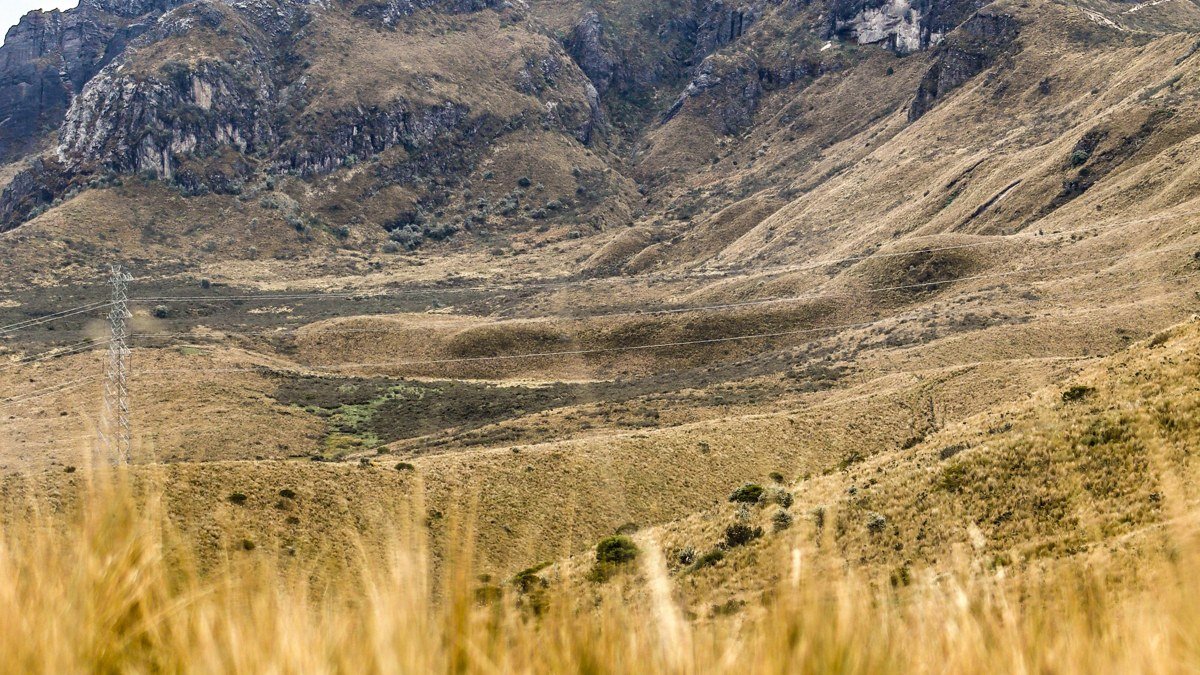
Cotopaxi is one of the world’s highest active volcanoes (5,897 m), a near-perfect glaciated cone about 1.5–2 hours south of Quito. A typical day tour:
- Drive to the park, spotting wild horses on the páramo (high grassland).
- Drive up to the parking lot at ~4,500 m, then hike (slowly!) about 40–60 minutes up to the José Ribas refuge at ~4,800 m. This is a genuine lung-buster at altitude — go at a pace that feels almost embarrassingly slow.
- Visit Limpiopungo lagoon for reflection shots of the cone (weather permitting — it’s often clouded by afternoon, so morning is better).
Guided tours run $50–90 pp. Park entry is free.
Option B — Quilotoa Crater Lake
A stunning turquoise crater lake ~3 hours south. You can hike down to the water (30–40 min) and back up (the brutal part — budget 60+ min or hire a mule for ~$10). Slightly longer drive than Cotopaxi but arguably the more photogenic single view.
Quilotoa logistics — read before you DIY: If you’re going by public bus from Latacunga, know that the last bus back to Latacunga typically leaves in the early afternoon (roughly 2–3 PM, and schedules thin out further on weekends). Miss it and you’re stuck arranging an expensive private ride. For this reason, many independent travelers deliberately stay overnight in Quilotoa village — basic hostels with wood stoves and hot soup (~$15–30/night, often with breakfast and dinner included) let you catch the lake at dawn without the afternoon scramble. If you’re fit and have an extra day, the Isinliví loop — the multi-day Quilotoa Loop trek through Andean villages like Sigchos, Isinliví, and Chugchilán, ending at the crater rim — is a far more rewarding version of this landscape than a single day trip. It’s the standout if you can spare 2–3 days.
Pick one, not both. They’re in different directions and each is a full day.
Insider tip: Whichever you choose, wear layers. Páramo weather swings from sunny to sleet in twenty minutes. Sunglasses, sunscreen (UV is intense at altitude), a windproof jacket, and warm gloves for the summit push.
Day 4 — Fly to the Galápagos
Book a morning flight from Quito to Baltra (GPS) — flights route through Guayaquil, so total travel is ~3–3.5 hours. Airlines include Avianca, LATAM, and Aeroregional. Round-trip fares typically run $350–500 if booked a few weeks out; last-minute prices climb fast.
The airport gauntlet (do this in order):
1. At Quito airport, before checking in, visit the INGALA counter to buy your $20 Transit Control Card and get your bags fumigation-inspected.
2. On arrival at Baltra, pay the $200 National Park fee in cash.
3. Take the free shuttle bus to the Itabaca Channel, ferry across ($1), then a taxi/bus to Puerto Ayora on Santa Cruz (~45 min, ~$25 by taxi or a couple dollars by bus).
Base yourself in Puerto Ayora — it’s the island-hopping hub with the most restaurants, dive shops, and tour operators.
Where to stay:
– Budget: Casa Gardenia in Puerto Ayora (~$60/night) — a friendly, clean guesthouse walkable to the docks, with a helpful tour-booking desk that saves you shopping agencies on foot.
– Mid-range: Hotel Silberstein (~$120–160/night), a well-run hotel with a pool a few blocks from the main strip — a comfortable place to decompress after long boat days.
Afternoon: Ease in with the Charles Darwin Research Station (walkable from town, entry to the grounds is free/low-cost) to see the giant tortoise breeding program. Then grab dinner at the open-air seafood grills on Calle Charles Binford — get the grilled brujo fish or fresh lobster in season for around $12–18.
Day 5 — Bartolomé Island: The Postcard Day
Bartolomé gives you the iconic Galápagos view: the pointed Pinnacle Rock rising over golden and black volcanic beaches. It’s a full-day boat tour from Santa Cruz (~2 hours each way by speedboat).
A typical day:
– Early boat departure (bring motion-sickness pills — that stretch can be choppy).
– Climb the wooden boardwalk (~370 steps) to the summit viewpoint for the classic panorama.
– Snorkel at Pinnacle Rock — you’ve got a real shot at seeing Galápagos penguins, white-tipped reef sharks, sea turtles, and playful sea lions.
Cost: roughly $150–220 pp including guide, snorkel gear, and lunch.
Operator quality warning: Book only with an operator using a GNPSA-licensed naturalist guide, and confirm the boat carries a maximum of 16 passengers — larger boats are prohibited in key visitor zones, so a small-capacity, licensed-guide setup is a reliable signal that the operator is legitimate and permitted to land where they claim. If an agency dodges these questions, walk away.
Insider tip: Book this the day you arrive, in person, at a Puerto Ayora agency — you can often negotiate 10–20% off the online price, especially for next-day departures with open spots. Bring a rash guard; the equatorial sun burns fast even in cool water.
Day 6 — Santa Cruz Highlands + Tortuga Bay
Your slower, cheaper, no-boat day — and a great one.
Morning — the Highlands (~$40–60 by taxi for a half day):
– El Chato Reserve or a private ranch (like Rancho Primicias) to see wild giant tortoises roaming free in the grass. This beats the breeding station — these are 200+ kilo animals living their best lives.
– The lava tunnels — walkable underground tubes formed by ancient lava flows.
– Los Gemelos, twin sinkhole craters ringed by Scalesia forest.
Afternoon — Tortuga Bay (free, and one of the best beaches on Earth):
– Walk the paved 2.5 km trail from town (~40 min) to reach a long white-sand beach.
– Continue to the calmer cove where you can swim, spot marine iguanas basking, and paddle a kayak among baby blacktip sharks and rays.
Insider tip: The last entry to the Tortuga Bay trail is around 5 PM (sign in at the ranger gate). Bring your own water and snacks — there’s nothing to buy out there. Go in late afternoon to dodge the midday heat.
Day 7 — Return to Quito and Depart
Fly back to the mainland in the morning. Give yourself buffer: get to Baltra with plenty of time, since there’s a ferry + bus involved before check-in.
If your international flight is late and you land back in Quito with a free late afternoon, skip the tourist-trap detours and ride the Quito TelefériQo — a cable car that climbs the flank of Pichincha to about 4,050 m (13,300 ft) in roughly 20 minutes. It’s genuinely undervisited by short-trip travelers, and the payoff is a sweeping view over the whole city and, on a clear day, the surrounding volcanoes. Go in the late afternoon for softer light, dress warm (it’s cold and windy up top), and keep it low-key given the altitude — a viewpoint stroll, not a hike, since you’ll be flying that night. Allow ~2 hours round-trip including the taxi from the airport side of town.
Extending to 10 Days: Add the Amazon
If you can stretch this to a 10-day trip, the highest-value addition is the Ecuadorian Amazon — and the cleanest place to slot it is the Cuyabeno Wildlife Reserve. Fly Quito → Lago Agrio, then transfer by road and motorized canoe to a lodge deep in the reserve; Cuyabeno Lodge and Siona Lodge are well-established options with resident naturalist guides, and a 3-night stay (the realistic minimum for it to be worth the travel) delivers pink river dolphins, caimans, monkeys, macaws, and night canoe outings. What to drop to make room: don’t compress the Galápagos or your Day 1 acclimatization. Instead, fold the Amazon in as its own 4-day block (2 travel days + roughly 2.5 full days in the reserve) either before you fly to Galápagos or after you return, and consider trimming the Otavalo/Cotopaxi Andes portion to a single day. The Amazon needs uninterrupted days; half-measures aren’t worth the transit.
Common Mistakes First-Timers Make
(Altitude is covered in Day 1, and cramming in the Amazon is addressed in the 10-day note above — here are the traps not already baked into the daily plan.)
- Booking Galápagos flights last-minute. Prices spike and morning slots vanish. Book 3–6 weeks out.
- Forgetting cash for Galápagos. Card networks are unreliable on the islands and the $200 park fee is cash-only. Withdraw USD on the mainland; ATMs in Puerto Ayora run dry.
- Overpacking a checked bag for Galápagos. Inter-island baggage limits are tight (often ~23 kg checked, plus fumigation checks). Pack light, quick-dry clothes.
- Assuming “the coast is a quick add-on.” Guayaquil and the beaches are a separate trip in feel and logistics. Don’t sprinkle them in.
- Booking Bartolomé on price alone. As above — an unlicensed guide or an oversized boat can mean being turned away from the best landing sites. Vet the operator, not just the discount.
When to Go: Galápagos and the Andes Behave Differently
These two regions have different seasonal patterns, and conflating them is a classic planning error. Treat them separately.
Galápagos (two seasons, driven by ocean currents):
– Warm/wet season (roughly December–May): hotter and more humid air, calmer seas, and the best underwater visibility and warmer water for snorkeling. Short afternoon showers are common but brief. Great for first-timers who prioritize the water.
– Cool/dry season (roughly June–November): cooler air, choppier seas (motion-sickness pills earn their keep), and colder, nutrient-rich water that brings peak marine activity — this is when penguins, sea lions, and seabird colonies are most active. Snorkeling visibility can drop, but wildlife is abundant.
The Andes / highlands (dry vs. wet, unrelated to the island cycle):
– Drier season (roughly June–September): the best odds of clear volcano views (Cotopaxi, Quilotoa). Days can be sunny and cold; the garúa mist is more likely to break for those photo windows.
– Wetter season (roughly October–May): greener páramo but more cloud and afternoon rain, meaning summits are more often socked in.
The practical upshot: the calm, clear-water Galápagos window (Dec–May) overlaps with the cloudier Andes window — so you may trade some volcano clarity for better snorkeling, or vice versa. There’s no bad time to go; just know which trade-off you’re choosing.
Insider Tips That Signal You’ve Actually Done This
- Bring your own reef-safe sunscreen and snorkel mask. Rental masks leak and Galápagos shops charge tourist prices for sunscreen.
- Tip guides. A few dollars per person per tour goes a long way and is genuinely appreciated.
- Download offline Google Maps for Quito and Santa Cruz. Data coverage is patchy off the main towns.
- The tap water isn’t potable. Carry a refillable bottle and refill at hotels; skip buying dozens of plastic bottles.
Honest Trade-Offs: How to Bend This Itinerary
- Only care about Galápagos? Cut a highlands day and spend 4 days island-hopping — add San Cristóbal (sea lions everywhere) or Isabela (penguins, flamingos, Sierra Negra volcano).
- On a tight budget? Do day trips only from Santa Cruz and skip the pricier Bartolomé boat; Tortuga Bay and the highlands are nearly free.
- Love cities and culture? Add a night in Cuenca, Ecuador’s gorgeous UNESCO colonial city — but that means dropping either Cotopaxi or a Galápagos day.
- Traveling with kids? Santa Cruz + Tortuga Bay + tortoise ranches is a home run. Skip the strenuous Cotopaxi refuge hike.
Total Budget: Per-Person Estimates (7 Days)
This is the number most people actually want before committing. The table below breaks out the full trip across three travel styles. All figures are per person in USD.
| Category | Low (backpacker) | Mid-range | High (comfort) |
|---|---|---|---|
| Galápagos round-trip flight | $350 | $430 | $500 |
| Galápagos park + transit fees | $220 | $220 | $220 |
| Accommodation (6 nights) | $110 (hostels) | $480 (mid-range) | $900+ (upscale) |
| Tours (Bartolomé, highlands, Andes day trips) | $220 (DIY where possible) | $380 | $550+ |
| Food & local transport | $150 | $260 | $400 |
| Estimated total | ~$1,050 | ~$1,770 | ~$2,570+ |
Notes: The low column assumes hostels, DIY buses to Otavalo/Quilotoa, and skipping the pricier Bartolomé boat in favor of free Tortuga Bay and highlands. The high column assumes upscale hotels, private transfers, and a full slate of guided tours. A Galápagos liveaboard cruise instead of island-hopping pushes the total to $3,500–$6,000+ and is not reflected here. Fees are fixed regardless of style, so budget travelers save mainly on lodging, tours, and transport.
Your Actionable Takeaway