
You land at Madrid-Barajas at 8 a.m. after an overnight flight, jetlagged, and the first thing you realize is that nothing opens the way you expect. Lunch is at 2 p.m., dinner starts when you’d normally be asleep, and half the shops shut for a mid-afternoon break. Most first-timers lose a full day just recalibrating to the rhythm.
This week-long plan is built to absorb that shock instead of fighting it. I’ve run this route three times, once solo and twice with slower-moving companions, and I’ve rewritten it below for 2026 conditions: higher summer crowds, the ongoing anti-overtourism mood in Barcelona, and train prices that shift depending on how early you book.
The short version: Madrid, Seville, and Barcelona, connected by high-speed rail, with day trips slotted in. Seven days is enough for three cities done well. It is not enough for three cities plus a beach plus the north, and pretending otherwise is how people end up spending their trip in transit.
Who this itinerary is for (and who should change it)
Do this route if it’s your first time in Spain and you want the “greatest hits” without living on a bus. It leans urban, cultural, and food-heavy.
Change it if:
- You mainly want beaches. Swap Barcelona’s museum time for Costa Brava, or skip inland cities entirely and base yourself on Andalusia’s coast.
- You’re traveling with kids under 8. Three cities in seven days is a lot of packing and repacking. Consider two cities and a slower pace.
- You hate heat. Seville in July and August regularly pushes past 40 C, and the fix is not the order of your cities, it’s your travel dates. Avoid Andalusia in high summer entirely if you can. Late September and October are still warm and long-lit but far more bearable. If your dates are locked into summer, do everything before noon and treat the afternoon as rest.
The 7-day route at a glance
| Day | Base | Main focus | Rough pace |
|---|---|---|---|
| 1 | Madrid | Arrival, easy walking, first tapas | Light |
| 2 | Madrid | Prado, Retiro, Royal Palace | Medium |
| 3 | Madrid to Toledo (day trip) then train south | Toledo old town | Heavy |
| 4 | Seville | Alcazar, Cathedral, Santa Cruz | Medium |
| 5 | Seville | Flamenco, Triana, slow morning | Light |
| 6 | Seville to Barcelona (fly) | Travel plus evening in Barcelona | Medium |
| 7 | Barcelona | Sagrada Familia, Gothic Quarter, beach | Medium |
Fly home from Barcelona on Day 8. This one-way structure (into Madrid, out of Barcelona) saves you a wasted return leg. Search flights as “multi-city” or “open-jaw” to get it.
The connections: trains and one flight
Spain’s high-speed trains (AVE and the cheaper Avlo, plus competitors Ouigo and Iryo) are genuinely excellent and usually faster than flying once you count airport time.
- Madrid to Seville: about 2 hours 30 minutes by AVE.
- Seville to Barcelona: this is the awkward leg. The direct train runs over 5 hours 30 minutes, while a flight is roughly 1 hour 45 minutes in the air. For a 7-day trip, fly this one.
Book train tickets on Renfe, Ouigo, or Iryo directly, or use Trainline if you want everything in one app for a small fee. Prices behave like airfares: cheap when released (often around 60 to 90 days out), expensive last-minute. A Madrid-Seville seat booked early can be 25 to 35 euros. Bought the day before, expect 70 euros or more.
Insider note: the competing operators (Ouigo, Iryo) usually depart from the same major stations but sometimes a different hall. Give yourself 20 minutes to find the right platform the first time. Security screening at Spanish train stations is real but quick.
Day-by-day, with timings
Day 1: Madrid, arrival day
Drop bags at your hotel or use the station lockers if check-in isn’t ready. Do not book anything demanding today. Your body is lying to you about what time it is.
- Late morning: walk Puerta del Sol, Plaza Mayor, and Mercado de San Miguel. San Miguel is touristy and overpriced, so treat it as a look-around, not lunch.
- 2 p.m.: proper sit-down lunch. The menu del dia (fixed lunch menu, usually 13 to 18 euros for three courses plus a drink) is the best value meal in Spain, and locals eat it on weekdays.
- Afternoon: nap if you must, but no more than 90 minutes.
- Evening: tapas crawl around La Latina, especially Cava Baja street. Order at the bar, stand up, move on after one or two plates.
Stay in Madrid two nights minimum so you don’t repack.
Day 2: Madrid’s big hitters
- 9:30 a.m.: Museo del Prado. Book a timed ticket online in advance. It gets free entry in the last two hours (currently 6 to 8 p.m. on weekdays), but that window is packed and rushed, so pay the roughly 15 euros and go early instead.
- Midday: walk through Retiro Park. Rent a rowboat on the lake for a few euros if it’s warm.
- 2 p.m.: lunch near the museum district.
- Afternoon: Royal Palace of Madrid. It’s enormous, so allow 90 minutes.
- Evening: churros con chocolate. San Gines is the famous 24-hour option and worth a look, but for a fresher stop try Chocolat on Calle de Santa Teresa in Chueca, where the churros are thicker and the room less of a tour-bus scrum. If you’d rather skip the sugar, Madrid’s other great late-night move is a bocadillo de calamares (fried-squid sandwich) at a bar near Plaza Mayor, a genuine local ritual that outlasts most kitchens.
If you love art, swap the Royal Palace for the Reina Sofia to see Picasso’s Guernica. You cannot comfortably do the Prado, the Reina Sofia, and the palace in one day. Pick two.
Where to stay in Madrid. Skip Sol itself, which is central but loud and thin on good food. Malasaña and Chueca put you a short walk from the sights while giving you far better restaurants and bars. Boutique hotels along Calle Fuencarral run roughly 90 to 130 EUR per night mid-range. If you want quieter and slightly more polished, the streets around the Barrio de Las Letras (near the Prado) suit museum days well.
Day 3: Toledo day trip, then south
Toledo is 33 minutes from Madrid by train and it’s the best half-day trip in central Spain. Medieval streets, a staggering cathedral, and El Greco’s home turf.
- 8:30 a.m.: early train to Toledo (book ahead, seats sell out).
- Morning: cathedral, the Santa Maria la Blanca synagogue, walk the ramparts.
- Early lunch, then afternoon train back to Madrid.
- Grab your bags and take the late-afternoon AVE to Seville.
This is the heaviest day. If it feels like too much, cut Toledo and go straight to Seville midday for a relaxed evening instead. Honest trade-off: Toledo is spectacular, but a rushed Toledo plus a travel day can sour the whole trip if you’re prone to burnout.
Day 4: Seville, the highlight for most people
Seville is where a lot of first-timers fall in love with Spain, and it’s my personal favorite of the three.
- 9 a.m.: Real Alcazar. Book the earliest slot online weeks ahead. This is one of the most beautiful buildings in Europe, and the queues without a timed ticket are brutal.
- Late morning: Seville Cathedral and the Giralda tower climb.
- 2:30 p.m.: long lunch in Barrio Santa Cruz, the old Jewish quarter.
- Evening: sunset at Plaza de Espana, then tapas around Alfalfa.
Where to stay in Seville. The old center is compact enough to walk everywhere, so pick atmosphere. Barrio Santa Cruz is the postcard, all tiled alleys and orange trees, though it books up and charges for the charm. For a better food scene and slightly lower prices, base yourself around Alameda de Hercules or the Alfalfa area. Small restored townhouse hotels and casa-style guesthouses in these quarters typically run 80 to 120 EUR per night mid-range.
Day 5: Seville at its own pace
- Slow morning. Coffee and tostada with tomato.
- Late morning: cross the river to Triana, the old ceramics and flamenco neighborhood. The Triana market is real and unpolished.
- Afternoon: rooftop or river-walk, or the Metropol Parasol viewpoint (locals call it Las Setas).
- Evening: a flamenco show. Skip the giant dinner-and-show tourist venues. Book a small tablao like Casa de la Memoria or La Casa del Flamenco, where the room is tiny and the intensity is the point. Shows run about 20 to 25 euros and last an hour.
Day 6: Fly to Barcelona
- Morning: one last thing in Seville, then to the airport.
- Fly to Barcelona (roughly 1 hour 45 in the air). Book this weeks ahead; Vueling and Ryanair fares climb fast.
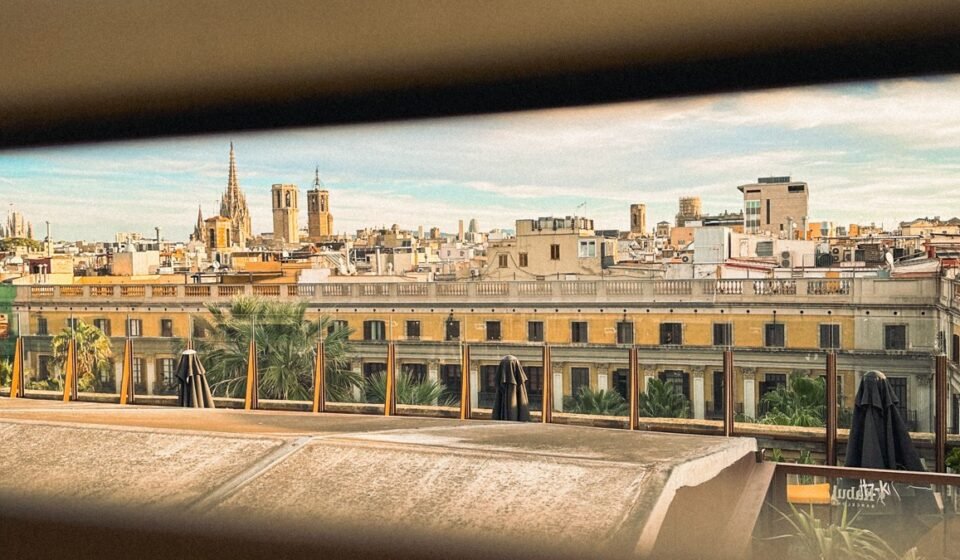
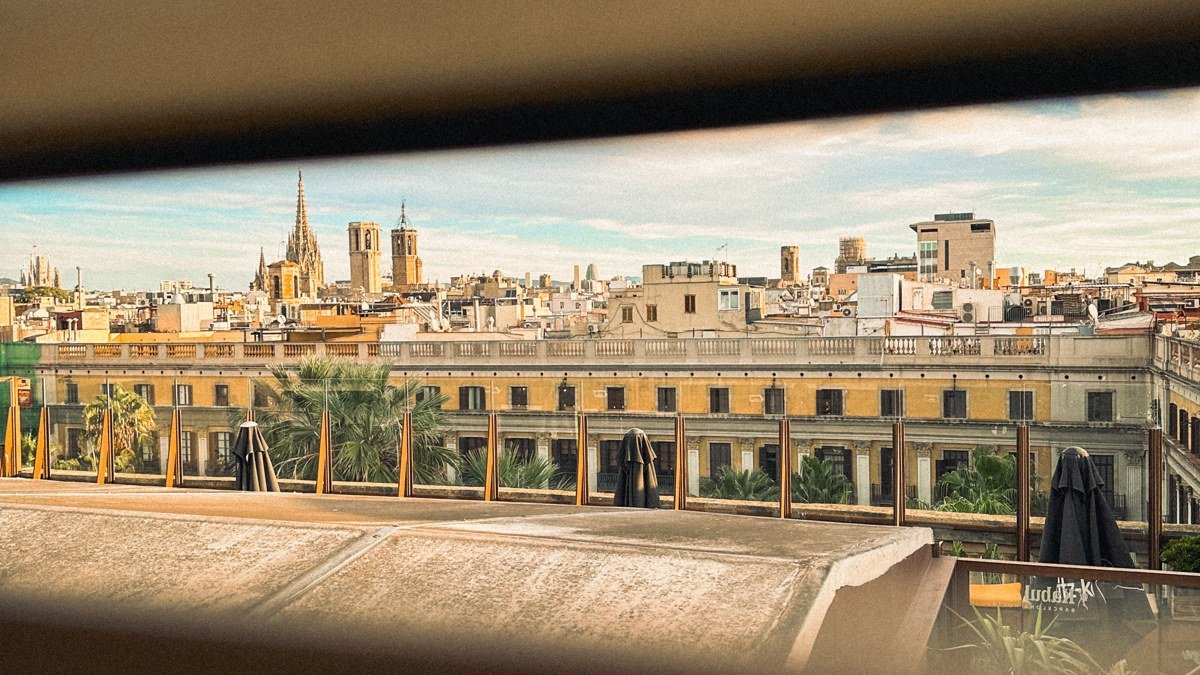
- Afternoon: land, drop bags, and ease into the Gothic Quarter (Barri Gotic) on foot.
- Evening: dinner in El Born, the neighborhood next door, which has better food and fewer tourist traps than Las Ramblas.
Never plan a same-day flight home from a different city than your last stop. Give yourself Day 7 fully in Barcelona and fly out Day 8.
Day 7: Barcelona’s essentials
- 9 a.m.: Sagrada Familia. Buy the timed ticket online well in advance; on-the-day entry is often sold out, especially in 2026’s expected high season. There are three ticket levels: basilica only, basilica plus one tower, and guided-tour options. The tower add-on lets you ride a lift up either the Nativity facade tower (leafier, harbor-facing views) or the Passion facade tower (city-and-sea views), then walk down a tight spiral staircase, so skip it if stairs or enclosed spaces bother you. When you book, you choose the specific tower and a timed entry slot, and tower tickets sell out earliest, so lock the whole thing weeks ahead.
- Midday: walk Passeig de Gracia to see Gaudi’s Casa Batllo and La Pedrera from outside (interiors are pricey, so pick one if any).
- 2 p.m.: lunch, then the beach at Barceloneta for a swim or a nap.
- Late afternoon: head up to Bunkers del Carmel, a free hilltop viewpoint on the old Civil War anti-aircraft battery. It’s about a 15-minute uphill walk from the Guinardó / Hospital de Sant Pau metro (L5), or take bus 119 which climbs most of the way. Aim to arrive roughly 45 minutes before sunset: you get the golden light over the whole city and a spot to sit before the crowd thickens. Bring water and something to sit on, as there are no facilities up top.
- Evening: dinner in Gràcia, the old village-feel neighborhood above the Eixample. Aim for the tapas and vermouth bars around Carrer de Verdi and the Plaça de la Vila de Gràcia, or the food stalls at the Mercat de la Llibertat earlier in the day. It’s residential and low-key, a good antidote to the Ramblas crush.
If you want Park Guell, you must reserve a timed entry, and it’s a fair way uphill. I’d skip it on a single Barcelona day unless you’re a Gaudi completist. The free viewpoints give you more of the city for less hassle.
Where to stay in Barcelona. For a first visit, the left Eixample (Eixample Esquerra) is the sweet spot: grid-quiet, walkable to Passeig de Gracia and the Sagrada Familia, and full of neighborhood restaurants. El Born is more atmospheric and central but noisier at night. Boutique and design hotels in the Eixample commonly run 120 to 170 EUR per night mid-range. Skip anything directly on Las Ramblas, where you pay a premium for noise and pickpockets.
What a realistic budget looks like
Per person, mid-range, for the seven days, not counting international flights:
| Category | Rough cost (EUR) | Notes |
|---|---|---|
| Accommodation | 700 to 1,100 | 3-star central hotels, per person assuming a double room |
| Trains and internal flight | 120 to 200 | If booked early |
| Attractions | 120 to 160 | Prado, Alcazar, Sagrada Familia, flamenco, etc. |
| Food and drink | 250 to 400 | Menu del dia lunches keep this down |
| Local transport and taxis | 60 to 90 | Metro plus a few airport rides |
| Barcelona tourist tax | 7 to 20 | Charged per person per night on your Barcelona nights only |
That lands most people in the 1,250 to 1,950 euro range per person for the week on the ground. Book late and it climbs fast, mostly through accommodation and rail.
Cost warning on the tourist tax: Barcelona charges a combined regional and city surcharge per person, per night, roughly 3.25 to 6.75 EUR in 2026 depending on your accommodation tier (higher for 4- and 5-star hotels, lower for basic stays). It’s usually added at checkout, not in the room rate, so factor it in for your two Barcelona nights.
Budget lever that actually works: eat your big meal at lunch. Dinner can be light tapas. The same food is often a third cheaper at midday.
Common mistakes (the non-obvious ones)
Overpacking the map. The most frequent first-timer error is adding Granada, or Valencia, or San Sebastian to this list. Seven days cannot hold it. Each added city costs you roughly half a day in logistics. Three cities is the honest ceiling.
Booking the Alcazar and Sagrada Familia on arrival day. These sell out. Reserve timed slots the moment you know your dates, not when you land. In 2026, expect the biggest sites to sell out days ahead in peak months.
Assuming everything’s open midday. The afternoon break is real in smaller cities and many shops close roughly 2 to 5 p.m. Plan indoor museum time or lunch then, not shopping.
Eating dinner at 7 p.m. Kitchens in real restaurants often don’t open until 8:30 or 9 p.m. If a place is serving dinner at 6:30, it’s aiming at tourists. Eat late or eat tapas.
Card confusion on trains. Your seat reservation is tied to a specific train, not just a route. Missing your booked AVE usually means buying a new ticket, unlike some flexible European rail passes.
Getting a rail pass. For this specific route, point-to-point tickets booked early beat a Eurail pass on cost almost every time. Passes make sense for longer, more spontaneous trips, not a tight three-city week.
Ignoring the anti-tourism context in Barcelona. Locals have been vocal about overtourism, and the city is phasing out short-term tourist apartment licenses over the coming years. Be a considerate guest: keep noise down in residential buildings, don’t wander the neighborhoods in swimwear, and tip modestly (rounding up is normal, 10 percent is generous).
Insider tips a first-timer wouldn’t know
- The menu del dia is your best friend, and it’s usually only available on weekday lunches. Ask for “el menu” and you’ll get the fixed-price options.
- Tap water is fine and free, but you’ll be brought bottled unless you specifically ask for “agua del grifo.” Some places still refuse, and that’s normal.
- Order tapas standing at the bar for the fastest, cheapest experience. Sitting at a table (terraza) usually costs a little more per item.
- In Andalusia, the free tapa with a drink still exists in some bars, especially in Granada. Seville less so, but it happens.
- Carry a bit of cash. Small bars and some flamenco venues are card-shy for tiny amounts.
Metro cards, the small detail that saves you at the machine. In Madrid, get the reusable Multi card. The card itself is free to obtain, and a 10-trip top-up within Zone A costs around 12.20 EUR (you can load it at any metro machine and share it between people, tapping through one at a time). In Barcelona, buy the T-Casual, a 10-trip single-person card at around 11.35 EUR, valid across metro, bus, and local rail in Zone 1. Both beat single tickets many times over and mean you’re not fumbling for coins at every stop.
Pickpockets work Las Ramblas, the Barcelona metro, and crowded Madrid squares. Front pockets and a zipped bag solve 95 percent of it. This is theft, not danger; violent crime against tourists is rare.
Sunday and Monday closures catch people out, so build around them rather than discovering them on arrival. Many museums close all day Monday, including the Prado’s free evening window being unaffected but the building still shutting on certain holidays, so always check the specific site. On Sundays, most smaller shops and many restaurants close or run reduced hours, especially outside the tourist core, though major sights and markets like Seville’s stay open. Sunday is a good museum-and-park day and a bad shopping-and-errands day. If a neighborhood feels dead on a Sunday afternoon, that’s normal, not a sign you picked the wrong street.
When to go in 2026
- Best overall: late April to mid-June, and mid-September to October. Warm, long days, manageable crowds.
- Avoid if you can: July and August. Seville is punishing, Barcelona is jammed, and prices peak. If you must go in summer, front-load mornings and rest through the afternoon heat.
- Watch local festivals. Seville’s Feria de Abril and Semana Santa are extraordinary, but hotels double in price and sell out months ahead. Great if you plan around them, a nasty surprise if you don’t.
Should you swap a city?
Honest trade-offs:
- Swap Seville for Granada if the Alhambra is a bucket-list item for you. But Granada adds a longer, more awkward train leg, and the Alhambra needs its own advance-booking discipline that rivals the Sagrada Familia.
- Swap Barcelona for Valencia if you want fewer crowds, better paella, and beaches, and you don’t care about Gaudi. Valencia is underrated and calmer.
- Swap Toledo for Segovia if you want a Roman aqueduct and a fairytale castle over medieval alleys. Both are easy day trips from Madrid.
Your first action, and a send-off
Before you book anything else, do this today: search a multi-city flight into Madrid and out of Barcelona for your 2026 dates, then set a calendar reminder for 75 days before departure to book your AVE tickets and reserve timed slots for the Prado, the Real Alcazar, and the Sagrada Familia in that order. Lock those four things and the rest of this trip falls into place around them.
Everything after that is just showing up and letting Spain reset your clock. You’ll fumble the first lunch hour, order too much at your first tapas bar, and stand blinking in an afternoon-shuttered street wondering where everyone went. That’s the trip working, not failing. Book the fixed points, leave the afternoons loose, eat late, and let three very different cities do what they do best. Do that, and seven days is genuinely enough to come home feeling like you saw Spain rather than sprinted past it.