
It’s the third Saturday of October, and you’re standing on Essex Street watching a man in a plastic Grim Reaper costume hand out flyers for a “haunted vampire ghost dungeon experience” while a family of four eats fried dough next to a 340-year-old house where an actual accused witch once lived. That contrast is Salem in October. And most visitors only ever see the fried-dough half.
This Salem Massachusetts itinerary for 3 days is built for the other kind of traveler—the one who wants the goosebumps and the context. You’ll still do a spooky night walk and a candlelit cemetery visit. But you’ll also stand in the actual courtroom records, learn why 19 people were hanged (not burned), and understand how a maritime boomtown became the Witch City. Depth and fun, not one or the other.
A quick, load-bearing fact before we start: the accused were executed by hanging on Proctor’s Ledge, and one man was pressed to death—nobody was burned at the stake. If a tour tells you otherwise, walk away. That’s your first filter for separating history from theater.
Short on time? The One-Day Version
If you only have a single day, do this: arrive by 9:30 a.m. and hit the Witch House at opening (earliest slot, pre-booked). Walk to the Salem Witch Trials Memorial and Old Burying Point next door (both free, ~40 min). Lunch downtown, then spend the early afternoon at the Peabody Essex Museum, including Yin Yu Tang. Late afternoon, walk Derby Wharf at the free Salem Maritime National Historic Site. As the sun drops, wander Essex Street for the costumes and vendors, and if you want one scare, book an evening slot at a haunted attraction. That’s the real history, the world-class culture, the waterfront, and the carnival—in one well-paced day. Skip the diorama museums and save Danvers for a return trip.
Before You Go: The Logistics Nobody Warns You About
October is Salem’s Super Bowl. The whole month is themed “Haunted Happenings,” and the last two weekends plus Halloween itself are genuinely mobbed—think 30,000+ people in a small colonial downtown on a good Saturday.
Where to base yourself:
| Option | Rough nightly cost (Oct weekend) | Best for |
|---|---|---|
| Hotel in downtown Salem | $350–$600+ | Walkability, if you book 6+ months out |
| Airbnb in Salem residential | $250–$450 | Groups, kitchen, quieter nights |
| Marblehead / Beverly / Danvers | $180–$320 | Value + charm, need a car or Uber |
| Boston + day trips via train | Boston rates | If you want a bigger city as home base |
The train is your friend. The MBTA Newburyport/Rockport commuter rail runs from Boston’s North Station to Salem in about 30 minutes and drops you a 5-minute walk from downtown. On October weekends this beats driving by a mile—parking garages fill by mid-morning and the Bridge Street/Route 114 approach can crawl for 45 minutes.
If you drive: book a garage spot ahead. The MarketPlace and Church Street garages are central, but on peak weekends they sell out or reach capacity early. Use SpotHero or ParkWhiz to reserve and pre-pay a specific garage or lot before you leave home—you’ll roll straight to a guaranteed spot instead of circling. Alternatively, park at a commuter rail station a few towns out (Beverly or Swampscott) and train in. Do not circle looking for street parking on a Saturday. You will lose.
Book timed tickets NOW. The two must-do historical sites—the Peabody Essex Museum and especially the Witch House—sell timed entry that vanishes for peak weekends. Same for any nighttime tour with a good reputation.
Which days to go, honestly
- Go the first two weeks of October if you can. Full festival atmosphere, most attractions themed and open, dramatically thinner crowds.
- Go a peak weekend (mid-to-late Oct) only if the electric, costumed, packed-street vibe is the point for you. It’s a legitimate experience—just know what you’re signing up for.
- Weekdays beat weekends every single time for the history-focused traveler.
Day 1: The Real Witch Trials (Arrival + Afternoon + Night Walk)
Aim to arrive by late morning. Drop bags, grab lunch, and spend the afternoon on the actual 1692 story before you touch anything gimmicky.
Lunch (30–45 min)
Start light because you’ll be walking. A few reliable, quick-ish options near downtown:
- Salem Willows Ice Cream & Arcade area / Ledger Restaurant — Ledger, set in a converted 1800s bank on Washington Street, does upscale New England fare in a striking room; good if you want a real sit-down and can spare an hour.
- Howling Wolf Taqueria — fast, hearty tacos and burritos on Union Street; ideal for a quick refuel before walking.
- Red’s Sandwich Shop — a beloved local diner in a 1698 building; counter-service breakfast and lunch, cash-friendly, no fuss.
Budget $15–$25. Only Ledger really needs a reservation at lunch (a day or two ahead on weekends is plenty).
The Witch House (1–1.25 hrs)
The Witch House (Jonathan Corwin House) is the only structure still standing in Salem with a direct tie to the 1692 trials—Corwin was one of the judges. Admission runs roughly $8–$10. It’s a genuine 17th-century home, restored and furnished to period. This isn’t a jump-scare attraction; it’s the real material culture of the people who did this. Read the room text carefully—it’s dense and rewarding.
Insider tip: Book the earliest available time slot. The house is small, low-ceilinged, and gets uncomfortably crowded by afternoon.
Salem Witch Trials Memorial + Old Burying Point (45 min)
Walk to the Salem Witch Trials Memorial, a quiet, deliberately austere space with a stone bench for each executed victim, their name and execution date carved in. It sits right beside the Old Burying Point (Charter Street Cemetery), one of the oldest cemeteries in the country. Both are free.
Stand at the memorial and read the names on the ground at the entrance—they’re the victims’ own words of protest, cut off mid-sentence by the threshold. That detail lands harder than any actor in a cloak.
Skip trap: The “Salem Witch Museum” and the “Witch Dungeon Museum” are diorama/theatrical experiences. They’re fine, and kids often love the Witch Museum’s narrated staging, but they are not where you learn rigorous history. Manage your expectations and your budget.
Dinner (1–1.5 hrs)
Eat somewhere you can actually sit down—reservations are essential on October weekends. A mid-range dinner runs $30–$55 per person with a drink. Book these as far ahead as you can:
- Turner’s Seafood at Lyceum Hall — classic New England seafood in a historic building where Alexander Graham Bell reportedly gave an early telephone demonstration; the raw bar and baked scrod are the move. Reserve 3–4 weeks ahead for October weekends.
- Ledger Restaurant — if you didn’t do it for lunch, it’s an excellent dinner too; the converted-bank setting is genuinely special. 2–3 weeks ahead.
- Bambolina — wood-fired Neapolitan pizza and pasta, lively and reasonably priced; good for groups. 1–2 weeks ahead, and note they hold some walk-in bar seats.
Given the scale of October crowds, treat Turner’s or Ledger as your anchor and book it the moment your dates are set.
Evening: A History-Forward Night Walk (1.5 hrs)
Now do a nighttime walking tour—but choose carefully. You want a licensed guide who leans on primary sources, not one who “channels spirits.” Two operators that reliably clear the history-vs-theater bar:
- Salem Historical Tours — long-running, licensed local guides who work from documented sites and primary sources rather than jump scares; look for their daytime “history” walk or the evening lantern tour that stays grounded in 1692 fact.
- Salem Night Tour — a well-reviewed evening walk led by guides who emphasize the documented history of the trials and colonial Salem; consistently praised in reviews for “actual history” over campfire spookiness.
How to vet any tour:
– Read recent reviews for the word “history” vs. “cheesy.”
– Look for guides who are licensed Salem tour guides and/or reference historical or preservation groups.
– Confirm it’s a walking tour of real sites, not a haunted-house crawl.
Expect to pay $25–$35 per adult. Walking Salem’s dim, gaslit-feeling side streets at night—away from the Essex Street carnival—is when the town’s actual eeriness shows up.
Day 1 rough cost per person: lunch $20 + Witch House $9 + memorials free + dinner $45 + night tour $30 = ~$104 (plus lodging).
Day 2: Maritime Salem, the PEM, and Why This Town Existed
Here’s the thing tourists miss: Salem was one of the richest ports in early America. Before it was the Witch City, it was a global trading power whose ships reached Sumatra, China, and India. Understanding that makes the whole place click.
Morning: Salem Maritime National Historic Site (1.5–2 hrs)
Start at the Salem Maritime National Historic Site, run by the National Park Service, down on Derby Wharf. The grounds and the wharf walk are free. Ranger-led tours of the historic buildings (like the Custom House where Nathaniel Hawthorne worked) may be free or a small fee, and often require sign-up at the visitor center.
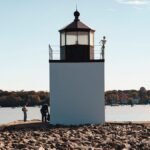
Walk out to the end of Derby Wharf to the little lighthouse. Look back at the town. This is where Salem’s money came from—and that money later built the mansions and funded the museum you’ll see next.
If the Friendship of Salem isn’t available: The replica tall ship is frequently off-site for maintenance or closed seasonally, so don’t build your morning around boarding it. If it’s shut, you still have plenty here: catch the NPS orientation film at the visitor center for a solid grounding in Salem’s trade history, tour the interior of the Custom House (Hawthorne’s old workplace, with his desk and the surveyor’s office), and walk the Derby House and Narbonne House grounds. Ask the ranger at the desk what’s open that specific day—it changes.
Late Morning: The House of the Seven Gables (1.25 hrs)
A short walk away, the House of the Seven Gables (the 1668 Turner-Ingersoll Mansion that inspired Hawthorne’s novel) offers guided tours through a genuinely beautiful colonial estate with waterfront gardens. Admission is around $20–$25. There’s a hidden staircase, low doorways, and real architectural history—it’s atmospheric without being schlocky.
Do the full guided house tour if you love architecture and literature. If you’re short on time, the gardens and grounds alone are a lovely, cheaper visit.
Lunch (45 min)
Refuel near the waterfront. Two solid, specific picks:
- The Lobster Shanty — a colorful, no-reservations neighborhood spot near Pickering Wharf; lobster rolls, fried seafood, and famously good cocktails. Expect a wait at peak; put your name in and browse the shops nearby.
- Sea Level Oyster Bar — right on Pickering Wharf with water views, oysters, and a broad seafood menu; reservations recommended a week ahead for weekend lunch.
Budget $15–$25 (more if you go oyster-happy).
Afternoon: Peabody Essex Museum (2–3 hrs)
The Peabody Essex Museum (PEM) is the sleeper hit of any serious Salem Massachusetts 3-day itinerary and the reason culturally curious travelers leave impressed. It’s a major, world-class art museum—maritime art, Asian export art, contemporary galleries, and its showpiece: Yin Yu Tang, a complete 200-year-old Chinese house relocated and reassembled inside the museum campus.
Admission runs roughly $20–$25; Yin Yu Tang usually requires a separate timed ticket, so grab it when you buy entry.
Give the PEM real time. It’s climate-controlled, uncrowded compared to the street chaos, and a genuine intellectual palate cleanser after a morning of costumes and fried food.
Insider tip: The PEM is a perfect rainy-day or peak-crowd-Saturday move. When Essex Street is shoulder-to-shoulder, the museum is calm.
Evening: The Fun Half, On Purpose
You’ve earned the carnival now. Wander the pedestrian Essex Street stretch after dark—the street performers, the costumes, the vendors, the pop-up haunts. This is where you do the spooky-fun stuff without pretending it’s history:
- Grab a themed cocktail or a caramel apple.
- People-watch; the costumes in late October are genuinely impressive.
- If you want one theatrical scare, book a haunted attraction. A dependable pick is Witch Mansion on Essex Street, a walk-through haunted house right in the thick of downtown; tickets run roughly $15–$20, and on peak weekends you should buy a timed ticket online in advance to skip the sidewalk line. (Nearby, the seasonal Salem’s Chamber of Horrors / Nightmare-style pop-ups run similar pricing—just confirm hours online, since some open only Fri–Sun early in the month before going nightly.)
Day 2 rough cost per person: Maritime site free + Gables $23 + lunch $20 + PEM $25 (+$10 Yin Yu Tang) + evening treats/attraction $30 = ~$118.
Day 3: Danvers (the Real Salem Village) + Slower Morning
Most 3-day visitors never leave downtown Salem. That’s a mistake, because the witch hysteria actually started in what is now Danvers—then called Salem Village. Going there is the single strongest move for a history lover, and almost nobody does it.
Morning: Rebecca Nurse Homestead + Salem Village sites (2 hrs)
Drive or Uber ~15 minutes to Danvers (this is the one day a car genuinely helps). Visit the Rebecca Nurse Homestead—the actual 1678 home of Rebecca Nurse, a 71-year-old grandmother hanged as a witch. It’s a working historic property with a reproduction meetinghouse used in the film Three Sovereigns for Sarah. Admission is modest, usually around $8–$10.
Crucial planning note: The Homestead is a small, volunteer-run operation with a short season. It is typically open only mid-May through October, and even then usually on limited days (often just Saturdays and Sundays, plus some Fridays in peak October), roughly midday to late afternoon. Hours shift year to year and it closes for private events, so check the official website or call before you drive to Danvers—otherwise you may arrive to a locked gate. Time your visit for a weekend and confirm the day before.
Nearby you can find the Salem Village Parsonage archaeological site (foundation remains of Rev. Parris’s home, where the first “afflicted” girls lived) and the Salem Village Witchcraft Victims’ Memorial in Danvers. These are quiet, free, and moving—the anti-tourist-trap.
Why this matters: Standing in the fields where an old woman was dragged from her home over petty village grudges reframes the whole 1692 story from spooky spectacle into a sober lesson about neighbors, land disputes, and mass panic. That’s the depth this trip promised.
Late Morning / Lunch: Back to Salem (or Marblehead) (1 hr)
On your way back, detour to Marblehead, a stunning, wealthy neighboring town with a preserved colonial harbor, narrow lanes, and none of the Halloween circus. Park near the historic district and walk Washington Street past the Jeremiah Lee Mansion, a grand 1768 Georgian home built by one of the wealthiest merchants in colonial America—one of the finest surviving pre-Revolutionary mansions in the country. Wander up to Abbott Hall, the town hall that houses Archibald Willard’s famous painting The Spirit of ’76. For lunch, grab a window table at The Barnacle, a small, unfussy seafood spot perched right over the harbor with some of the best water views in town, or a fresh sandwich and chowder from Shubie’s Marketplace to eat down by the water at Crocker Park. It’s a genuinely lovely, calm counterpoint to Salem’s chaos—an hour here resets your whole day. Lunch runs $18–$30.
Afternoon: Loose Ends + Souvenirs (flex)
Back in Salem, use the afternoon to hit anything you missed:
- The Charter Street / Peabody Essex area for a last museum gallery.
- Independent bookshops for serious 1692 history (look for Stacy Schiff’s The Witches or Emerson Baker’s A Storm of Witchcraft—both rigorous and readable).
- A witch/occult shop, if you want a souvenir with actual character. Salem has a real, living modern Witch and Pagan community, and the better shops treat it seriously rather than as a gag:
- HEX: Old World Witchery (Essex Street) — a moody, well-curated shop of ritual goods, herbs, and oils run by practicing witches; leans traditional and takes the craft seriously.
- OMEN: Psychic Parlor & Witchcraft Emporium — sister shop with tarot readings, candles, and books; a good place to actually talk to someone knowledgeable rather than buy a plastic wand.
- Crow Haven Corner — Salem’s oldest witch shop, small and atmospheric, known for readings and a genuinely local feel.
Then catch your train or hit the road before the evening crush.
Day 3 rough cost per person: Rebecca Nurse ~$9 + memorials free + lunch $25 + book/souvenir $20 = ~$54.
Common Mistakes (Specific, Not Obvious)
- Treating the “Witch Museum” as the history stop. It’s a narrated diorama show. The Witch House, Maritime NHS, and Danvers sites are where the real history lives.
- Driving in on a peak Saturday morning without a reserved spot. You’ll waste 45+ minutes in traffic and more looking for parking. Take the commuter rail, or pre-book a garage on SpotHero/ParkWhiz and arrive before 9 a.m.
- Not pre-booking dinner. Walk-in dining on October weekends means 90-minute waits or fast-food fallback. Reserve Turner’s, Ledger, or your anchor spot 3–4 weeks out.
- Skipping the PEM because it “isn’t spooky.” It’s the best cultural institution in town and your sanity-saving escape from crowds.
- Believing the “burned at the stake” myth. Hanging, plus one death by pressing. A tour that gets this wrong is entertainment, not education.
- Never leaving downtown. The hysteria began in Danvers. Going there is the move that separates a real history trip from a costume crawl—just confirm the Rebecca Nurse Homestead’s limited seasonal hours before you go.
- Assuming the Friendship of Salem will be docked and boardable. The tall ship is often away for maintenance or closed off-season. Have the Custom House and NPS film as your backup so the maritime morning still delivers.
- Overpacking Halloween night itself. If you’re there Oct 31, expect road closures, huge crowds, and limited nighttime attraction availability. Plan a relaxed evening, not a checklist.
Insider Tips a First-Timer Wouldn’t Know
- Mornings are yours. Downtown doesn’t fully wake up until ~11 a.m. Hit the Witch House and cemeteries early and you’ll nearly have them to yourself.
- Buy multi-attraction passes only if you’ll use them. Do the math; if you’re skipping the diorama museums (you should), a combo pass may not pay off.
- The last commuter train back to Boston can be packed and jubilant on weekends. Know your return time before you commit to that final cocktail.
- Weather flips fast in coastal October. Layers, and a waterproof shell for Derby Wharf wind.
- Cash still helps at small shops and some street vendors.
The Takeaway
Build your three days as a deliberate rhythm: real history in the mornings, big culture in the afternoons, spooky fun after dark—and one half-day in Danvers to see where it all actually happened. Do that and you’ll leave Salem understanding 1692, not just having photographed it.
Your single highest-leverage action right now: book your timed Witch House and Peabody Essex Museum tickets, a well-reviewed history-focused night tour (Salem Historical Tours or Salem Night Tour), and your anchor dinner (Turner’s or Ledger) before they sell out for your dates. Everything else on this itinerary you can improvise—those you can’t.