Why Canada Should Be at the Top of Every Traveler’s List
There are destinations that impress you, and then there are destinations that change you. Canada belongs firmly in the second category. Stretching across nearly ten million square kilometers, this vast and breathtaking country offers an experience so rich, so layered, and so diverse that first-time visitors often leave already planning their return trip. From the thundering roar of Niagara Falls to the silent, star-filled skies of the Yukon wilderness, Canada is a place where nature and culture collide in the most spectacular ways imaginable.
For first-time tourists, Canada can feel almost overwhelming in the best possible sense. Do you spend your days skiing down the legendary slopes of Whistler? Wandering the cobblestone streets of Old Quebec City? Watching humpback whales breach off the coast of British Columbia? The honest answer is that you want to do all of it, and with the right Canada travel guide, you absolutely can plan a trip that captures as much of this incredible country as possible.
Canada is also one of the most welcoming nations on earth. It is a place where diverse cultures, languages, and traditions blend seamlessly, where locals are genuinely happy to point you toward the best bowl of poutine in town or the hidden trail with the best view. Whether you are a solo traveler, a couple on a romantic getaway, or a family looking for adventure, Canada delivers in ways that few other countries can match.
This Canada bucket list is designed specifically for first-time visitors who want to make the most of every moment. Each experience on this list has been chosen because it captures something essential and irreplaceable about what makes Canada one of the most extraordinary travel destinations in the world. So pack your bags, bring your sense of wonder, and get ready to fall in love with the Great White North.
1. Stand in Awe at Niagara Falls

No Canada bucket list would be complete without a visit to Niagara Falls, one of the most iconic natural wonders on the planet. Located on the border of Ontario and New York State, the Canadian side of Niagara offers a perspective that is widely considered superior to the American side, and once you see it for yourself, it is easy to understand why. The Horseshoe Falls, which is the largest and most dramatic of the three waterfalls that make up Niagara, drops over fifty meters and stretches nearly eight hundred meters wide, sending up a perpetual mist that can be seen from kilometers away.
For first-time visitors, the experience of standing at the edge of the falls and feeling the ground tremble beneath your feet is genuinely humbling. The sheer volume of water moving over those falls every second is almost impossible to comprehend until you are standing right there, soaking in the spectacle. The Niagara Parks area surrounding the falls is beautifully maintained, with walking paths, gardens, and viewpoints that allow you to experience the falls from multiple angles throughout the day.
One of the most memorable ways to get up close is by taking a boat tour on the Hornblower Niagara Cruises, which takes passengers directly into the mist at the base of the falls. You will receive a poncho, but be warned: you will still get thoroughly soaked, and you will love every second of it. At night, the falls are illuminated with colorful lights, creating an entirely different but equally stunning experience.
Highlights and tips for visiting Niagara Falls:
• Visit early in the morning to avoid peak crowds and enjoy better lighting for photos
• The Canadian side offers panoramic views that are far more dramatic than the American side
• Book the Hornblower boat tour in advance during summer months
• Stay for the evening light show, which runs seasonally and is completely free to watch
• The Journey Behind the Falls attraction lets you walk through tunnels to view the waterfall from behind
2. Witness the Northern Lights in the Yukon

Of all the things to do in Canada, watching the Northern Lights is perhaps the most otherworldly. Known scientifically as the aurora borealis, this natural light phenomenon occurs when charged particles from the sun collide with gases in the earth’s atmosphere, producing curtains of dancing light in shades of green, purple, pink, and occasionally red. The Yukon is one of the best places in the world to witness this phenomenon, and for first-time visitors who have never seen it before, the experience is nothing short of life-altering.
The best time to see the Northern Lights in the Yukon is between late August and April, when the nights are long and dark enough to provide the contrast needed to see the aurora clearly. Whitehorse, the capital of the Yukon, serves as the primary base for aurora hunting in the region, and there are numerous tour operators who specialize in taking visitors to prime viewing locations away from light pollution.
What makes the Yukon particularly special for this experience is the combination of the aurora with the surrounding wilderness. Standing in a snow-covered clearing, surrounded by spruce trees, with the lights shifting and swirling above you in silence, is an experience that defies description. Many visitors report feeling a profound sense of connection to the natural world during these moments, a feeling that stays with them long after they return home.
For the best experience, consider staying at one of the aurora-viewing lodges or cabins outside of Whitehorse, where you can wake up in the middle of the night when the lights are at their peak without having to leave the warmth of your accommodation.
Highlights and tips for seeing the Northern Lights in Canada:
• The Yukon, Northwest Territories, and northern Manitoba are the top viewing locations in Canada
• Download a Northern Lights forecast app to track aurora activity during your trip
• Dress in multiple warm layers as temperatures can drop well below freezing at night
• Allow at least three to four nights in the viewing area to improve your chances of a clear sky
• A wide-angle camera lens and tripod are essential for capturing the aurora on camera
3. Explore the Magic of Banff National Park

If there is one place in Canada that consistently leaves first-time visitors speechless, it is Banff National Park. Located in the heart of the Canadian Rockies in Alberta, Banff is Canada’s oldest national park and arguably its most stunning. The combination of jagged mountain peaks, impossibly blue glacial lakes, dense evergreen forests, and abundant wildlife creates a landscape that looks almost too perfect to be real. And yet, there it is, waiting for you to explore every breathtaking corner of it.
Lake Louise is the crown jewel of Banff, a glacially fed lake whose water takes on an almost surreal shade of turquoise due to the fine glacial rock flour suspended within it. Canoe rentals are available on the lake during summer, and the experience of paddling across those still, jewel-colored waters with the Victoria Glacier rising above you is something that will stay with you forever. Moraine Lake, just a short drive away, offers a similarly spectacular setting and is surrounded by ten towering peaks that collectively form one of the most photographed landscapes in Canada.
Beyond the lakes, Banff offers world-class hiking, wildlife watching, and in winter, some of the best skiing in North America. The town of Banff itself is charming and walkable, filled with excellent restaurants, cozy cafes, and boutique shops. The Banff Upper Hot Springs, a natural thermal pool with mountain views, provides the perfect way to soak tired muscles after a day of exploration.
Highlights and tips for visiting Banff National Park:
• Arrive at Moraine Lake before sunrise to beat the crowds and witness the most spectacular morning light
• A Parks Canada Discovery Pass is required for entry and can be purchased online in advance
• Watch for elk, bears, and bighorn sheep along the Icefields Parkway
• The gondola ride up Sulphur Mountain offers panoramic views of the Bow Valley below
• Visit in late September for golden larch trees that transform the landscape into a painter’s canvas
4. Discover the Vibrant Energy of Toronto
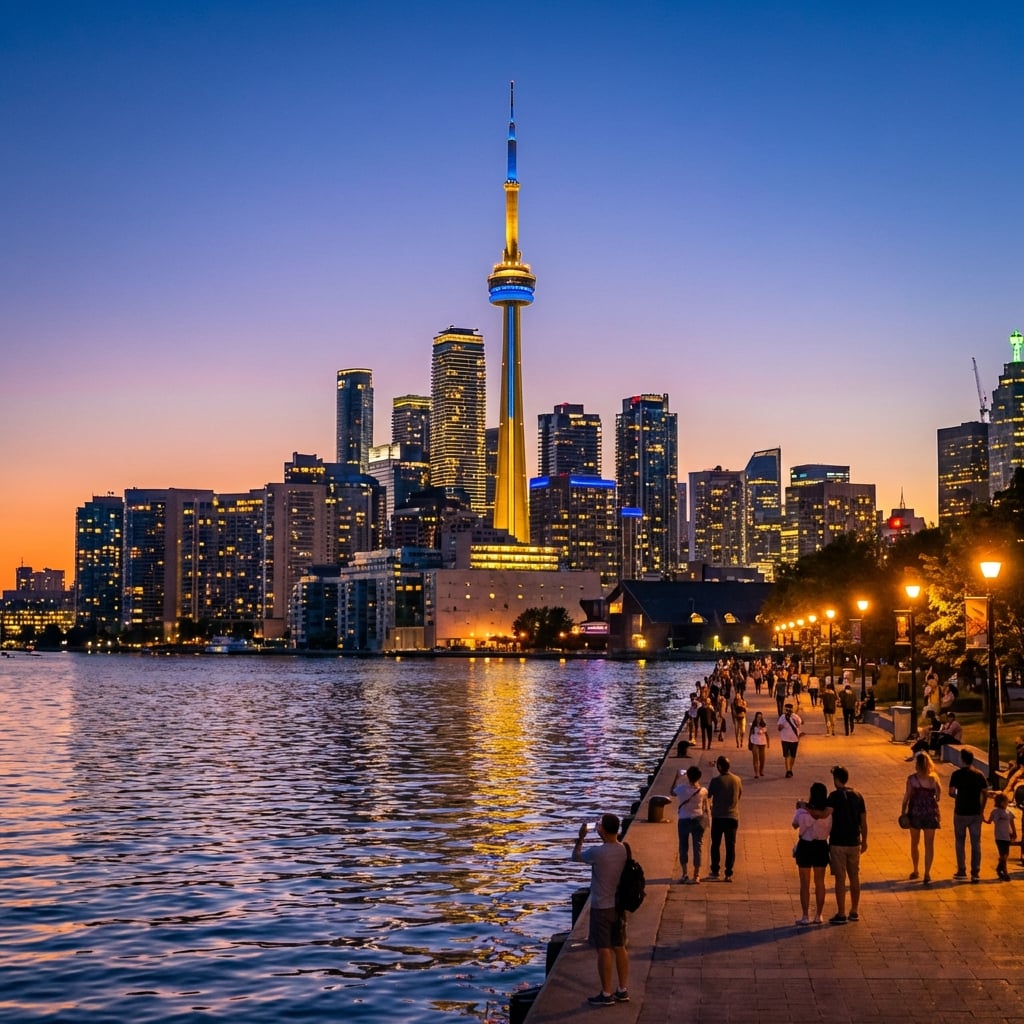
Toronto is one of the most multicultural cities on earth, a place where over two hundred languages are spoken and where the food, art, and culture of virtually every nation on the planet can be found within a few city blocks. For first-time visitors to Canada, spending several days in Toronto is an absolute must, not just because of the famous CN Tower or the sprawling waterfront, but because the city itself is a living, breathing expression of what makes Canada so special.
The CN Tower, which stands at 553 meters, dominated the world’s skyline rankings for over thirty years and remains one of the most recognizable structures in North America. For the brave, the EdgeWalk experience allows visitors to walk around the outside of the tower’s main pod while harnessed to a guardrail, with nothing but the city spread out hundreds of meters below. For those who prefer to keep their feet on solid ground, the glass floor observation deck provides a similarly thrilling perspective.
Beyond the tower, Toronto’s neighborhoods each offer a distinct personality and flavor. Kensington Market is a bohemian, artsy area filled with vintage shops and international street food. Distillery District is a beautifully preserved Victorian industrial complex now home to galleries, restaurants, and artisan shops. Chinatown, Little Italy, and Greektown each offer authentic culinary experiences that reflect the city’s remarkable diversity.
The Royal Ontario Museum, the Art Gallery of Ontario, and the Hockey Hall of Fame round out the cultural offerings of a city that takes both its arts and its sports very seriously.
Highlights and tips for exploring Toronto:
• The TTC subway and streetcar system makes getting around the city affordable and efficient
• Visit St. Lawrence Market on a Saturday morning for one of the best food market experiences in North America
• Book CN Tower tickets online to skip the queue at the entrance
• Toronto Islands, just a short ferry ride from downtown, offer stunning views of the skyline and a peaceful escape from the city
• Try a peameal bacon sandwich at St. Lawrence Market, a true Toronto culinary tradition
5. Fall in Love with the Old World Charm of Quebec City
 Stepping into Old Quebec City feels like stepping into a different century. This UNESCO World Heritage Site is the only fortified city north of Mexico in North America, and its remarkably preserved architecture, winding cobblestone streets, and French-speaking culture make it feel more like a European village than a North American city. For first-time tourists visiting Canada, Quebec City is a revelation, a reminder that this country contains multitudes far beyond what most people expect.
The Chateau Frontenac, a grand hotel that dominates the city’s skyline with its castle-like silhouette, is one of the most photographed hotels in the world and an enduring symbol of Quebec City’s old-world grandeur. Even if you are not staying there, a visit to the hotel’s lobby and a walk along the Dufferin Terrace boardwalk below it are essential parts of the Quebec City experience. The views of the St. Lawrence River from the terrace are magnificent in every season.
The Lower Town, known as Petit-Champlain, is a charming district of boutique shops, art galleries, and excellent restaurants that spills down from the Upper Town via the funicular railway or the steep Breakneck Stairs. The entire neighborhood feels like a film set, but it is entirely real and wonderfully alive with locals and visitors alike.
Quebec City in winter is particularly magical. The city hosts the famous Quebec Winter Carnival, one of the largest winter festivals in the world, featuring ice sculptures, outdoor concerts, and the legendary ice palace. Even outside of carnival season, the snowy streets of Old Quebec take on a fairy-tale quality that is unlike anything else in North America.
Highlights and tips for visiting Quebec City:
• Old Quebec is very walkable, but wear comfortable shoes as the cobblestones can be uneven
• Learn a few basic French phrases as it will be warmly appreciated by locals
• The Plains of Abraham, a historic battlefield turned urban park, offers wonderful walking and cycling
• Try traditional Quebecois cuisine such as tourtiere, sugar pie, and of course, authentic poutine
• Visit during the Winter Carnival in February for a truly unique and unforgettable experience
6. Taste Authentic Poutine and Explore Canada’s Food Culture

No first-time visit to Canada would be complete without a deep dive into the country’s food culture, and nothing represents that culture quite as perfectly as poutine. This iconic Canadian dish, consisting of crispy french fries topped with fresh cheese curds and smothered in rich brown gravy, originated in rural Quebec in the late 1950s and has since become a national obsession. Finding the best poutine in Canada is itself a worthy travel mission, and one that will take you to some wonderful places along the way.
The best poutine is found in Quebec, where the dish was born, and where the cheese curds are fresh enough to squeak against your teeth when you bite into them. Montreal and Quebec City both have legendary poutine establishments that locals will happily debate over for hours. La Banquise in Montreal is one of the most famous, offering dozens of poutine variations around the clock, while Ashton in Quebec City is a beloved institution that has been serving the dish for decades.
But Canadian food culture extends far beyond poutine. Maple syrup, which Canada produces in vast quantities, is a national treasure that shows up in everything from pancake breakfasts to gourmet restaurant dishes. A visit to a sugar shack, particularly in Quebec during maple syrup season in March and April, is a truly authentic Canadian experience that involves watching the syrup production process and eating a traditional feast.
Seafood lovers will find paradise on both coasts, from the fresh Atlantic lobster of Nova Scotia and Prince Edward Island to the wild Pacific salmon of British Columbia. Butter tarts, Nanaimo bars, and BeaverTails are just a few of the other quintessentially Canadian treats that deserve a place on your culinary bucket list.
Highlights and tips for exploring Canadian food culture:
• Visit a Quebec sugar shack in March or April to experience maple syrup season firsthand
• Try BeaverTails, a fried dough pastry topped with sweet toppings, at any of their locations across Canada
• Explore the Jean-Talon Market in Montreal for an incredible variety of local and seasonal produce
• On Prince Edward Island, do not miss a lobster supper at one of the famous community halls
• Ask locals for their personal poutine recommendations as the best spots are often not the most famous ones
7. Ski the World-Class Slopes of Whistler Blackcomb
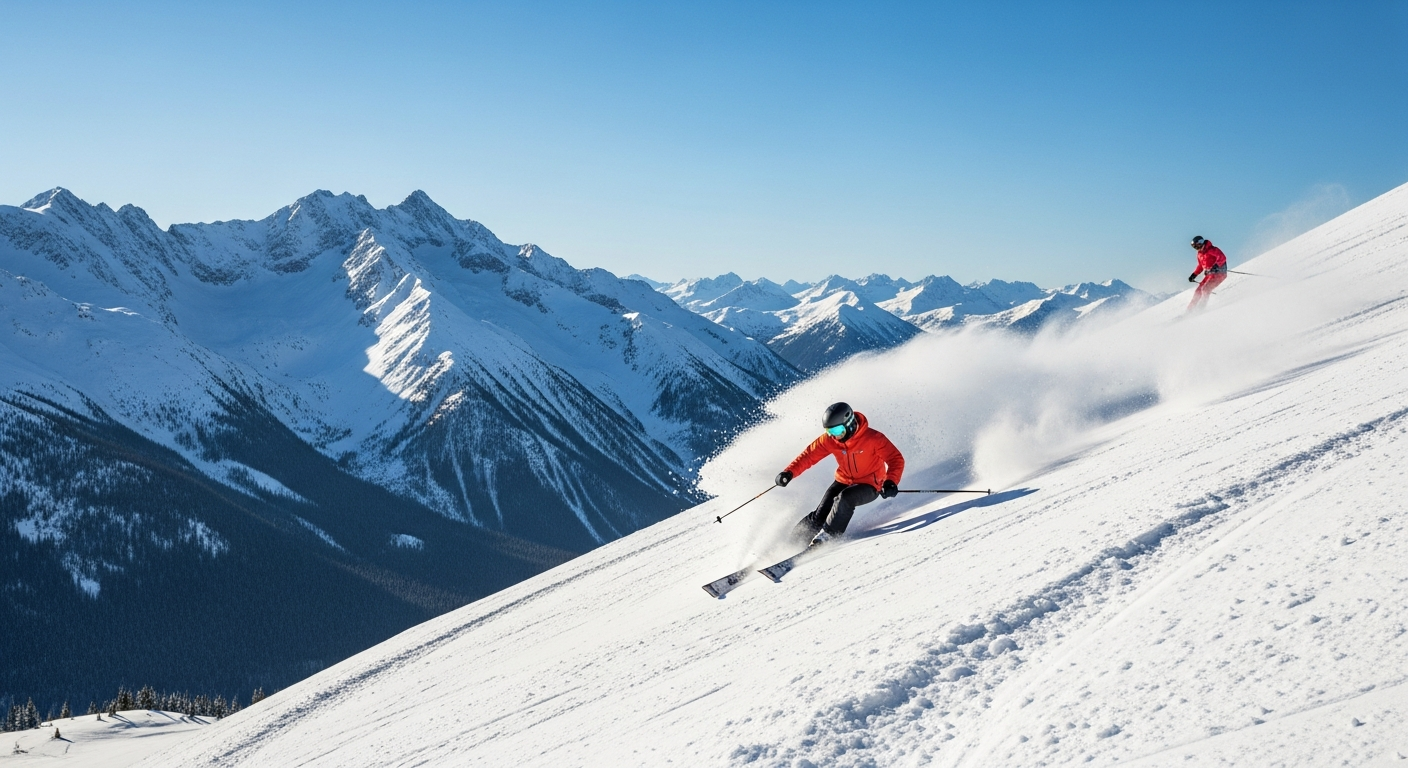
For anyone who has ever dreamed of skiing or snowboarding at one of the world’s premier mountain resorts, Whistler Blackcomb in British Columbia is the ultimate destination. Consistently ranked among the top ski resorts in North America, Whistler offers more skiable terrain than virtually any other resort on the continent, with over two hundred marked runs spread across two massive mountains connected by the PEAK 2 PEAK Gondola, itself a feat of engineering that offers jaw-dropping views of the mountains below.
The village of Whistler is equally impressive, a purpose-built alpine community that manages to feel both lively and intimate at the same time. After a day on the slopes, the village comes alive with excellent restaurants, cozy bars, and a vibrant après-ski culture that makes the evenings just as enjoyable as the days. The pedestrian-only village is beautifully designed, with high-end hotels and boutique accommodations lining the main square alongside local shops and entertainment venues.
For first-time skiers or snowboarders, Whistler offers excellent beginner terrain and a wide range of ski schools and lesson programs. For experienced riders, the advanced runs and off-piste terrain will provide a genuine challenge and an unforgettable experience. During summer months, Whistler transforms into a mountain biking and hiking destination, with the same gondolas that carry skiers in winter transporting cyclists and hikers to high-altitude trails with spectacular views.
The drive from Vancouver to Whistler along the Sea-to-Sky Highway is itself one of the most scenic drives in Canada, hugging the coast of Howe Sound before climbing into the mountains.
Highlights and tips for visiting Whistler:
• Book accommodation and lift tickets well in advance for peak winter weekends
• The PEAK 2 PEAK Gondola connecting Whistler and Blackcomb mountains is a must-ride experience
• Take a lesson at the Whistler Blackcomb Ski and Snowboard School if you are a beginner
• The drive along the Sea-to-Sky Highway from Vancouver includes a stop at Shannon Falls, worth the detour
• Summer visits offer world-class mountain biking and hiking at a fraction of the winter cost
8. Go Whale Watching on the Pacific Coast

British Columbia’s coastline is one of the richest marine environments in the world, and whale watching here ranks among the most thrilling wildlife experiences available anywhere in Canada. The waters around Vancouver Island, particularly near the town of Victoria and the Johnstone Strait region, are home to orcas, humpback whales, minke whales, grey whales, and an abundance of other marine life that makes every boat trip an adventure.
Victoria, the charming capital of British Columbia located on the southern tip of Vancouver Island, is one of the most popular departure points for whale watching tours. The resident orca pods that inhabit the waters around Victoria are one of the most studied populations of orcas in the world, and the sight of these magnificent animals swimming in their natural habitat, dorsal fins cutting through the calm water, is something that moves even the most seasoned wildlife enthusiasts to silence.
For a more remote and immersive experience, the Telegraph Cove area in northern Vancouver Island offers access to the Johnstone Strait, where orcas gather in large numbers during summer months to rub on the smooth pebble beaches in a behavior unique to this population. Kayaking with orcas in this area, under the guidance of experienced operators, is one of the most extraordinary wildlife encounters available anywhere in the world.
Beyond whales, the boat trips often include sightings of sea lions, harbour seals, bald eagles, and Dall’s porpoises, making the entire experience a celebration of the incredible biodiversity of Canada’s Pacific coast.
Highlights and tips for whale watching in British Columbia:
• The best time for whale watching near Victoria is May through October
• Choose a reputable operator that follows responsible whale watching guidelines
• Bring warm, waterproof layers even in summer as the ocean can be cool and windy
• Binoculars and a telephoto lens will significantly enhance your experience
• Consider a multi-day kayaking tour in the Johnstone Strait for the most immersive orca experience
9. Ride the Rocky Mountaineer Through the Canadian Rockies

If there is one way to see the Canadian Rockies that combines luxury, comfort, and unparalleled scenery, it is the Rocky Mountaineer. This legendary train journey, which operates between Vancouver and the mountain destinations of Banff, Lake Louise, and Jasper, is widely considered one of the greatest train journeys in the world, and for very good reason. The route takes passengers through landscapes so dramatic and so continuously spectacular that it is almost impossible to look away from the window for the entire journey.
The Rocky Mountaineer operates exclusively during daylight hours, ensuring that passengers never miss a single moment of the scenery passing by. The train travels through river valleys flanked by towering peaks, across high trestle bridges over rushing rivers, through tunnels carved through solid rock, and past glaciers, waterfalls, and forests that stretch to the horizon. The glass-domed observation cars allow passengers to take in the panoramic views in complete comfort, while the onboard service includes gourmet meals and knowledgeable hosts who provide commentary on the landscape and its history.
For first-time visitors to Canada who want to experience the Rockies in a way that is both effortless and deeply memorable, the Rocky Mountaineer is an investment worth making. The journey is typically done over two days with an overnight stop in Kamloops, and the combination of the train experience with the destination at either end creates a complete and deeply satisfying travel experience.
Highlights and tips for the Rocky Mountaineer:
• Book well in advance as this popular train sells out months ahead of peak season
• The GoldLeaf Service, with its glass-domed upper deck, offers the most immersive viewing experience
• The journey runs from late April through October and does not operate in winter
• Combine the train journey with time in Banff or Jasper for a complete Rocky Mountain experience
• The section through the Fraser Canyon and the Spiral Tunnels near Field are particularly spectacular
10. Explore the Cosmopolitan Beauty of Vancouver
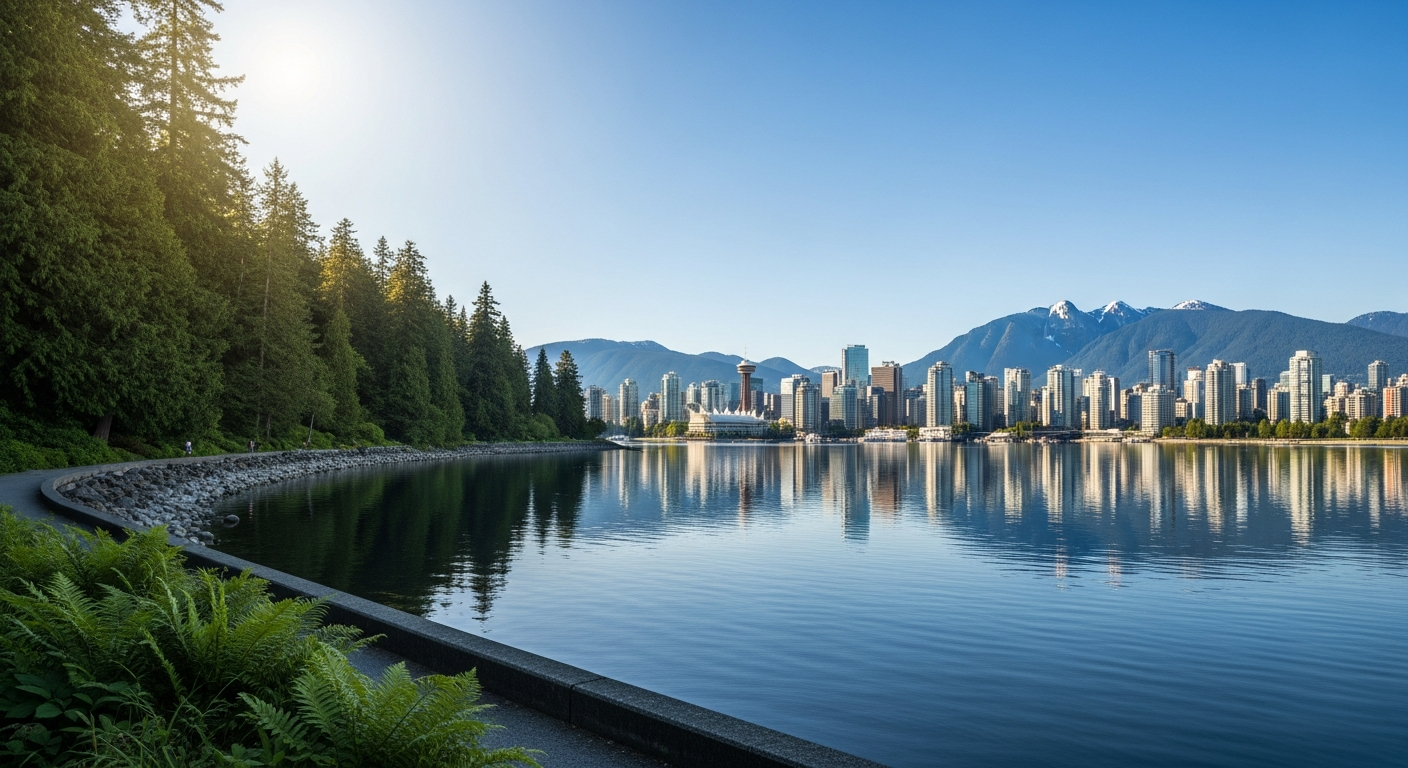
Vancouver consistently ranks among the most livable and most beautiful cities in the world, and a visit here will make it immediately clear why. Nestled between the Pacific Ocean and the Coast Mountain Range, Vancouver offers a combination of urban sophistication and natural splendor that is virtually unmatched anywhere else in Canada or the world. For first-time tourists, the city is endlessly walkable, extraordinarily diverse, and filled with experiences that range from world-class dining to old-growth forest hiking.
Stanley Park is the crown jewel of Vancouver’s urban landscape, a thousand-acre urban park that sits right at the edge of downtown and contains ancient forest, scenic seawall paths, beaches, and one of the most beautiful viewpoints in the city at Prospect Point. Walking or cycling the seawall around the entire perimeter of the park takes a few hours and provides continuously changing views of the ocean, the mountains, and the city skyline.
Granville Island, a converted industrial area now home to a famous public market, artist studios, and waterfront restaurants, is another essential Vancouver experience. The Public Market is a feast for the senses, filled with fresh produce, artisan foods, and local crafts that make it the perfect place to spend a morning. The False Creek ferry that connects Granville Island to other parts of the waterfront is a charming and practical way to explore the city.
Gastown, Vancouver’s oldest neighborhood, offers Victorian architecture, independent boutiques, and excellent restaurants. Chinatown, one of the largest in North America, provides a fascinating glimpse into the city’s deep Asian cultural roots.
Highlights and tips for visiting Vancouver:
• Rent a bicycle to explore the Stanley Park seawall, one of the most scenic cycling routes in North America
• Take the SeaBus ferry across Burrard Inlet to North Vancouver for a different perspective of the city
• Visit Granville Island Public Market on a weekday to avoid weekend crowds
• The Capilano Suspension Bridge and Grouse Mountain are popular day trips from the city
• Try the exceptional Asian food scene in Richmond, a suburb of Vancouver with outstanding dim sum and hot pot restaurants
11. Experience the Festivals and Culture of Montreal

Montreal is a city that knows how to celebrate life, and for first-time visitors to Canada, it represents one of the most culturally rich and endlessly entertaining destinations in the country. The largest city in Quebec and the second-largest in Canada, Montreal blends French and English influences into something entirely its own, a vibrant, creative, cosmopolitan city that has produced world-class artists, musicians, chefs, and thinkers for centuries.
The Montreal International Jazz Festival, held every summer, is the largest jazz festival in the world according to the Guinness Book of World Records, drawing over two million visitors to the city over eleven days of outdoor and indoor performances. The festival transforms the downtown core into one giant celebration, with free outdoor concerts on multiple stages and ticketed shows featuring the biggest names in jazz and related genres. Even if you are not a jazz enthusiast, the atmosphere alone is worth planning a trip around.
Beyond the festival season, Montreal offers year-round cultural richness. The Montreal Museum of Fine Arts is one of the finest art museums in Canada. The Notre-Dame Basilica, with its breathtaking Gothic Revival interior of hand-carved wood and brilliant blue ceiling, is one of the most beautiful churches in North America. The underground city, known as RÉSO, is a remarkable network of tunnels connecting shopping centers, metro stations, hotels, and entertainment venues that allows Montrealers to navigate much of the downtown core without ever stepping outside in winter.
The food scene in Montreal deserves special mention, from the legendary smoked meat sandwiches at Schwartz’s Deli to the exquisite tasting menus at the city’s award-winning restaurants.
Highlights and tips for visiting Montreal:
• The Montreal Jazz Festival in late June and early July is one of the best free events in North America
• Explore the Plateau-Mont-Royal neighborhood for the most authentic Montreal neighborhood experience
• Try a smoked meat sandwich at Schwartz’s Deli, a Montreal institution since 1928
• Mount Royal Park, designed by Frederick Law Olmsted of Central Park fame, offers beautiful views of the city
• The Montreal Metro is clean, efficient, and decorated with unique artwork at each station
12. Discover the Wild Beauty of Prince Edward Island
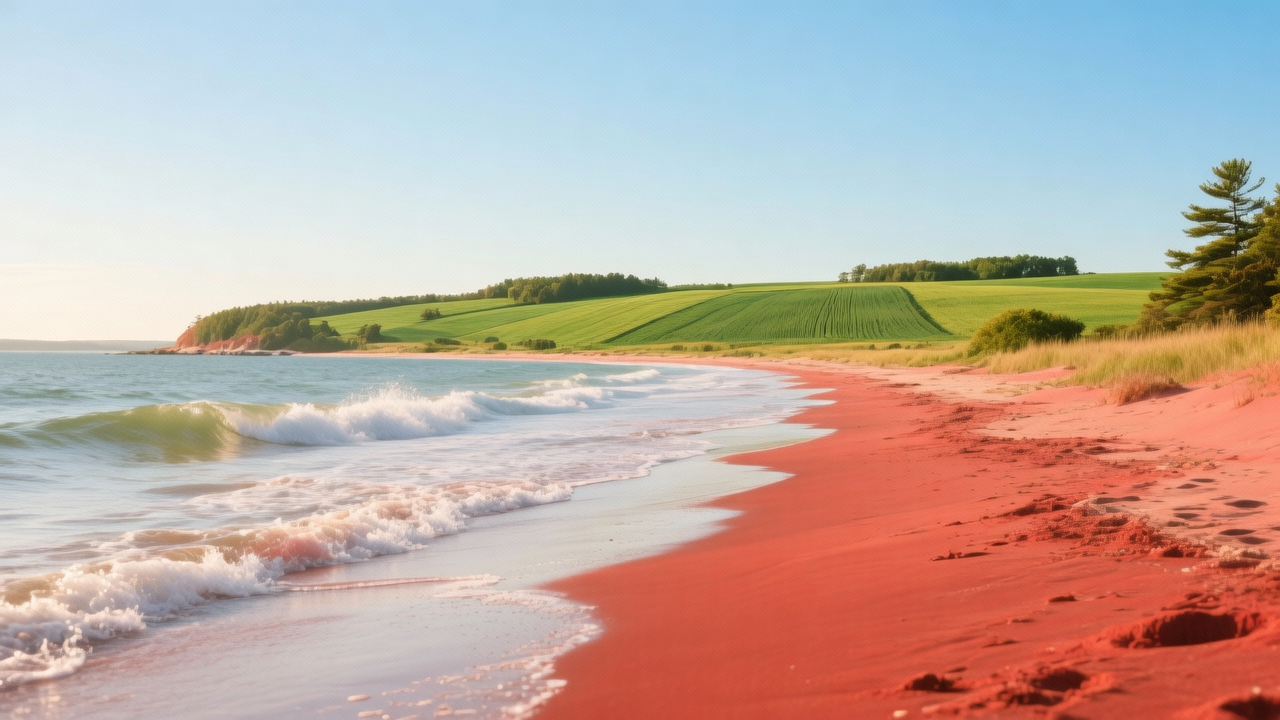
Prince Edward Island, Canada’s smallest province, is a place of quiet, pastoral beauty that offers a completely different kind of Canadian experience from the mountains and cities that dominate most travel itineraries. Connected to the mainland by the Confederation Bridge, the longest bridge over ice-covered water in the world, PEI is a gentle, rolling island of red soil, green farmland, and sandy beaches that has been charming visitors for generations.
The island is perhaps best known internationally as the birthplace of Anne of Green Gables, the beloved novel by Lucy Maud Montgomery that has been read by millions of people around the world. The Green Gables Heritage Place in Cavendish, where Montgomery drew inspiration for her story, is a pilgrimage site for fans of the book and a genuinely lovely property set in beautiful farmland. But PEI’s appeal extends far beyond literary tourism.
The island’s beaches are among the warmest north of Virginia, thanks to the shallow waters of the Gulf of St. Lawrence that heat up significantly during summer. Red sand beaches, a result of the island’s iron-rich soil, give PEI a distinctive and beautiful coastal character. Cavendish Beach, Basin Head, and Greenwich Beach are among the finest stretches of sand on the island.
The culinary culture of PEI is built around its extraordinary seafood, particularly the world-famous PEI mussels and lobster. A traditional lobster supper at one of the island’s community halls is an experience that combines excellent food with a genuine sense of local community and hospitality.
Highlights and tips for visiting Prince Edward Island:
• Rent a bicycle and explore the Confederation Trail, a converted railway line that runs the length of the island
• Visit in summer for the warmest beach weather and the lobster supper season
• The PEI Preserve Company in New Glasgow offers excellent local jams, preserves, and afternoon tea
• Take a guided red sand beach walk to learn about the island’s unique geology
• The Charlottetown Festival runs each summer and features excellent productions of Anne of Green Gables
13. Walk the Ancient Rainforest of Pacific Rim National Park
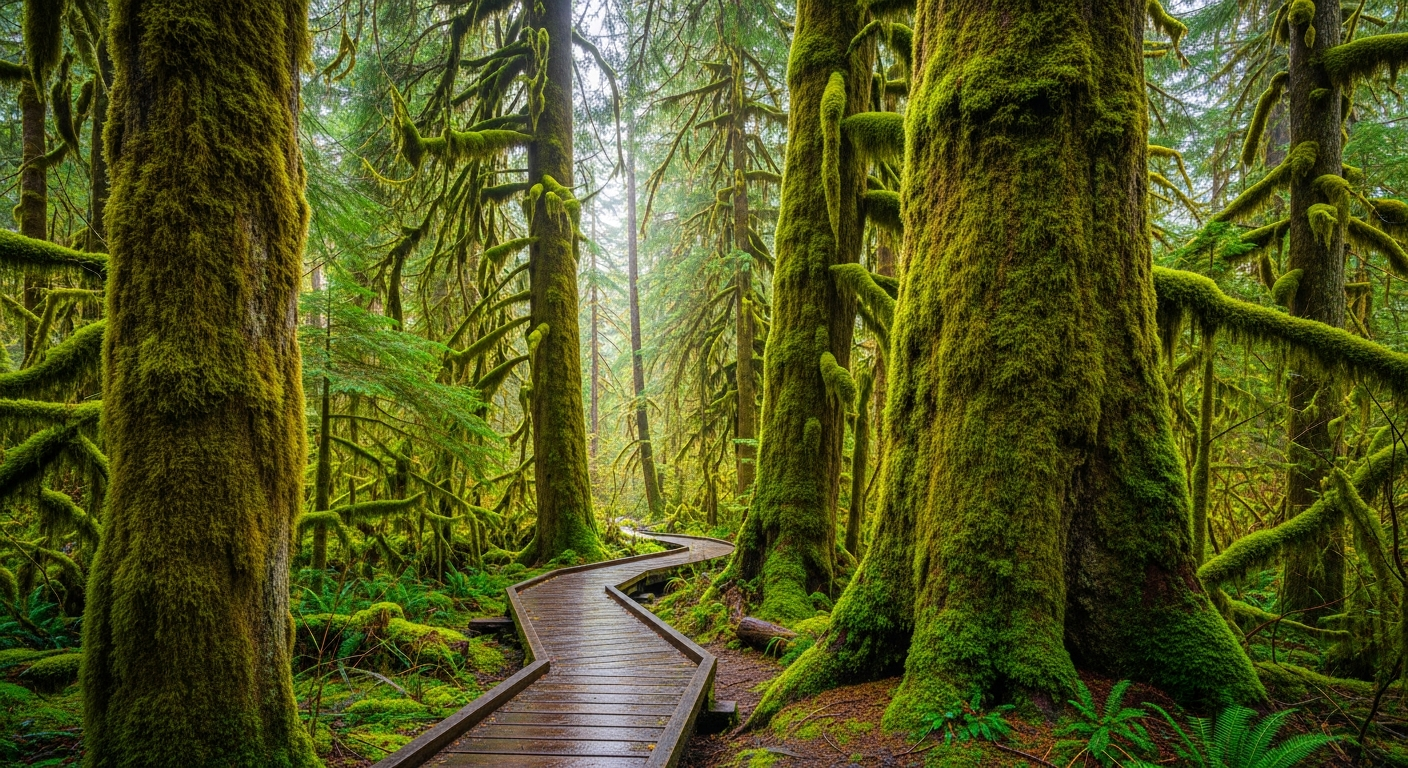
On the wild west coast of Vancouver Island, Pacific Rim National Park Reserve offers one of the most dramatic and primordial landscapes in all of Canada. This remote park encompasses old-growth temperate rainforest, wild Pacific beaches, and a network of islands and waterways that together create an environment of extraordinary ecological richness. For first-time visitors who want to experience Canada’s natural world at its most raw and unfiltered, Pacific Rim is an unforgettable destination.
The Long Beach unit of the park contains a breathtaking stretch of wild Pacific coastline where massive waves roll in from the open ocean and crash against the sandy shore with tremendous force. Walking along Long Beach during a storm is one of the most visceral natural experiences available in Canada, the kind of encounter with the raw power of nature that resets your perspective on the world. Even on calm days, the beach is spectacular, stretching for kilometers with driftwood-strewn shores and the dense green forest rising behind.
The Rainforest Trail is a short but deeply immersive boardwalk loop through ancient old-growth forest where trees hundreds of years old rise to towering heights, their trunks covered in thick carpets of moss and their branches draped with lichen. The forest here feels prehistoric, a living museum of what the Pacific Northwest looked like before human settlement. The silence within the old growth, broken only by birdsong and the distant sound of the ocean, is profound.
The nearby town of Tofino has become one of Canada’s most beloved coastal destinations, offering excellent surfing, whale watching, hot spring excursions, and a thriving food scene that celebrates local seafood and Indigenous culinary traditions.
Highlights and tips for visiting Pacific Rim National Park:
• Tofino is the primary base for exploring the park and offers excellent accommodation options
• Storm watching in winter is a unique and thrilling experience that draws visitors specifically for the dramatic weather
• The West Coast Trail within the park is a challenging multi-day hike for experienced backpackers
• Hot Springs Cove, accessible by boat or floatplane from Tofino, offers natural geothermal pools in a remote setting
• Surfing lessons are widely available in Tofino and the consistent Pacific swells make it one of Canada’s best surf destinations
14. Experience Indigenous Culture and Heritage
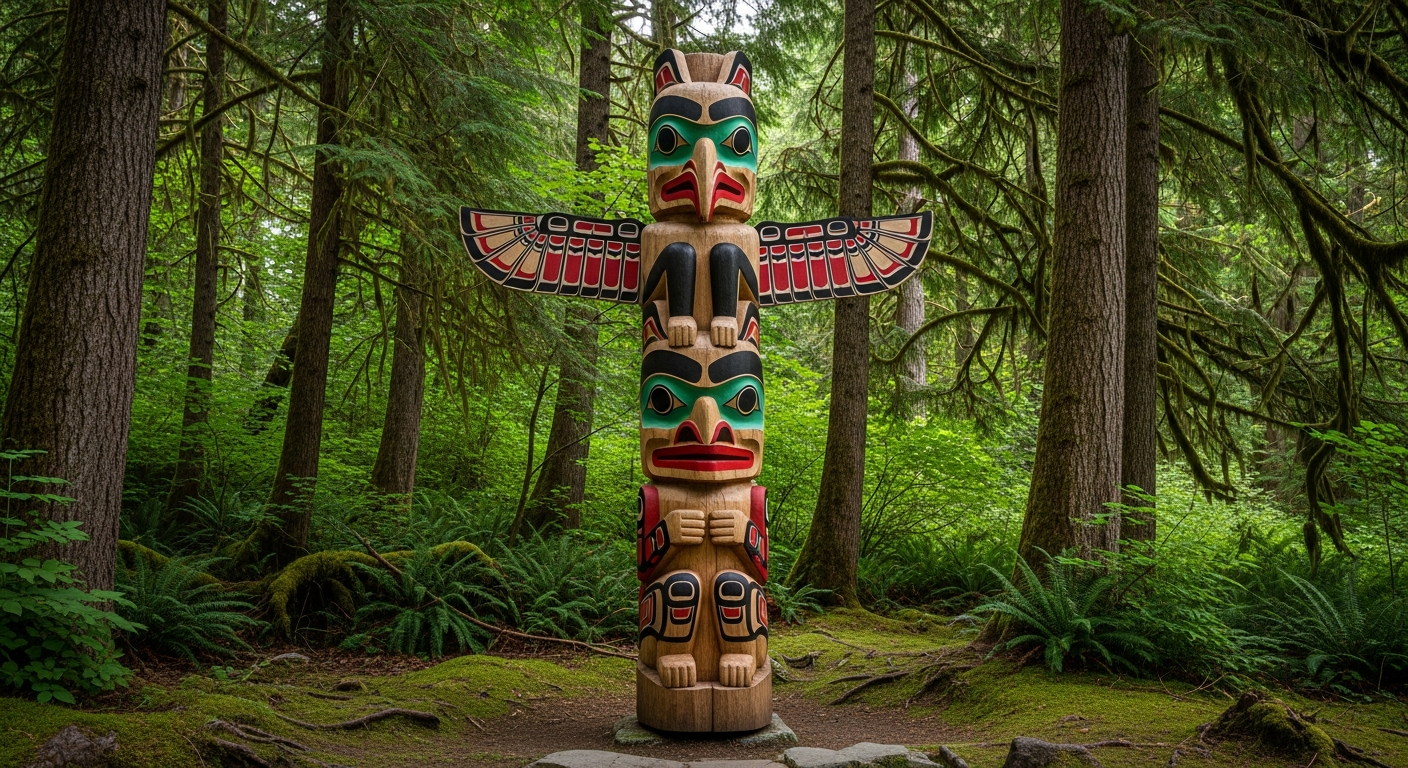
One of the most meaningful and enriching experiences available to first-time visitors in Canada is engaging with the country’s Indigenous cultures and heritage. Canada is home to hundreds of distinct First Nations, Metis, and Inuit peoples, each with their own languages, traditions, art forms, and histories that stretch back thousands of years before European contact. Seeking out authentic Indigenous cultural experiences is not only deeply interesting and educational but also an important way of honoring and supporting communities that have so much to share with the world.
In British Columbia, the Museum of Anthropology at the University of British Columbia in Vancouver houses one of the finest collections of Northwest Coast Indigenous art in the world, including towering totem poles, intricately carved ceremonial objects, and contemporary works by living Indigenous artists. The museum itself is an architectural masterpiece designed by Arthur Erickson, and a visit here provides essential context for understanding the cultures of the Pacific Northwest.
In Manitoba, the Canadian Museum for Human Rights in Winnipeg, while not exclusively focused on Indigenous culture, dedicates significant space to the history and experiences of Canada’s Indigenous peoples, including the legacy of residential schools. This is important and sometimes difficult history that first-time visitors to Canada should seek to understand.
Many Indigenous communities across Canada now offer cultural tourism experiences directly, from guided canoe trips and traditional feast dinners to storytelling sessions and art workshops. These firsthand encounters, led by community members themselves, provide an authenticity and depth of understanding that no museum exhibit can fully replicate.
Highlights and tips for engaging with Indigenous culture in Canada:
• The Museum of Anthropology in Vancouver is an essential stop for understanding Pacific Northwest Indigenous art
• Seek out Indigenous-owned tour operators and cultural experiences to ensure your spending directly benefits communities
• The Haida Gwaii archipelago off the coast of BC is a profound destination for Indigenous cultural immersion
• The Wanuskewin Heritage Park near Saskatoon offers insight into the cultures of the Northern Plains peoples
• Approach Indigenous cultural experiences with respect, openness, and a genuine desire to listen and learn
15. Drive the Icefields Parkway, One of the World’s Great Road Trips
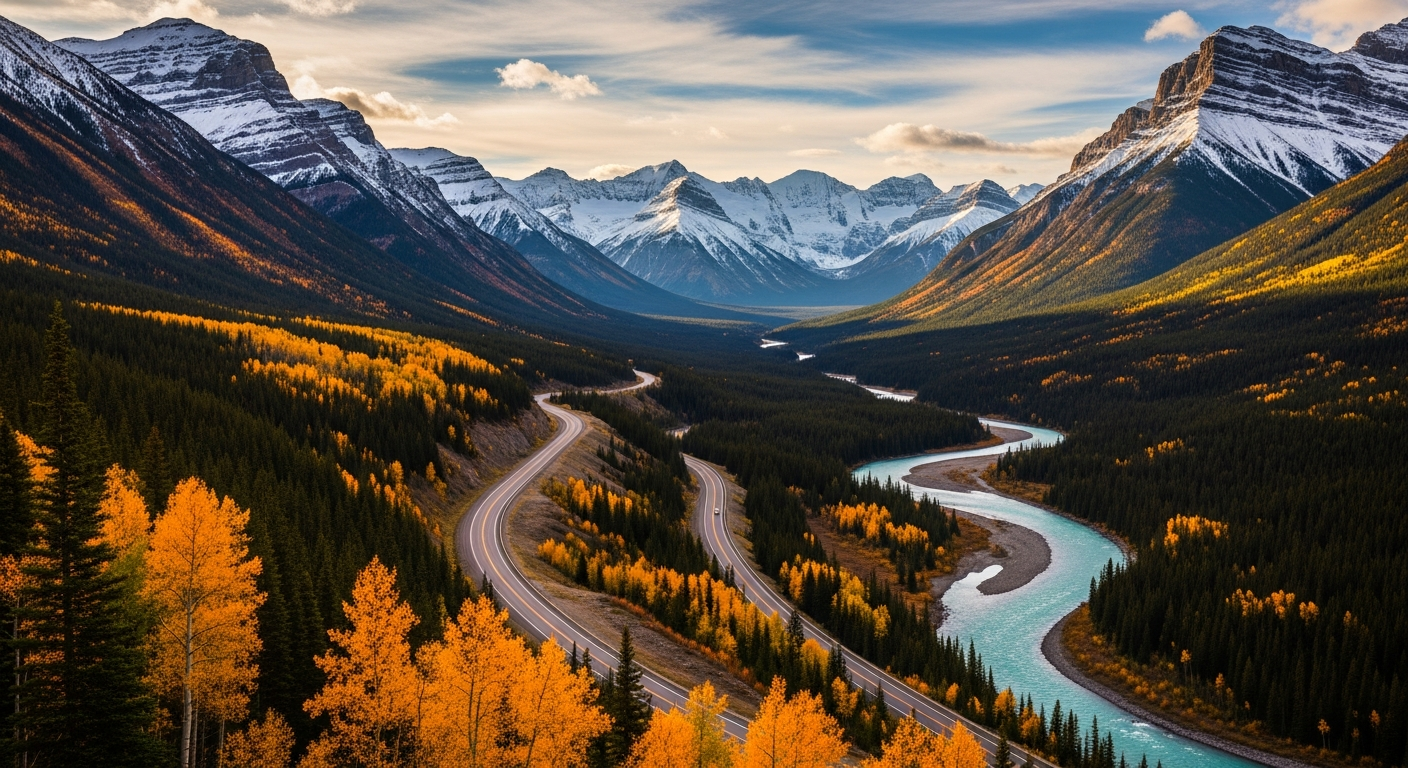
The Icefields Parkway, a 232-kilometer highway connecting Banff and Jasper National Parks in Alberta, is widely regarded as one of the most spectacular drives in the world, and for first-time visitors to Canada who have access to a rental car, it is an absolute must. The route passes through a landscape of almost incomprehensible grandeur, with glacier-capped peaks, ancient icefields, turquoise lakes, thundering waterfalls, and abundant wildlife visible from the roadside at virtually every turn.
The Columbia Icefield, located roughly halfway along the route, is the largest icefield in the Rocky Mountains south of Alaska and the primary attraction along the parkway. The Athabasca Glacier, one of the six outlet glaciers of the Columbia Icefield, is accessible by foot or by specially designed Ice Explorer vehicles that take visitors directly onto the glacier’s surface. Standing on ice that has been accumulating for thousands of years, surrounded by the vast white expanse of the icefield, is a genuinely awe-inspiring experience.
Along the drive, stops at Peyto Lake, whose vivid turquoise water and wolf-shaped shoreline make it one of the most photographed lakes in Canada, and Sunwapta Falls, where the Sunwapta River plunges dramatically over a rocky ledge, are essential. Jasper National Park, at the northern end of the parkway, is a darker sky preserve and one of the best places in Canada to stargaze on clear nights.
The entire drive can be completed in a single day, but allowing two or three days with overnight stops allows you to fully absorb the extraordinary landscape without feeling rushed.
Highlights and tips for driving the Icefields Parkway:
• Drive north from Banff to Jasper for the most dramatic views on the right side of the road
• Stop at every pullout and viewpoint as each one reveals something new and spectacular
• Wildlife including elk, bears, mountain goats, and bighorn sheep are frequently seen from the road
• Book the Ice Explorer glacier tour at the Columbia Icefield in advance during peak summer months
• Carry enough fuel as gas stations along the parkway are few and far between
Conclusion: Canada Is Waiting for You
There are very few places in the world that can genuinely claim to offer something for every kind of traveler, but Canada is one of them. Whether your idea of the perfect trip involves standing at the edge of a thundering waterfall, gliding through ancient rainforest on a quiet trail, savoring a bowl of perfectly made poutine in a cozy Quebec diner, or watching the Northern Lights paint the sky above a snow-covered wilderness, Canada delivers with a generosity and grandeur that is simply unmatched.
This Canada bucket list has touched on just a fraction of what this extraordinary country has to offer. There are still the Maritime provinces with their dramatic tidal phenomena and seafood culture, the prairies with their vast skies and rich agricultural heritage, the Arctic territories with their polar bears and midnight sun, and countless other experiences waiting to be discovered. Canada is a destination that rewards return visits as generously as it rewards first-time tourists, and that is perhaps the highest compliment that can be paid to any travel destination.
For first-time visitors, the most important thing is simply to go. To book the flight, plan the itinerary, and allow yourself to be surprised by how deeply this country gets under your skin. Canada has a way of doing that, of revealing itself slowly and then all at once, in a moment of perfect beauty that you did not see coming, that leaves you standing somewhere magnificent, thinking that you never want to leave.
Your Canada travel guide begins the moment you step off the plane. Everything else, the wonder, the adventure, the memories that will last a lifetime, unfolds naturally